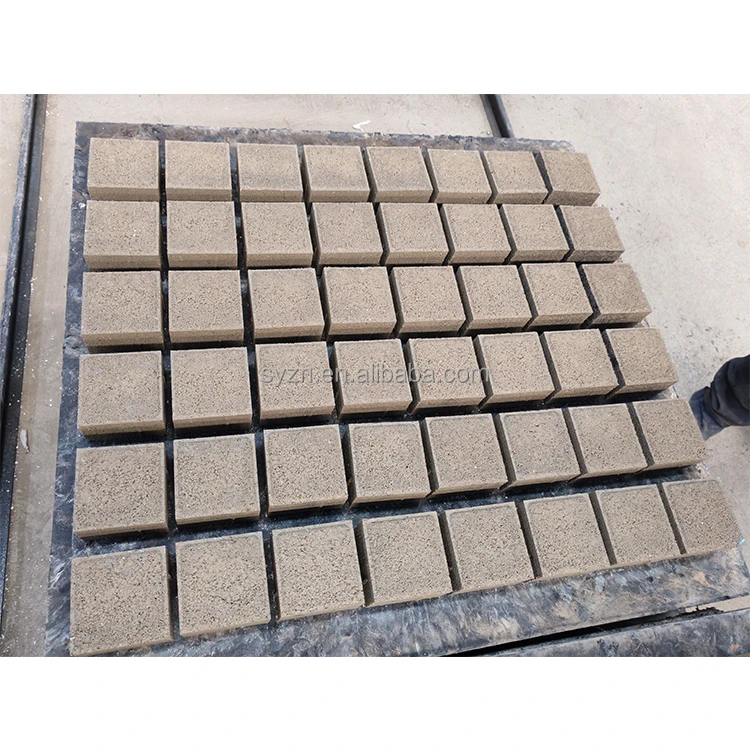
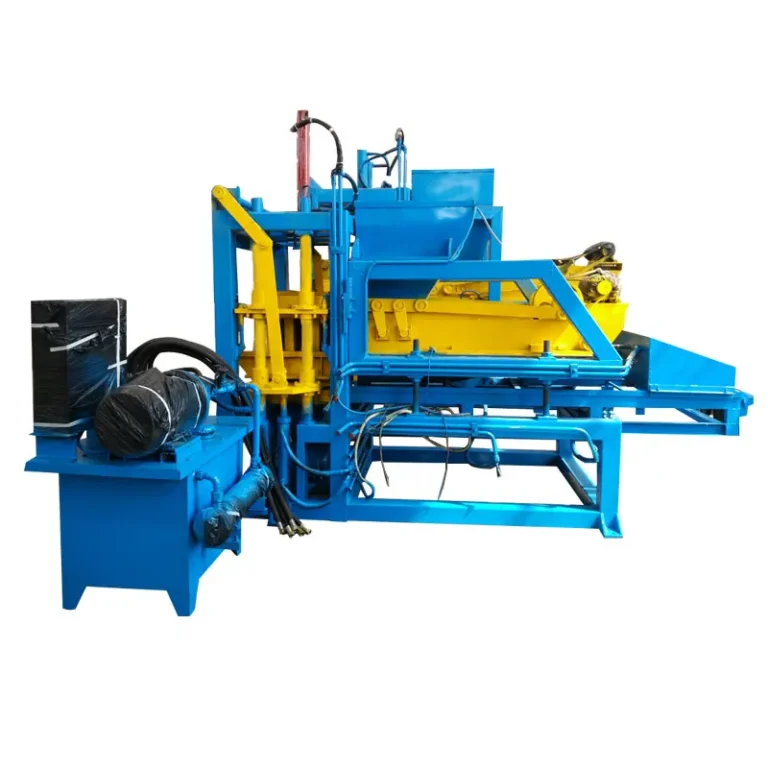
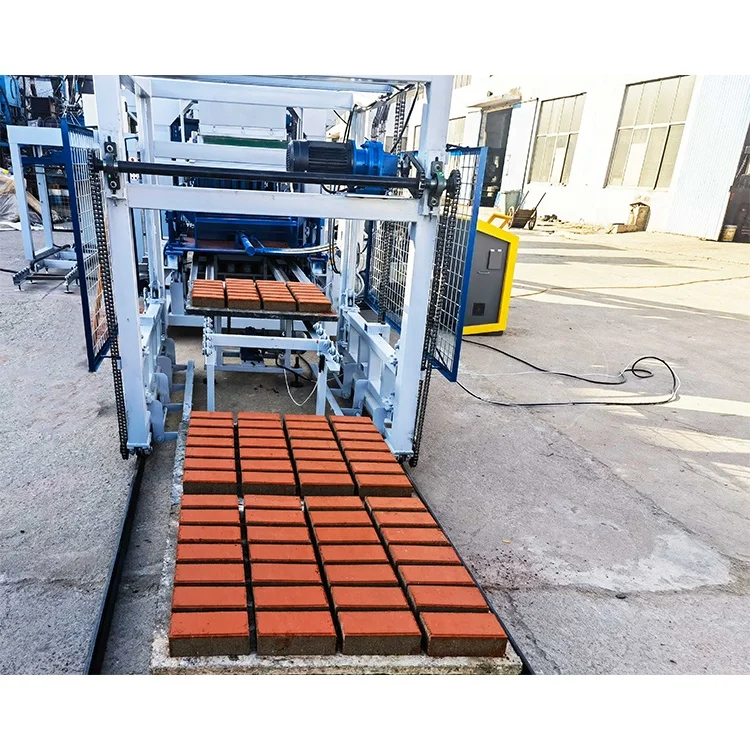
Stationary block machine range entry — The QT4-18 sits at the semi-automatic tier, where output tiers, plant footprint, and investment level meet first-time buyers who need to place themselves on the lineup before scaling up.
Technical Specifications
| Parameter |
Value |
| Model |
QT4-18 |
| Product Type |
Concrete Block Making Machine |
| Overall Dimensions (L×W×H) |
3900×1600×2300 mm |
| Molding Cycle |
15-25 s |
| Vibration Force |
40-50 kN |
| Rated Power |
24 kW |
| Mixer Model |
JQ350 |
| Pallet Size |
850×550×25 mm |
| Net Weight |
3 T |
| Applied Products |
paver, solid block, hollow block, curbstone |
| Raw Materials |
crushed stones, sand, cement, dust, fly ash |
| Automation Level |
semi-automatic |
| Vibration Method |
bed mould vertical vibration + upper mould compression vibration |
| Hydraulic System |
hydraulic station for high pressure and stable operation |
| Pallet Material |
fiber glass (wooden pallet also compatible) |
| Assembly State |
host machine, mixer (JQ350), conveyor, automatic stacker, trolley |
| Output Capacity |
1200-1680 pcs/h (basis: 400×200×200mm hollow block, 4 pcs/mould, cycle 15-20s) |
| Output Capacity |
1800-2400 pcs/h (basis: 400×150×200mm hollow block, cycle 15-20s) |
| Output Capacity |
3240 pcs/h (basis: 240×115×53mm solid brick, cycle 15-20s) |
| Daily Output (8hr) |
9600-13440 pcs (basis: 400×200×200mm hollow block) |
| Daily Output (8hr) |
14400-19200 pcs (basis: 400×150×200mm hollow block) |
| Daily Output (8hr) |
16200-19440 pcs (basis: 240×115×53mm solid brick) |
Application Suitability
| Application |
Material or Output |
| Block and paver production plants |
Hollow, solid, and paving blocks from crushed stone, sand, and cement |
| Construction contractors producing blocks on-site |
Medium-volume hollow block runs using locally sourced aggregate |
| Concrete product manufacturers adding formats |
Curbstone and paver formats through mould change on existing lines |
| Development and housing project contractors |
Local production of solid and hollow blocks for residential builds |
| Entrepreneurs setting up a first block plant |
Semi-automatic start with mixer, conveyor, stacker, and pallets included |
Why Quoted Capacity Figures Mislead First-Time Buyers
Output numbers only mean something when tied to a specific block size, mould slot count, and cycle time.
I have seen buyers commit to a concrete block making machine full range order based on a headline capacity figure, only to discover on commissioning day that the number assumed a small solid brick they never intended to produce. The QT4-18 is rated at 1200-1680 pcs/h based on a 400×200×200mm hollow block at 4 pcs per mould, and at 3240 pcs/h based on a 240×115×53mm solid brick. Those two realities are completely different production environments [NEED_CITE: how block format assumptions distort capacity comparisons across manufacturers]. When a stationary block machine manufacturer quotes cycles per hour without naming the format, the daily output you plan around will not match what arrives on your curing floor.

Where the QT4-18 Sits in the Output Tier Lineup
The Shiyue stationary block machine range spans small workshop units through high-capacity automatic lines. The QT4-18 occupies the entry-to-mid tier, positioned above mobile egg-laying machines that produce without pallets and below fully automatic stacking and cubing systems. For a buyer surveying the concrete block making machine full range, this model answers the question: what does a semi-automatic hydraulic press look like before I take on the footprint and investment of a complete automatic plant?
Semi-Automatic Means the Stacker Is Included
Unlike a bare host machine where pallets are moved by hand from press to curing rack, the QT4-18 ships with an automatic stacker as part of the assembly state. This keeps manual pallet handling out of the pressing cycle while leaving the door open to upgrade further [NEED_CITE: typical automation upgrade paths from semi-automatic block lines]. Buyers who want the press doing the work — but are not yet ready for full cubing and rack handling automation — find this tier practical. The 3900×1600×2300 mm footprint fits inside a modest workshop without requiring the extended conveyor runs of higher-tier lines.
Vibration, Pressure, and What They Mean for Block Density
The QT4-18 combines bed mould vertical vibration at 40-50 kN with upper mould compression vibration, while a dedicated hydraulic station delivers stable pressure throughout the molding cycle. In block production, vibration settles the aggregate into the mould cavity and hydraulic pressure compresses it; if either is undersized for the mix, the resulting block will show inconsistent density from top to bottom. A 15-25 s molding cycle gives coarser aggregates enough vibration time to consolidate, which matters when your local crushed stone runs larger than the standard sand most catalogue specifications assume [NEED_CITE: relationship between aggregate gradation and required vibration time in block pressing].
The Hidden Cost of Skipping Pallet and Voltage Confirmation
A pallet size of 850×550×25 mm seems like a minor detail until your curing area was built around a different dimension and your existing forklift tines cannot slide under the loaded pallets. I have watched plants sit idle for weeks because the pallets that arrived did not match the rack spacing already welded in place. Voltage and control language cause similar delays — a 24 kW machine wired for the wrong frequency will not run its hydraulic station correctly, and a PLC display in an unreadable language turns every fault code into a guessing game [NEED_CITE: voltage and frequency mismatches as a leading cause of commissioning delays in exported machinery]. These are specification decisions, not paperwork, and they belong in the quotation stage.
Why Buyers Source the QT4-18 Through This Range
The machine, JQ350 mixer, conveyor, stacker, and pallets are specified as one matched system rather than assembled from separate suppliers. Configuration starts from your actual mix design and local aggregate, not a catalogue default — if your crushed stone is volcanic and coarse, the vibration frequency is adjusted before the mould is cut. Mould design covers the formats your market actually sells, with custom drawings available. You can start semi-automatic on the QT4-18 and move to a higher automation tier later without replacing the host press. Installation includes on-site commissioning and operator training so the first shift produces saleable block.
Documentation & Verification
- Line layout and capacity calculation naming the exact block format behind each output figure
- Machine specification sheet confirming vibration force, hydraulic pressure, and 850×550 mm pallet size
- Mould drawing and format list covering hollow block, solid brick, paver, and curbstone options
- Voltage, frequency, and control language confirmation document signed before production begins
- Factory test record showing the QT4-18 running your specified mix and block format
- Wear parts and mould availability list for planning your first replacement order
Installation, Commissioning & Support
- Foundation pad sized to the 3900×1600 mm footprint with anchor bolt template provided before shipment
- Dedicated 24 kW power circuit with voltage and frequency confirmed against your local grid supply
- Host machine, mixer, conveyor, and stacker arrive dismantled with assembly sequence documentation
- First-run parameter setting on the hydraulic station and vibration timing matched to your aggregate sample
- Operator training covering mould change procedure across hollow, solid, paver, and curbstone formats
- Scheduled maintenance checklist tied to hydraulic station intervals and vibration motor bearing life
What to Prepare Before Requesting a Quotation
To position the right tier within the concrete block making machine full range, share your target block formats with dimensions, the daily volume you need per format, and your local aggregate type and gradation. Confirm your site voltage, frequency, and preferred control language so the electrical package matches on arrival. Let us know your existing curing area dimensions and forklift specifications so pallet size and material are chosen to fit.
Frequently Asked Questions
Q: How is the output capacity of the QT4-18 verified against specific block formats?
A: Every capacity figure states the block format, mould slot count, and cycle time it assumes. The 1200-1680 pcs/h rating is based on a 400×200×200mm hollow block at 4 pcs per mould with a 15-20 s cycle. Different formats produce different hourly numbers, so your quotation includes a line layout showing the format you will actually run.
Q: What voltage and control language options are available for the QT4-18?
A: Voltage and frequency are configurable to match your local grid supply, confirmed in writing before production starts. The control display language is selected to match your operators. Getting these right at quotation stage prevents commissioning delays when the machine arrives on site.
Q: Can I begin with the QT4-18 semi-automatic and move to a higher tier later?
A: Yes. The semi-automatic configuration includes the host machine, mixer, conveyor, and automatic stacker. When your volume grows, you can add higher-level pallet feeding, stacking, and cubing automation around the same press without replacing the core unit.
Q: How should I choose pallet size and material for my curing setup?
A: The standard pallet is 850×550×25 mm in fiber glass, with wooden pallets also compatible. The right choice depends on your existing curing rack spacing and forklift tine dimensions. Confirming these before order ensures loaded pallets move smoothly from press to curing area without modification.
Q: How long does a mould change take, and which formats fit a single shift?
A: The QT4-18 supports mould changes across hollow block, solid brick, paver, and curbstone formats. Realistic formats per shift depend on your crew’s familiarity and the change system fitted. Your quotation includes the expected change time for your selected format list so you can plan production runs accordingly.

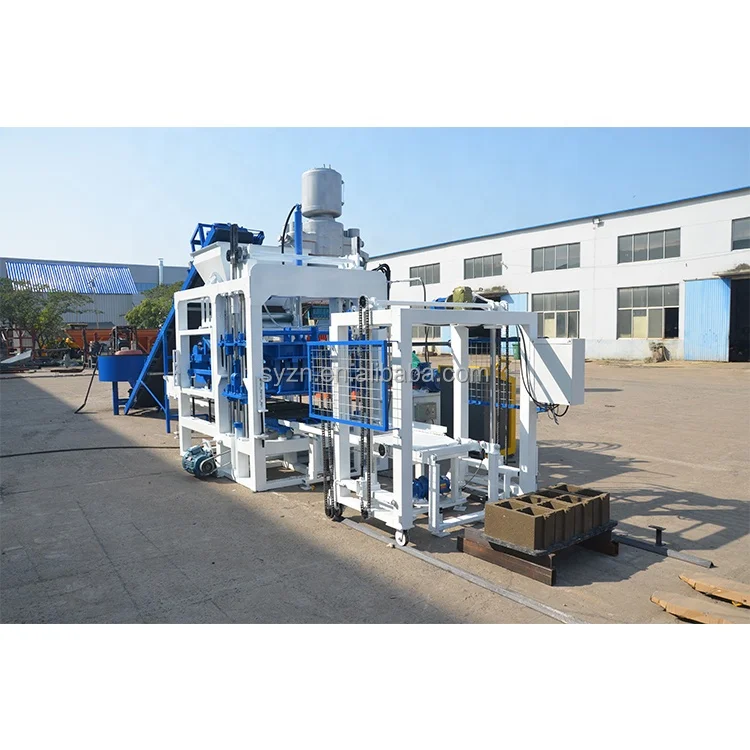
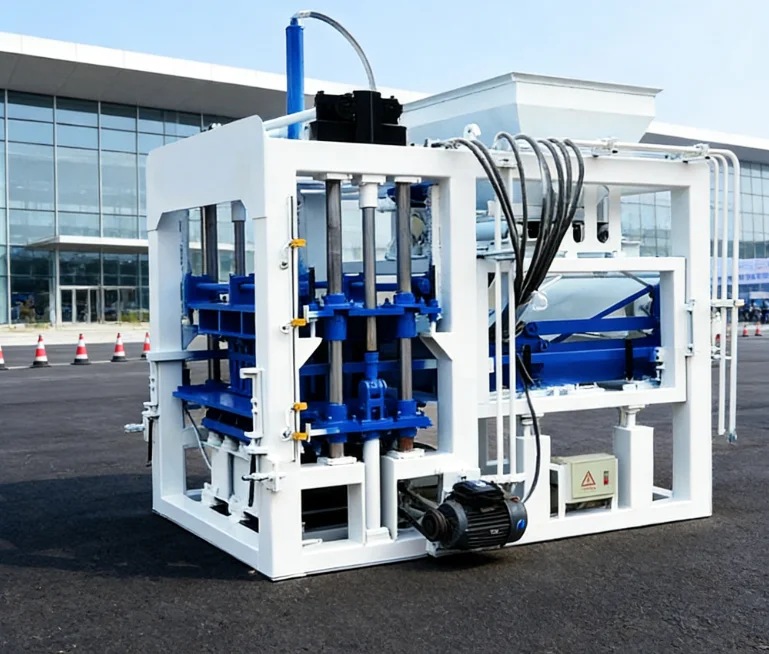 Stationary block machine