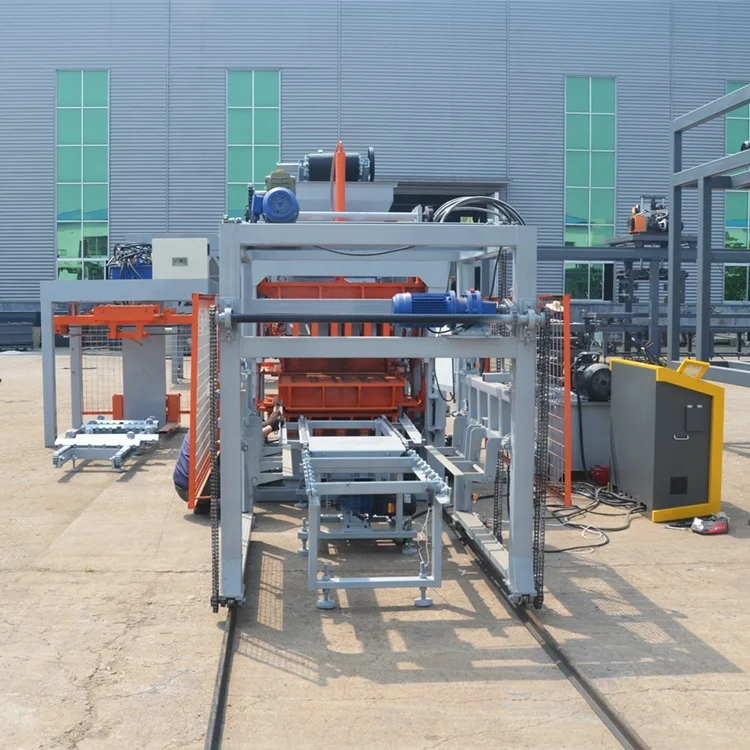
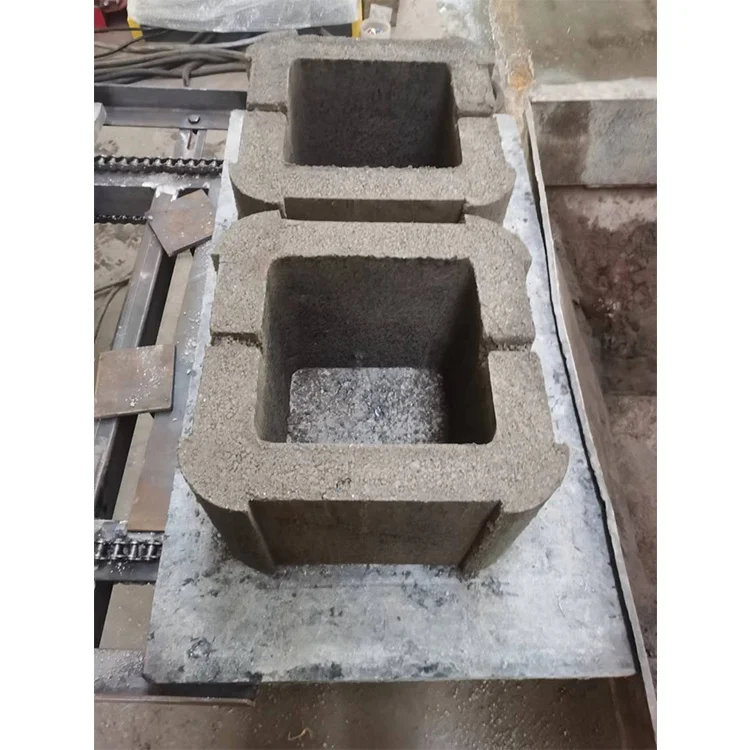
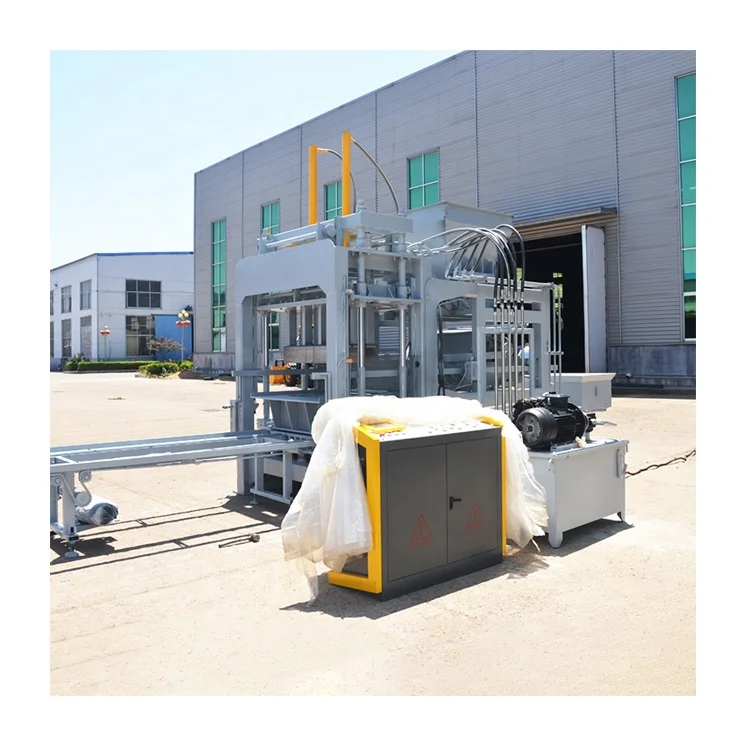
Matched System Configuration — every QT6-15 quotation we issue pairs the press with a specific pallet size, mould list and handling flow, so the buyer sees one integrated line rather than a collection of standalone items.
Technical Specifications
| Parameter |
Value |
| Model |
QT6-15 |
| Product Type |
Hydraulic Hollow Block Making Machine |
| Overall Dimensions (L×W×H) |
8200×1700×2950 mm |
| Pallet Size |
880×850 mm |
| Vibration Form |
Platform Vibration |
| Vibration Frequency |
0-60 Hz |
| Vibration Force |
45 kN |
| Moulding Mode |
Automatic loading with vibration moulding |
| Molding Cycle |
15-20 s |
| Demolding Method |
Hydraulic |
| Hydraulic System |
Independent integrated hydraulic station |
| Control System |
PLC (Programmable Controller) with touch screen HMI |
| Overall Power |
37 kW |
| Total Mass |
7 T |
| Factory Area Required |
1200 m² |
| Block Compressive Strength |
>15 MPa |
| Output Capacity (Hollow block 400×200×200 mm) |
1080-1440 pcs/h, 8640-11520 pcs/8hr (basis: 6 pcs/mould, 15-20 s cycle) |
| Output Capacity (Hollow block 400×150×200 mm) |
1440-1920 pcs/h, 11520-15360 pcs/8hr (basis: 8 pcs/mould, 15-20 s cycle) |
| Output Capacity (Solid brick 240×115×53 mm) |
5760-7680 pcs/h, 46080-61440 pcs/8hr (basis: 32 pcs/mould, 15-20 s cycle) |
| Output Capacity (Rectangular brick 200×100×60 mm) |
2160-2880 pcs/h, 17280-23040 pcs/8hr (basis: 21 pcs/mould, 20-25 s cycle) |
| Output Capacity (Zigzag brick 225×112.5×60 mm) |
2160-2880 pcs/h, 17280-23040 pcs/8hr (basis: 15 pcs/mould, 20-25 s cycle) |
| Voltage & Frequency |
Configurable to buyer’s grid (confirm before production) |
| PLC Display Language |
Configurable (confirm before production) |
| Warranty |
1 year for the whole machine (excluding spare parts) |
Application Suitability
| Application |
Material or Output |
| Standard hollow block production |
Crushed stone, sand and cement mixes for 400×200×200 mm and 400×150×200 mm formats |
| Solid brick production |
Aggregate and cement blends yielding 240×115×53 mm bricks at high cycle frequency |
| Rectangular paving brick |
200×100×60 mm pavers from fine aggregate and pigment mixes |
| Zigzag interlocking paver |
225×112.5×60 mm interlocking shapes from dense aggregate blends |
| Waste ash and slag utilization |
Fly ash, slag and recycled aggregate mixes with reduced cement dosage |
What "Cycles per Hour" Actually Means for Your Daily Output
Any capacity figure is only as honest as the block format it assumes.
When a hollow block making machine manufacturer quotes a single output number without naming the block size, the buyer has no way to verify daily production against a real sales order. I once worked with a buyer who compared two machines solely on a headline capacity number; only after we broke down each format did he realise the cheaper option could not hit his hollow block target without running a second shift. The QT6-15 delivers different throughputs depending on whether you are pressing six large hollow blocks per mould or thirty-two solid bricks, and every figure in the table above names the exact format, pieces per mould and cycle time behind it. [NEED_CITE: how block format and cycle time determine realistic daily output in concrete block production]

Placing the QT6-15 on the Shiyue Machine Range
The Shiyue range spans entry-level semi-automatic presses, mid-tier automatic machines and high-capacity fully automatic lines. The QT6-15 sits in the mid-to-high automatic tier: it carries full PLC control with a touch screen HMI and fault diagnosis, yet it does not demand the footprint or investment of a high-capacity line. For a buyer setting up a first block plant, it represents the point where automation removes manual pallet feeding and stacking from the operator’s daily routine. For an existing plant replacing an older press, it offers a clear step up in output without requiring a complete factory redesign.
How the Full Line Fits Around the Press
A block press does not produce blocks in isolation — raw material feeding, mixing, pallet circulation, stacking and curing rack handling must all keep pace. On the Shiyue range, the QT6-15 is specified alongside pallet size, handling conveyors and stacking equipment so that no station waits on another. The 880×850 mm pallet is not a catalogue default; it is selected against the buyer’s curing area dimensions and the forklift already on site. When the entire line is matched, the press cycle becomes the governing rhythm rather than a bottleneck. [NEED_CITE: importance of matched line configuration in concrete block plant design]
Reading the QT6-15 Specification Sheet for Production Impact
The vibration system on the QT6-15 operates across an adjustable 0-60 Hz range with a vibration force rating of 45 kN. In practice, vibration frequency and force must be matched to the buyer’s specific aggregate grading and cement content — coarser material typically requires lower frequency and higher force to achieve full compaction, while finer mixes respond to higher frequency. The independent integrated hydraulic station is mounted away from the main vibration zone, which reduces seal wear and keeps demolding pressure stable across long shifts. The PLC controller manages the full moulding cycle including automatic material loading, vibration timing and hydraulic demolding, and the touch screen HMI allows operators to store parameters for each block format. The overall power draw of 37 kW means the electrical supply must be confirmed before production so that transformers, cabling and switchgear are sized correctly for the full line, not just the press alone.
The Cost of Skipping Configuration Before the Order Ships
A machine built to a catalogue default mix design will underperform the moment it meets a local aggregate the engineering team never saw. I have seen plants where the vibration parameters had to be completely re-tuned on arrival because the buyer’s aggregate had a higher clay content than assumed, and the resulting blocks failed compressive strength tests for the first two weeks of production. When pallet size is chosen without checking the curing rack spacing, the buyer ends up cutting pallets or rearranging racks by hand. When voltage and PLC language are left unconfirmed, commissioning stalls until the right transformer arrives or an operator who reads the display language can be found. [NEED_CITE: common commissioning delays caused by unconfirmed voltage and control language in exported machinery]
Why Source the QT6-15 Through This Range
Block machinery is the single focus here, which means the press, mould, pallet and handling equipment are engineered as one system rather than assembled from separate suppliers. Every QT6-15 configuration is set against the buyer’s actual mix design and target block format, not a generic catalogue line. Mould design covers the formats the buyer’s market actually sells, and custom drawings are accepted when standard formats do not match local demand. The automation level is selectable — a buyer can start with semi-automatic pallet handling and add automatic stacking later as production volume grows. Installation support includes on-site commissioning with operator training so the team is running independently before the engineer leaves.
Documentation & Verification
- Line layout drawing showing station spacing and pallet flow for the QT6-15 configuration
- Capacity calculation sheet naming block format, pieces per mould and cycle time for each output figure
- Machine specification sheet with confirmed voltage, frequency and PLC display language
- Mould drawing and format list covering every block type included in the quotation
- Pallet specification matched to curing area dimensions and forklift capacity
- Factory test record run on buyer’s block format before dispatch
Installation, Commissioning & Support
- The QT6-15 requires a factory area of approximately 1200 m² including curing and handling zones
- A dedicated electrical circuit rated for the 37 kW overall power draw must be available before arrival
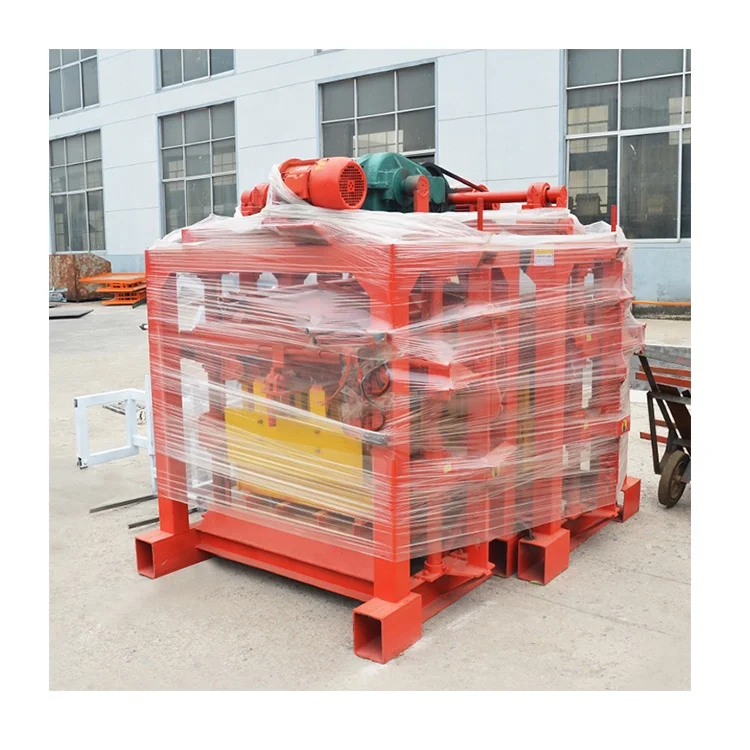
- The machine ships dismantled for container loading with reassembly supervised on site
- PLC parameters for each block format are set during commissioning using the buyer’s actual raw material
- Operator training covers mould change procedure, HMI navigation and daily maintenance checks
- Hydraulic seals and vibration components are listed on the spare parts schedule with reorder codes
Before You Request a Quote
To give you a configuration that matches your real production conditions rather than a catalogue assumption, we need a few details upfront. Tell us which block formats your market sells and your target daily output for each. Share a sample or analysis of your local aggregate — particle size, moisture and clay content all affect vibration tuning. Confirm your site’s voltage, frequency and the language your operators read on a control screen, so the QT6-15 arrives ready to run.
Frequently Asked Questions
Q: How is the QT6-15 capacity calculated, and which block format does each figure assume?
A: Every output figure in the specification table names the exact block dimensions, pieces per mould and cycle time. For example, 8640-11520 hollow blocks per eight-hour shift assumes the 400×200×200 mm format at six pieces per mould with a 15-20 second cycle. No single headline number is used without its format assumption.
Q: Where does the QT6-15 sit on the full Shiyue machine range?
A: It occupies the mid-to-high automatic tier — above semi-automatic entry-level presses and below high-capacity fully automatic lines. Buyers starting a first plant often choose it for the balance of PLC automation and moderate footprint, while replacing plants select it as a direct output upgrade.
Q: What voltage, frequency and PLC language options are available?
A: Both the electrical supply and the PLC display language are confirmed with the buyer before production begins. This ensures the QT6-15 matches the local grid and that operators can read fault messages and cycle parameters on the touch screen without translation.
Q: What factory area does the QT6-15 require?
A: The press itself measures 8200×1700×2950 mm, and the full line including pallet circulation, stacking and curing space typically requires around 1200 m². The exact layout depends on which handling stations are included and the buyer’s curing method.
Q: Can I start semi-automatic and upgrade later?
A: Yes. The QT6-15 platform supports selectable automation levels. A buyer can begin with manual pallet handling and add automatic stacking or cubing stations later as daily output requirements increase, without replacing the press itself.

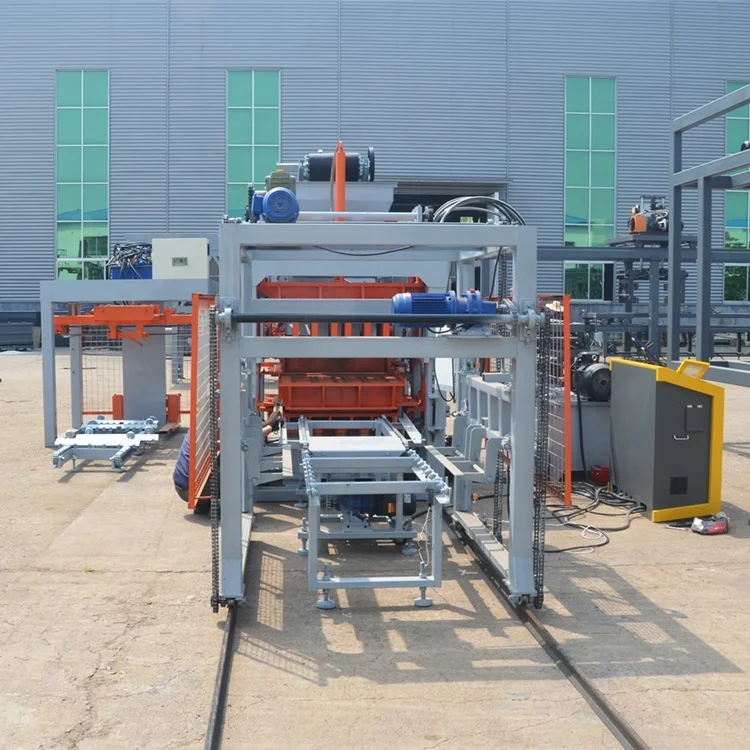
 High quality block machine