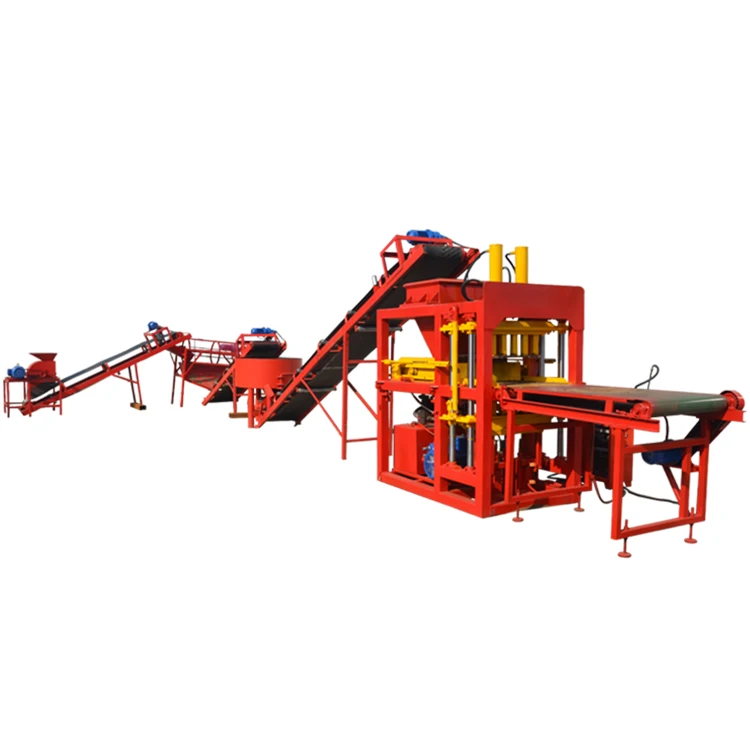
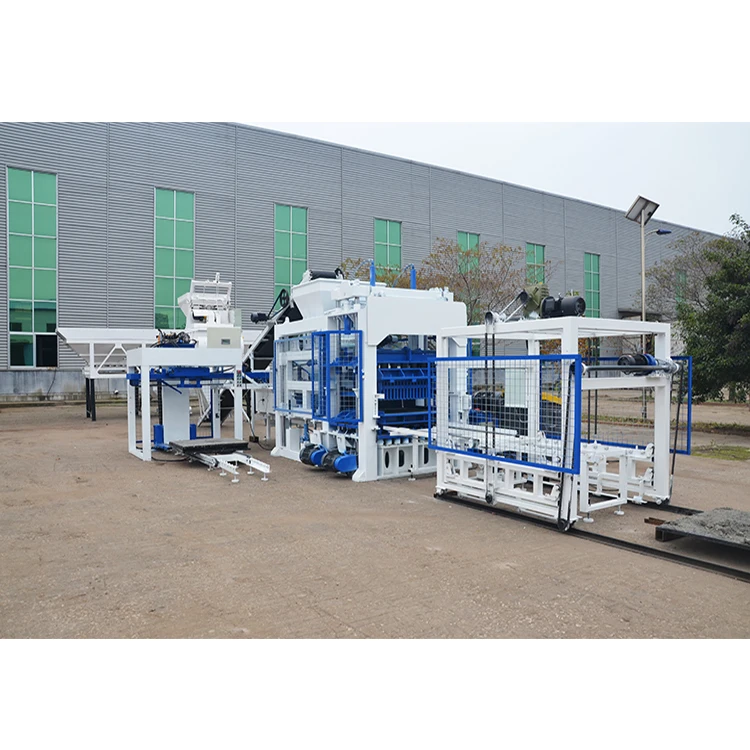
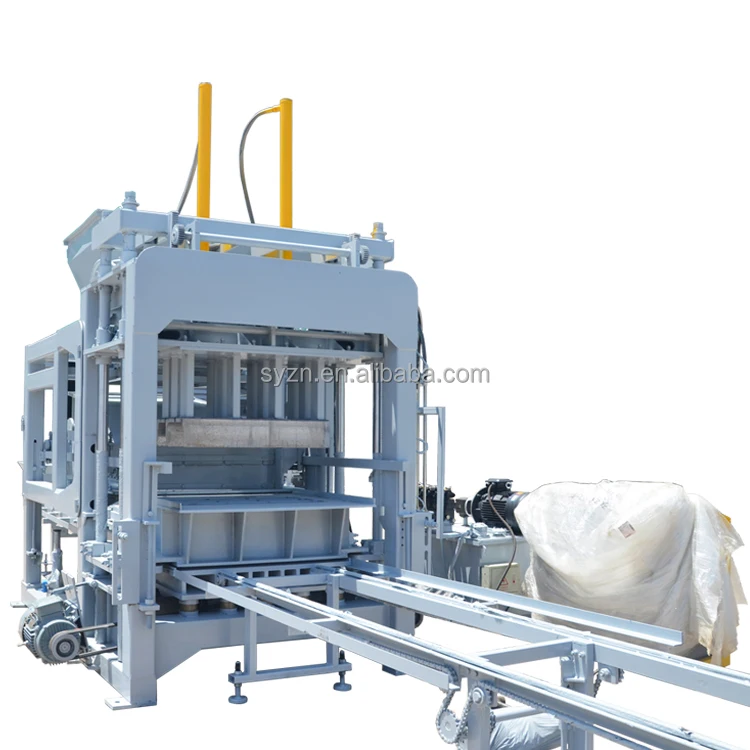
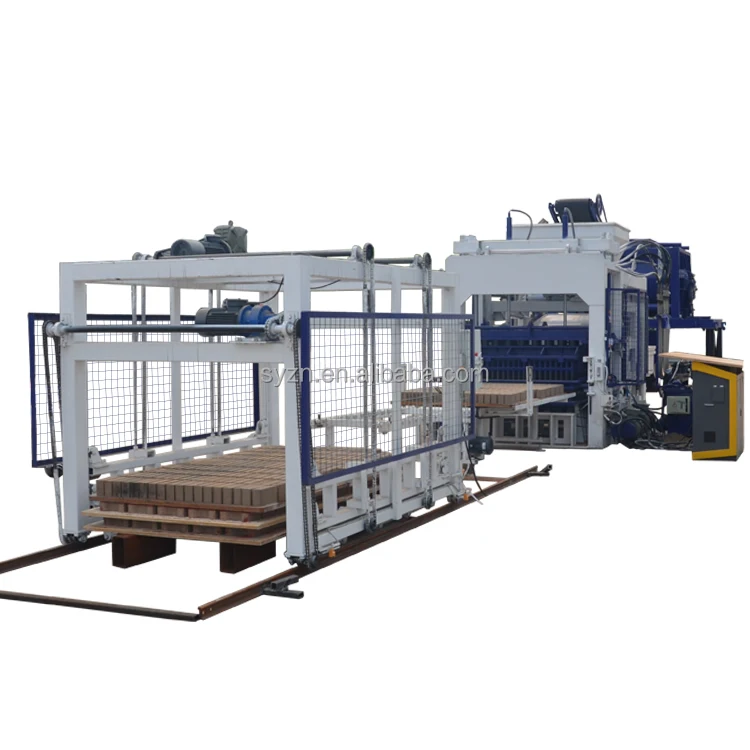
Matched System Design — The QT4-18 block machine, pallet feeder, conveyor, and sweeper are specified together as one line so cycle times align across stations rather than leaving the press waiting on upstream or downstream equipment.
Technical Specifications
| Parameter |
Value |
| Model |
QT4-18 |
| Product Type |
Hydraulic Block Making Machine |
| Overall Dimensions (L×W×H) |
3900×1600×2300 mm |
| Vibration Force |
40–50 kN |
| Total Power |
24 kW |
| Molding Cycle |
15–25 s (basis to be confirmed by block format and material) |
| Pallet Size |
850×550×25 mm |
| Mixer Model |
JQ350 |
| Net Weight |
3 T |
| Control System |
PLC control system (display language options to be confirmed) |
| Hydraulic Station |
Included (pressure rating to be confirmed) |
| Automation Level |
Semi-automatic with pallet feeder |
| Included Equipment |
Block making machine, hydraulic station, PLC control system, pallet feeder, brick conveyor, block sweeper |
| Free Accessories |
Manual hydraulic trolley, spare parts, tools |
| Output — Hollow Block 400×200×200 mm |
1200–1680 pcs/hr, 9600–13440 pcs/8hr |
| Output — Hollow Block 400×150×200 mm |
1800–2400 pcs/hr, 14400–19200 pcs/8hr |
| Output — Solid Brick 240×115×53 mm |
3240 pcs/hr, 16200–19440 pcs/8hr |
| Applied Products |
Paver, solid block, hollow block, curbstone |
| Raw Materials |
Crushed stone, sand, cement, dust, fly ash, and similar aggregates |
| Packing |
Nude packing in 20GP container; approx. 500 pcs pallets loaded |
Application Suitability
| Application |
Material or Output |
| Hollow block production for housing and commercial builds |
Crushed stone, sand, cement, fly ash mixes on 400×200×200 mm and 400×150×200 mm formats |
| Solid brick manufacturing for load-bearing and partition walls |
Standard 240×115×53 mm format from local aggregate and cement |
| Paver and curbstone production for roads and landscaping |
Interlocking and rectangular paver formats, kerbstone profiles via mould change |
| On-site block production for development projects |
Semi-automatic setup suitable for contractors producing at project locations |
| First block plant setup with moderate investment |
Mid-tier output for entrepreneurs entering the concrete product market |
What "Pieces per Hour" Actually Means for the QT4-18 Block Machine
Capacity figures only matter when the block format behind them is named.
I have watched buyers compare two machines on a single headline number, only to discover after delivery that the quoted throughput assumed a thin solid brick while their actual product is a large hollow block with a much longer cycle. With the QT4-18 hydraulic block making machine for sale, the output range shifts considerably across formats — a reality that reshapes daily planning and revenue projections. When the block format, mix design, and local aggregate are not locked down before the order, the machine arrives configured for a production scenario that does not match the buyer’s market [NEED_CITE: block format assumptions in capacity quotations].

Where the QT4-18 Sits in the Full SHIYUE Range
The SHIYUE lineup spans mobile egg-laying machines at the entry tier, semi-automatic presses like the QT4-18 in the mid tier, and fully automatic lines with stacking and cubing at the upper tier. The QT4-18 block machine manufacturer positions this model for buyers who need consistent hydraulic pressure and vibration across multiple block formats but are not yet ready to invest in a fully automatic plant. It covers hollow blocks, solid bricks, pavers, and curbstones through mould changes, giving a single press the format range that a small workshop would otherwise need two or three machines to produce.
Semi-Automatic Footprint versus Full Automatic Investment
A semi-automatic configuration keeps the plant footprint compact and the initial outlay moderate, which matters when a buyer is testing a new market or scaling up from manual production. The QT4-18 includes a pallet feeder, brick conveyor, and block sweeper as standard line equipment, so the press is not left idle while operators manually move pallets. Upgrading to higher automation tiers later is a path SHIYUE supports, meaning the semi-automatic start does not lock a buyer out of future expansion [NEED_CITE: automation upgrade paths for block production lines].
Reading the Specs That Shape Daily Output
Vibration force at 40–50 kN works together with the hydraulic station to compact the mix into dense, consistent blocks; if either parameter is mismatched to the buyer’s aggregate, block strength suffers. The 850×550×25 mm pallet size determines how many blocks cure per rack and must align with the curing area dimensions and the forklift already on site. A PLC control system manages cycle timing, but the display language and voltage frequency need written confirmation before production begins — a step that prevents commissioning delays once the machine arrives. The 24 kW total power rating indicates the electrical supply requirement; buyers should verify that their site transformer and dedicated circuit can sustain this load alongside the JQ350 mixer running simultaneously.
The Cost of Skipping Configuration Details
When pallet size is chosen without checking the curing rack spacing, blocks pile up on the floor because they cannot be racked efficiently, and output drops regardless of how fast the press cycles. When voltage and frequency are assumed rather than confirmed, the machine may arrive with a motor wound for the wrong grid standard, requiring a rewind or replacement before production starts. Mould change time is another variable that erases format flexibility if it stretches across most of a shift — buyers should ask for a timed mould swap demonstration before signing off [NEED_CITE: mould change impact on daily format switching].
Why Source the QT4-18 from SHIYUE
Block machinery is SHIYUE’s single focus, so the QT4-18 is specified as a matched system — press, mould, pallet, feeder, conveyor — rather than assembled from unrelated suppliers. Configuration is set against the buyer’s actual mix design and target block format, not pulled from a catalogue default. Mould design covers the formats the buyer’s market sells, with custom drawings available when standard options do not fit. The automation level is selectable, allowing a buyer to begin with the semi-automatic QT4-18 and move to a higher tier as volume grows. Installation support includes on-site commissioning and operator training so the line runs correctly from the first production day.
Documentation & Verification
- Line layout showing QT4-18 station positions with capacity calculated per block format
- Machine specification sheet listing hydraulic pressure rating and vibration force matched to your mix
- Mould drawing and format list confirming which block profiles the quoted moulds cover
- Pallet specification noting 850×550×25 mm dimensions and material grade
- Voltage, frequency, and PLC display language confirmation in writing before production
- Factory test record on your target block format before container loading
Installation, Commissioning & Support
- Foundation must support the QT4-18’s 3 T net weight plus dynamic vibration loads across the 3900×1600 mm footprint
- Dedicated electrical circuit rated for 24 kW total power plus mixer draw, voltage confirmed before wiring
- Machine ships in a 20GP container with approx. 500 pallets; reassembly of hydraulic station and conveyor on site
- PLC parameters and hydraulic pressure set to your block format and mix during commissioning
- Operator training covers mould change procedure, cycle adjustment, and daily maintenance checkpoints
- Wear parts and mould spares list provided so first replacements are on hand before production ramps up
Planning Your QT4-18 Inquiry
To size the QT4-18 correctly for your project, share the block formats you plan to produce, your target daily output per format, and the local aggregate and cement types available at your site. Confirm your site voltage, frequency, and preferred PLC display language so the electrical and control packages match from day one. If you have an existing curing area or forklift, provide the dimensions and lift capacity so the pallet specification aligns with your current handling setup.
Frequently Asked Questions
Q: Where does the QT4-18 sit in the full SHIYUE range compared to other tiers?
A: The QT4-18 is a mid-tier semi-automatic hydraulic press. Below it are smaller workshop machines and mobile egg-laying units for very low investment. Above it are fully automatic lines with automatic stacking and cubing for high-volume plants. The QT4-18 suits buyers who need multi-format capability with moderate automation and a compact plant footprint.
Q: How is output capacity calculated, and which block format is each figure based on?
A: Each output figure is tied to a specific block format and its cycle time. For example, the 1200–1680 pcs/hr figure applies to 400×200×200 mm hollow blocks, while 3240 pcs/hr applies to 240×115×53 mm solid bricks. Always confirm which format underlies any quoted capacity before comparing machines.
Q: What plant footprint does the QT4-18 require versus a higher-tier automatic line?
A: The QT4-18’s semi-automatic configuration keeps the line compact, with the press, pallet feeder, conveyor, and sweeper fitting a smaller area than a fully automatic line that adds stacking and cubing stations. Exact footprint depends on curing rack layout and pallet circulation space at your site.
Q: Can I start semi-automatic with the QT4-18 and upgrade automation later?
A: Yes. SHIYUE designs the automation level to be selectable, so a buyer can begin with the semi-automatic QT4-18 setup and add automatic stacking or cubing stations as production volume grows, without replacing the core press.
Q: What is included in the standard QT4-18 line versus what must be added separately?
A: The standard line includes the block making machine, hydraulic station, PLC control system, pallet feeder, brick conveyor, and block sweeper. Items such as additional moulds beyond the quoted format, extra pallets beyond the approx. 500 loaded, and raw material batching equipment are specified separately based on your production plan.

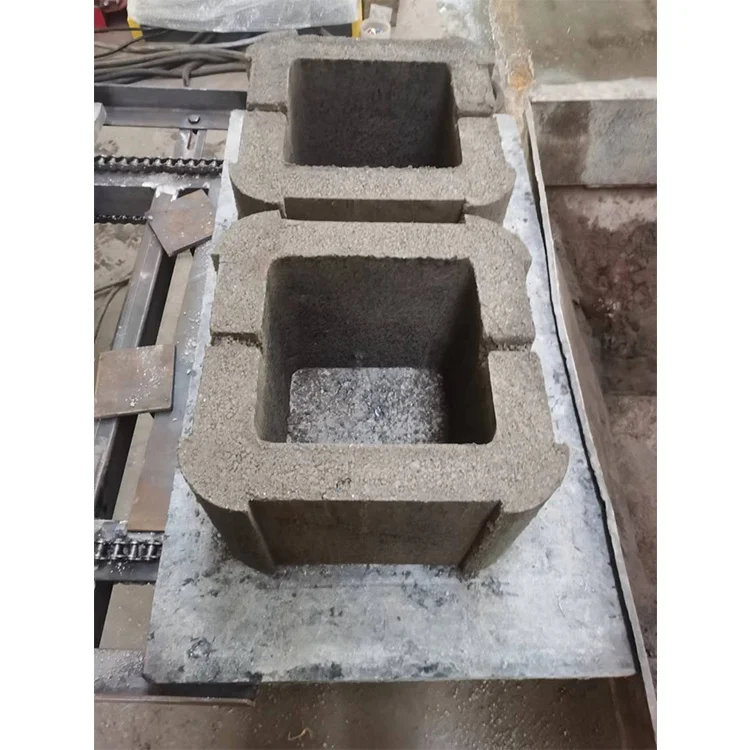
 High quality block machine