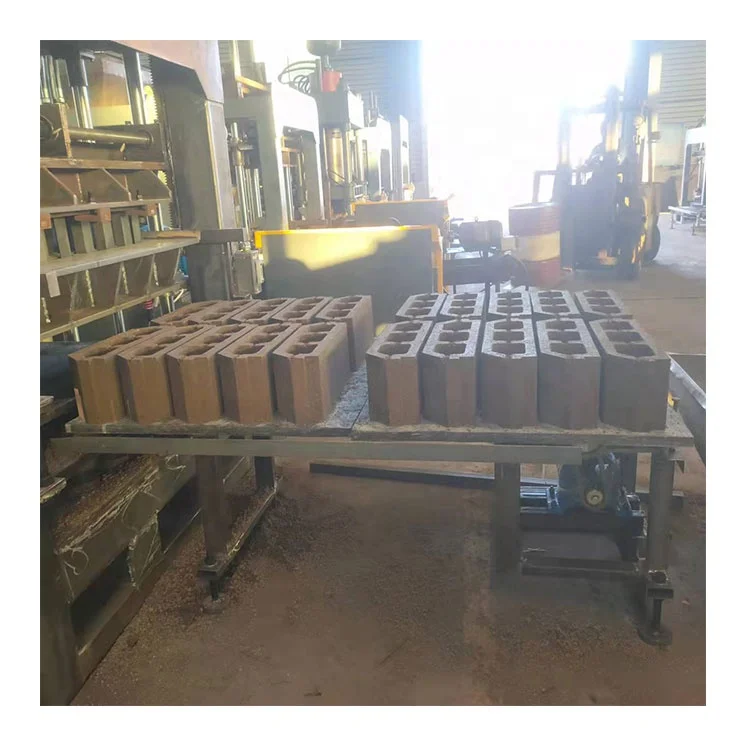
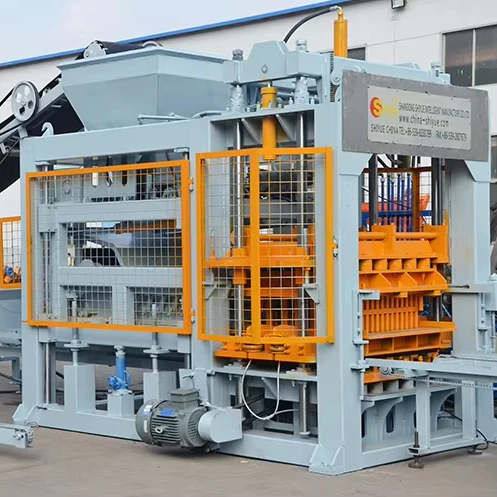
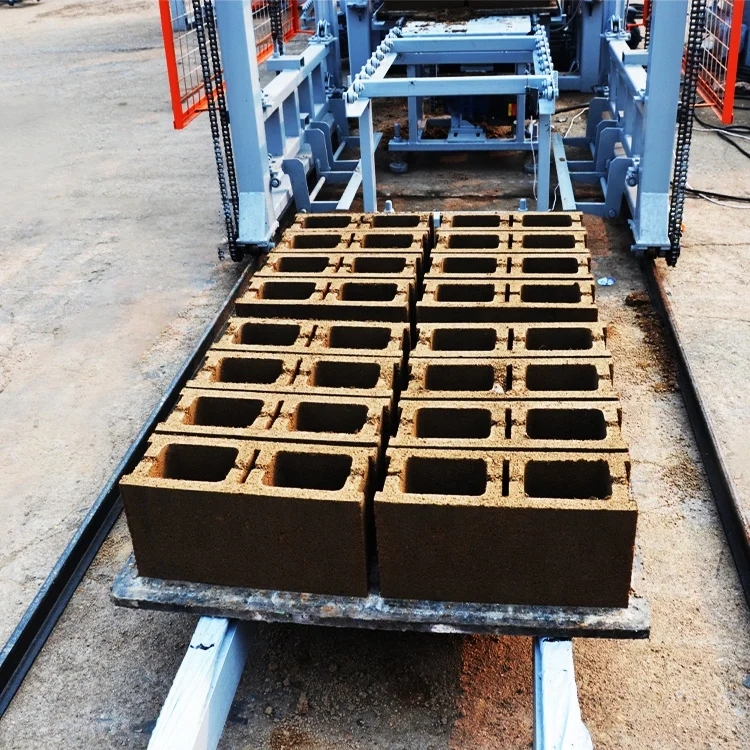
Single-Machine Platform Flexibility — the QT6-15 hydraulic block making machine produces hollow blocks, solid bricks, and pavers from one matched press, mould, and pallet system rather than separate lines.
Technical Specifications
| Parameter |
Value |
| Model |
QT6-15 |
| Product Type |
Hydraulic Block Making Machine |
| Overall Dimension |
8200 × 1700 × 2950 mm |
| Total Mass |
7 T |
| Overall Power |
37 kW |
| Vibration Form |
Platform Vibration |
| Vibration Frequency |
0–60 Hz |
| Vibration Force |
45 KN |
| Moulding Mode |
Load automatically, vibration moulding |
| Demolding Method |
Hydraulic |
| Molding Cycle |
15–20 s |
| Pallet Size |
880 × 850 mm |
| Control System |
PLC (Programmable Controller) |
| Compressive Strength |
More than 15 MPa |
| Factory Area Required |
1200 m² |
| Hollow Block Capacity |
8640–11520 pcs/8hr based on 400×200×200mm hollow block, 6 pcs/mould |
| Hollow Block Capacity |
11520–15360 pcs/8hr based on 400×150×200mm hollow block, 8 pcs/mould |
| Solid Brick Capacity |
46080–61440 pcs/8hr based on 240×115×53mm solid brick, 32 pcs/mould |
| Rectangular Paver Capacity |
17280–23040 pcs/8hr based on 200×100×60mm rectangular brick, 21 pcs/mould |
| Zigzag Paver Capacity |
17280–23040 pcs/8hr based on 225×112.5×60mm zigzag brick, 15 pcs/mould |
Application Suitability
| Application |
Material or Output |
| Hollow block production |
Crushed stone, sand, cement, fly ash blends for structural and partition walls |
| Solid brick production |
Dense aggregate and cement mixes for load-bearing masonry |
| Paving brick production |
High-strength concrete mixes for pedestrian and light-traffic surfaces |
| Multicellular brick production |
Lightweight aggregate and waste ash blends for thermal insulation blocks |
What "8640 Blocks per Shift" Leaves Out When No Format Is Named
Capacity only means something when the block dimension and mould cavity count are stated beside it.
A mid-range QT6-15 hydraulic block machine manufacturer will often quote a single output number in brochures. Buyers then plan their entire curing yard, pallet inventory, and delivery schedule around that figure. Once the machine arrives and runs a different block format — one with fewer cavities per mould or a longer cycle — the daily count drops well below the quoted number. I have watched plants redesign their stacking layout after discovering the real throughput [NEED_CITE: capacity calculation standards for concrete block plants].
The table above ties every capacity figure to a specific block size and mould cavity count so you can plan against the format your market actually buys, not a catalogue headline.

Where the QT6-15 Sits in a Complete Block Line
The QT6-15 hydraulic block machine manufacturer positions this press in the mid-tier automatic range, suited to plants that need multiple block formats without investing in separate machines. Platform vibration at up to 60 Hz works with hydraulic demolding to release blocks cleanly, which matters when you switch between a delicate paving brick and a heavy hollow block on the same shift.
How the Press Connects to Upstream and Downstream Stations
A block press never runs in isolation. Raw material feeding, mixing, pallet circulation, stacking, and curing rack handling must all keep pace with the 15–20 second moulding cycle. If the mixer delivers a batch every 45 seconds but the press cycles every 15, the press sits idle for two-thirds of its available time. Line balance starts with confirming the slowest station and sizing every other component to that rhythm [NEED_CITE: production line balance methodology for concrete products].
Reading the Numbers That Matter for Block Quality
Hydraulic demolding at 45 KN vibration force determines how densely the concrete is compacted before release. A denser block exits the mould with higher green strength, reducing breakage on the pallet transfer. The 880 × 850 mm pallet size must match both the curing rack spacing and the forklift tine width already in your yard — ordering pallets that are too wide for your existing racks means replacing the rack system before the first block is laid down. PLC control manages the moulding sequence, but the display language should be confirmed before the control panel leaves the factory. Compressive strength above 15 MPa is achievable only when the vibration frequency, hydraulic pressure, and cycle time are all matched to your specific aggregate gradation and cement content.
The Cost of Skipping the Format Conversation
Buyers who confirm only the machine model and skip the block-format discussion often face a mould change that takes most of a shift, negating the format flexibility they paid for. Others receive a machine calibrated for river sand when their site only has volcanic aggregate, forcing a costly material substitution or accepting blocks that crumble at the edges. Pallet handling, stacking, and curing equipment left out of the original quotation then arrives as a second purchase order weeks after production should have started [NEED_CITE: common commissioning delays in block plant projects].
Why Buyers Source This Machine Here
Block machinery is our single focus, so the QT6-15 press, mould, pallet, and handling equipment are specified as one matched system. Configuration is set against your actual mix design and local aggregate rather than a catalogue default. Mould design covers every format your market sells, including custom drawings for non-standard bricks. Automation level is selectable, so a plant can start with manual pallet handling and add automatic stacking later without replacing the press. Installation support includes on-site commissioning and operator training so the first production run happens under supervision, not guesswork.
Documentation & Verification
- Line layout with capacity calculation stated per block format for the QT6-15
- Machine specification sheet listing vibration force, pallet size, and cycle time
- Mould drawing and format list for every block type in your quotation
- Hydraulic and electrical schematic showing valve and PLC node locations
- Factory test record on your specified aggregate before dispatch
- Voltage and control language confirmation document signed before shipment
Installation, Commissioning & Support
- Foundation must support the 7 T machine mass across the 8200 × 1700 mm footprint
- 37 kW total power requires a dedicated circuit matched to confirmed voltage and frequency
- Machine ships in dismantled sections for container loading and reassembles on site
- PLC parameters calibrated to your mould set during on-site commissioning
- Operator training covers mould change procedure, cycle time adjustment, and fault diagnosis
- Wear parts and mould spares list provided with first-shipment documentation
Before You Request a Quote
Send the exact block dimensions your market sells, the daily volume you need per format, and the raw materials available locally. Include your site voltage, frequency, and preferred PLC display language. If you already have curing racks or forklifts, share their specifications so pallet size can be matched before the QT6-15 hydraulic block machine manufacturer finalizes the proposal.
Frequently Asked Questions
Q: How is capacity calculated for each block format on the QT6-15?
A: Every capacity figure ties to a specific block dimension, mould cavity count, and the 15–20 second moulding cycle. We calculate an 8-hour shift output per format and list it in the specification sheet so buyers plan against real numbers, not a single unqualified headline.
Q: What pallet size does the QT6-15 use and how does it match my curing setup?
A: The standard pallet is 880 × 850 mm. Before shipment we confirm your curing rack slot width and forklift tine spacing so the pallet fits your existing handling infrastructure without requiring rack or equipment replacement on arrival.
Q: Can I upgrade from semi-automatic to fully automatic stacking later?
A: The QT6-15 platform supports selectable automation. You can begin with manual pallet handling and add automatic stacking and cubing modules afterward without replacing the main press, keeping the initial investment aligned with your current volume.
Q: Which block formats can I produce and what does a mould change involve?
A: The press handles hollow blocks, solid bricks, rectangular pavers, and zigzag pavers. Mould change time depends on the quick-clamp system fitted; we confirm the procedure and expected changeover duration per mould set during the configuration stage.
Q: What voltage and PLC display language options are available?
A: Voltage and frequency are configured to your site supply before production. The PLC display language is confirmed in writing so operators can read fault codes and cycle parameters in their working language from the first production day.

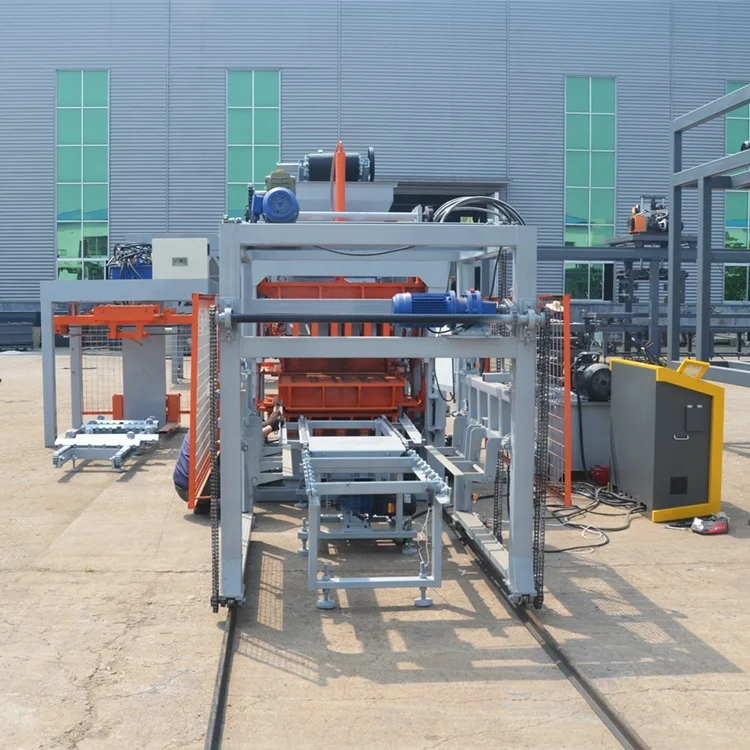 High quality block machine