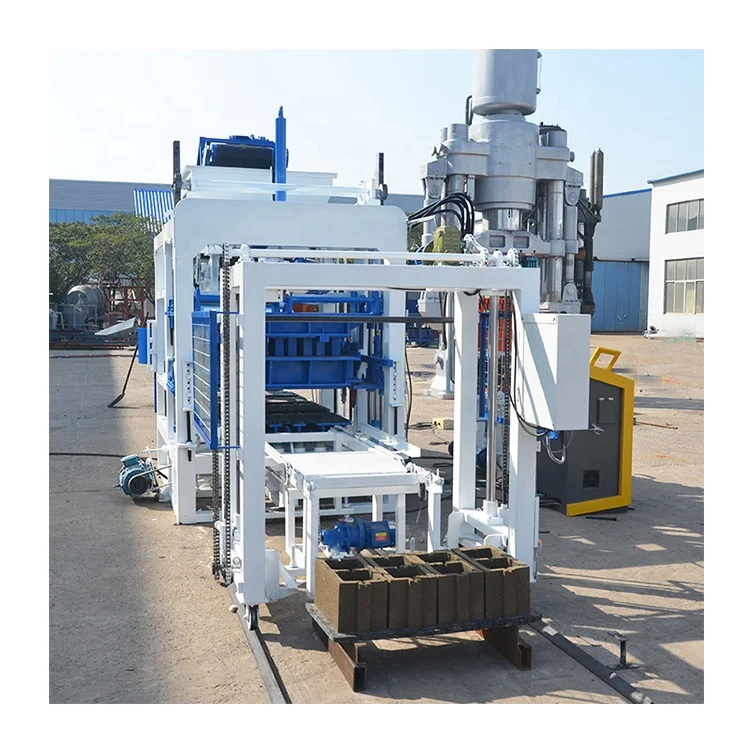
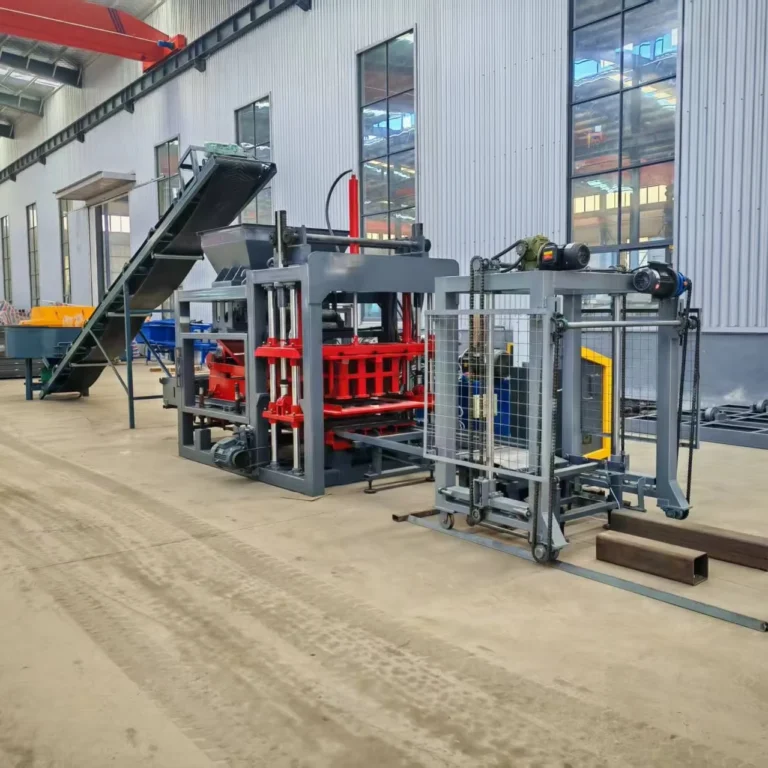
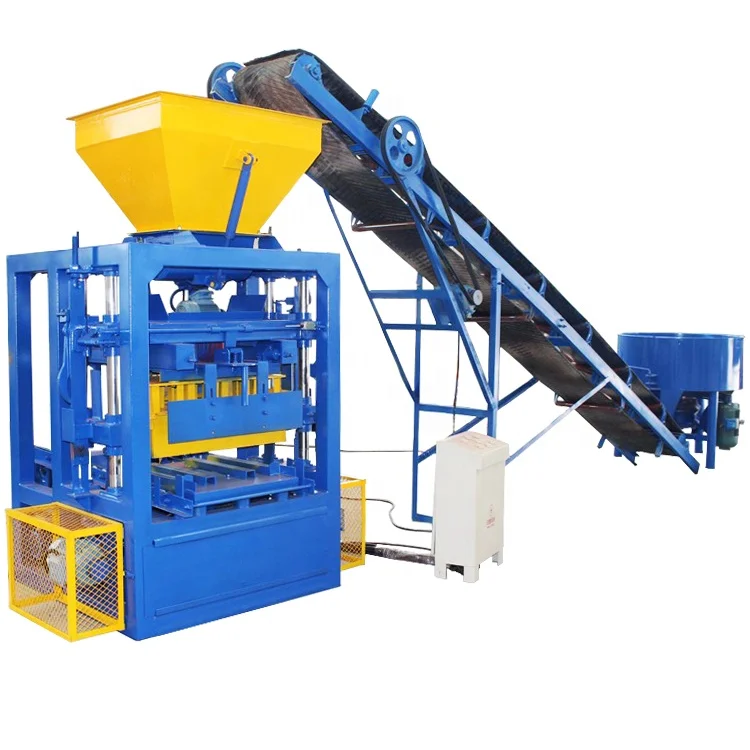
Matched system specification — The QT6-15 hydraulic hollow block machine is configured as a single coordinated unit where the press, pallet dimensions, mould cavity count, and hydraulic station are selected together rather than assembled from independent suppliers.
Technical Specifications
| Parameter |
Value |
| Model |
QT6-15 |
| Product Type |
Hydraulic Hollow Block Making Machine |
| Overall Dimension |
8200 × 1700 × 2950 mm |
| Total Mass |
7 T |
| Pallet Size |
880 × 850 mm |
| Vibration Frequency |
0–60 Hz (adjustable) |
| Vibration Form |
Platform Vibration |
| Vibration Force |
45 KN |
| Moulding Mode |
Automatic loading, vibration moulding |
| Molding Cycle |
15–20 s (hollow blocks); 20–25 s (pavers) |
| Demolding Method |
Hydraulic |
| Overall Power |
37 kW |
| Control System |
PLC controlled with touch screen and fault diagnosis |
| Hydraulic System |
Independent integrated hydraulic station |
| Block Compressive Strength |
> 15 MPa |
| Factory Area |
1200 m² |
| Output Capacity (Hollow block 400×200×200 mm) |
1080–1440 pcs/hour, 8640–11520 pcs/8hr |
| Output Capacity (Hollow block 400×150×200 mm) |
1440–1920 pcs/hour, 11520–15360 pcs/8hr |
| Output Capacity (Solid brick 240×115×53 mm) |
5760–7680 pcs/hour, 46080–61440 pcs/8hr |
| Output Capacity (Rectangular paver 200×100×60 mm) |
2160–2880 pcs/hour, 17280–23040 pcs/8hr (basis: 20–25 s cycle) |
| Output Capacity (Zigzag brick 225×112.5×60 mm) |
2160–2880 pcs/hour, 17280–23040 pcs/8hr (basis: 20–25 s cycle) |
| Automation Level |
High degree of automation, intelligent electronic control |
| Raw Material Adaptability |
Waste ash, slag, various aggregates with reduced cement dosage |
| Standards |
CE (where applicable) |
Application Suitability
| Application |
Material or Output |
| Hollow block production for residential and commercial walls |
Concrete mixes incorporating crushed stone, river sand, or volcanic ash aggregate |
| Solid brick manufacturing for load-bearing and partition walls |
Cement, fly ash, and slag blends with standard aggregate grading |
| Paving brick and interlocking brick for roads and walkways |
High-density mixes using fine aggregate and pigmented face layers |
| On-site block production for housing and development projects |
Locally sourced aggregate with waste ash or slag substitution |
| Building material distribution requiring multiple block formats |
Single platform running hollow, solid, and paver formats through mould change |
What "Pieces per Hour" Actually Means on the QT6-15
Any capacity figure that omits the block format and cycle time behind it is a number without context.
I once stood in a block yard in Central America watching a QT6-15 hollow block machine manufacturer line produce barely half its quoted output. The brochure capacity assumed standard river sand, but the customer’s local volcanic ash aggregate absorbed vibration energy differently. The hydraulic pressure and vibration frequency were never recalibrated for that material, so each cycle left blocks with soft edges that crumbled on the pallet. [NEED_CITE: effect of aggregate density on vibration compaction in block moulding] The machine itself was not at fault. The specification and the material simply had never met before the container arrived.
Placing the QT6-15 Within the Full Block Machine Range
The QT6-15 occupies the mid-to-high output tier in our automatic block machine lineup. Below it sit semi-automatic and mobile egg-laying machines for smaller plants or on-site production without a fixed curing yard. Above it, high-capacity automatic lines push output further with larger pallet sizes and faster cycle management. A buyer evaluating where this QT6-15 hollow block machine manufacturer model fits should first decide whether the target daily volume justifies a fully automatic press with independent hydraulic station, or whether a semi-automatic unit with manual pallet handling is sufficient for the first production years.
Automation That Reduces Operator Variables
The PLC control system with touch screen interface manages the moulding cycle, vibration duration, and hydraulic demolding sequence through safe logic interlock circuits. This removes timing decisions from the operator and keeps cycle-to-cycle consistency across shifts. [NEED_CITE: PLC control standards for hydraulic block presses] The built-in fault diagnosis system flags hydraulic pressure drops, sensor misalignment, or pallet feed jams on screen, so the maintenance team addresses issues before they produce a batch of rejects. For buyers planning to start with basic operation, the automation level is selectable, allowing a semi-automatic setup now with an upgrade path to full stacking and cubing later.
How Vibration Force and Hydraulic Pressure Shape Block Density
The platform vibration system delivers adjustable frequency from 0 to 60 Hz combined with 45 KN of vibration force. In block moulding, vibration frequency determines how well the concrete mix settles into the mould cavity corners, while hydraulic pressure sets the final compaction density. If the frequency is too high for a coarse aggregate mix, the vibration segregates the fines to the surface and leaves voids in the block core. If the hydraulic pressure is too low for the mould cavity volume, the block exits with insufficient compressive strength. The QT6-15 hollow block machine manufacturer specification pairs these two forces on a single platform vibration table, so both can be tuned together against the buyer’s actual mix design. The independent integrated hydraulic station sits isolated from the main vibration table, preventing vibration transmission from degrading hydraulic valve response over time. The 15–20 second moulding cycle for standard 400×200×200 mm hollow blocks and the 20–25 second cycle for pavers reflect the additional compaction time denser formats require. A pallet size of 880×850 mm defines the mould footprint and must align with the curing rack spacing and forklift tine width already in place at the buyer’s yard. [NEED_CITE: pallet dimension compatibility with curing rack systems]

What Happens When Pallet and Curing Yard Do Not Match
A buyer who selects a pallet size without measuring the existing curing rack bays will find that loaded pallets cannot be slotted into the racks, forcing the entire output to be stacked on the ground by hand. The pallets may also be incompatible with the forklift carriage width, requiring a second forklift purchase that was never budgeted. [NEED_CITE: pallet handling incompatibility in block plant operations] On a machine of this output tier, a pallet mismatch compounds quickly because the press produces enough volume each shift to overwhelm any manual workaround within hours.
Why Buyers Choose This QT6-15 Hollow Block Machine Manufacturer
Machine, mould, pallet, and handling equipment are specified as one matched system, not pulled from separate catalogues. The configuration is set against the buyer’s actual mix design and local aggregate rather than a default recipe. Mould design covers the block formats that sell in the buyer’s market, with custom drawings available when standard cavity layouts do not fit. The automation level is selectable so a buyer can commission the line semi-automatic and add stacking automation as volume grows. Installation support includes on-site commissioning and operator training, ensuring the vibration frequency and hydraulic pressure are tuned to local material before the first production run.
Documentation & Verification
- Line layout with capacity calculation stating block format assumed for each output tier
- Machine specification sheet confirming pallet size and vibration force matched to your mix
- Mould drawing and format list showing which block sizes the quoted capacity applies to
- Voltage, frequency, and PLC display language confirmation document before production
- Hydraulic and electrical schematic for your maintenance team reference
- Factory test record on your specified block format before dispatch
Installation, Commissioning & Support
- Foundation pad sized to the 8200 × 1700 mm footprint with vibration isolation provisions
- Dedicated 37 kW power circuit with voltage and frequency confirmed before wiring
- Hydraulic station filled and bled on-site after transport vibration settles internal seals
- PLC touch screen language and fault diagnosis parameters set during commissioning week
- Vibration frequency and hydraulic pressure tuned to your local aggregate during test runs
- Mould change procedure trained to your operators using your actual block format set
Before You Request a Quote
To size the QT6-15 correctly for your plant, provide the block formats your market actually purchases along with target daily output per format. Confirm the raw materials available locally, including aggregate type and whether fly ash or slag substitution is planned. Specify the voltage and frequency at your site, the PLC display language your operators need, and the curing area dimensions so the pallet size can be validated against your existing racks and forklift.
Frequently Asked Questions
Q: How is the QT6-15 output capacity calculated and which block format does each figure assume?
A: Each capacity figure in the specification table states the block format and moulding cycle behind it. The hollow block 400×200×200 mm figure is based on a 15–20 second cycle, while paver figures assume a 20–25 second cycle. Real daily output depends on your aggregate type, pallet handling speed, and curing logistics. We provide a capacity calculation document stating the format assumed before order confirmation.
Q: What pallet size does the QT6-15 require and how does it relate to my curing setup?
A: The QT6-15 uses an 880×850 mm pallet. Before order, we confirm this dimension against your curing rack bay width, rack spacing, and forklift tine carriage. If your existing infrastructure does not match, we adjust the pallet specification or advise on rack modification so loaded pallets move from press to curing without manual rehandling.
Q: Can I start the QT6-15 with semi-automatic operation and add automation later?
A: Yes. The automation level is selectable. A buyer can commission the press with manual pallet handling and basic PLC cycle control, then add automatic pallet feeding, stacking, and cubing modules as production volume grows. The PLC platform and hydraulic station are designed to accept these additions without replacing the main press.
Q: What voltage and PLC language options are available for my market?
A: Voltage and frequency are confirmed during the inquiry stage to match your site supply. The PLC touch screen display language is set to your operators’ preference before production begins. This avoids commissioning delays caused by language barriers or electrical incompatibility after the machine arrives at your plant.
Q: How does the QT6-15 fit into the full range from small workshop to high-capacity lines?
A: The QT6-15 sits in the mid-to-high output tier of our automatic range. Below it, semi-automatic and mobile machines serve smaller plants or on-site production. Above it, larger-pallet high-capacity lines serve plants targeting maximum daily volume. The choice depends on your target output per block format and available factory area, which the QT6-15 requires approximately 1200 m² to accommodate.

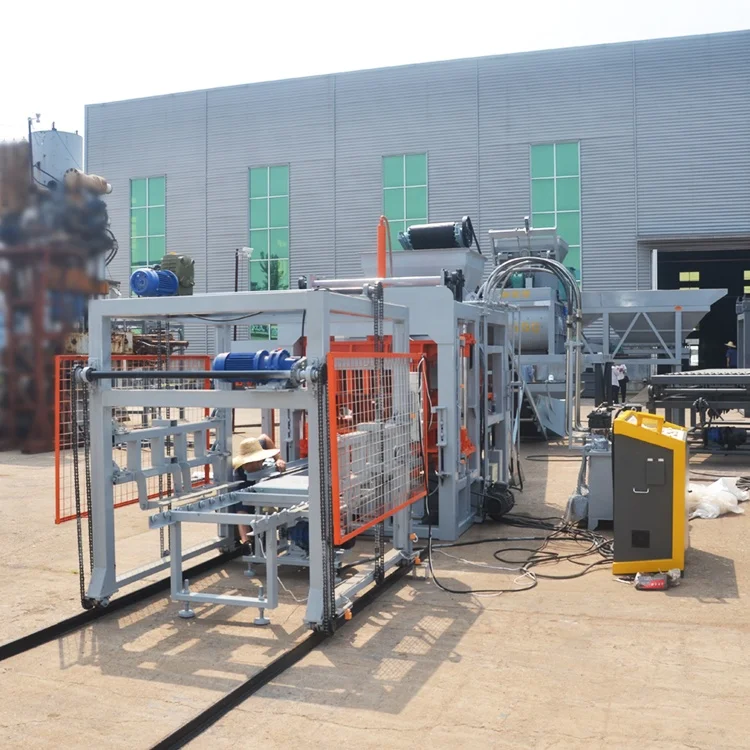
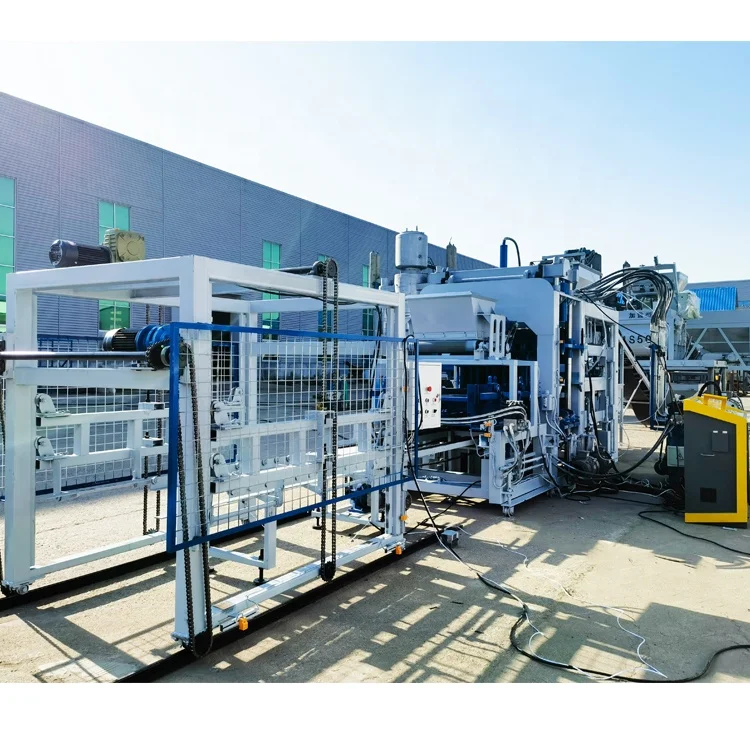 High quality block machine