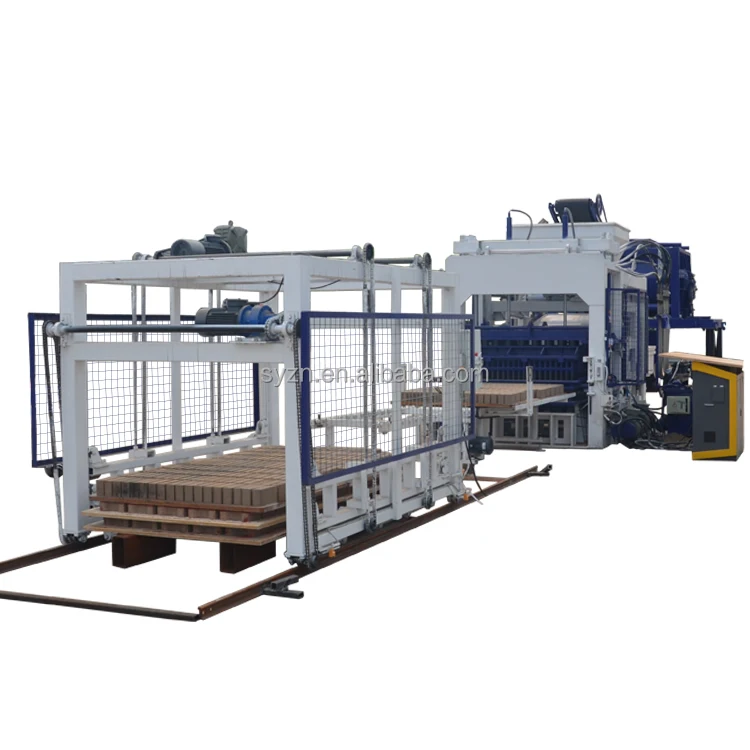
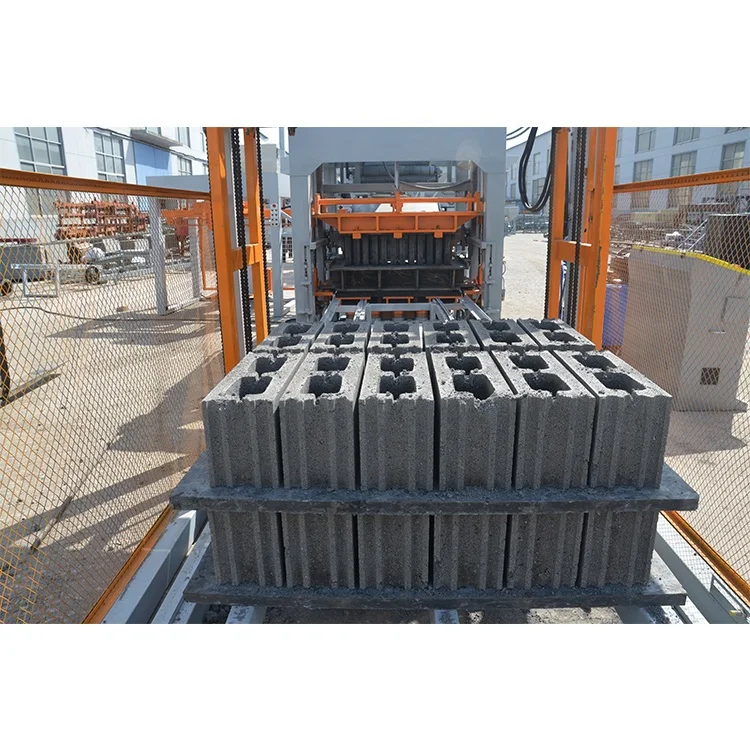
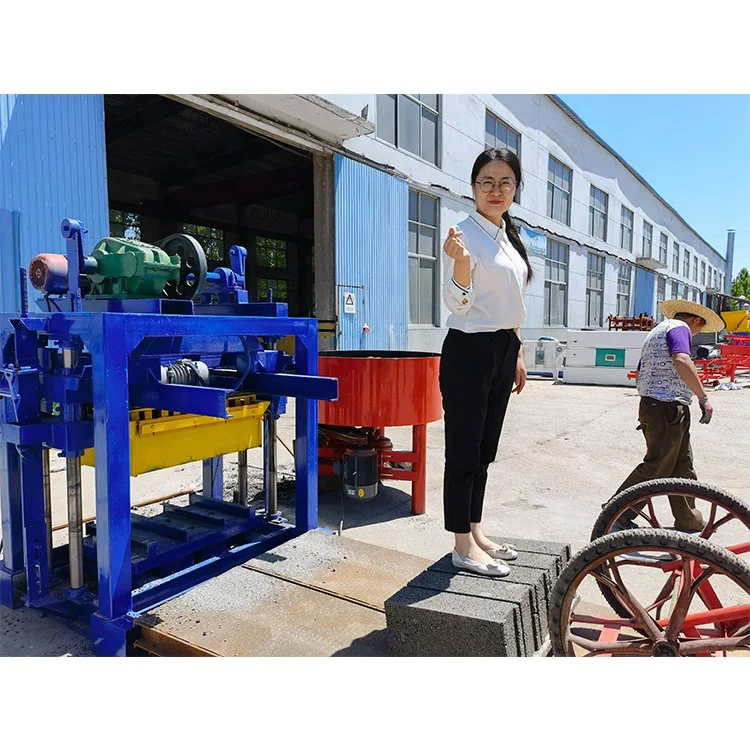
Mid-Tier Flexibility — the QT4-18 bridges small manual presses and fully automatic lines, giving first-time block plant buyers a proven entry point that scales with demand.
Technical Specifications
| Parameter |
Value |
| Model |
QT4-18 |
| Product Type |
Semi-Automatic Concrete Block Making Machine |
| Overall Dimensions (L×W×H) |
3900×1600×2300 mm |
| Total Weight |
3 T |
| Rated Power |
24 kW |
| Vibration Force |
40–50 kN |
| Molding Cycle |
15–25 s |
| Pallet Size |
850×550×25 mm |
| Mixer Model |
JQ350 |
| Automation Level |
Semi-automatic |
| Hydraulic System |
Hydraulic station equipped |
| Applied Products |
Paver, solid brick, hollow block, curbstone |
| Output — 400×200×200 mm hollow block |
1200–1680 pcs/hr (4 pcs per mould, basis: production capacity table) |
| Output — 400×150×200 mm hollow block |
1800–2400 pcs/hr (basis: production capacity table) |
| Output — 240×115×53 mm solid brick |
3240 pcs/hr (basis: production capacity table) |
| Cycle Time per Format |
15–20 s (basis: production capacity table) |
| Voltage & Frequency |
Configurable to destination market (basis to be confirmed) |
| Control System |
PLC or relay logic (basis to be confirmed) |
| Mould Change Time |
Varies by format (basis to be confirmed) |
| Stacking Method |
Automatic stacker included |
| Raw Materials |
Crushed stones, sand, cement, dust, fly ash |
Application Suitability
| Application |
Material or Output |
| Hollow block production for masonry walls |
Crushed stone, sand, cement, fly ash — formats including 400×200×200 mm and 400×150×200 mm |
| Solid brick production for load-bearing and partition work |
Cement, sand, stone dust — standard 240×115×53 mm and regional sizes |
| Paving block production for walkways and yards |
High-density concrete mixes with fine aggregate and cement |
| Curbstone production for road edging |
Coarse aggregate, cement — heavy-section moulds on 850×550 mm pallets |
| On-site block making for housing projects |
Locally sourced sand and crushed stone, semi-automatic operation with manual pallet transfer |
What "1200 Pieces per Hour" Actually Means for Your Plant
Capacity numbers are meaningless unless tied to a specific block format, mix design, and cycle time.
Most quotations list a headline figure that assumes a large hollow block on a short cycle, then buyers discover their actual daily output of pavers or solid bricks falls well below expectation. With the QT4-18 concrete block making machine manufacturer specifications, every output claim here references a stated block size — 400×200×200 mm hollow at 4 pcs per mould, 240×115×53 mm solid brick, and so on. When a buyer switches to a smaller paver format, cycle time and mould cavity count change, and so does the real hourly number. Getting this alignment right before the order is placed prevents the most common dispute we see on semi-automatic lines [NEED_CITE: typical capacity dispute patterns in block machinery exports].

Where the QT4-18 Sits in the Full Block Machine Range
The Shiyue range spans mobile egg-laying machines at the entry level, semi-automatic presses like the QT4-18 in the mid tier, and fully automatic lines with batching, automatic pallet circulation, and cubing at the top end. The QT4-18 concrete block making machine manufacturer positions this model for buyers who have outgrown manual machines but are not yet ready to invest in a complete automatic plant. It covers a footprint that fits a modest workshop, yet delivers hydraulic pressing and vibration force that approach automatic-line density.
Semi-Automatic Operation With a Clear Upgrade Path
Semi-automatic means the press cycle, vibration, and hydraulic compression run under control, while pallet feeding and product transfer still involve operator input. The included automatic stacker reduces manual handling at the end of the line. This configuration keeps the initial investment moderate, and the machine’s mechanical and hydraulic architecture leaves room for future additions — automatic pallet feeders, batching stations, and curing rack systems can be integrated when production volume justifies the step [NEED_CITE: semi-automatic to automatic upgrade paths in block production].
How Vibration Force and Hydraulic Pressure Work Together on This Press
The QT4-18 delivers 40–50 kN of exciting power through the bed mould, while the hydraulic station applies downward compression via the upper mould. This dual action is what determines block density and, ultimately, compressive strength. If vibration force is high but hydraulic pressure is low, the concrete settles but lacks compaction at the surface. If hydraulic pressure dominates with insufficient vibration, the mix does not flow evenly into mould corners. The 24 kW rated power supports both systems simultaneously through a 15–25 second molding cycle, which is adequate for most standard concrete mixes using crushed stone and sand. Pallet size at 850×550×25 mm also defines the curing area needed per shift — buyers must verify their curing yard and forklift can handle this pallet format before confirming the order.
The Hidden Cost of Mismatched Pallet and Curing Layout
When pallet dimensions are chosen without considering the curing racks, forklift capacity, and yard space the buyer already has, the result is pallets stacked on the ground by hand, curing times that stretch beyond plan, and block breakage during movement. A pallet that is too large for an existing forklift means a new forklift purchase. A pallet material that warps in local humidity means uneven block bases. These issues never show up on a quotation but surface within the first week of production [NEED_CITE: pallet handling and curing mismatches in semi-automatic block plants].
Why Buyers Source This Model Through Shiyue
Block machinery is the single focus here, so the QT4-18 is specified as a matched system — press, mould, pallet, and stacker are sized together rather than assembled from unrelated suppliers. Configuration is set against the buyer’s actual mix design and local aggregate, not a catalogue default. Mould design covers the formats the buyer’s market actually sells, with custom drawings available. The semi-automatic tier lets a buyer start conservatively and add automation later. Installation support includes on-site commissioning and operator training so the first production run meets strength targets.
Documentation & Verification
- Line layout showing the block format assumed for each stated output figure
- Machine specification sheet confirming hydraulic pressure, vibration force, and pallet size
- Mould drawing and format list for every block size included in the quotation
- Pallet material and dimension specification matched to buyer’s curing setup
- Voltage, frequency, and control language confirmation record before production
- Factory test record on buyer’s target block format before dispatch
Installation, Commissioning & Support
- Foundation pad sized to 3900×1600 mm footprint with vibration isolation provisions
- Dedicated power circuit for the 24 kW rated load, voltage and frequency confirmed before wiring
- Hydraulic station pre-filled and tested at factory; oil top-up and bleed on site
- Mould alignment and cycle timing set against buyer’s specific block format during commissioning
- Operator training covering mould change procedure, daily greasing points, and pallet inspection
- Wear parts list with hydraulic seals and vibration springs identified for first reorder
What to Prepare Before Requesting a Quotation
To get a configuration that actually matches your plant, share your target block formats and the daily volume you need for each, the raw materials available locally including aggregate type and gradation, and your workshop dimensions. Voltage, frequency, and the language you need on the PLC display should also be stated early. If you are replacing an existing machine, let us know your current pallet size and curing layout so the new line integrates without disruption.
Frequently Asked Questions
Q: How is output capacity verified and what block format does each figure assume?
A: Every capacity figure listed for the QT4-18 is tied to a specific block format — for example, 1200–1680 pcs/hr is based on a 400×200×200 mm hollow block at 4 pcs per mould. When you switch to a different size, mould cavity count and cycle time change, so the hourly output shifts. We provide a written capacity calculation for each format you intend to produce.
Q: What voltage and frequency configurations are available for different target markets?
A: The QT4-18 can be configured for the voltage and frequency standards of the destination market. This must be confirmed before production begins, as motor winding, hydraulic pump motor, and PLC power supply all depend on the correct electrical specification. Share your local standard early to avoid commissioning delays.
Q: How does the QT4-18 compare to smaller manual machines and larger fully automatic lines?
A: The QT4-18 sits in the mid-tier semi-automatic position. It delivers hydraulic pressing and controlled vibration that manual machines cannot match, while keeping investment below a full automatic line. Buyers who outgrow this model can add automatic pallet feeding and batching later without replacing the press itself.
Q: What automation upgrade path is available from the semi-automatic QT4-18?
A: The mechanical and hydraulic architecture supports future additions such as automatic pallet feeders, multi-bin batching stations, and curing rack handling systems. The existing automatic stacker already reduces end-of-line labour. Upgrades can be phased in as production volume grows, spreading capital expenditure over time.
Q: What is included in the standard delivery scope?
A: The standard scope covers the QT4-18 press, JQ350 mixer, hydraulic station, automatic stacker, one set of moulds as specified, and pallets sized at 850×550×25 mm. Additional moulds, spare pallets, and wear parts packages are quoted separately. A packing list and factory test record are provided before shipment.

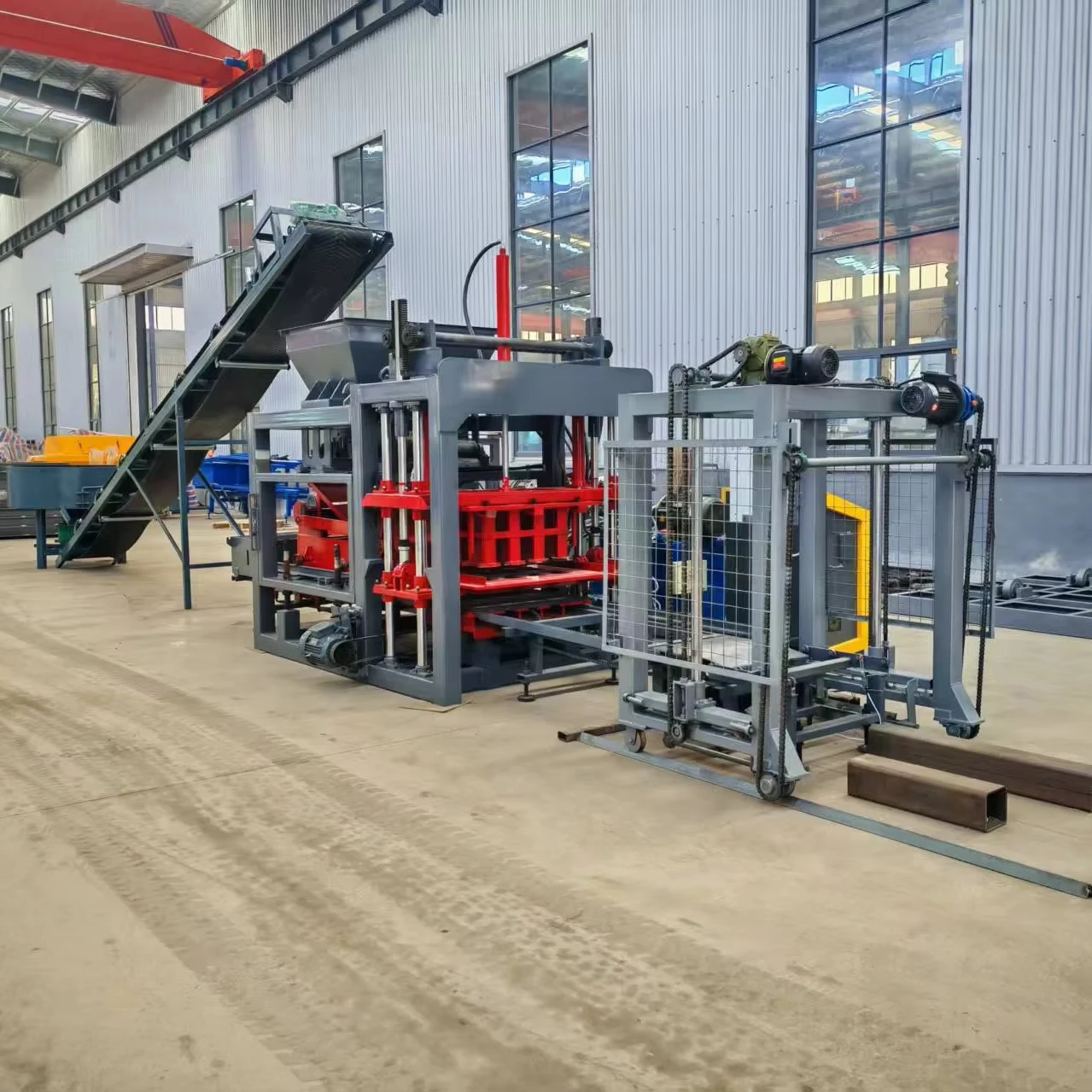
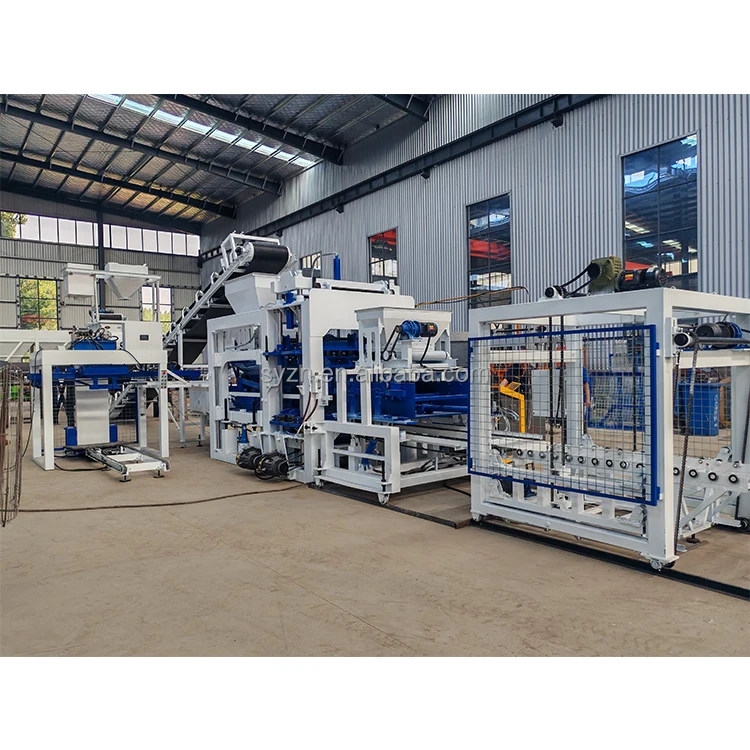 High quality block machine