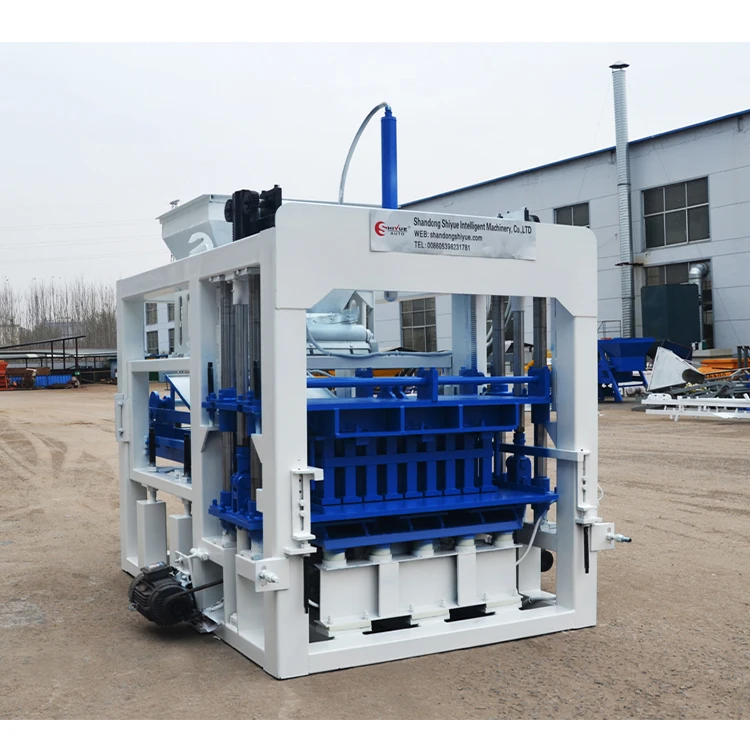
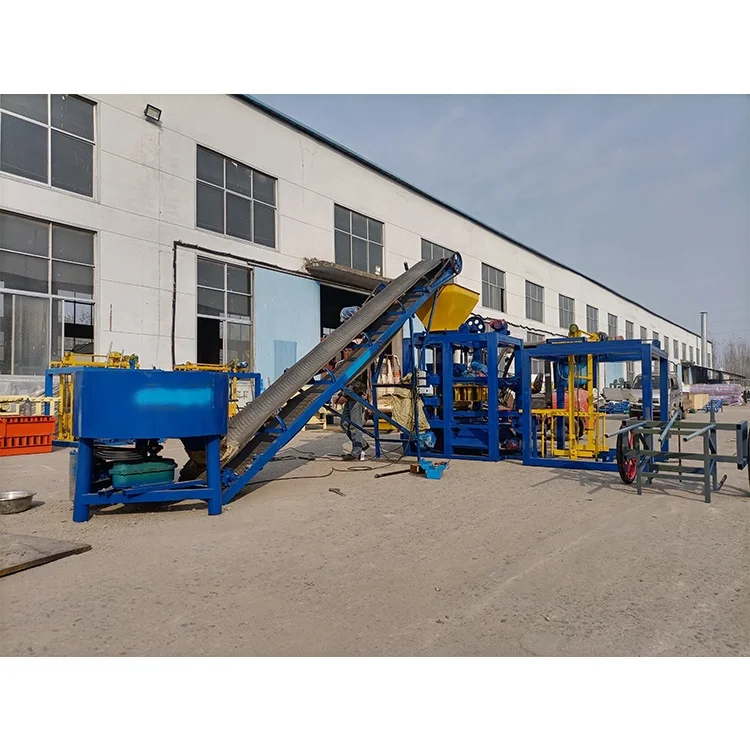
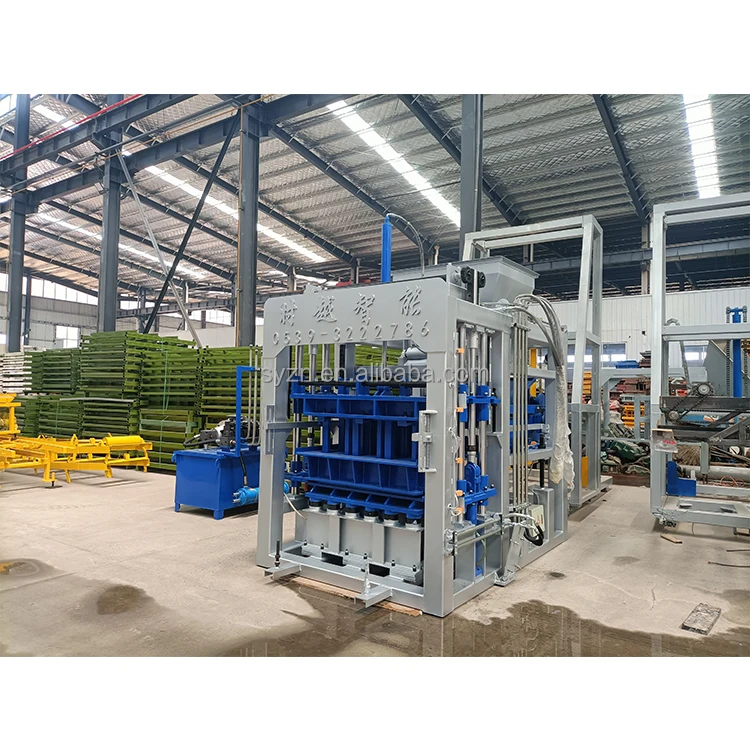
Matched System Design — The QT5-15 is specified as one coordinated block machine, mould, pallet and handling setup rather than a standalone press, so cycle times, output and block strength align with your actual mix design.
Technical Specifications
| Parameter |
Value |
| Model |
QT5-15 |
| Product Type |
Automatic Concrete Block Making Machine |
| Overall Dimensions (L×W×H) |
7400×1950×2800 mm |
| Rated Pressure |
21 MPa |
| Main Vibration Form |
Hydraulic platform vibration |
| Vibrating Frequency |
2800-4500 rolls/minute |
| Cycle Time |
15~20 seconds |
| Motors Power |
26.5 kW |
| Pallet Size |
1100×550 mm |
| Weight |
6T |
| Voltage |
Configurable according to buyer requirements |
| Control System |
PLC with fault diagnosis and long-distance controlling system |
| Automation Level |
Full automatic |
| Output Capacity (240×115×90mm solid brick) |
16 pcs/mould, 2880-3600 pcs/h, 23040-28800 pcs/8h |
| Output Capacity (400×115×53mm face brick) |
32 pcs/mould, 7680-8800 pcs/h, 61440-70400 pcs/8h |
| Output Capacity (400×200×200mm hollow block) |
5 pcs/mould, 900-1200 pcs/h, 7200-9600 pcs/8h |
| Feeding System |
Particular storage and description material system for feeding accuracy |
| Key Features |
PLC fault diagnosis, remote control capability, adjustable hydraulic platform vibration |
Application Suitability
| Application |
Material or Output |
| Hollow block production for load-bearing walls |
Crushed stone, sand, cement, and water with adjustable vibration to suit local aggregate gradation |
| Multicellular brick for partition and infill walls |
Lightweight aggregate or pumice blends with modified hydraulic pressure settings |
| Standard solid brick for masonry and cladding |
River sand or manufactured sand mixed with Portland cement at controlled moisture |
| Paving brick for walkways and courtyards |
Dense aggregate blends with extended vibration cycles for high surface finish |
Why the Rated Output Figure Rarely Matches the Site Reality
The capacity printed in a catalogue only applies to the specific block format and mix assumed during testing.
When an automatic block making machine manufacturer quotes 900 to 1200 pieces per hour, that figure assumes a 400×200×200mm hollow block under controlled conditions. Switch the mould to a thinner format, or change the aggregate from standard river sand to a local volcanic scoria, and the cycle time stretches. I recall a Middle East project where the buyer expected the same throughput they saw on video, but their aggregate required a different vibration profile — the press ran, but blocks came out under-compacted. We had to fly in and recalibrate the hydraulic pressure and vibration frequency on site before the numbers aligned with expectations [NEED_CITE: effect of aggregate gradation on concrete block compaction cycle time].

Where the QT5-15 Sits in the Automatic Machine Range
The QT5-15 occupies the middle tier of the full automatic block making machine manufacturer lineup. Below it, semi-automatic models reduce upfront investment but require manual pallet transfer and stacking. Above it, higher-tier machines increase pallet size and cycle speed for large-volume plants. The QT5-15 suits buyers moving from manual or semi-automatic production into a fully controlled line without committing to the footprint and power draw of a high-capacity system.
Automation That Removes Variables, Not Just Operators
Full automatic operation here means the PLC manages the entire press cycle — feeding, compaction, mould release, and pallet advance — while the fault diagnosis system flags anomalies before they produce a batch of rejects. The long-distance controlling capability allows remote monitoring of production runs, which matters when the plant manager is responsible for more than one site. The vibration frequency adjusts between 2800 and 4500 rolls per minute, giving the operator room to tune compaction for different block formats without changing hardware.
How Pressure and Vibration Shape the Block
The 21 MPa rated pressure works together with the hydraulic platform vibration to compact the mix into the mould cavity. Higher pressure alone does not guarantee block strength; if the vibration frequency is too low for a stiff mix, voids remain inside the block wall. The adjustable frequency range on the QT5-15 lets the operator match the vibration profile to the aggregate size and moisture content — a coarse, low-slump mix needs higher amplitude at lower frequency, while a finer sand blend responds to higher frequency. The 1100×550 mm pallet size determines how many cavities each mould can hold, directly linking the press stroke to the curing area layout and the forklift capacity already on site [NEED_CITE: relationship between vibration frequency and concrete block density in hydraulic press forming]. The 15 to 20 second cycle time varies by format, with solid bricks cycling faster than large hollow blocks because the fill volume is smaller and compaction completes sooner.
What Happens When Voltage and Control Language Are Confirmed Late
Confirming electrical specifications after the machine ships creates delays that cascade through the entire project timeline. A plant wired for 380V/50Hz will not start a machine configured for 440V/60Hz, and rewinding motors on site voids warranty coverage. The PLC display language matters just as much — an operator reading fault codes in an unfamiliar language will either shut the machine down unnecessarily or ignore a warning that leads to hydraulic seal failure. Every automatic block making machine manufacturer should lock voltage, frequency, and control language before the first weld is cut, not after the container is loaded.
What Distinguishes This Supply Approach
Configuration begins with the buyer’s target block format, local aggregate, and mix design rather than a default catalogue setting. The mould is designed for the formats the buyer’s market actually sells, with custom drawings available when standard options do not match. Pallet size and material are selected to fit the curing rack system and forklift the buyer already operates. Automation level is scalable — a buyer can start with semi-automatic pallet handling and upgrade to full automatic stacking later. The machine, mould, pallet, and handling equipment are specified as one system so that cycle times match across stations and the press never sits idle waiting for the next pallet.
Documentation & Verification
- Line layout showing QT5-15 footprint relative to pallet return and stacking stations
- Capacity calculation sheet stating block format assumed for each output figure
- Mould drawing and format list confirming cavity count per pallet size
- Voltage and PLC control language confirmation recorded before production begins
- Factory test record with cycle times measured per target block format
- Packing photographs and customs documentation prepared before container loading
Installation, Commissioning & Support
- Foundation plan sized to the 7400×1950 mm machine footprint with vibration isolation points
- Dedicated power circuit rated for 26.5 kW motor draw plus auxiliary equipment load
- Machine shipped in dismantled state with reassembly supervised by installation team on site
- First-run commissioning includes cycle time verification against each ordered mould format
- Operator training covers PLC fault diagnosis reading and vibration frequency adjustment per mix
- Wear parts list with hydraulic seal and mould liner replacement intervals documented
Planning Your Inquiry
To size the QT5-15 correctly for your project, share your target block formats and the daily output you need per format. Include details on your local aggregate type and available mix materials, as these determine the vibration and pressure settings. Specify your site voltage, frequency, and the PLC display language your operators require.
Frequently Asked Questions
Q: How does QT5-15 output compare to smaller semi-automatic and larger automatic models?
A: The QT5-15 sits in the middle tier. Semi-automatic models below it use smaller pallets and require manual pallet handling, reducing effective daily output. Larger automatic machines above it run bigger pallets with faster cycles for high-volume plants. The right choice depends on your target daily volume and whether you need full automatic stacking or can handle pallets manually at the end of the line.
Q: What is the plant footprint and investment level for QT5-15?
A: The press itself measures 7400×1950×2800 mm, but the total line footprint includes raw material feeding, pallet return, and stacking stations. Investment level falls between semi-automatic entry lines and high-capacity automatic plants. The exact layout depends on your chosen automation level and whether you include curing rack handling and cubing in the scope.
Q: Can I start semi-automatic and upgrade to QT5-15 automatic later?
A: Yes. The automation level is selectable, and the QT5-15 platform supports adding automatic pallet feeding, stacking, and cubing after the initial installation. The mechanical press and mould interface remain the same, so the upgrade involves adding handling modules and updating the PLC program rather than replacing the core machine.
Q: What block formats does QT5-15 support and how do I choose?
A: The machine handles hollow blocks, solid bricks, multicellular bricks, and paving bricks by changing the mould. Each format has a different cycle time and output rate — for example, 400×200×200mm hollow blocks yield 5 pieces per mould at 15 to 20 second cycles. Choose the mould that matches your local market demand, and confirm the mix design suits your available aggregate.
Q: What is the typical lead time from order to delivery?
A: Lead time depends on whether the ordered model and moulds are in stock or require production. Standard configurations with common mould formats dispatch faster, while custom mould designs add engineering and fabrication time. Voltage and PLC language confirmation must be finalized before production starts to avoid delays at the commissioning stage.

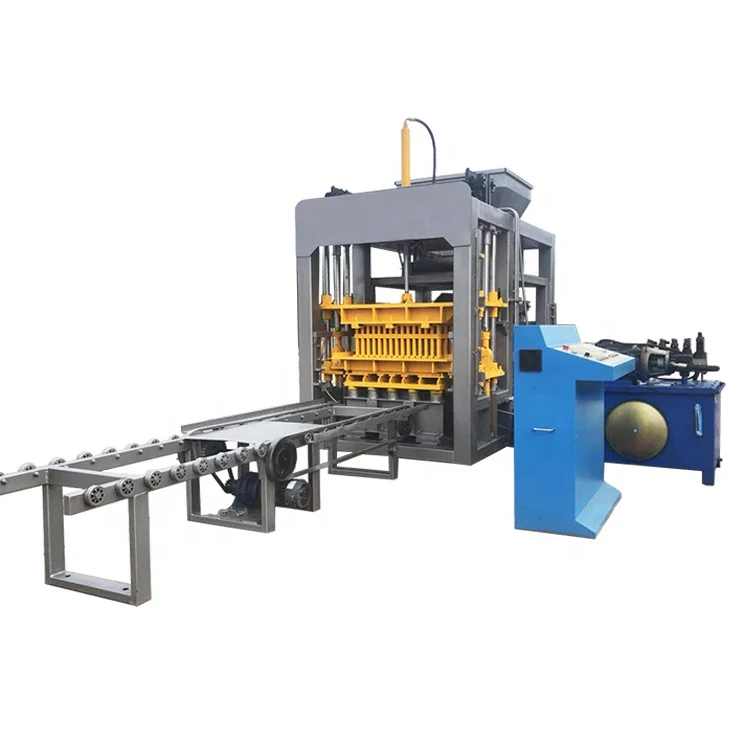
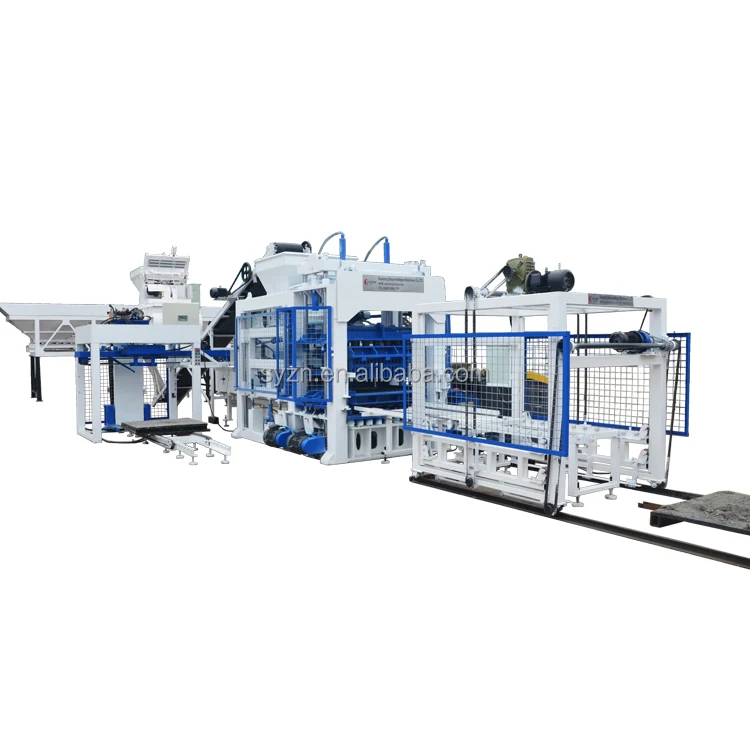 Stationary block machine