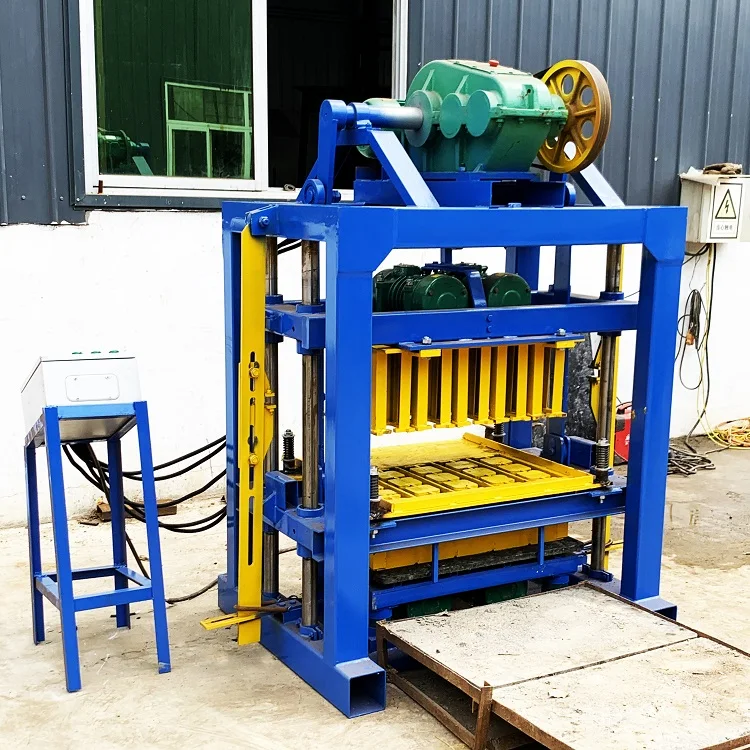
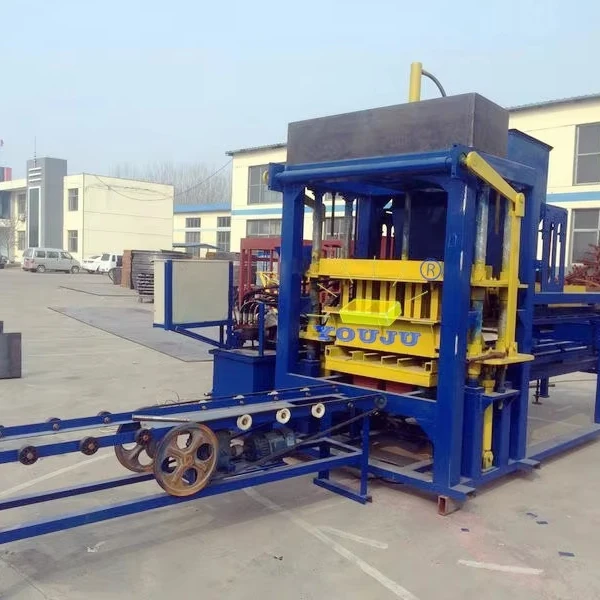
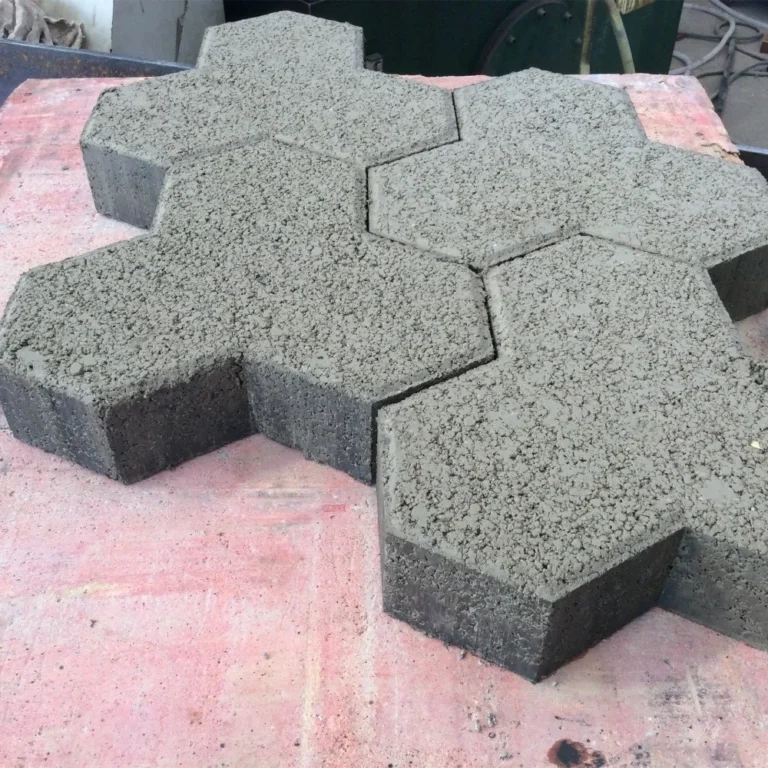
Matched System Approach — the QTJ4-25 stationary block machine is specified as a complete forming, mould and pallet package rather than a standalone press, so every component is verified against your target block format before dispatch.
Technical Specifications
| Parameter |
Value |
| Model |
QTJ4-25 |
| Product Type |
Stationary Concrete Block Making Machine |
| Rated Power |
17.9 kW |
| Vibration Force |
60 kN |
| Vibration Frequency |
2800 r/min |
| Moulding Cycle |
25 s |
| Pallet Size |
850 × 550 × 20 mm |
| Overall Dimensions (L×W×H) |
6400 × 1500 × 2700 mm |
| Total Mass |
2500 kg |
| Output Capacity |
960 pcs/h, 7680 pcs/day (based on 400×200×200 mm hollow block, 4 pcs/mould) |
| Mould Format Capability |
Hollow, solid, paver, curbstone (8", 6", 5", 4" sizes) |
| Automation Level |
Semi-automatic |
| Control System |
Motor-driven with hydraulic station (PLC availability to be confirmed) |
| Voltage & Frequency |
Configurable to target market (to be confirmed before production) |
| Standard Configuration |
Host machine 1 set, block mould 1 set, JQ350 mixer |
| Mould Change Method |
Manual (change time to be confirmed) |
| Stacking Method |
Manual via trolley |
| Certification |
CE declaration where applicable (to be confirmed) |
Application Suitability
| Application |
Material or Output |
| Hollow block production for residential and commercial walls |
Crushed stone, sand, cement and water mix |
| Solid block manufacturing for load-bearing structures |
Dense aggregate and cement blend |
| Paving block production for walkways and yards |
Fine aggregate with pigment additives |
| Curbstone forming for road and boundary edging |
Coarse aggregate with high cement content |
| On-site contractor block production |
Locally sourced sand, gravel and cement |
Why "960 Pieces per Hour" Needs a Format Attached
The QTJ4-25 stationary block machine manufacturer quotes cycle time against a specific mould — without that context, the number means very little on your shop floor.
I have watched buyers sign off on a block machine because the brochure said "high output," only to discover the figure assumed a small solid brick while they needed 8-inch hollow blocks. The moulding area stays the same, but fewer cavities fit per cycle, and the actual daily count drops sharply. With the QTJ4-25, the 960 pcs/h figure holds only when running 400×200×200 mm hollow blocks at four per mould. Switch to a larger format or a paver, and the per-cycle yield changes [NEED_CITE: block format impact on daily output calculations]. That is why every capacity sheet we issue names the exact block size and cavity count behind the number.

Where the QTJ4-25 Sits in the Shiyue Range
The Shiyue lineup spans mobile egg-layers, semi-automatic stationary presses and fully automatic lines with robotic stacking. The QTJ4-25 occupies the semi-automatic stationary tier, aimed at buyers who need hydraulic-assisted forming and multiple mould formats but are not yet ready to invest in a fully automated plant. It gives you a fixed production station with consistent vibration and pressure, while pallet handling and stacking remain manual — keeping the initial capital requirement contained.
Room to Grow Without Replacing the Press
Many first-time block plant owners start with a semi-automatic machine and later add automatic pallet feeders, stackers and curing rack systems. The QTJ4-25 is designed so that the host machine, hydraulic station and mould interface remain compatible with those upgrades. You keep the same press and add automation stations around it as your volume justifies the investment, rather than scrapping the entire line [NEED_CITE: semi-automatic to automatic upgrade paths in block production].
Reading the Numbers That Actually Matter
The 60 kN vibration force combined with the hydraulic station delivers dual-action compaction — vertical vibration from the bed mould and compression vibration from the upper mould. This pairing determines block density far more than motor power alone. A higher kW rating without matched vibration simply burns more electricity without improving strength. The 2800 r/min frequency is tuned for standard concrete mixes; if your local aggregate has high clay or moisture content, the effective penetration depth changes, which is why we test with your actual mix before confirming the machine setup. The 850 × 550 × 20 mm pallet size balances curing area footprint with manual handling weight — a larger pallet means more blocks per cycle but requires heavier lifting equipment and more floor space in the curing yard.
What Happens When Pallet and Curing Plans Are an Afterthought
Buyers who focus only on the press often arrive at commissioning with pallets that do not fit their existing forklift, or a curing area too small for the daily output. With the QTJ4-25 producing up to 7680 hollow blocks per day on the stated format, you need enough pallets to keep the machine running while earlier batches cure, plus racking or ground space to hold them. If the pallet material warps under local humidity, blocks crack before they leave the yard. These are not machine faults — they are line-design gaps that surface weeks after startup and cost far more to fix than to plan for upfront [NEED_CITE: pallet material selection and curing area planning for block plants].
What Buying From Shiyue Actually Means
Block machinery is our single focus, so the QTJ4-25 is never sold as a bare press. The mould, pallet specification and mixer are chosen together to match your target format and local raw materials. Every machine is configured against the buyer’s actual mix design and aggregate source, not pulled from a catalogue default. We supply mould drawings and a format list so you know exactly which block sizes the machine can produce before it ships. Voltage, frequency and control language are confirmed with you before production begins, avoiding the commissioning delays we see when machines arrive with the wrong electrical setup. Factory test records are taken with your specified block format, so the output data you receive reflects your product, not a generic benchmark.
Documentation & Verification
- Line layout with capacity calculation naming the exact block format and cavity count
- Machine specification sheet confirming hydraulic pressure, vibration force and pallet dimensions
- Mould drawing and format list for every block size included in your order
- Voltage, frequency and control language confirmation sheet signed before production
- Factory test record produced on your target block format before dispatch
- Wear parts and mould maintenance list with replacement intervals
Installation, Commissioning & Support
- Foundation plan matched to the QTJ4-25’s 2500 kg mass and 6400 mm length for level anchoring
- Dedicated electrical circuit sized for the 17.9 kW rated power with correct voltage and frequency
- Machine arrives partially dismantled for container loading; reassembly guided on site
- First-run block test using your local aggregate and cement ratio to verify forming parameters
- Operator training covers mould change procedure, vibration timing and daily maintenance checks
- Wear parts list identifies high-friction components with recommended inspection intervals
What We Need From You to Move Forward
To size the QTJ4-25 correctly for your operation, share the block formats you plan to produce, your target daily volume and the local aggregate type you will use. Confirm your site voltage, frequency and preferred control language so the electrical package is built right the first time. Let us know your available curing area dimensions and whether you already have pallets or handling equipment, so the line layout accounts for the full workflow from mixer to cured product.
Frequently Asked Questions
Q: How is the QTJ4-25’s daily output calculated and for which block format?
A: The 7680 pieces per day figure is based on running 400×200×200 mm hollow blocks at four per mould, with a 25-second moulding cycle and an eight-hour shift. If you switch to a larger block or a different format like pavers, the pieces per cycle change, and the daily total adjusts accordingly. We provide a format-specific capacity sheet with every quotation.
Q: Where does the QTJ4-25 sit compared to Shiyue’s fully automatic and mobile tiers?
A: It sits in the semi-automatic stationary tier, offering hydraulic-assisted forming and multiple mould formats at a lower investment than a fully automatic line. Mobile egg-layers produce blocks directly on the ground without pallets, while fully automatic lines add pallet feeding, stacking and cubing. The QTJ4-25 gives you a fixed press with room to add automation stations later.
Q: What pallet material and quantity should I plan for with this machine?
A: The QTJ4-25 uses 850 × 550 × 20 mm pallets. Material choice depends on your curing environment — bamboo or PVC pallets resist moisture better than plain timber. You will need enough pallets to cover the machine’s cycle output plus curing time, typically several hundred pieces for a full shift. We confirm the exact quantity based on your block format and curing layout.
Q: Can I start semi-automatic with the QTJ4-25 and upgrade to higher automation later?
A: Yes. The host machine and hydraulic station are designed to accept automatic pallet feeders, stackers and curing rack systems as add-on stations. You keep the same press and expand the line around it when your production volume justifies the additional investment, avoiding a full machine replacement.
Q: What voltage and control language options are available for my market?
A: Voltage and frequency are configured to your local supply standard before production begins. Control panel language is confirmed at the same stage so operators can read the interface in their working language from day one. We document both choices in a signed confirmation sheet before the machine enters production.

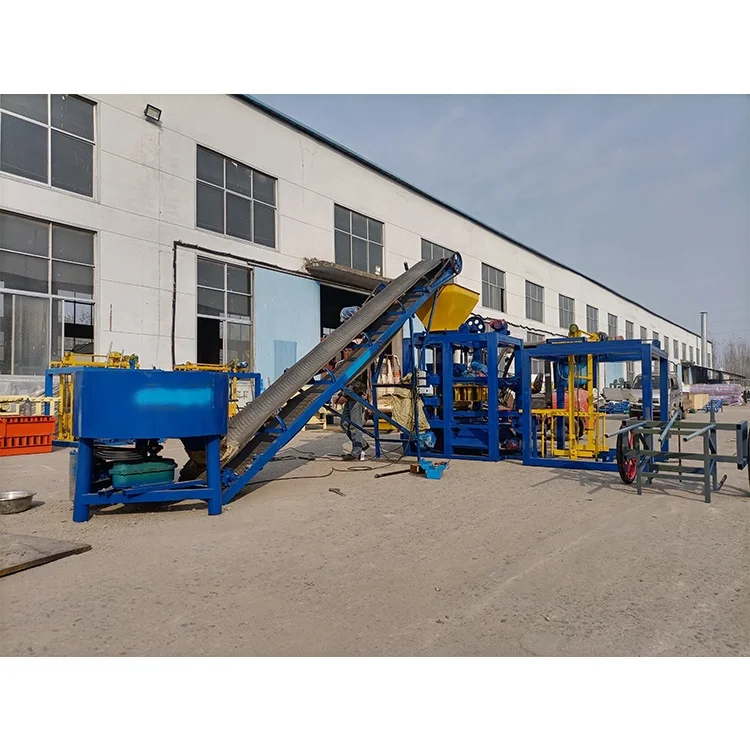
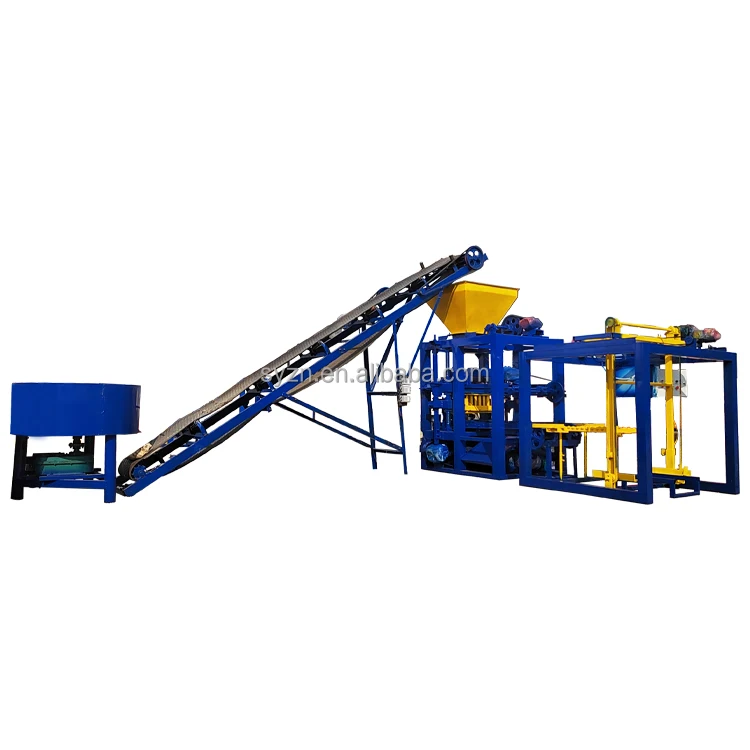 Stationary block machine