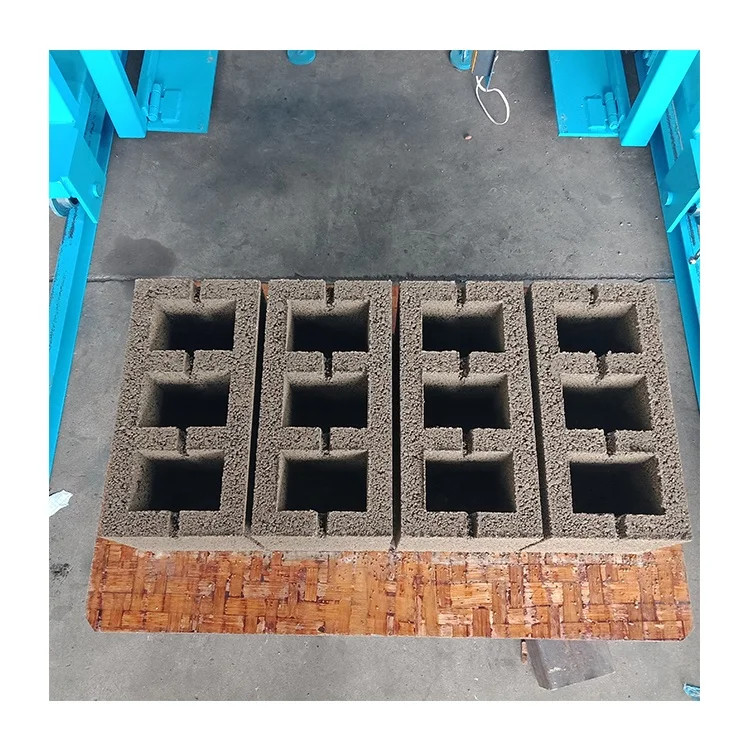
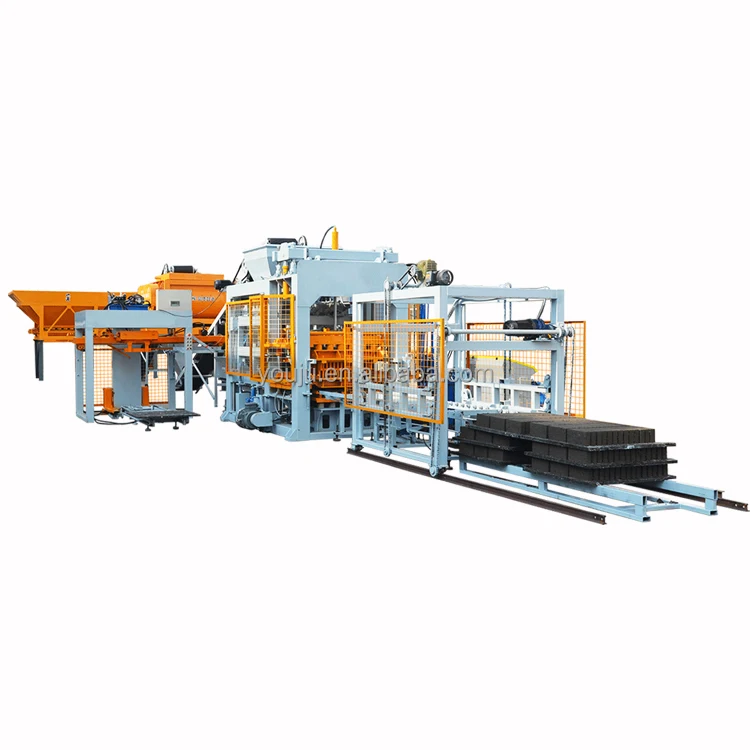
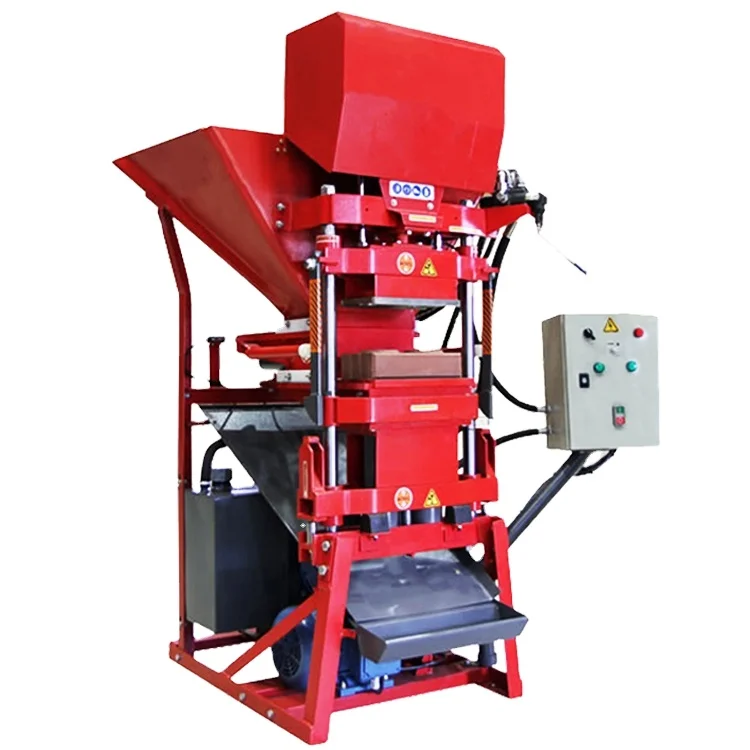
Matched System Configuration — The QT10-15 is specified with press, mould, pallet and handling reviewed together rather than sourced separately, so the automatic block making machine manufacturer delivers a line that runs from day one without interface gaps.
Technical Specifications
| Parameter |
Value |
| Model |
QT10-15 |
| Product Type |
Automatic Hydraulic Block Making Machine |
| Control System |
PLC control cabinet |
| Hydraulic System |
Independent integrated hydraulic station |
| Vibration Mode |
Vertical station mode resonance, automatic FM-AM |
| Mould Change |
Simple replacement of mould for multi-format production |
| Components Included |
Pallet feed machine, block making machine, storage hopper, conveyor, hydraulic unit, PLC control cabinet |
| Output (Hollow Block 400×200×200mm) |
1,800–2,400 pcs/hour; 14,400–19,200 pcs/8hr (10 pcs/mould, 15–20s cycle) |
| Output (Hollow Block 400×150×200mm) |
2,160–2,880 pcs/hour; 17,280–23,040 pcs/8hr (12 pcs/mould, 15–20s cycle) |
| Output (Solid Brick 240×115×53mm) |
8,928–11,160 pcs/hour; 71,424–89,280 pcs/8hr (62 pcs/mould) |
| Output (Paving Block 200×100×60mm) |
5,184–6,480 pcs/hour; 41,472–51,840 pcs/8hr (27 pcs/mould, 20–25s cycle) |
| Output (Paving Block 225×112.5×60mm) |
4,032–5,040 pcs/hour; 32,256–40,320 pcs/8hr (24 pcs/mould, 20–25s cycle) |
| Automation Level |
Automatic |
| Warranty |
1 year for the whole machine (excluding spare parts) |
| Payment Terms |
30% T/T deposit, 70% balance before delivery |
| Rated Power (kW) |
(source value — verify against manufacturer catalog) |
| Voltage & Frequency |
(source value — verify against manufacturer catalog) |
| Overall Dimensions (L×W×H) |
(source value — verify against manufacturer catalog) |
| Net Weight |
(source value — verify against manufacturer catalog) |
| Hydraulic Pressure (MPa) |
(source value — verify against manufacturer catalog) |
| Vibration Force (kN) |
(source value — verify against manufacturer catalog) |
| Pallet Size |
(source value — verify against manufacturer catalog) |
| Mould Change Time |
(source value — verify against manufacturer catalog) |
| Stacking Method |
(source value — verify against manufacturer catalog) |
| Language Options |
(source value — verify against manufacturer catalog) |
Application Suitability
| Application |
Material or Output |
| Hollow block production |
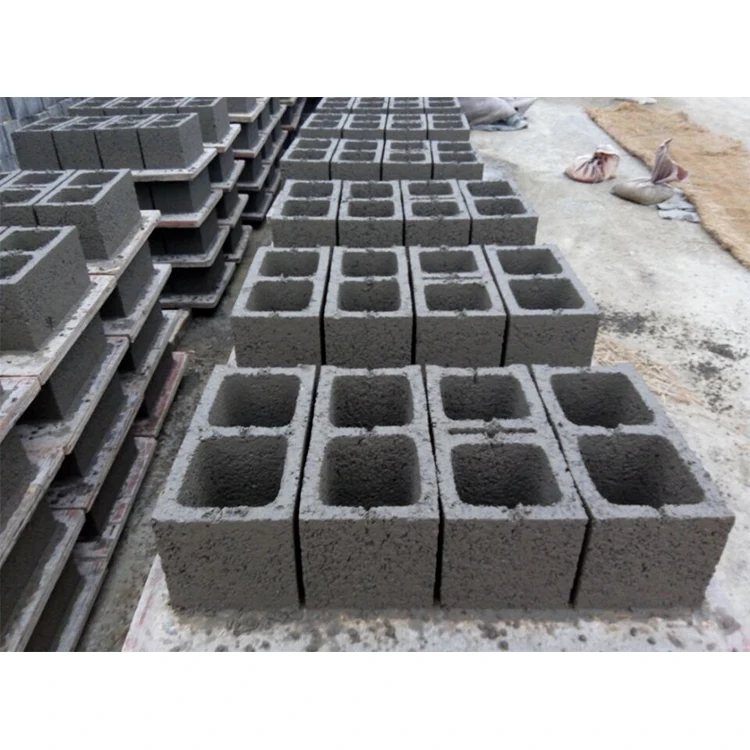
Crushed stone, sand, cement, fly ash aggregates for 400×200×200mm and 400×150×200mm formats |
| Multi-cellular brick production |
Lightweight aggregate and cement blends for multi-cavity structural blocks |
| Paving block production |
High-density granite or basalt aggregate mixes for 200×100×60mm and 225×112.5×60mm interlocking pavers |
| Standard solid brick production |
Sand-cement or fly ash-cement blends for 240×115×53mm solid bricks |
| Large-scale block production line |
Continuous high-volume output across multiple formats from a single press |
What "Pieces per Hour" Actually Means for Your Block Format
Capacity numbers only matter when tied to the exact block you plan to sell.
Many quotations for an automatic block making machine manufacturer list a single cycle-per-hour figure and leave it at that. The problem is that a machine cycling 4 times per minute produces a very different daily output when the mould holds 10 hollow blocks versus 62 solid bricks. Buyers who skip this detail often find their real production falling far short of what they budgeted for, sometimes by a wide margin [NEED_CITE: block machine capacity calculation standards]. The QT10-15 capacity table on this page states the block format, pieces per mould, cycle time and resulting hourly and shift output for each product, so the number you plan against is the number the machine actually delivers on your product.

Placing the QT10-15 Within the Full Machine Range
The Shiyue range covers mobile egg-laying machines for on-site work, semi-automatic presses for smaller plants and fully automatic lines like the QT10-15 for high-volume production. This model sits in the upper tier, designed for buyers who need consistent daily output across several block formats from a single press. Choosing the right tier depends on your daily volume target and how many operators you plan to run, not simply on the highest capacity number available.
How the Automatic Line Connects Press to Curing Area
An automatic block making machine manufacturer must consider every station around the press — raw material feeding, pallet circulation, block stacking and curing rack handling — because a bottleneck at any point forces the press to idle. The QT10-15 comes with pallet feed machine, storage hopper and conveyor as standard components, and the line layout should confirm that each station’s cycle time matches the press so wet blocks move to curing without delay [NEED_CITE: concrete block production line synchronization principles].
Reading the Specifications That Matter on Site
The independent integrated hydraulic station is mounted away from the main vibration zone, which protects seals and valve blocks from the constant shock loading that shortens component life on machines where hydraulics sit directly under the mould table. Vertical station mode resonance with automatic FM-AM adjusts vibration frequency and amplitude to suit the format being produced — a paving block needs high-frequency, low-amplitude vibration for surface finish, while a hollow block needs lower frequency with greater amplitude for core compaction. The PLC control cabinet centralises all press parameters, and confirming the display language before production avoids operator errors during the first weeks of running. Mould change uses simple replacement rather than a cassette system, keeping the initial investment lower while still allowing multi-format production from one machine.
The Cost of Skipping Configuration Details
When pallet size is chosen without checking the curing racks and forklift already on site, the buyer ends up replacing hundreds of pallets or rebuilding rack spacing before the first block is sold. Voltage and frequency left unconfirmed until the machine arrives can delay commissioning by days while transformers or panel rewiring are arranged locally [NEED_CITE: industrial equipment voltage mismatch consequences]. These are not engineering failures — they are specification oversights that an automatic block making machine manufacturer should catch during the quotation stage, not after the container is unloaded.
Why Source This Machine From Shiyue
Block machinery is the single focus here, which means the QT10-15 press, moulds, pallets and handling equipment are specified as one matched system rather than assembled from unrelated suppliers. Every capacity figure in the table above is tied to a specific block format, so there is no ambiguity about what the machine delivers on your product. Mould design covers the formats your market actually sells, with custom drawings available when standard sizes do not match local building codes. The automation level is selectable, allowing a buyer to start with the standard QT10-15 configuration and add stacking or cubing automation as volume grows. Factory test records are prepared before shipment, giving the buyer documented evidence that the machine cycles correctly on the agreed mould and parameters.
Documentation & Verification
- Line layout showing station spacing and capacity calculation per block format for the QT10-15
- Machine specification sheet with hydraulic and electrical schematic for on-site maintenance reference
- Mould drawing and format list confirming compatibility with your local block dimensions
- Voltage, frequency and PLC display language confirmation sheet before production starts
- Factory test record and packing photographs documenting the QT10-15 condition prior to dispatch
Installation, Commissioning & Support
- Foundation plan specifying load points and curing area dimensions matched to the QT10-15 pallet size
- Dedicated electrical circuit requirements based on the confirmed rated power and voltage specification
- Assembly guidance for on-site reconnection of hydraulic station, PLC cabinet and conveyor sections
- First-run parameter setting covering vibration frequency, hydraulic pressure and cycle timing per mould
- Operator training on PLC interface navigation, mould change procedure and daily maintenance checkpoints
- Wear parts and mould inventory list for planning first replacement orders before stock runs low
Before You Request a Quotation
To match the QT10-15 to your project accurately, share the block formats you sell locally, your target daily output per format and the raw materials available in your area. Include your site voltage, frequency and preferred PLC display language so the electrical package is built correctly from the start. If you already have curing racks, forklifts or pallet inventory on site, send the dimensions so the pallet specification aligns with your existing handling setup.
Frequently Asked Questions
Q: How is capacity calculated and which block format does each figure assume?
A: Every capacity figure for the QT10-15 is stated alongside the specific block format, pieces per mould and cycle time. For example, 400×200×200mm hollow blocks are rated at 1,800–2,400 pieces per hour based on 10 pieces per mould and a 15–20 second cycle. This means the output number you plan against is directly tied to the product you intend to manufacture, not an abstract cycle rate.
Q: What automation level does the QT10-15 include, and can it be upgraded?
A: The QT10-15 ships as an automatic machine with PLC control cabinet, pallet feed machine, storage hopper and conveyor as standard components. Buyers who later want to add automatic stacking or cubing can upgrade the handling end of the line without replacing the press itself, allowing investment to match production volume as demand grows.
Q: How do I confirm voltage, frequency and PLC display language for my country?
A: These three items are confirmed during the quotation stage before production begins. You provide your local supply voltage, frequency and preferred operator language, and the electrical package and PLC interface are built to match. This avoids commissioning delays caused by voltage mismatch or unreadable control screens after the machine arrives on site.
Q: What mould formats are available, and what is the mould change procedure?
A: The QT10-15 supports hollow blocks, solid bricks and paving blocks through simple mould replacement. Standard moulds cover formats such as 400×200×200mm hollow blocks and 200×100×60mm paving blocks, and custom moulds can be designed to buyer drawings when local building codes require non-standard dimensions. Change procedure details are covered during operator training at commissioning.
Q: Where does this model sit in the full machine range — automatic vs. semi-automatic vs. mobile?
A: The QT10-15 is in the high-capacity automatic tier, above the semi-automatic models suited for smaller plants and the mobile egg-laying machines used for on-site production without a fixed facility. Buyers choosing this model typically need continuous daily volume across multiple formats from a single stationary press with PLC-controlled consistency.

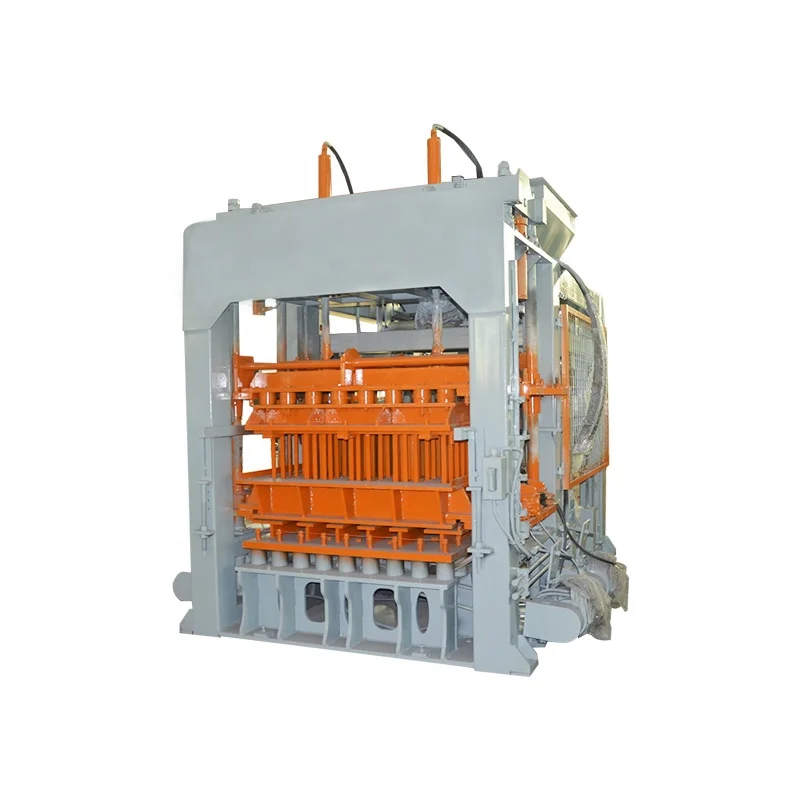
 Automatic block machine