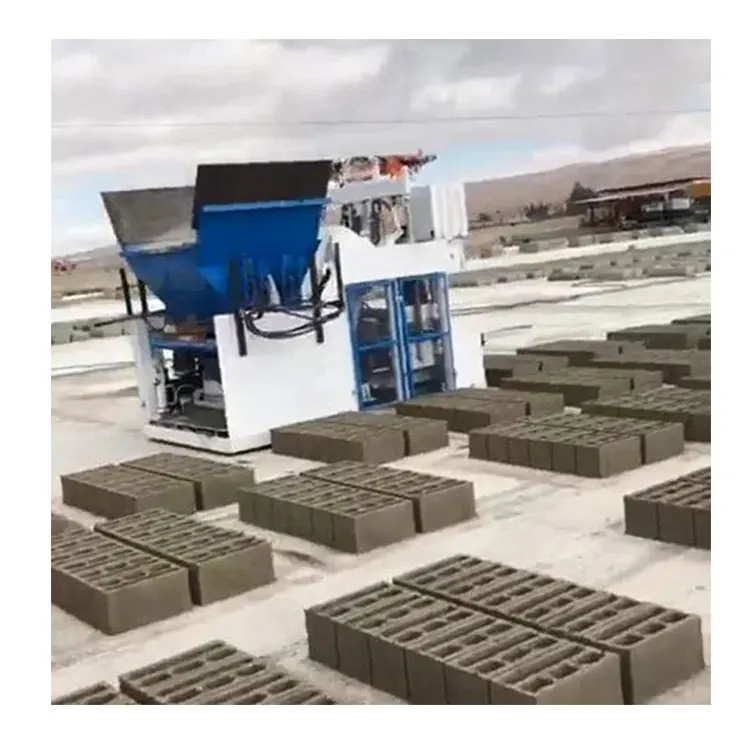
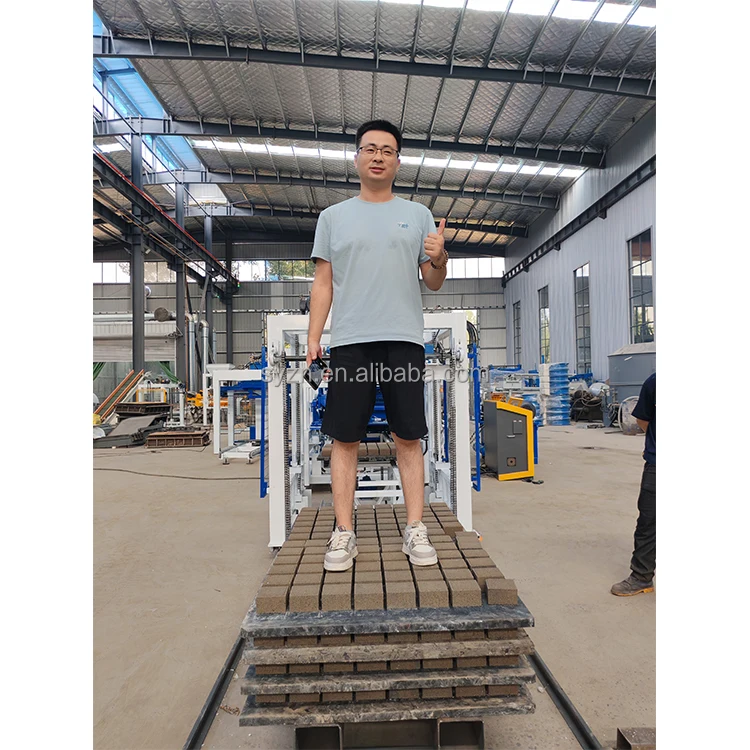
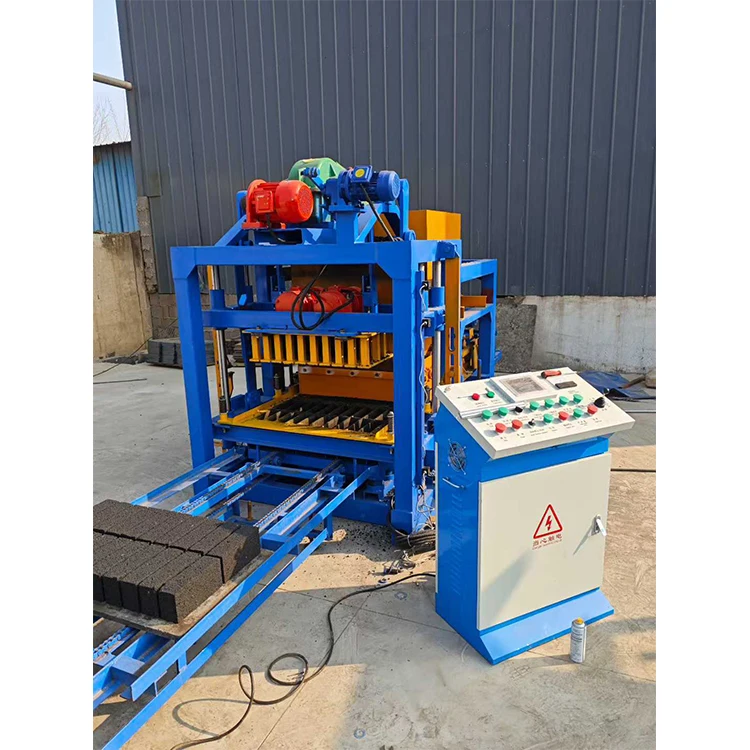
Matched System Sizing — block press, mould, pallet and handling specified as one coordinated line rather than assembled from unrelated suppliers.
Technical Specifications
| Parameter |
Value |
| Model |
QT8-15 |
| Product Type |
Fully Automatic Concrete Block Making Machine |
| Overall Dimensions (L×W×H) |
8300 x 1860 x 3000 mm |
| Rated Power |
37 kW |
| Control System |
PLC (Programmable Controller) with touch screen interface |
| Vibration Form |
Platform Vibration |
| Vibration Frequency |
2,800–4,500 RPM |
| Pallet Size |
950 x 900 mm |
| Molding Cycle |
15–25 s (20–25 s with color feeding) (basis not stated in source) |
| Brick Height Range |
50–200 mm |
| Block Comprehensive Strength |
Up to 15 MPa |
| Output: 400×200×200 mm hollow block |
8 pcs/mould, 1,912 pcs/h, 15,300 pcs/day (8 hours) |
| Output: 400×150×200 mm hollow block |
12 pcs/mould, 2,875 pcs/h, 23,000 pcs/day (8 hours) |
| Output: 240×115×90 mm porous block |
18 pcs/mould, 4,320 pcs/h, 34,560 pcs/day (8 hours) |
| Output: 240×115×53 mm solid brick |
39 pcs/mould, 9,360 pcs/h, 74,880 pcs/day (8 hours) |
| Output: 225×112.5×60 mm paving block |
18 pcs/mould, 3,000 pcs/h, 24,000 pcs/day (8 hours) |
| Output: 200×100×60 mm paving block |
28 pcs/mould, 4,625 pcs/h, 37,000 pcs/day (8 hours) |
| Hydraulic System |
Independent integrated hydraulic station |
| Mould Format |
Interchangeable: hollow, porous, standard, paving, curbstone, grass, slope-protecting, ring-tree |
| Raw Materials |
Fly ash, slag, gangue, industrial waste, river sand, gravel, cement |
| Voltage & Frequency |
Configurable — confirm before ordering |
Application Suitability
| Application |
Material or Output |
| Hollow block production for residential and commercial wall construction |
Fly ash, slag, river sand and cement blends |
| Solid brick manufacturing for load-bearing masonry |
Gravel, gangue and cement mixes |
| Paving block and interlocking paver production for roads and walkways |
Crushed stone, sand and cement with optional color feeding |
| Porous and permeable brick for stormwater management |
Coarse aggregate with controlled cement ratio |
| Curbstone and kerb production for municipal infrastructure |
High-strength concrete mixes up to 15 MPa |
| Grass block and slope-protecting block for landscaping |
Open-void designs with standard aggregate blends |
What "15,300 Blocks per Day" Actually Means for Your Plant
Output figures only hold weight when tied to the exact block format, local material, and shift length you will run.
I once watched a buyer in the Pearl River Delta plan an entire delivery schedule around a catalogue capacity number, only to discover the figure assumed a standard hollow block while his market demanded dense interlocking pavers. The cycle stretched, daily volume dropped, and his contract penalties nearly wiped out the year’s margin. That pattern repeats across the industry because capacity is quoted against a single reference format, not the mix of products a plant actually ships. When evaluating a fully automatic block machine manufacturer, the first question should always be which block format and material profile underpins the stated output [NEED_CITE: block machine capacity testing standards by format and material].

Placing the QT8-15 Within the Automatic Range
The QT8-15 occupies the mid-to-high tier of the automatic block machine lineup, bridging smaller semi-automatic models and the largest high-capacity lines. Its 950 x 900 mm pallet and 37 kW rated power position it for plants that have outgrown workshop-scale output but are not yet ready for a continuous high-volume operation. Buyers surveying the range typically land here when their daily target spans multiple block formats across an eight-hour shift.
How Output Shifts Across Block Formats
A single host machine producing different block types will show dramatically different daily volumes. With the QT8-15, an eight-hour run on 400×200×200 mm hollow blocks yields a stated 15,300 pieces, while the same shift on 240×115×53 mm solid bricks reaches 74,880 pieces — yet the machine and mould change interval remain constant. This spread matters because buyers who commit to a plant layout based on the highest catalogue number often find their primary product sits at the lower end. A fully automatic block machine manufacturer that states capacity per format helps you match the line to your actual product mix [NEED_CITE: concrete block output calculation methods across formats].
Vibration, Pressure, and the Density Equation
Platform vibration at 2,800–4,500 RPM works in tandem with the independent hydraulic station to compact the mix into the mould cavity. Higher frequency suits fine aggregate blends, while lower frequency allows heavier particles to settle before full pressure engages. The hydraulic system is isolated from the main frame vibration, which keeps seals and valve blocks away from the constant shock that shortens component life. Mould height ranges from 50 to 200 mm, meaning the same press can produce thin paving units and tall hollow blocks by swapping the mould box and adjusting the PLC parameters. Block comprehensive strength reaches up to 15 MPa when the vibration force, hydraulic pressure, and cement ratio are matched to the local aggregate profile.
The Cost of Overlooking Pallet and Voltage Details
Pallet size dictates how many blocks cure per rack and which forklift can move them, yet it is often specified without checking the buyer’s existing curing area. A 950 x 900 mm pallet that does not align with the curing racks already on site forces a plant to rebuild its stacking zone or buy new handling equipment. Voltage and frequency carry a similar hidden cost; arriving at a 60 Hz site with a 50 Hz motor means the vibration frequency will be wrong from the first cycle, and the PLC touch screen may display in an unreadable language. These mismatches delay commissioning and erode the schedule the buyer committed to [NEED_CITE: electrical standards for industrial machinery in export markets].
Why Buyers Source This Tier From Us
Block machinery is our single product focus, so the QT8-15 press, its moulds, pallets, and handling equipment are specified as one matched system rather than assembled from separate vendors. Every configuration is set against the buyer’s actual mix design and local aggregate, not pulled from a catalogue default. Mould design covers the formats the buyer’s market sells, including custom drawings when standard options fall short. Automation level is selectable, allowing a plant to start semi-automatic and upgrade later without replacing the host machine. Installation support includes operator training so the team running the line understands cycle adjustment and mould change procedures from day one.
Documentation & Verification
- Line layout with capacity calculation stated per block format and pallet size
- Machine specification sheet confirming voltage, frequency, and PLC display language
- Mould drawing and format list covering all available block types for the QT8-15
- Pallet specification matched to your curing rack dimensions and forklift capacity
- Factory test record and packing photographs provided before container loading
- Hydraulic and electrical schematic for on-site maintenance reference
Installation, Commissioning & Support
- Foundation plan accounts for the 8,300 x 1,860 mm footprint and vibration isolation requirements
- Dedicated power circuit sized for the 37 kW rated load plus mixer and conveyor draw
- Machine arrives dismantled for container loading; reassembly guided by marked connection points
- PLC touch screen calibrated on site with process parameters set to your local aggregate mix
- Operator training covers mould change procedure, cycle adjustment, and daily maintenance checks
- Wear parts and mould inventory list provided so first replacements are on hand before needed
Planning Your Inquiry
To size the QT8-15 accurately for your plant, share the primary block formats you intend to produce, the target daily output per format, and the local raw materials available including aggregate type and moisture range. Confirm your site voltage, frequency, and preferred PLC display language early so the control cabinet is built to match. If you already have curing racks or forklifts, provide their dimensions so the pallet and handling layout aligns with existing equipment.
Frequently Asked Questions
Q: How does the QT8-15 output tier compare to semi-automatic and high-capacity models?
A: The QT8-15 sits between small semi-automatic machines and large continuous lines. Its 950 x 900 mm pallet and PLC-controlled cycle suit plants that need multiple block formats in a single shift without the floor space and investment of a high-capacity line. Buyers moving up from semi-automatic gain automated pallet feeding and stacking while retaining a manageable plant footprint.
Q: Which block format is assumed in each capacity figure?
A: Every output figure is tied to a specific block dimension listed in the specification table — for example, 15,300 pieces per eight-hour day assumes 400×200×200 mm hollow blocks. When you switch to a different format, the per-cycle piece count and molding time change, so daily volume must be recalculated against your actual product mix.
Q: What supporting equipment does a complete QT8-15 line require?
A: A typical line includes a cement silo, batching machine, mixer, pallet feed system, the host block machine, conveyor, stacker, and forklift for cured block handling. The exact configuration depends on your automation level choice and the curing method your site supports.
Q: Can I start semi-automatic and upgrade later?
A: Yes. The automation level is configurable, so the QT8-15 can be supplied with manual pallet handling initially and upgraded to automatic stacking and cubing later without replacing the host press or mould set.
Q: When must voltage, frequency, and control language be confirmed?
A: These must be locked before production begins. The PLC touch screen language, motor winding specification, and hydraulic pump rating are all built to your confirmed electrical standard, so late changes require component swaps that delay shipment.

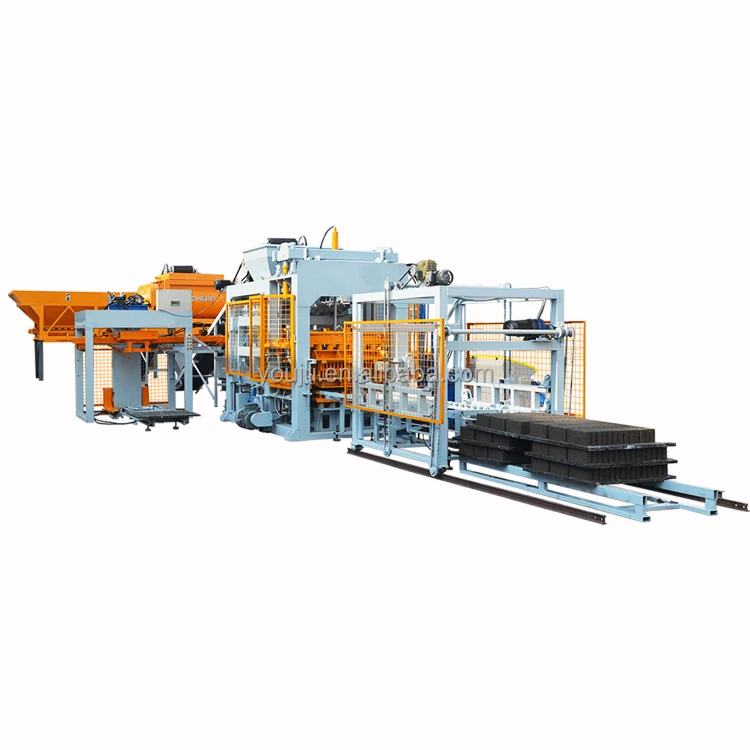
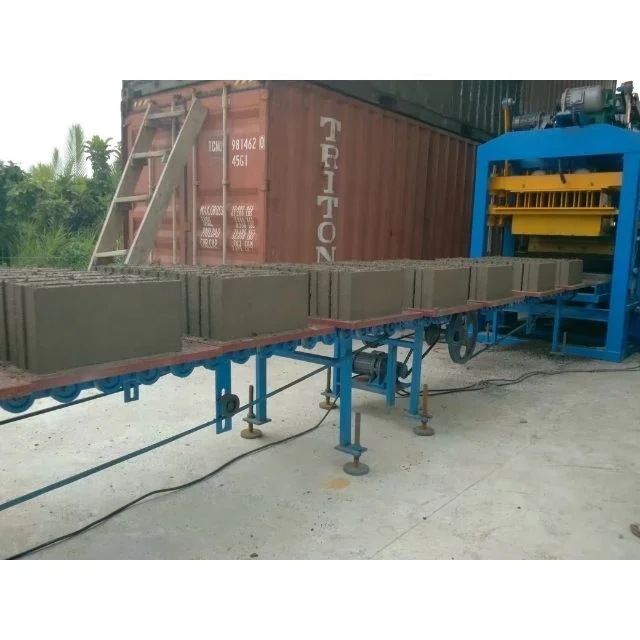 Automatic block machine