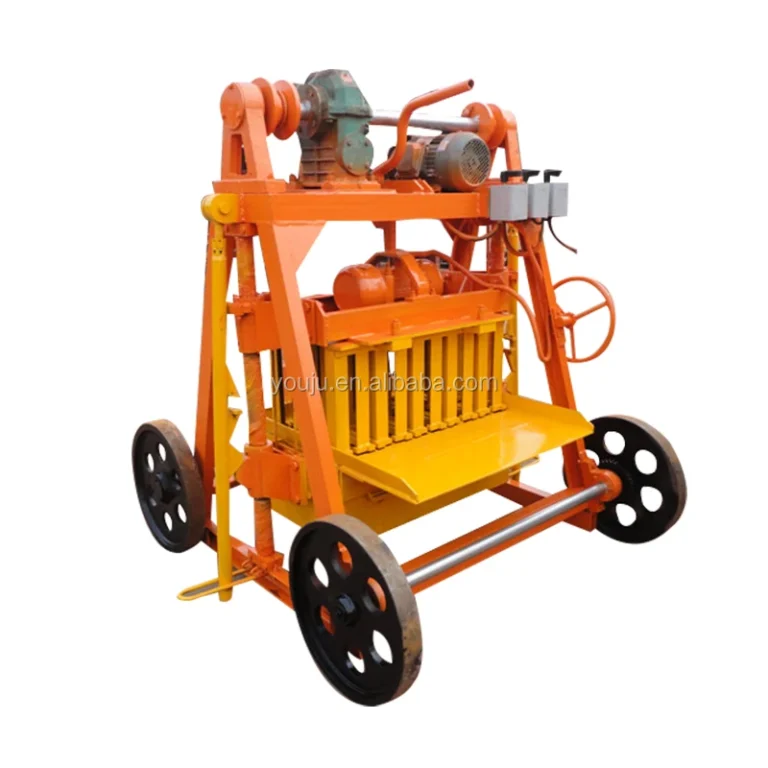
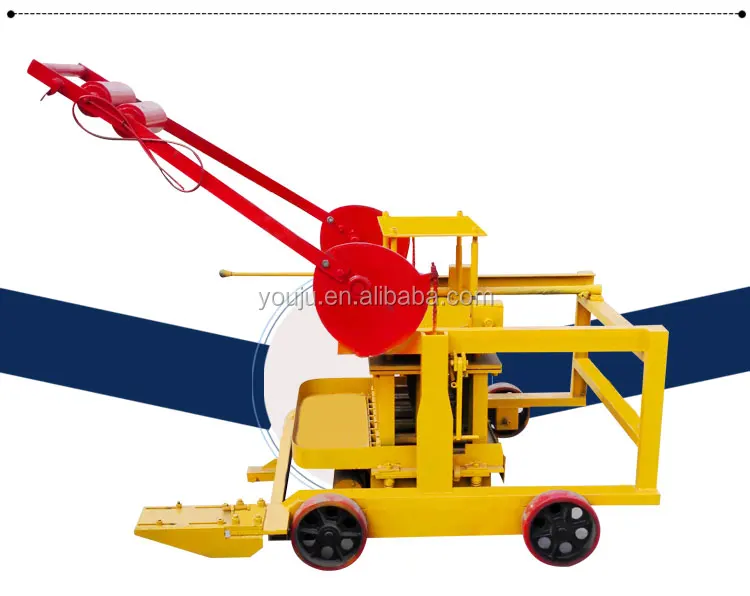
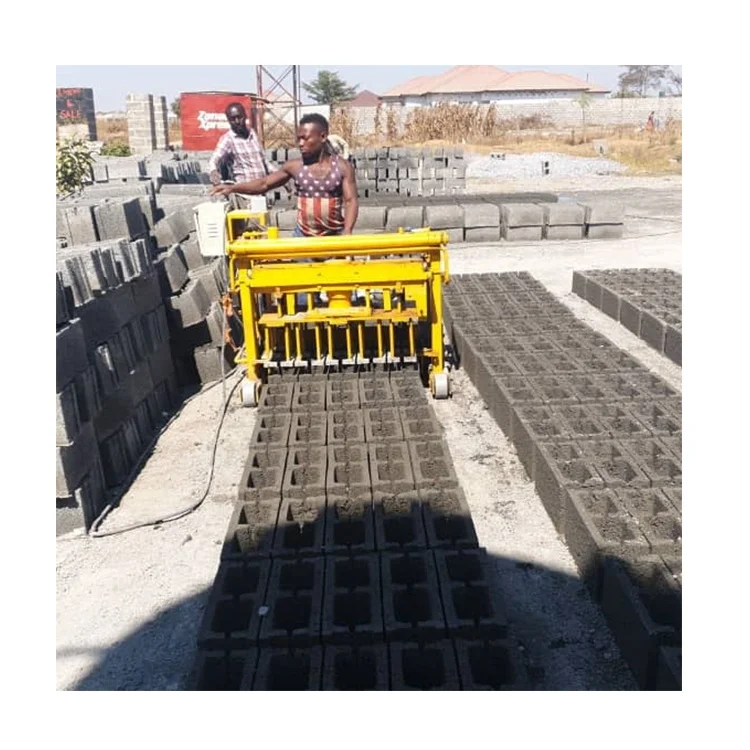
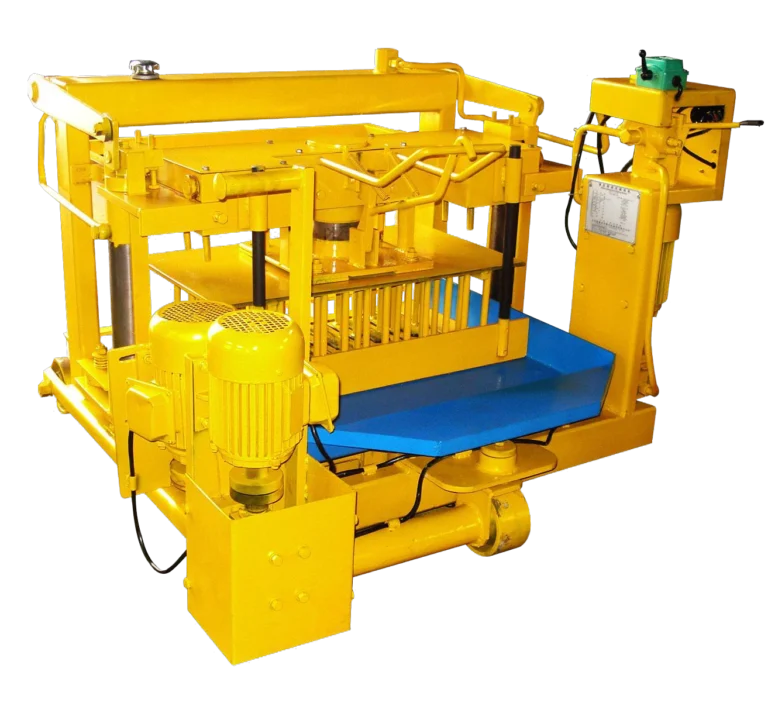
Single Focus, Matched System — the QMY6-25 is specified as a complete unit where machine, mould, and ground-laying method work together, not sourced from different suppliers.
Technical Specifications
| Parameter |
Value |
| Model |
QMY6-25 |
| Product Type |
Mobile Egg-Laying Concrete Block Making Machine |
| Main Vibration Form |
Three-dimensional excitation |
| Vibration Frequency |
3200 Hz |
| Overall Power |
9.6 kW |
| Moving Method |
Automatic movement with hydraulic steering |
| Overall Dimension |
2000 × 2100 × 1650 mm |
| Moulding Cycle |
25–30 s |
| Pallet Requirement |
None (egg-laying type) |
| Output Capacity |
1080 pcs/h (based on 400×200×200 mm hollow block, 6 pcs/mould) |
| Output Capacity |
1260 pcs/h (based on 400×150×200 mm hollow block, 7 pcs/mould) |
| Output Capacity |
1620 pcs/h (based on 400×120×200 mm solid block, 9 pcs/mould) |
| Output Capacity |
1800 pcs/h (based on 400×100×200 mm solid block, 12 pcs/mould) |
| Shift Output |
8600 pcs/shift (based on 400×200×200 mm hollow block, 8-hour shift) |
| Automation Level |
Semi-automatic, single-person operation |
| Power Source |
Motor engine |
Application Suitability
| Application |
Material or Output |
| On-site hollow block production for building contractors |
Crushed stone, sand, cement and water mix without fixed plant |
| Housing and development project sites |
Multiple hollow and solid block formats produced locally |
| First-time block production operations |
Low-investment setup without pallet or curing rack infrastructure |
| Remote construction sites with limited logistics |
Self-propelled machine lays blocks directly on prepared ground |
What "1080 Pieces per Hour" Leaves Out About Mobile Block Machine Output
Every output figure above is tied to a specific block size and mould cavity count — no single number tells the full story.
A capacity claim of 1080 pieces per hour sounds definitive until you ask which block it assumes. The answer here is a 400×200×200 mm hollow block with six cavities per mould. Switch to a 120 mm solid block with nine cavities and the number climbs to 1620. Without this context, a buyer ordering a mobile block machine manufacturer catalogue model may discover on site that daily volume falls well short of the plan. That gap between quoted and actual output is one of the most common reasons first-time block producers miss their project deadlines [NEED_CITE: common causes of output shortfall in mobile block production].

Why Pallet-Free Operation Changes Your Site Logistics
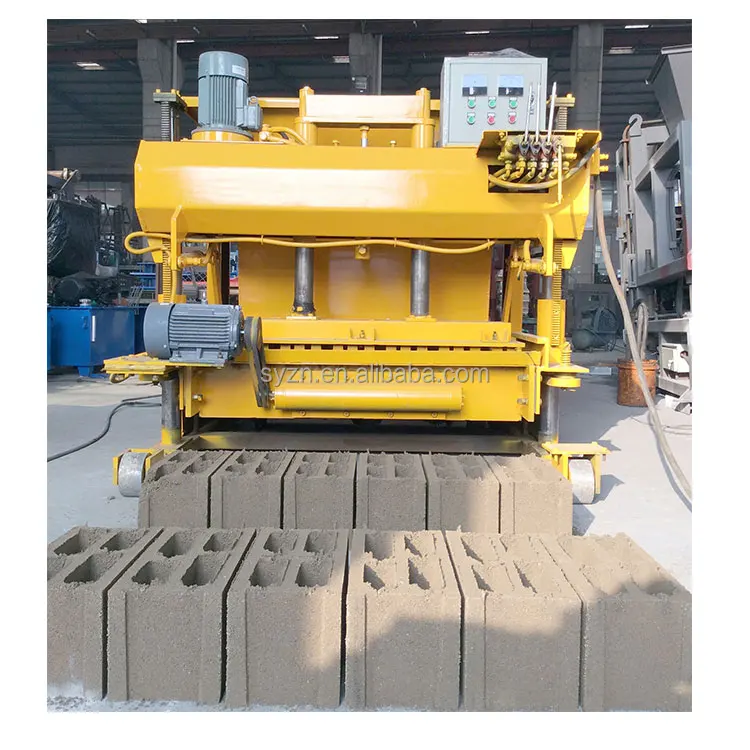
The QMY6-25 lays each block directly onto a level concrete floor and moves forward automatically, so there is no pallet to buy, store, rotate, or replace. For a contractor working on a housing development in a region where timber or PVC pallets are hard to source, this removes an entire supply chain. The hydraulic steering lets one operator guide the mobile block machine manufacturer unit across the production area while the mould cycles behind, keeping labour requirements to a minimum.
Matching the Vibration Profile to Hollow and Solid Formats
Three-dimensional excitation at 3200 Hz is designed to consolidate both hollow and solid block mixes within the 25–30 second cycle. Hollow blocks need enough vibration to compact thin shells without collapsing the cores, while solid blocks demand force distributed through the full depth. A mobile block machine manufacturer that sets vibration as a single fixed value ignores this difference; here the excitation pattern works across the listed format range so the operator does not need to manually retune between block types [NEED_CITE: vibration consolidation principles for concrete block forming].
Reading the Specs That Actually Affect Your Daily Run
The 9.6 kW total power draw determines what generator or site connection you need before the machine arrives. At a moulding cycle of 25–30 seconds, the press completes roughly two cycles per minute, which sets the pace your material feeder and operator must sustain. The 2000 × 2100 × 1650 mm footprint is compact enough to work inside a partially completed building shell, yet the mould cavity counts — six for 200 mm hollow, twelve for 100 mm solid — show that output scales with format choice, not machine size alone. Understanding these relationships lets a buyer plan shift length and raw material delivery around realistic numbers rather than optimistic brochure claims.
When the Wrong Ground Surface Stops Production
Egg-laying machines need a flat, cured concrete slab to deposit blocks on. If the site only has compacted earth or uneven gravel, blocks will crack or lean as they are laid, and the entire production run becomes waste. Buyers who assume any flat ground will work often spend the first week pouring a slab they never budgeted for, while the mobile block machine sits idle. Ground preparation should be confirmed before the machine ships, not after it arrives [NEED_CITE: ground surface requirements for egg-laying block machines].
Why Buyers Choose This Range Over Assembled Alternatives
Block machinery is the single focus here, so the QMY6-25 arrives with mould, hydraulic steering, and power unit tested as one system rather than pieced together from separate vendors. Mould options cover the hollow and solid formats the buyer’s local market actually sells, and custom mould drawings are available when standard sizes do not match. Automation level is selectable, meaning a contractor can start with semi-automatic single-person operation and add handling equipment later if volume grows. Voltage, frequency, and control display language are confirmed in writing before production starts, preventing the commissioning delays that strand machines on site for weeks.
Documentation & Verification
- Capacity calculation sheet listing output per block format and mould cavity count
- Machine specification sheet with vibration frequency, power, and dimension values confirmed
- Mould drawing and format list showing available block sizes
- Voltage, frequency, and control language sign-off record before dispatch
- Factory test record on buyer’s target block format before shipment
Installation, Commissioning & Support
- Level concrete slab of adequate area required for egg-laying block deposition
- Power supply matching confirmed voltage and frequency before the 9.6 kW motor is energised
- Hydraulic steering system checked and fluid topped up during on-site assembly
- First production run supervised to set moulding cycle within 25–30 second range
- Operator trained on single-person workflow including mould change procedure
- Wear parts list supplied with first-order spare mould and hydraulic seal recommendations
What to Prepare Before Requesting a Quote
Send your target block sizes, required daily output, and the raw material mix available locally so the configuration can be matched to your actual conditions. Confirm the voltage and frequency at your site, along with the control panel language your operator reads, to avoid rework after the machine arrives. If you have a specific project deadline, share the start date so production and shipping can be scheduled around it.
Frequently Asked Questions
Q: How is the stated capacity calculated and which block format does each figure assume?
A: Every output number is tied to a specific block dimension and mould cavity count. For example, 1080 pieces per hour assumes a 400×200×200 mm hollow block with six cavities, while 1620 pieces per hour assumes a 400×120×200 mm solid block with nine cavities. Shift output of 8600 pieces is based on an eight-hour shift running the 200 mm hollow block format.
Q: What ground surface conditions are required for pallet-free egg-laying operation?
A: The machine needs a flat, cured concrete surface to lay blocks directly onto. Compacted earth or uneven gravel will cause blocks to crack or tilt during deposition. Ground preparation must be completed before the machine begins production, and the slab should extend across the full planned production area.
Q: Which block formats and mould options are available, and what is the mould change procedure?
A: Standard moulds cover hollow blocks in 200 mm and 150 mm widths and solid blocks in 120 mm and 100 mm widths. Custom moulds can be designed to buyer drawings. Mould change is performed by the operator on site using the standard bolt pattern, and training covers the procedure during commissioning.
Q: What voltage and frequency options are available, and is the control display language selectable?
A: Voltage and frequency are configured to match the buyer’s site supply, and the control display language is confirmed before production begins. These details are documented in a written sign-off record to prevent commissioning delays when the machine arrives at its destination.

 Mobile block machine