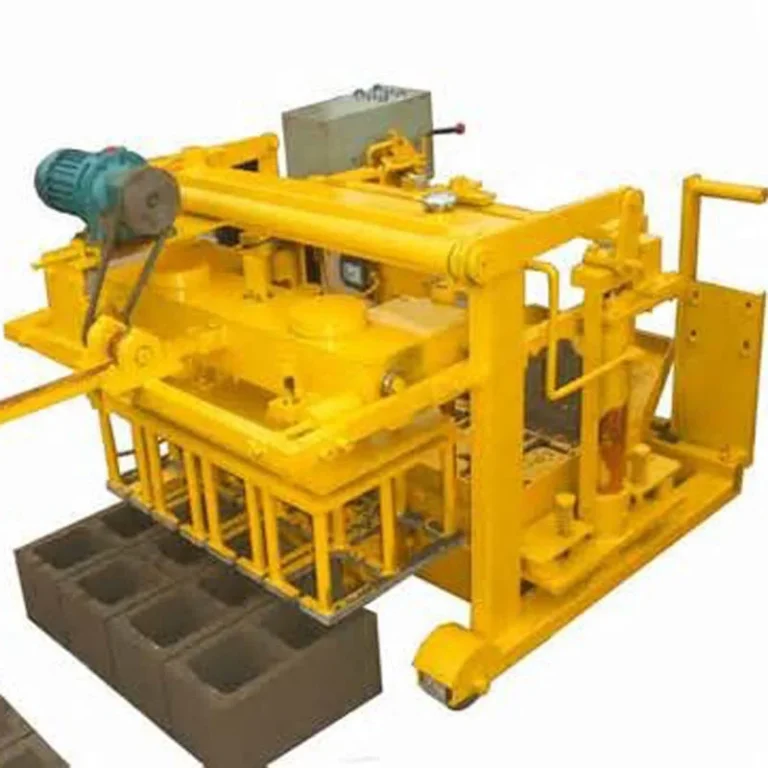
Matched System Configuration — the QMY4-30 mobile block machine is specified alongside its compatible mould formats and ground conditions as one verified production unit, not an isolated press listing.
Technical Specifications
| Parameter |
Value |
| Model |
QMY4-30 |
| Product Type |
Mobile Egg-Laying Block Making Machine |
| Machine Type |
Mobile / egg-laying (palletless) |
| Transmission |
Hydraulic |
| Excitation Method |
Mold box excitation |
| Pallet Requirement |
None (palletless operation) |
| Automation Level |
Manual |
| Applicable Terrain |
Mountainous, hilly, industrial mining, desert and coastal areas |
| Certification |
ISO9001:2000, CE |
| Mould Heat Treatment |
Carburization technology applied |
| Hydraulic Pressure |
(basis to be confirmed) |
| Vibration Force |
(basis to be confirmed) |
| Output Capacity |
(basis to be confirmed) |
| Cycle Time |
(basis to be confirmed) |
| Mould Format Options |
(basis to be confirmed) |
| Rated Power |
(basis to be confirmed) |
Application Suitability
| Application |
Material or Output |
| On-site housing project block production |
Concrete mixed with local crushed stone, river sand and cement |
| Remote infrastructure block making |
Aggregate and sand sourced near mountainous or desert sites |
| Small-scale contractor block supply |
Standard concrete mixes for solid and hollow block formats |
| Coastal and mining area construction |
Blocks produced directly on uneven or unprepared ground |
Why "Pieces per Hour" Means Nothing Without the Block Format
Real output is defined by the block format you actually produce, not the smallest block the machine can cycle.
I have walked onto sites where a mobile block machine manufacturer quoted capacity based on a small solid paver, while the contractor needed 200mm hollow blocks for wall construction. The daily count fell drastically below what was promised. The QMY4-30 operates on a hydraulic cycle, and that cycle length changes with every mould you bolt on. When a supplier gives you one number for output without naming the block format, that number is built on sand. Always ask which block size, mix design and curing condition the figure assumes before comparing machines. [NEED_CITE: block format and cycle time relationship in mobile egg-laying machines]

Where the QMY4-30 Sits in the Full Machine Range
The QMY4-30 occupies the entry-level mobile tier of the Shiyue block machinery range. It is a palletless egg-laying machine, meaning it lays blocks directly onto the ground and moves forward, leaving the product to cure in place. This removes the need for pallets, curing racks and a fixed production building. For a buyer surveying options, this mobile block machine represents the lowest capital entry point — suitable when your priority is producing blocks on a project site rather than running a commercial block plant. Semi-automatic and automatic tiers sit above this, adding pallet systems, stacking and higher output for buyers who need volume and format variety.
Ground Conditions That Decide Whether Egg-Laying Works
Egg-laying operation demands a flat, firm surface. The QMY4-30 moves on wheels and settles onto the ground for each press cycle, so the terrain directly affects block dimensional consistency. Soft soil, fresh fill or heavily uneven ground will cause the machine to settle unevenly during vibration, producing blocks with height variation. In desert or coastal sand conditions, a compacted gravel strip is often prepared as a production lane. This mobile block machine manufacturer recommendation is simple: the ground you lay blocks on must support the weight of fresh concrete without sinking. [NEED_CITE: ground preparation standards for palletless block production]
What the Specs Actually Mean on a Job Site
Mold box excitation on the QMY4-30 means vibration is applied directly to the mould cavity rather than through the machine frame. This concentrates compaction force where the concrete sits, improving density in the block walls and corners. Hydraulic transmission delivers pressing force through a hydraulic cylinder, which maintains consistent pressure throughout the cycle regardless of motor speed fluctuation — important when running on a portable generator at a remote site. The carburization heat treatment on moulds extends surface hardness, meaning the mould cavity resists abrasion from aggregate over many cycles before dimensional tolerance degrades. Manual operation means one or two operators control feeding, cycling and movement, keeping the labour requirement low but also keeping output tied to human pace rather than a timed automatic sequence.
The Cost of Skipping Terrain and Mix Verification
Buying a mobile egg-laying machine without confirming your ground conditions leads to cracked and uneven blocks from the first day. I have seen contractors in hilly regions lose entire production runs because the machine shifted during vibration on sloped ground. Skipping local aggregate testing means your mix may be too wet or too lean for the mould box excitation to compact properly, resulting in blocks that crumble when handled. When the mould format is chosen without checking what your market actually buys, you end up producing inventory that sits unsold while customers ask for a size you cannot make. [NEED_CITE: common causes of block failure in mobile egg-laying production]
Why Source This Machine Through Shiyue
Block machinery is our single product focus, so the QMY4-30 is not assembled from unrelated components but specified as a matched system of machine, mould and ground requirements. We set the configuration against your actual local aggregate and target block format rather than quoting from a catalogue default. Mould design covers the formats your regional market demands, and custom moulds can be produced from your drawings. The automation level is selectable across our range, so starting with this manual mobile unit leaves a clear upgrade path to semi-automatic or fully automatic lines when your output requirements grow. Installation support includes operator training on your specific mix and ground conditions.
Documentation & Verification
- Machine specification sheet confirming hydraulic pressure and vibration force per block format
- Capacity calculation stating the exact block size and cycle time assumed
- Mould drawing and format list matching your market requirements
- Voltage and frequency confirmation document before production begins
- Factory test record on your specified block format before dispatch
- CE declaration documentation where applicable for your import market
Installation, Commissioning & Support
- Level and compact a gravel production lane suited to the QMY4-30 wheel track and weight
- Confirm generator or site power matches the voltage and frequency specified on your order
- Machine arrives assembled; verify hydraulic lines and mould box excitation before first cycle
- Initial mould alignment and hydraulic pressure adjustment done on your local mix during commissioning
- Operator training covers manual feeding rhythm, cycle timing and block handling after laying
- Mould wear parts list and replacement procedure provided with carburized mould specifications
What to Prepare Before Requesting a Quote
Tell us the block formats your local market sells and the daily volume you need to hit. Share the type of sand and aggregate available near your site, along with any lab test results on gradation and clay content. Confirm your site ground conditions and whether you can prepare a compacted production area, as this determines whether egg-laying operation is viable for your project.
Frequently Asked Questions
Q: How is the output capacity of the QMY4-30 verified?
A: We state output based on a specific block format, cycle time and mix condition. Every quotation names the block size the capacity figure assumes, so you can compare it against the format you actually need to produce rather than a catalogue best-case number.
Q: Where does the QMY4-30 fit compared to your semi-automatic and automatic machines?
A: The QMY4-30 is the mobile, manual, palletless entry in our range — lowest investment and suited to on-site production. Semi-automatic models add pallet systems for higher consistency, and automatic lines add stacking and cubing for commercial volume.
Q: What voltage and frequency options are available?
A: The electrical system is configured to match your target market supply. We confirm voltage, frequency and any control labeling language before production begins, so the machine is ready to run when it arrives on your site.
Q: Can custom moulds be designed for my block formats?
A: Yes. Moulds are available for standard hollow, solid and paving formats, and custom moulds can be manufactured from your drawings. All moulds receive carburization heat treatment for extended wear life against abrasive aggregate.
Q: What ground conditions are needed for egg-laying operation?
A: The QMY4-30 requires a flat, firm surface such as compacted gravel or concrete. Soft or uneven ground causes the machine to shift during vibration, resulting in blocks with inconsistent height and density.

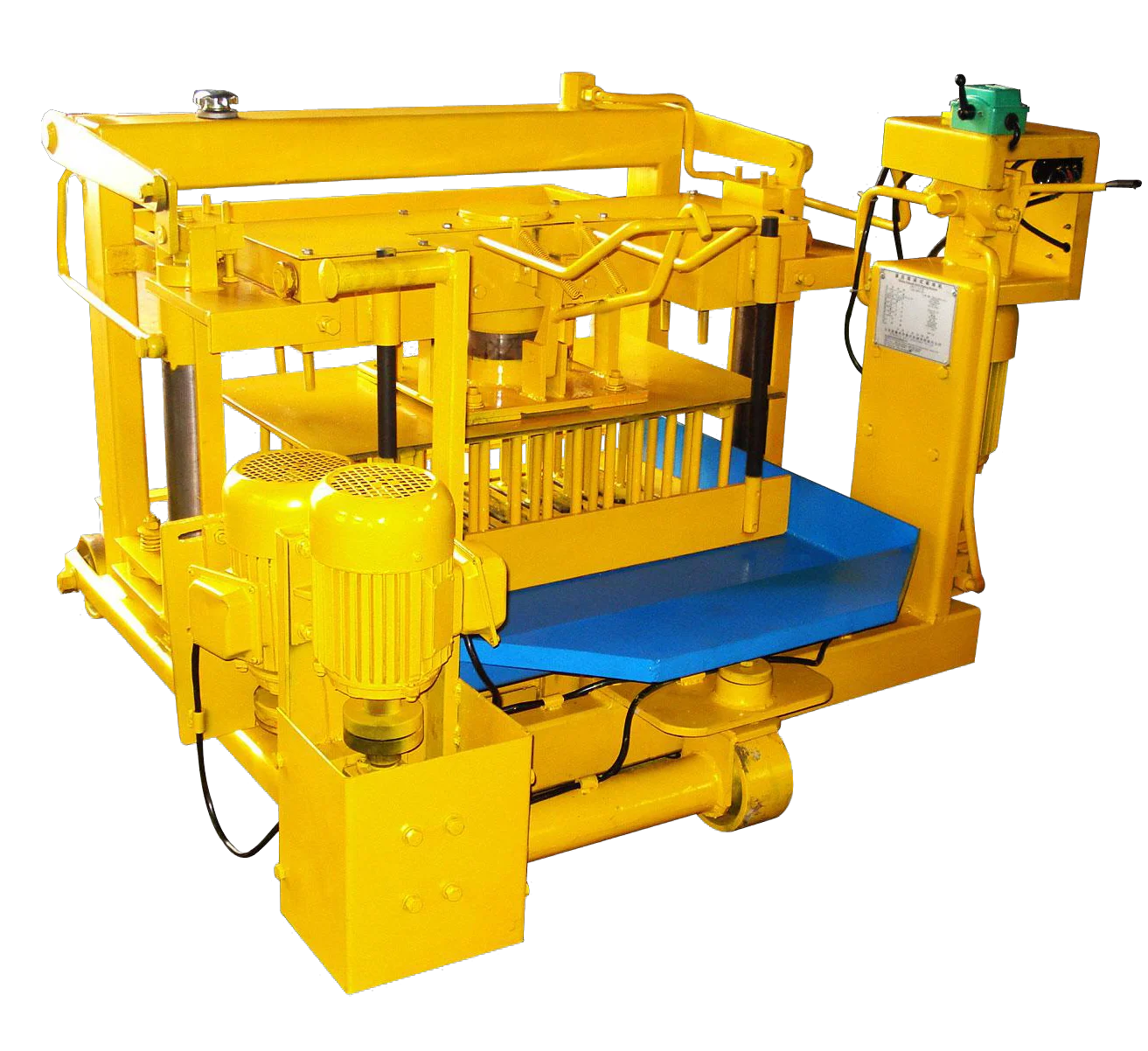
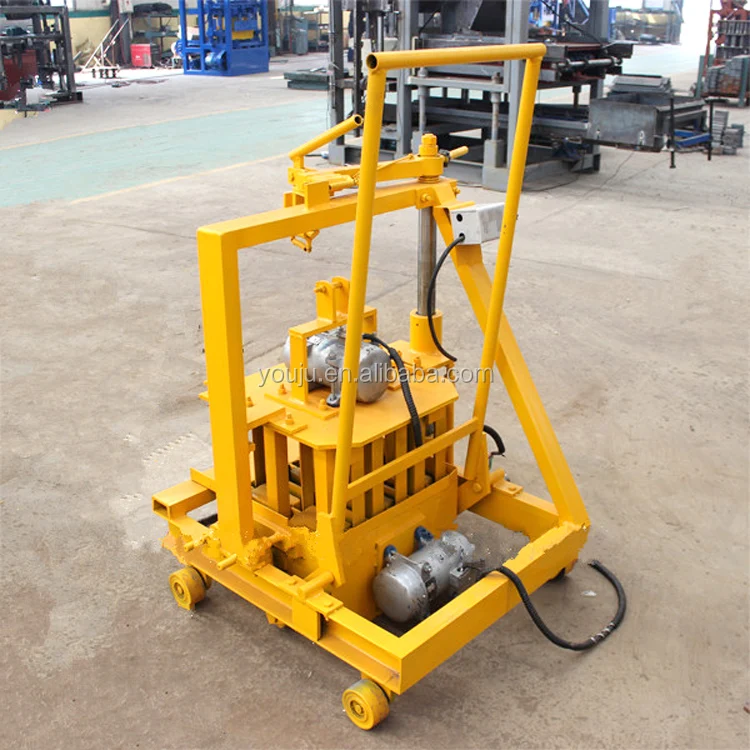
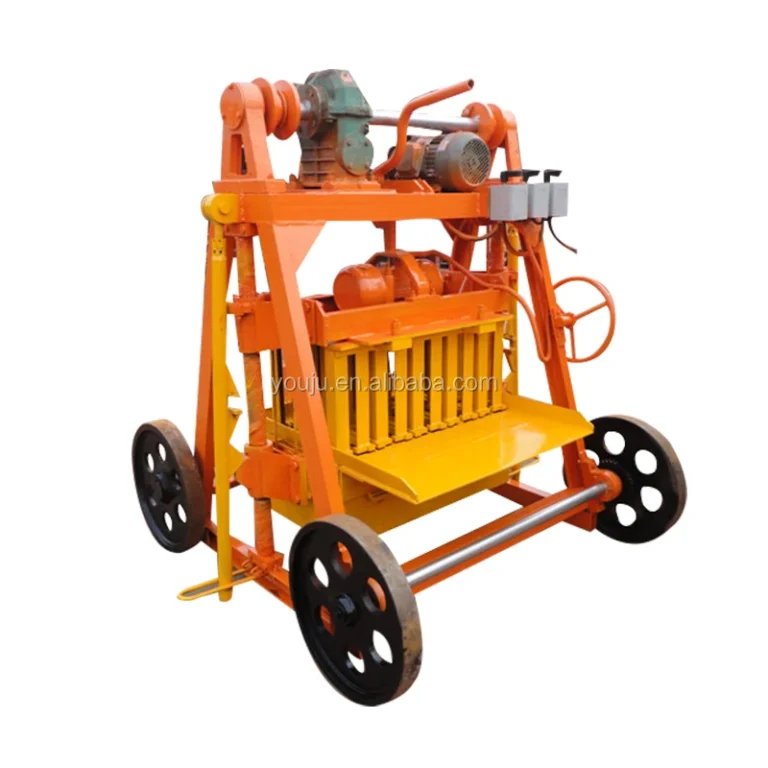 Mobile block machine
![QMR4-45 Mobile Concrete Block Machine for Hollow Block – Manufacturer8 + 3 + 0 + 9 + 0 = 20 → 20 % 6 = 2 → 句式: [品类词] [机型号或规格] | [站点修饰词] 目标站 shiyueblockmachine.com → 全品类目录类角色 → 池: Manufacturer / Factory Supply / Full Range 20 % 3 = 2 → Full Range Mobile Concrete Block Machine QMR4-45 | Full Range](https://shiyueblockmachine.com/wp-content/uploads/2026/04/H49cf628879e04843a82320591d4387a5Z-768x768.webp)