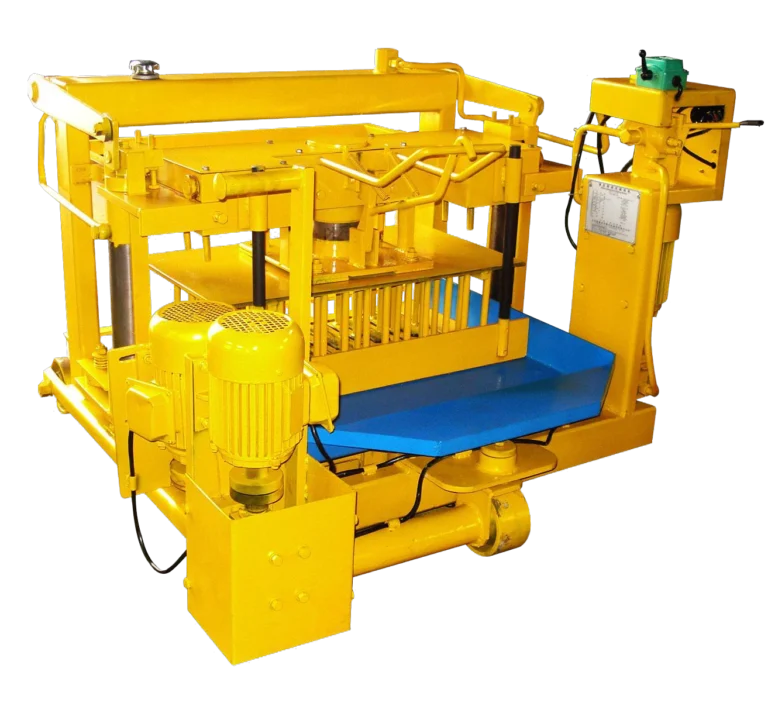
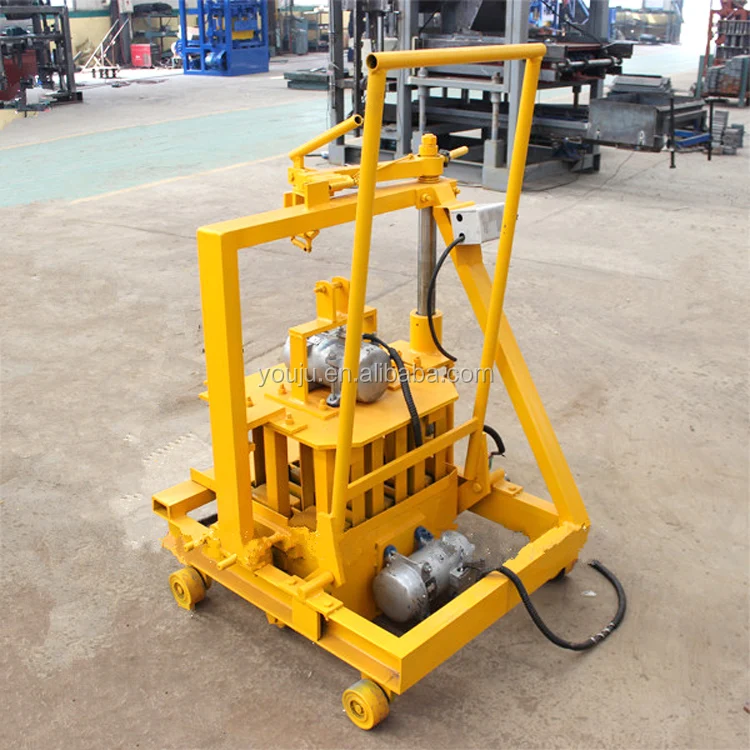
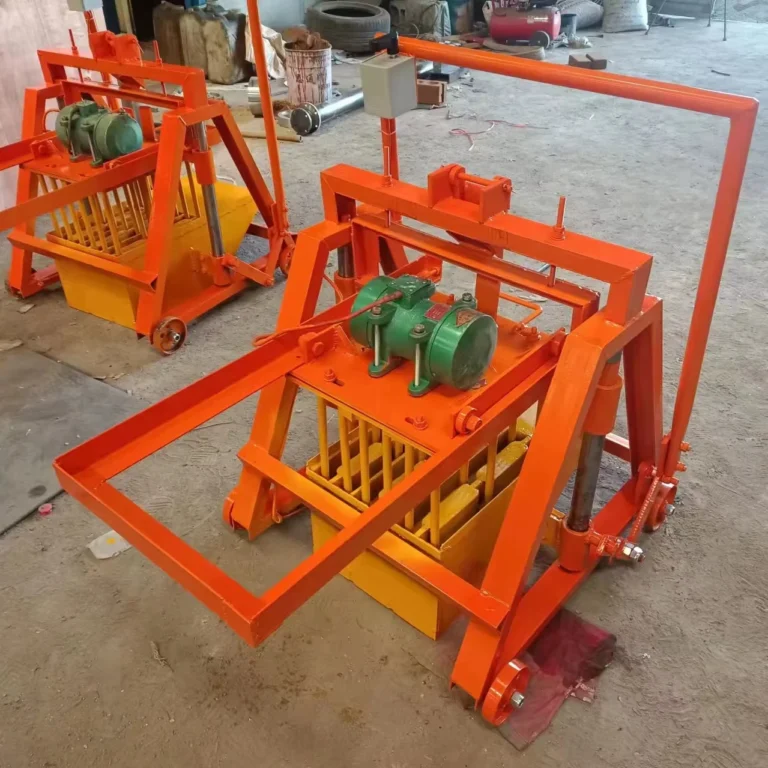
Matched System, Not a Catalogue Default — The QMY4-30 mobile block making machine is configured around the buyer’s target block format, local aggregate, and site power supply rather than shipped as a generic unit.
Technical Specifications
| Parameter |
Value |
| Model |
QMY4-30 |
| Product Type |
Mobile Concrete Block Making Machine |
| Rated Power |
5 kW |
| Molding Cycle Time |
30 seconds |
| Overall Dimensions (L×W×H) |
1200 × 1200 × 1100 mm |
| Net Weight |
950 kg |
| Raw Materials |
Cement, sand, crushed stones, slag |
| Automation Level |
Mobile / manual operation |
| Mould Format |
Changeable for hollow block and solid brick |
| Output per Hour |
480 pcs (400×200×200 mm hollow block, 4 pcs/mould) |
| Output per Hour |
600 pcs (400×150×200 mm hollow block, 5 pcs/mould) |
| Output per Hour |
840 pcs (400×100×200 mm hollow block, 7 pcs/mould) |
| 8-Hour Shift Output |
3,840 pcs (basis: 400×200×200 mm) |
| 8-Hour Shift Output |
4,800 pcs (basis: 400×150×200 mm) |
| 8-Hour Shift Output |
6,720 pcs (basis: 400×100×200 mm) |
| Voltage & Frequency |
To be confirmed with buyer’s site standard |
| Pallet Requirement |
Pallet-free egg-laying operation |
| Warranty |
One year |
Application Suitability
| Application |
Material or Output |
| On-site housing project block production |
Hollow blocks from crushed stone, sand and cement laid directly on a prepared floor slab |
| First block plant for entrepreneurs |
Solid bricks and hollow blocks with minimal infrastructure investment |
| Contractor self-supply on remote sites |
Hollow blocks produced adjacent to the building footprint, eliminating transport from a distant plant |
| Distributor evaluation unit |
Mobile trial runs before committing to a stationary block line |
What "Pieces per Hour" Leaves Out on a Mobile Block Making Machine
Capacity only means something when the block format is named next to it.
Every supplier quotes a mobile block making machine for sale with an hourly figure, but that number is almost always tied to the smallest, lightest block the mould can produce. A buyer expecting 400×200×200 mm hollow blocks all day will see output land well below the headline number. On the QMY4-30, the same machine produces 480 pieces per hour of 200 mm-wide blocks but 840 pieces per hour of 100 mm-wide blocks — nearly double, simply because the mould has more cavities. Without the format attached, a quote tells the buyer nothing useful. [NEED_CITE: common industry practice of quoting peak capacity without format disclosure]
I have walked onto Latin American sites where the machine arrived, the operator started producing 200 mm hollow blocks, and the project manager could not understand why daily output was half of what the invoice seemed to promise. The machine was not faulty; the expectation was.

Where the QMY4-30 Sits in the Full Machine Range
The Shiyue range spans small mobile units through to high-capacity automatic lines with pallet circulation and cubing. The QMY4-30 occupies the entry-mobile tier: it is designed for buyers who need block production without a fixed plant, without pallets, and without a curing rack system. For a contractor pouring foundations on a housing development, this mobile block making machine for sale removes the logistics cost of hauling blocks from a remote yard.
When a Buyer Should Step Up from Mobile to Stationary
If daily demand climbs beyond what an eight-hour shift on a single mobile unit can deliver, or if the block format requires consistent hydraulic pressing and vibration that only a stationary line provides, the next step is a semi-automatic plant with pallet handling. The QMY4-30 is the starting point of the range, not the ceiling. Buyers evaluating long-term output should use it as a baseline and compare against semi-automatic and automatic tiers before deciding. [NEED_CITE: output threshold where mobile versus stationary line investment breaks even]
Reading the Specifications That Matter
The 5 kW rated power reflects the modest electrical demand of a machine that relies on vibration and gravity rather than high-pressure hydraulics. This means the QMY4-30 can run from a site generator without requiring a dedicated transformer, a practical advantage on rural or greenfield construction sites. The 30-second moulding cycle is the rhythm the operator must sustain manually; it is realistic for trained crews but should not be confused with the fully automated cycle times quoted on stationary presses.
Net weight of 950 kg keeps the unit light enough to be relocated around a site by a standard forklift or small crane, yet heavy enough that vibration during moulding does not cause the machine to walk across the production floor. The changeable mould system means a single QMY4-30 can produce both hollow blocks and solid bricks, so a buyer is not forced to purchase two machines when the project specification shifts.
The Cost of Overlooking Site Power and Spares
A mobile machine is often bought quickly for a project already under way, and that urgency means voltage and frequency are assumed rather than confirmed. A 5 kW motor wound for 380 V / 50 Hz will overheat and fail within weeks on a 220 V / 60 Hz site supply. The result is not a slow decline but a sudden burnout that stops production entirely. [NEED_CITE: motor failure rates linked to voltage mismatch in exported machinery]
Beyond the motor, the absence of spare hydraulic seals and vibration springs on site means that a single worn component can halt the machine while replacement parts are shipped internationally. I once saw a mobile unit in Colombia sit idle for nearly three weeks because a local supplier could not source the correct seal kit.
Why Source This Mobile Block Making Machine for Sale Through Shiyue
Block machinery is the single product focus, so the QMY4-30 is specified alongside the exact mould, spare seal kit, and vibration springs the buyer will need, rather than shipped as a standalone press. Configuration is set against the buyer’s local aggregate and target block format — not a default catalogue setting — which means cycle time and output figures are honest from day one.
Every dispatch includes a factory test record run with the buyer’s specified block size, and the mould drawing is provided before production so the buyer can verify dimensions against local standards. Wear parts lists are reviewed before shipment so the first replacement set is already on site when the machine starts work. Voltage, frequency and any control language are confirmed in writing before the machine is wired, preventing the commissioning delays that are common with export equipment. [NEED_CITE: pre-dispatch factory testing standards for concrete block machinery]
Documentation & Verification
- Line layout showing QMY4-30 placement on the site floor with clearance dimensions
- Capacity calculation per block format with cycle time and mould cavity count stated
- Mould drawing and full format list for hollow block and solid brick options
- Factory test record run on the buyer’s target block size before dispatch
- Wear parts and mould availability list covering the first replacement cycle
Installation, Commissioning & Support
- Site floor must be level concrete capable of supporting 950 kg plus wet block weight during curing
- Dedicated 5 kW circuit at confirmed voltage and frequency to prevent motor overload on the QMY4-30
- Machine shipped assembled; only the mould and vibration motor guards require fitting on arrival
- First production run supervised remotely or on site to set cycle rhythm and mix proportions
- Operator training covers mould change procedure and daily vibration spring inspection
- Spare hydraulic seals and vibration springs shipped with the unit to cover the first replacement interval
What We Need to Move Forward
To specify the QMY4-30 correctly, share the block formats your market sells, the daily output you need for each format, and the voltage and frequency available on site. If you already have a mix design based on local sand and aggregate, include that as well so the vibration and cycle parameters can be matched. Let us know whether you will operate on a prepared slab or directly on compacted ground.
Frequently Asked Questions
Q: How is the QMY4-30’s capacity verified and which block format is each figure based on?
A: Each capacity figure is tied to a specific block dimension and mould cavity count. For example, 480 pieces per hour applies to 400×200×200 mm hollow blocks using a 4-cavity mould, while 840 pieces per hour applies to 400×100×200 mm blocks on a 7-cavity mould. No single headline number is used without the format stated alongside it.
Q: Where does the QMY4-30 sit in the full machine range?
A: It occupies the entry-mobile tier, designed for on-site production without a fixed plant or pallet system. Buyers whose daily demand exceeds a single mobile shift, or who need automated stacking and curing, should evaluate semi-automatic or automatic stationary lines as the next step in the range.
Q: What voltage and frequency does this mobile block making machine for sale require?
A: Voltage and frequency are not fixed at the catalogue level; they are confirmed against the buyer’s site power supply before the motor is wound and the wiring is completed. This prevents the overheating and premature motor failure that commonly occur when a machine built for one market is operated on another’s grid standard.
Q: Can custom block sizes be designed for the QMY4-30?
A: Yes, moulds can be designed to buyer drawings for formats beyond the standard hollow block and solid brick range. The mould drawing is shared for approval before manufacturing so the buyer can verify dimensions against local building codes and market requirements.
Q: What are the site preparation requirements for mobile production?
A: The machine operates on a level concrete floor or compacted ground surface. No fixed foundation or pallet system is required. The buyer must provide a dedicated electrical circuit matching the confirmed voltage and frequency, and ensure adequate clearance around the 1200×1200 mm footprint for the operator to move freely.

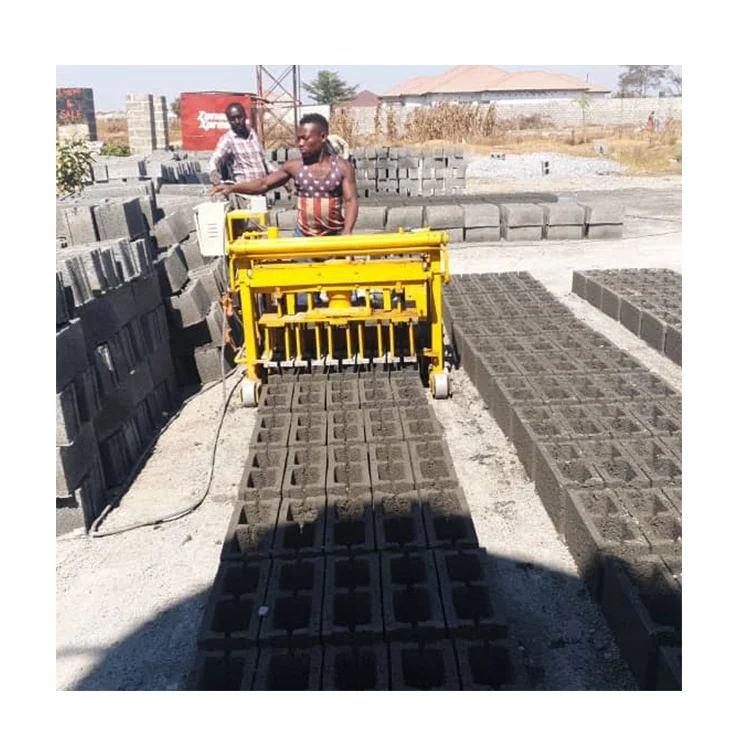
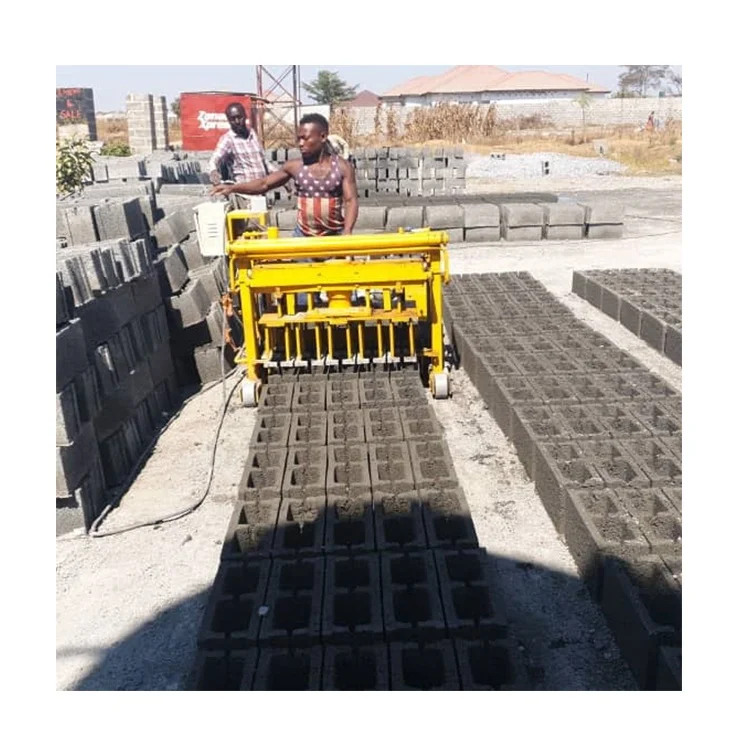 Mobile block machine