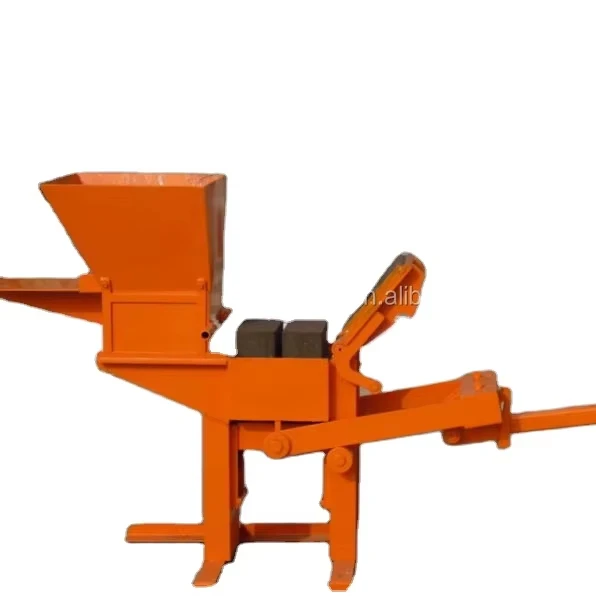
Matched System — machine, mould, pallet and handling specified as one integrated unit rather than sourced separately, confirmed against your local clay properties before dispatch.
Technical Specifications
| Parameter |
Value |
| Model |
LY2-40 |
| Product Type |
Manual Clay Brick Making Machine |
| Overall Dimensions (L×W×H) |
1600 × 700 × 1200 mm |
| Net Weight |
200–240 kg |
| Rated Power |
No power required — completely manual operation |
| Control System |
Manual lever operation |
| Molding Cycle |
30–40 seconds per press |
| Output Capacity |
400–1000 pieces per day (basis not stated in source — confirm block format, material and wall thickness) |
| Mould Format |
Changeable moulds for various interlocking profiles |
| Lifting System |
Manual |
| Mobility |
Steel wheel mounted |
| Paired Mixer |
JFA-1 or JQ350 mixer |
| Warranty |
1 year |
Application Suitability
| Application |
Material or Output |
| Off-grid interlocking brick production |
Soil-cement mix using local laterite or red clay |
| Small-scale housing project block forming |
Compressed earth blocks with 5–10% cement stabilization |
| On-site contractor block manufacturing |
Site-excavated soil blended with sand and cement |
| Remote community building programs |
Unfired clay interlocking bricks in areas with no grid power |
What "1000 Bricks a Day" Leaves Out When You Buy a Manual Clay Brick Making Machine
Daily output only means something when tied to a specific block format, wall thickness, and soil-cement mix.
I have seen buyers compare two manual clay brick making machines on paper and pick the one with the higher number, only to find the quoted capacity assumed a thin paving tile while they needed a thick-walled interlocking block. The cycle time stretches, the crew tires, and the daily count drops noticeably below expectation. Before you commit to any machine, ask the supplier to state output per specific mould profile and mix — not a single headline number [NEED_CITE: block format assumptions in capacity quotations]. That single question separates suppliers who understand production reality from those copying catalogue figures.

Where the LY2-40 Fits in the Full Machine Range
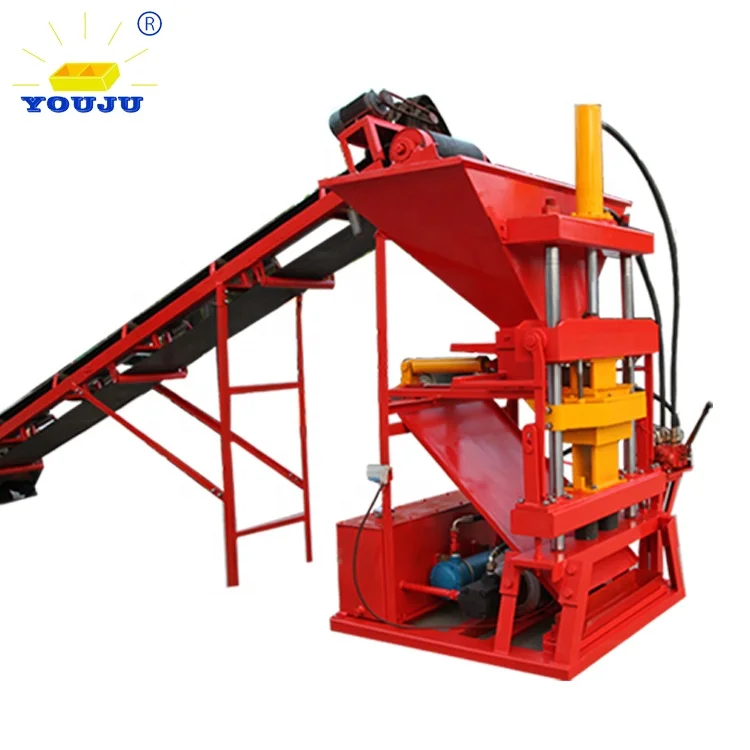
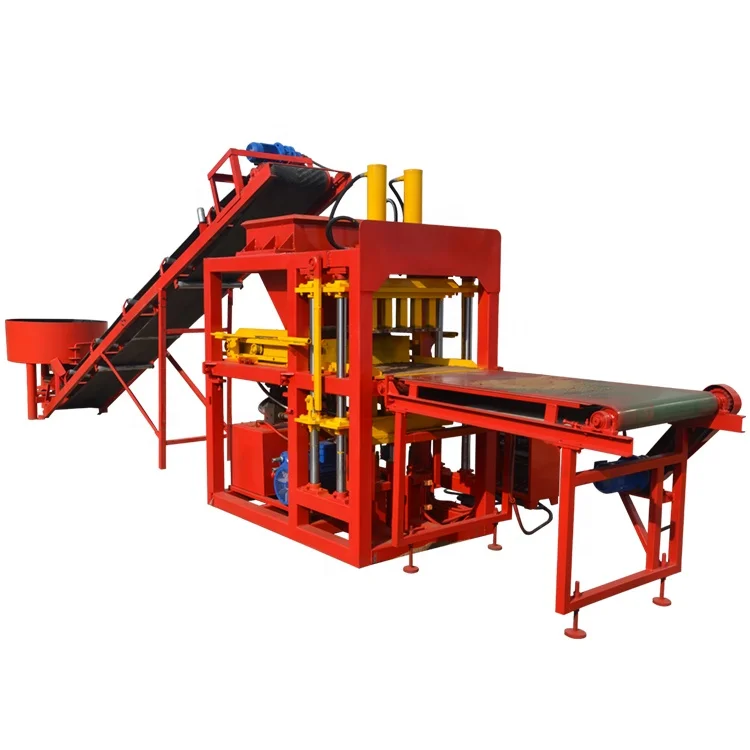
The LY2-40 sits at the entry point of our block machine range, built for operations that have no access to electricity or prefer to keep capital investment minimal. Buyers choosing this tier typically run small crews producing interlocking bricks for their own construction sites or for local sale in rural markets. Because the machine requires zero power, it eliminates the entire voltage-and-commissioning headache that delays powered lines. For buyers who later grow into higher volumes, the step up goes to semi-automatic machines with vibration and hydraulic assist, then to fully automatic lines with pallet feeders and stackers — each tier occupying a different plant footprint and investment band.
Choosing Between Manual, Semi-Automatic and Automatic Tiers
The decision comes down to three variables: daily volume target, available power infrastructure, and labour cost at your site. Manual machines like the LY2-40 trade throughput for independence from the grid, making them the only realistic option in regions where generators are expensive and unreliable [NEED_CITE: power infrastructure challenges in remote block production]. Semi-automatic tiers add vibration force and hydraulic pressure, producing denser blocks at higher speeds but requiring a stable electrical supply. Automatic lines introduce PLC-controlled batching, pallet circulation, and cubing — suitable when daily targets demand consistent output across long shifts and labour cost justifies the automation premium.
Understanding the Cycle Time, Mould Change and Soil Sensitivity
The 30–40 second molding cycle governs how many bricks a trained crew can press before fatigue sets in and rhythm slows. Mould changeability means a single LY2-40 can produce several interlocking profiles, but each format has a different cavity depth and compression ratio, so cycle time and daily output shift with every swap. The steel wheel chassis lets a crew reposition the machine closer to the mixer or curing area as the day progresses, reducing carrying distance. Paired with a JFA-1 or JQ350 mixer, the material feed stays consistent enough to maintain block density — an important detail because manual machines depend entirely on the operator keeping mix quality uniform. Soil type matters enormously here: a high-sand laterite responds differently to manual compression than a heavy clay, and vibration or pressure settings on powered machines cannot compensate on a unit that has neither.
The Cost of Skipping the Soil Test
Buying a manual clay brick making machine without testing local soil first is the single most common mistake in this tier. I recall a shipment to West Africa where the capacity estimate was based on standard clay, but the customer’s red soil carried a much higher sand content. The bricks crumbled on release, and daily output fell to roughly half the expected figure. The fix required re-evaluating the soil-cement ratio and adding a small proportion of fine aggregate, but those lost production weeks could have been avoided with a simple jar test before order confirmation [NEED_CITE: soil-cement stabilization testing methods for compressed earth blocks]. Always send a soil sample or at minimum describe your local material before finalizing the mould specification.
Why Source This Manual Clay Brick Making Machine Here
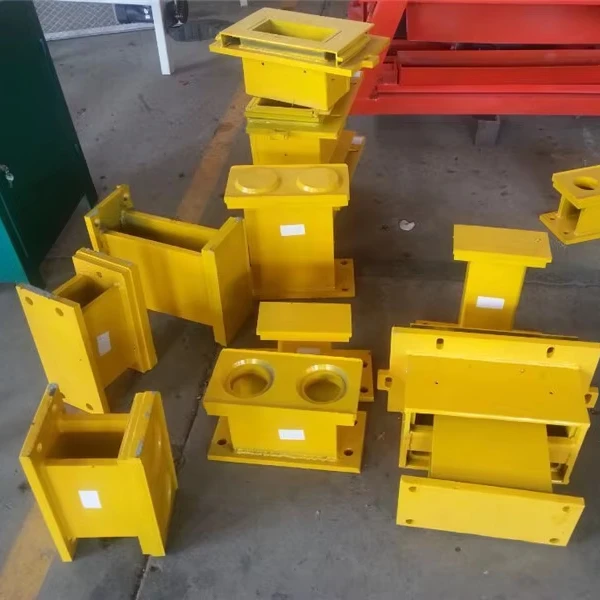
Block machinery is our single focus, which means the LY2-40 arrives as a matched system — machine, moulds, mixer recommendation and spare parts list specified together rather than assembled from unrelated suppliers. Every configuration starts with your target block format and local soil, not a catalogue default. Mould design covers the interlocking profiles your market actually sells, with custom drawings available when standard formats do not match. Automation level is selectable across the range, so you can begin with the LY2-40 and move to a semi-automatic press later without changing your entire plant concept. Factory testing records accompany each unit, and installation support includes operator training so your crew can reach full rhythm on day one.
Documentation & Verification
- Line layout and capacity calculation stating the exact interlocking brick format assumed
- Mould drawing and profile list confirming which interlocking shapes ship with the machine
- Voltage-free confirmation letter — the LY2-40 requires no electrical connection
- Factory test record on your specified soil-cement mix before dispatch
- Operation and maintenance manual with illustrated wear parts list
Installation, Commissioning & Support
- No electrical hookup needed — the LY2-40 operates entirely by manual lever force
- Level ground area of approximately 1600 × 700 mm required with space for mixer and curing zone
- Machine arrives assembled on steel wheels; place on compacted earth or concrete slab
- First-day production run supervised remotely to confirm soil-cement ratio and cycle rhythm
- Operator training covers mould change procedure, lever technique, and mix consistency checks
- Wear parts and replacement mould list provided for ongoing production continuity
What to Include in Your Inquiry
To recommend the right mould set and confirm realistic output, tell us which interlocking brick profile your market demands, the type of soil available at your site, and your target daily production volume. If you already own a mixer, share its model and capacity so we can verify material feed matches the LY2-40 cycle. Let us know whether your operation is in a region with no grid power or whether power may arrive later, which affects whether to start manual and plan a semi-automatic upgrade path.
Frequently Asked Questions
Q: Which interlocking brick formats can the LY2-40 produce and what is realistic daily output?
A: The LY2-40 accepts changeable moulds for various interlocking profiles. Realistic daily output depends on the specific block format, wall thickness, and soil-cement mix used, so we state capacity per confirmed mould and material rather than a single headline figure. Share your target profile and we calculate output for that exact configuration.
Q: What soil-cement mix works with this manual clay brick making machine?
A: Laterite, red clay, and sandy loam all work when stabilized with the correct cement percentage. The ideal ratio depends on your local soil’s sand-to-clay balance, which we verify through a simple jar test or sample evaluation before confirming the mould and production parameters.
Q: How long does a mould change take and what tools are needed?
A: Mould change on the LY2-40 uses basic hand tools and takes a short period once the operator is practiced. We provide an illustrated changeover procedure in the operation manual so your crew can switch formats without losing an entire shift to the process.
Q: Which mixer pairs best with the LY2-40 for consistent material feed?
A: The JFA-1 and JQ350 mixers are the recommended pairings. The choice between them depends on your daily volume target and the batch size that keeps material flowing to the press without long waits or mix degradation in the pan.

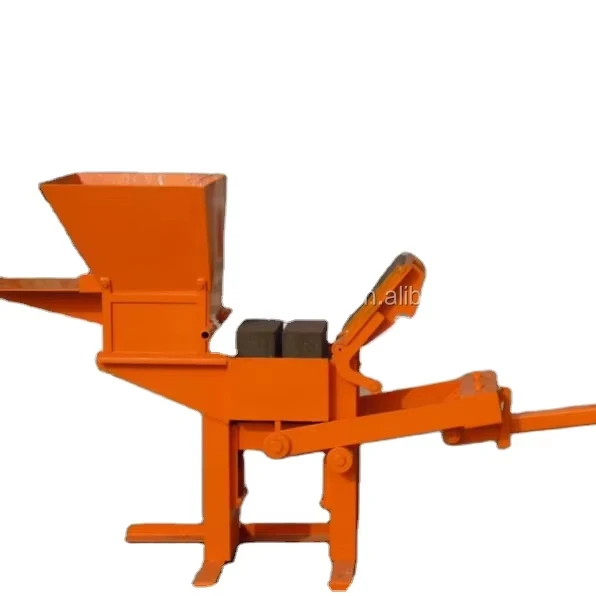
 Clay interlocking brick