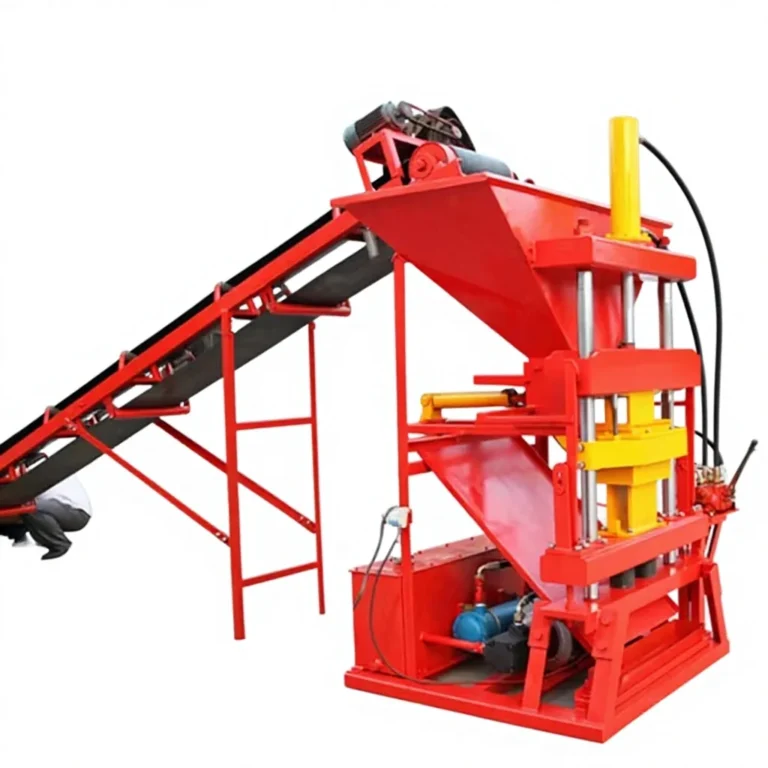
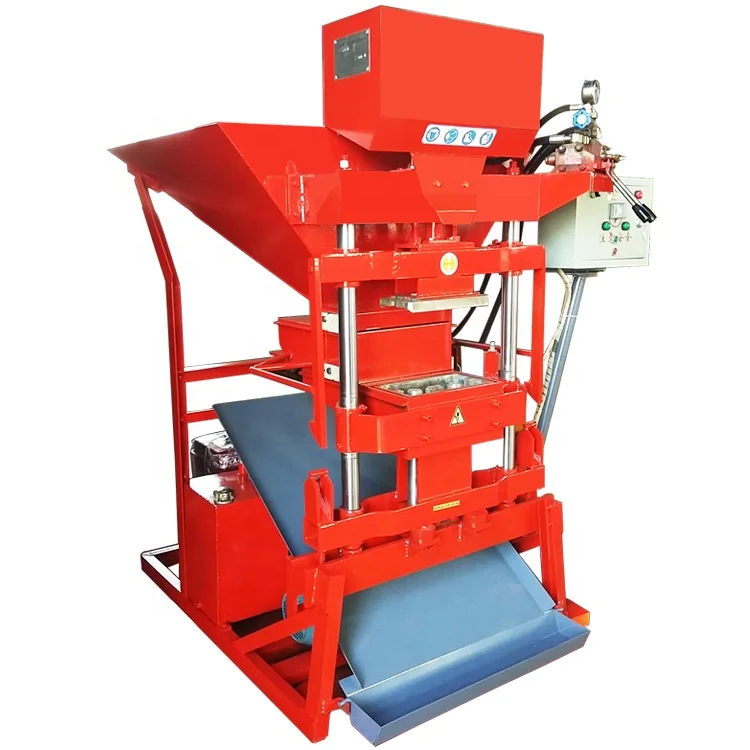
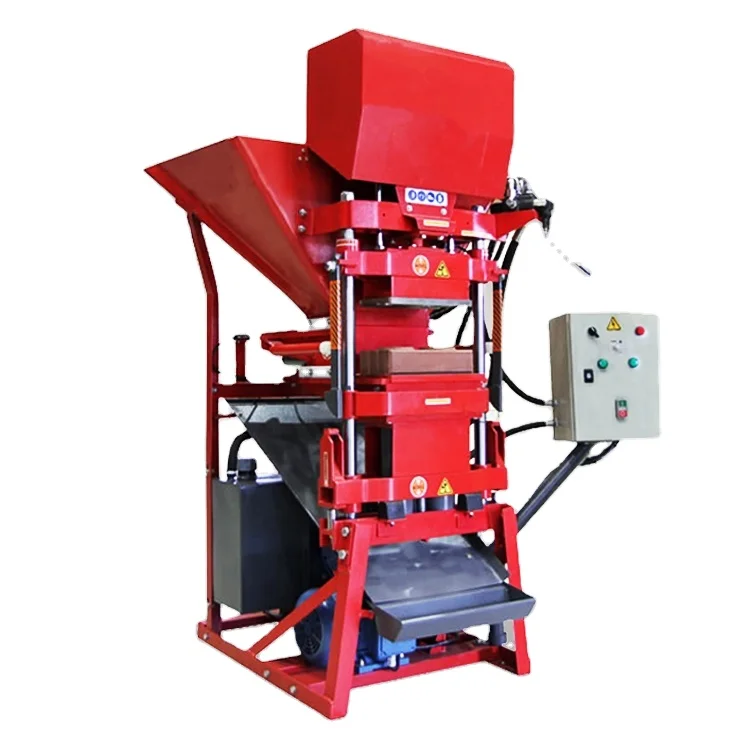
Hydraulic Clay Interlocking Brick Machine for Sale — Matching Machine Tier to Your Real Site Conditions
The ECO 2700 sits at the entry level of our block machine range, purpose-built for interlocking brick production using hydraulic pressure and diesel power. This positioning helps buyers surveying options for a first or replacement machine understand where this model fits before committing to a larger automatic line.
Technical Specifications
| Parameter |
Value |
| Model |
ECO 2700 |
| Product Type |
Hydraulic Clay Interlocking Brick Machine |
| Hydraulic Pressure |
16 MPa |
| Engine |
7.5 kW / 12 hp diesel engine |
| Overall Dimensions (L×W×H) |
1600 × 1300 × 2330 mm |
| Net Weight |
1100 kg |
| Molding Cycle |
10–15 s |
| Output Capacity |
2800 pcs/day (basis not stated in source — confirm block format / material / thickness) |
| Mould Format |
Interlocking bricks, moulds changeable |
| Mould Change Method |
Manual bolt loosening, upper and lower die swap |
| Hydraulic Cooling |
Temperature-controlled switch, automatic |
| Raw Materials |
Clay, cement, sand, soil, shale, fly ash, white lime |
| Finished Product Strength |
Above 12 MPa |
| Assembly State |
Skid-mounted, single-unit |
| Automation Level |
Semi-automatic, lever-operated hydraulic cycle |
| Stacking Method |
Manual |
Application Suitability
| Application |
Material or Output |
| On-site interlocking brick production |
Clay-soil-cement mix for construction contractors without a fixed plant |
| Small-scale brick plants |
Local aggregate and soil stabilised with cement |
| Rural housing and development projects |
Interlocking bricks produced locally in remote areas |
| First brick plant setup |
Low-investment entry with diesel power for off-grid operation |
What "2,800 Pieces per Day" Actually Means on Site
Capacity is only meaningful when the block format and material are stated alongside the number.
I have seen buyers order a machine based on a headline daily output figure, only to find the actual production falls far short once their specific interlocking brick size and local clay composition are factored in. A machine rated for a smaller, thinner format will cycle faster than one pressing a large, thick interlocking block. Without the format assumption written into the capacity calculation, the number on the quotation becomes a source of frustration rather than a planning tool [NEED_CITE: capacity calculation standards for block making machinery]. The hydraulic clay interlocking brick machine for sale here is no exception — the 2,800 pcs/day figure must be verified against the exact brick dimensions and mix design you intend to run.

Where the ECO 2700 Sits in the Full Machine Range
The complete block machine range spans from mobile egg-laying units through semi-automatic presses like the ECO 2700 and up to high-capacity fully automatic lines with pallet feeding, stacking and cubing. The ECO 2700 occupies the entry tier for interlocking brick production, offering hydraulic pressure at 16 MPa and diesel engine drive in a single skid-mounted unit. Buyers comparing options for a first plant or a replacement machine can use this tier as a baseline before evaluating whether a semi-automatic or automatic configuration better matches their target output and labour availability.
Diesel Power and Off-Grid Operation
For remote housing projects and construction sites without reliable grid electricity, the 7.5 kW / 12 hp diesel engine removes the dependency on a fixed power supply. This configuration is common across development projects in regions where three-phase electricity is either unavailable or subject to frequent interruption [NEED_CITE: off-grid construction equipment power requirements]. The skid-mounted assembly means the entire hydraulic clay interlocking brick machine for sale can be moved between sites on a flatbed truck, arriving ready to produce once the mould is fitted and the hydraulic system is filled.
Hydraulic Pressure, Mould Swap and Block Strength
The 16 MPa hydraulic pressure directly influences the density and bearing strength of the finished interlocking brick, with the specification calling for products above 12 MPa. This pressure level, combined with the correct clay-cement-soil ratio, determines whether the bricks will meet structural requirements for load-bearing walls. The mould change method requires manual bolt loosening and a die swap with 0.5 mm alignment adjustment — this means format changes take a portion of a shift rather than minutes, so buyers planning multiple brick shapes in a single day should factor that time into their scheduling. The temperature-controlled hydraulic cooling switch allows continuous operation in hot climates by engaging automatically when oil temperature rises, preventing the pressure loss that occurs when hydraulic fluid overheats.
The Cost of Skipping the Site Survey
Ordering a block machine without first confirming the local clay composition, available aggregate and target brick format leads to a cascade of problems once the machine arrives. I have walked onto sites where the mix design specified in the manual was impossible to source locally, forcing the contractor to import materials at significant expense or produce bricks that crumble under handling. When the vibration force and hydraulic pressure are not matched to the buyer’s actual soil-cement mix, block strength becomes inconsistent across batches, and rejected bricks pile up beside the press [NEED_CITE: block strength testing methods for clay-cement composites]. The ECO 2700 is a capable machine, but its output quality depends entirely on the configuration being set against real site conditions rather than a catalogue default.
Why Buyers Source This Tier From Us
Block machinery is our single focus, which means the ECO 2700 is specified as part of a matched system — machine, mould, pallet and handling — rather than assembled from separate suppliers. The configuration is set against the buyer’s actual mix design and local aggregate, not a generic setting. Mould design covers the interlocking brick formats the buyer’s market actually sells, with custom drawings available for shapes outside the standard range. The automation level is selectable, so a buyer can begin with the semi-automatic ECO 2700 and move to a higher tier as demand grows. Installation and commissioning support includes operator training so the crew understands the mould change procedure, hydraulic cooling behaviour and daily maintenance routine from the first production run.
Documentation & Verification
- Line layout and capacity calculation stating the interlocking brick format assumed for the ECO 2700
- Machine specification sheet with hydraulic pressure and diesel engine rating confirmed
- Mould drawing and format list for each interlocking brick shape available
- Factory test record on the buyer’s target brick dimensions before dispatch
- Operation and maintenance manual covering mould change and hydraulic cooling procedures
Installation, Commissioning & Support
- Skid-mounted ECO 2700 arrives as a single unit requiring a level concrete pad of at least 2 × 2 m
- Diesel engine configuration eliminates the need for a dedicated electrical circuit on site
- First commissioning includes hydraulic pressure verification at 16 MPa and mould alignment to 0.5 mm gap
- Operator training covers the manual die swap procedure and temperature-controlled cooling switch behaviour
- Wear parts list and mould inventory provided for the first replacement cycle planning
Before You Request a Quotation
To match the right machine tier to your project, we need to know the specific interlocking brick format your market demands, the daily output you are targeting, and the type of clay or soil available at your site. Share your local voltage and frequency if you are considering an electric motor variant instead of diesel, along with the dimensions of your curing area and the forklift you plan to use for pallet handling. This information allows us to prepare a configuration proposal that reflects your actual conditions rather than a generic catalogue entry.
Frequently Asked Questions
Q: How is the 2,800 pcs/day capacity calculated, and which interlocking brick format does it assume?
A: The 2,800 pcs/day figure requires confirmation of the specific block format, material mix and thickness being produced. Different interlocking brick sizes have different cycle times and mould cavity counts, so the same machine will produce fewer large blocks than small ones per shift. We provide a capacity calculation that states the exact format assumed, so you can plan against a number that matches your product.
Q: Where does the ECO 2700 sit versus semi-automatic and automatic models in the range?
A: The ECO 2700 is the entry tier for interlocking brick production, offering hydraulic pressing with diesel power and manual mould change. Semi-automatic models add features like powered pallet feeding, while automatic lines include stacking and cubing systems. The range allows buyers to start at this tier and move upward as production volume and labour constraints evolve.
Q: What site conditions are needed for the ECO 2700 compared to a full automatic line?
A: The ECO 2700 requires a level concrete pad and no grid electricity when configured with the diesel engine, making it suitable for remote sites. A full automatic line needs a larger building footprint, three-phase power, and space for pallet circulation and curing racks. The skid-mounted design of the ECO 2700 allows relocation between project sites as needed.
Q: Can I start with the ECO 2700 and upgrade to a higher automation level later?
A: Yes, the range is designed so buyers can begin with the semi-automatic ECO 2700 and transition to a more automated configuration as demand increases. Moulds and certain handling components may carry over depending on the target tier. We discuss the upgrade path during the initial configuration so the first investment aligns with longer-term production plans.

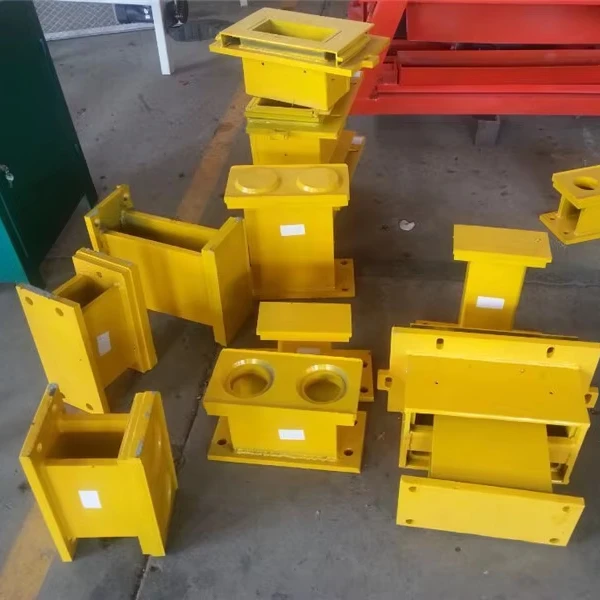
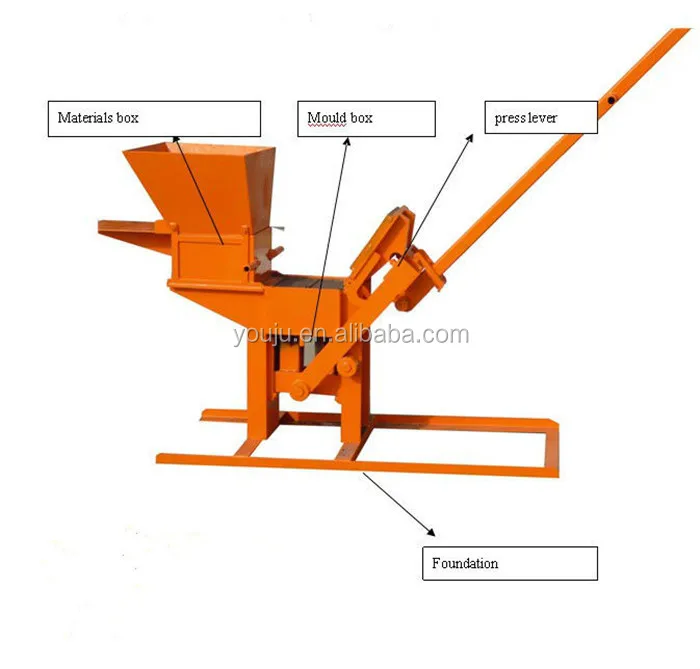 Clay interlocking brick