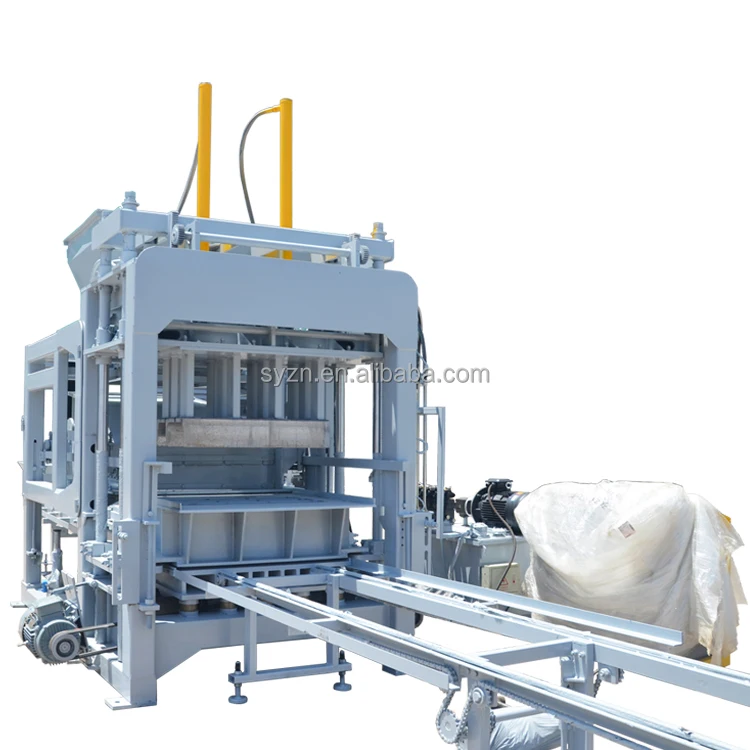
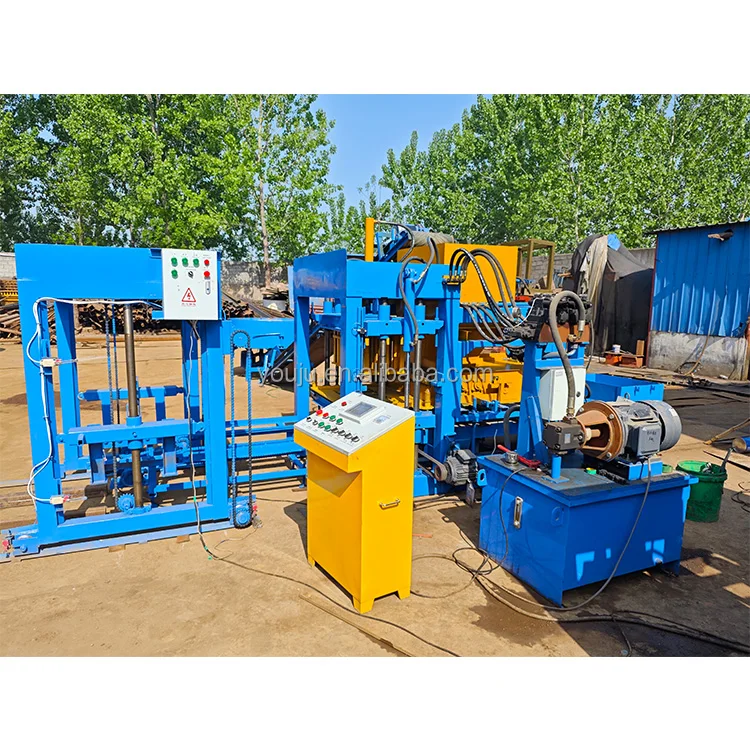
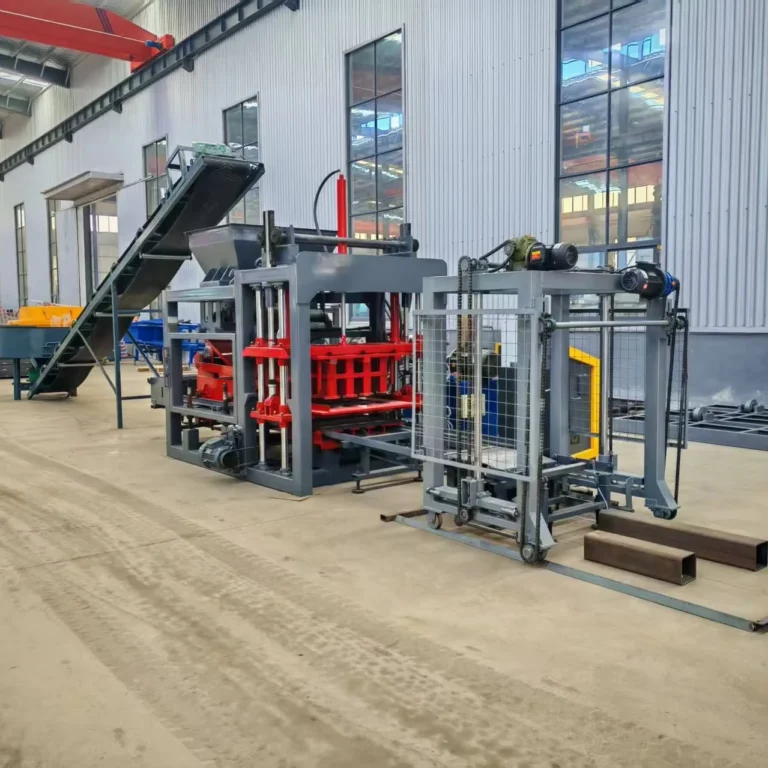
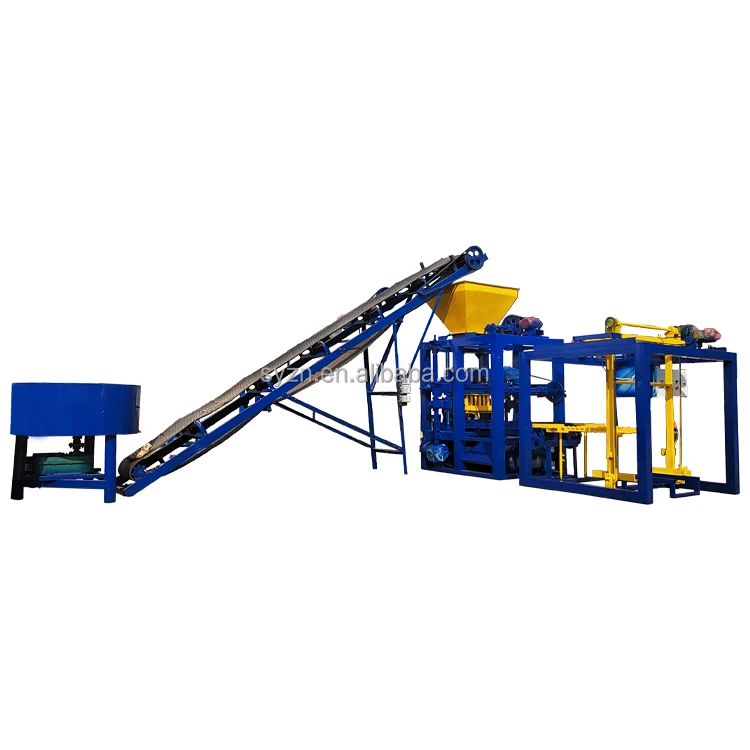
Matched System Supply — host machine, mould, pallet, and mixer specified as one verified unit so the QTJ4-25 semi-automatic concrete block machine for sale arrives ready to produce your exact block format without sourcing gaps.
Technical Specifications
| Parameter |
Value |
| Model |
QTJ4-25 |
| Product Type |
Semi-Automatic Concrete Block Making Machine |
| Rated Power |
17.9 kW |
| Overall Dimensions (L×W×H) |
6400 × 1500 × 2700 mm |
| Net Weight |
2500 kg |
| Molding Cycle |
25 s |
| Pallet Size |
850 × 550 × 20 mm |
| Vibration Frequency |
2800 r/min |
| Vibration Force |
60 kN |
| Output Capacity |
960 pcs/h, 7680 pcs/day (based on 400×200×200mm hollow block, 4 pcs/mould) |
| Mould Format |
Hollow, solid, paver, curbstone (supports 8-inch, 6-inch, 5-inch, 4-inch standard sizes) |
| Automation Level |
Semi-automatic |
| Configuration |
Host machine 1 set, block mould 1 set, JQ350 mixer |
| Control System |
Available with PLC or relay logic (confirm before order) |
| Voltage & Frequency |
Configurable to local grid (confirm before order) |
| Stacking Method |
Manual with pallet trolley |
| Certification |
CE declaration (verify applicability to this model) |
Application Suitability
| Application |
Material or Output |
| Hollow block production for residential and commercial walls |
Crushed stone, sand, cement, fly ash aggregates |
| Solid block manufacturing for load-bearing structures |
Dense aggregate mixes with standard cement ratios |
| Paving block and interlocking brick for walkways and yards |
Fine aggregate blends with pigment additives |
| Curbstone and kerbstone for road and landscape edging |
High-strength concrete mixes with coarse aggregate |
| On-site block production for construction contractors |
Locally sourced aggregate matching regional standards |
What "7680 Pieces per Day" Actually Means for Your Plant
That daily figure holds only when you run 400×200×200mm hollow blocks with the standard four-cavity mould and a steady material feed.
Buyers often compare machines on a single headline number, then discover the real output drops when switching to a smaller solid block or a paving format that uses a different mould cavity count. The QTJ4-25 block making machine manufacturer rates capacity per format, not per cycle alone. I have watched projects stall because the quotation listed peak hourly cycles without naming the block size behind that figure, leaving the contractor short on delivery commitments [NEED_CITE: capacity calculation standards for concrete block machinery].

Where the QTJ4-25 Sits in the Full Machine Range
The semi-automatic tier occupies a specific position: lower capital outlay than a fully automatic line, but with a defined upgrade path when your market demands higher throughput. The QTJ4-25 semi-automatic concrete block machine for sale fits buyers who need proven block quality without the complexity of automatic stacking and cubing systems. This positioning lets first-time plant owners learn the production process before investing in additional automation stations.
Semi-Automatic Operation and the Manual Handling Boundary
In semi-automatic mode, the press cycles automatically through vibration, compression, and demoulding, but pallet loading and loaded pallet transfer to the curing area remain manual tasks. This boundary matters because it defines your labour requirement on the production floor. A two-person crew typically manages the pallet trolley and stacking workflow at the QTJ4-25’s cycle rate. The machine does not wait on the operator during the 25-second press cycle, so pallet readiness directly affects actual hourly throughput [NEED_CITE: labour allocation in semi-automatic block plants].
Reading the Vibration and Pressure Specs for Block Density
The 60 kN vibration force combined with 2800 r/min frequency determines how tightly aggregate particles pack inside the mould cavity before hydraulic compression finishes the block. Higher vibration force generally produces denser blocks from the same mix, which translates to compressive strength meeting local building codes. The 850 × 550 × 20 mm pallet size must match your curing rack spacing and forklift fork width — a mismatch here forces you to re-rack or hand-stack, negating the output advantage of the 25-second cycle. The JQ350 mixer included in the configuration sets your batch volume per cycle; if your mix design calls for longer blending times, the mixer becomes the bottleneck rather than the press.
The Commissioning Delay That Voltage Guessing Causes
Specifying voltage and frequency as an afterthought is the most common reason a machine sits idle on arrival. I once had a QTJ4-25 block making machine manufacturer shipment land on a site with a 60Hz grid while the motor was wound for 50Hz — the motor overheated within minutes and tripped thermal protection. The contractor lost three weeks waiting for replacement components while block deliveries to the building site fell behind schedule. Confirming the exact local voltage, frequency, and control panel display language before production starts eliminates this class of failure entirely [NEED_CITE: electrical standards for exported industrial machinery].
Why Buyers Choose This Tier for Their Block Plant
Block machinery is the single focus at Shiyue, so the QTJ4-25 arrives as a matched system — host machine, mould, pallet, and JQ350 mixer verified together rather than assembled from separate suppliers. Configuration starts from your actual mix design and local aggregate, not a catalogue default that assumes materials you cannot source. Mould design covers the formats your market sells, with custom drawings available when standard cavity layouts do not match your product range. The semi-automatic level lets you begin production with manageable operator training, then add automation stations as daily volume grows.
Documentation & Verification
- Line layout drawing stating 850×550mm pallet footprint and curing area requirement
- Capacity calculation sheet listing output per mould format, not a single peak figure
- Mould drawing and cavity format list for each block size in your order
- Voltage and frequency confirmation sheet signed before production release
- Factory test record on your specified block format before dispatch
- Hydraulic and electrical schematic with control panel language noted
Installation, Commissioning & Support
- 6400 × 1500 mm machine footprint requires level concrete slab with drainage for wash-down
- 17.9 kW rated power needs dedicated circuit with correct breaker sizing for local voltage
- Host machine ships assembled; JQ350 mixer and pallet trolley connect on-site during commissioning
- First-run parameter tuning sets vibration duration and hydraulic pressure for your local aggregate mix
- Operator training covers 25-second cycle workflow, mould change procedure, and daily greasing points
- Wear parts list identifies vibration motor bearings and hydraulic seals available as first-year spares
Starting Your QTJ4-25 Inquiry
Provide your target block formats, the local aggregate you plan to use, and your daily production volume so the configuration matches actual market demand. Include your site voltage, frequency, and preferred control panel language to avoid electrical mismatches at commissioning. If you already have curing racks or a forklift, share the dimensions so the 850 × 550 mm pallet specification aligns with your existing handling equipment.
Frequently Asked Questions
Q: How is the 7680 pcs/day output calculated for the QTJ4-25?
A: That figure assumes continuous production of 400×200×200mm hollow blocks using the four-cavity mould, at 960 pieces per hour across an eight-hour shift. Switching to a solid block or paver format changes the cavity count per mould, so actual daily output must be recalculated for each format you plan to produce.
Q: When should I choose this semi-automatic tier over a fully automatic line?
A: Semi-automatic suits first-time plant buyers or contractors producing blocks on their own construction site where capital outlay must stay controlled and daily volume does not yet justify automatic stacking and cubing equipment. The upgrade path remains open as your market grows.
Q: What voltage and frequency options are available for export?
A: Voltage and frequency are configured to your local grid standard before production begins. Confirming these parameters along with control panel display language during the quotation stage prevents motor overheating and commissioning delays after the machine arrives at your site.
Q: How does pallet size affect my curing area setup?
A: The 850 × 550 × 20 mm pallet must match your curing rack slot dimensions and forklift fork spacing. Ordering pallets without checking this alignment forces manual re-stacking after pressing, which reduces actual throughput regardless of the machine cycle speed.
Q: What is the plant footprint for a complete QTJ4-25 setup?
A: The host machine occupies 6400 × 1500 mm, with additional space needed for the JQ350 mixer feed area, pallet storage, and curing rack zone. A full layout drawing showing all stations and material flow paths is provided during the configuration proposal stage.

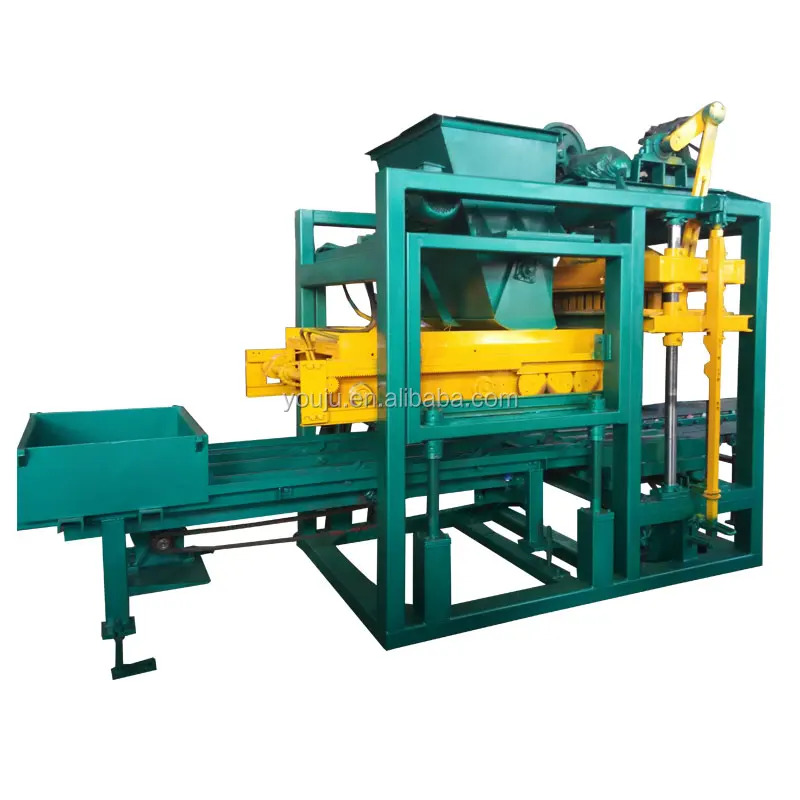
 Stationary block machine