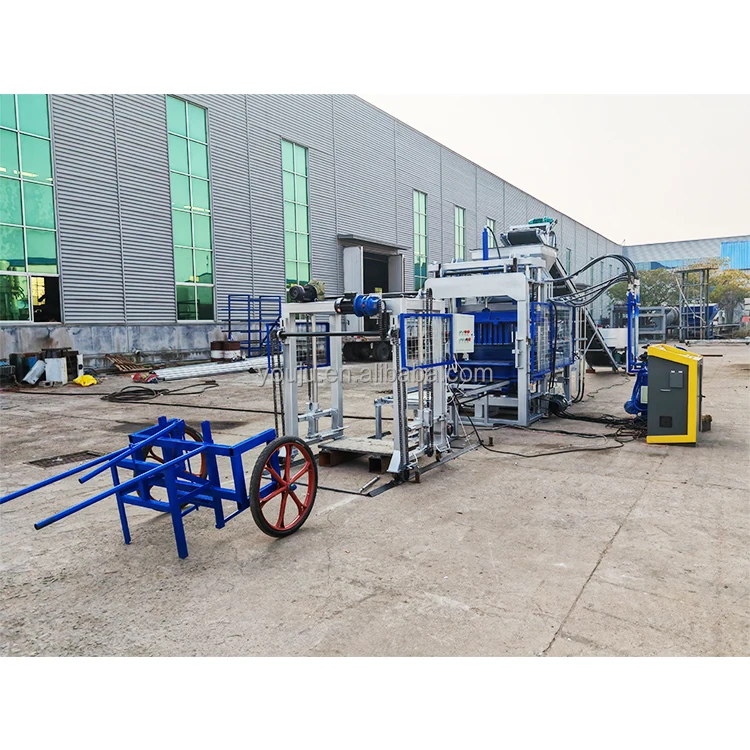
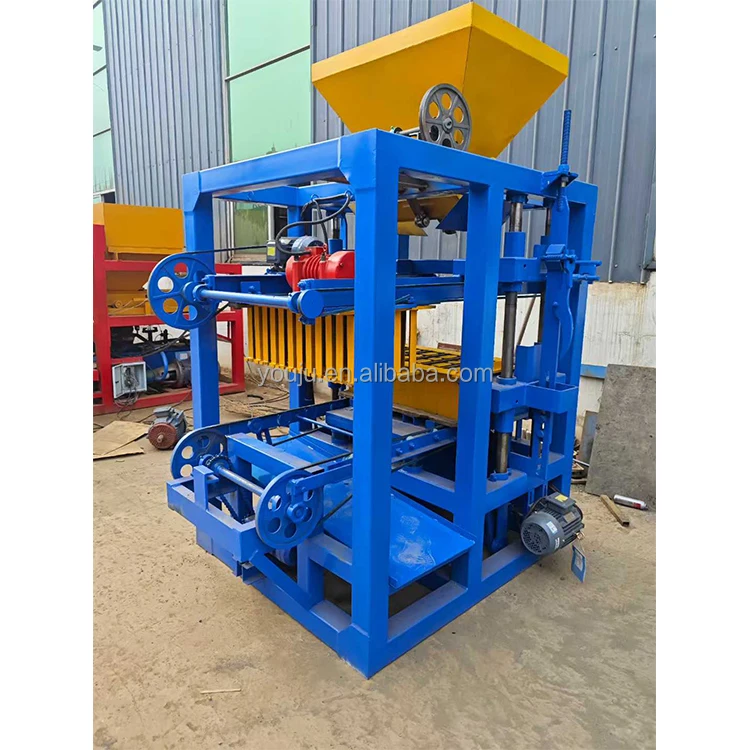
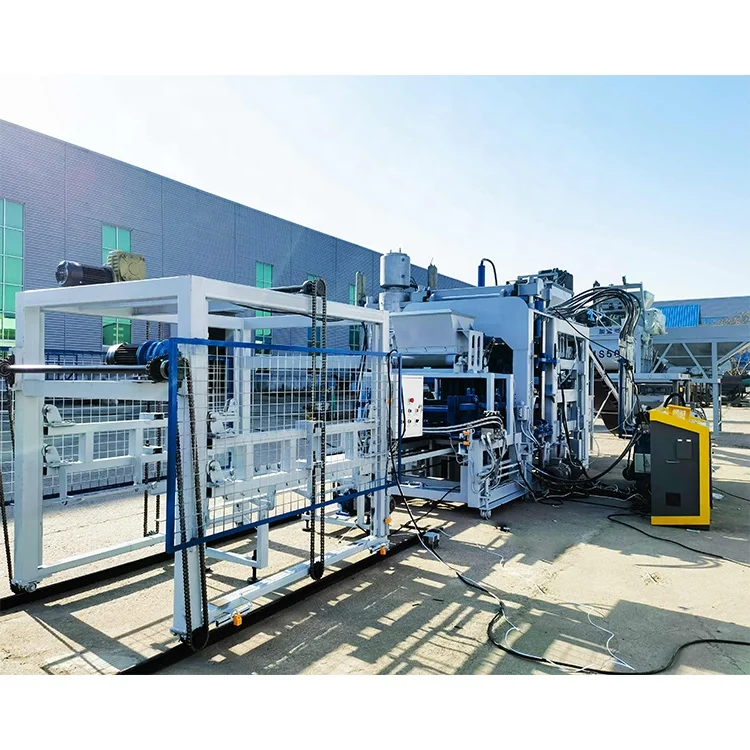
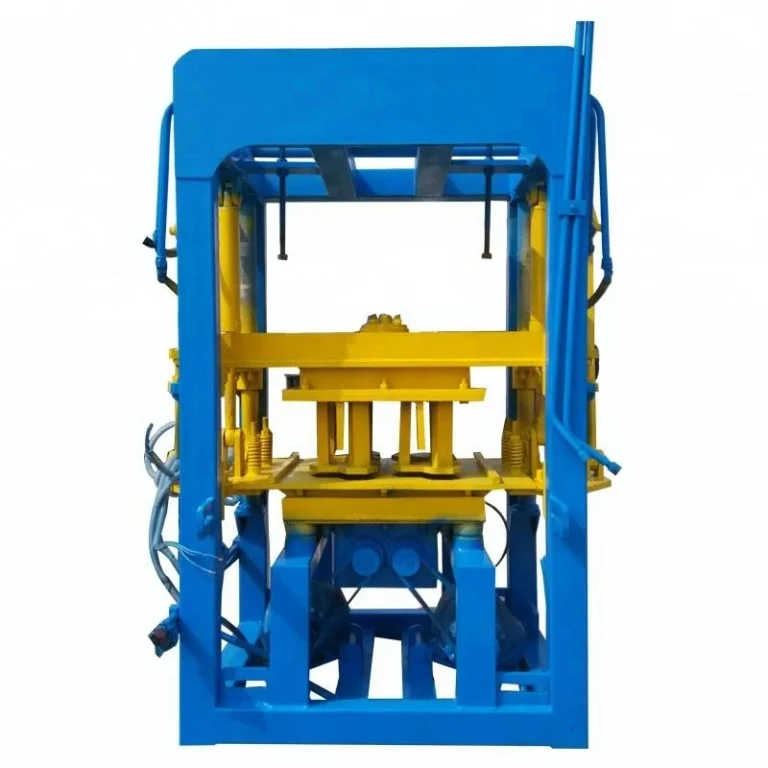
Single-focus block machinery builder — every QT4-15 configuration is specified against the buyer’s actual mix design, local aggregate and target format before production begins.
Technical Specifications
| Parameter |
Value |
| Model |
QT4-15 |
| Product Type |
Automatic Hydraulic Block Making Machine |
| Overall Dimensions (L×W×H) |
7100×1600×2610 mm |
| Host Machine Dimensions |
2800×1800×2550 mm |
| Total Mass |
5 T |
| Rated Pressure |
16 MPa |
| Vibration Frequency |
4600 r/min |
| Vibration Force |
40 kN |
| Main Vibration Form |
Platform Vibration |
| Molding Cycle |
15–25 s |
| Pallet Size |
950×550×20/25 mm |
| Overall Power |
27.5 kW |
| Host Machine Power |
19.2 kW |
| General Water Consumption |
4 T/day |
| Control System |
Siemens PLC with independently developed program |
| Motor Brand |
Siemens or ABB (buyer selectable) |
| Hydraulic System |
Double proportional valve, Calyca or Youken brand |
| Hollow Brick Output (390×190×190 mm) |
4 pcs/mould, 15–20 s cycle, 720–960 pcs/h |
| Porous Brick Output (240×115×90 mm) |
14 pcs/mould, 15–20 s cycle, 2520–3360 pcs/h |
| Standard Brick Output (240×115×53 mm) |
28 pcs/mould, 15–17 s cycle, 5930–6720 pcs/h |
| Automation Level |
Automatic |
| Voltage & Frequency |
Configurable to target market (basis to be confirmed) |
| PLC Display Language |
Selectable (basis to be confirmed) |
| Mould Change Time |
Dependent on block format (basis to be confirmed) |
| Stacking Method |
Dependent on format and automation level (basis to be confirmed) |
| Warranty |
1 year (excluding spare parts) |
| Standards |
CE declaration where applicable |
Application Suitability
| Application |
Material or Output |
| Hollow block production for housing projects |
Crushed stone, sand, cement blends forming 390×190×190 mm units |
| Porous brick manufacturing for urban drainage |
Permeable aggregate mixes shaped into 240×115×90 mm bricks |
| Standard solid brick for masonry walls |
Cement and local aggregate compressed into 240×115×53 mm bricks |
| Paving brick and road brick production |
High-strength concrete mixes for pedestrian and light-traffic surfaces |
| On-site block production by construction contractors |
Multiple formats from one machine across a housing development |
| Small to mid-size block plant operations |
Daily production volumes suited to regional building material supply |
What "720 Blocks per Hour" Actually Means on the QT4-15
Capacity figures only matter when the block format, mould cavity count and cycle time are all stated together.
I have watched buyers compare two quotations side by side, picking the one with the higher hourly number, only to discover after delivery that the figure assumed a solid brick format they never intended to produce. When they switched the mould to the hollow block their market actually buys, the output dropped to roughly a third. The QT4-15 is rated at 720–960 pieces per hour based on a 390×190×190 mm hollow block at 4 pcs per mould with a 15–20 second cycle — and that is the only honest way to present it. Any automatic block making machine manufacturer who quotes a single capacity number without naming the format is leaving out the detail that determines whether your daily production target is realistic [NEED_CITE: capacity calculation standards for concrete block machinery].

Where the QT4-15 Sits in the Full Machine Range
The QT4-15 occupies the mid-tier of our stationary automatic line. Below it, semi-automatic machines suit smaller workshops with lower daily volumes and manual pallet handling. Above it, higher-tier models serve large-scale plants that demand fully automatic stacking and cubing with continuous operation. Buyers evaluating an automatic block making machine manufacturer often start by understanding which tier matches their current output target and available floor space. The QT4-15 covers the middle ground: enough automation to reduce labour dependence, but compact enough for a first plant setup.
Matching the Machine to Your Actual Block Format
The real decision starts with the block your market sells. A housing contractor in West Africa producing 9-inch hollow blocks has different requirements from a paving brick supplier in Southeast Asia. The QT4-15 supports multiple formats through interchangeable moulds, and the pallet size of 950×550 mm must align with your existing curing racks and forklift capacity. We configure the vibration frequency and hydraulic pressure against the buyer’s specific aggregate and mix design rather than applying a catalogue default [NEED_CITE: hydraulic pressure and vibration matching for different aggregate types]. This prevents the density inconsistency that shows up as weak blocks at the curing stage.
How Pressure, Vibration and Cycle Time Shape Block Quality
The 16 MPa rated pressure and 40 kN vibration force work together during each 15–25 second molding cycle. Hydraulic pressure compacts the mix vertically while platform vibration at 4600 r/min settles the aggregate particles into a dense matrix. If the vibration force is too low for a coarse aggregate mix, the blocks emerge with voids and inconsistent wall thickness. If the cycle time is rushed to chase a higher hourly figure, the compression stage ends before full densification. The Siemens PLC allows operators to adjust cycle timing per format, so a porous brick requiring longer vibration gets its full dwell without slowing down the entire line. Motor selection between Siemens and ABB lets buyers match their existing maintenance supply chain, and the Calyca or Youken double proportional hydraulic valve provides precise pressure control across each stroke.
The Cost of Skipping Configuration Before Purchase
Buyers who skip the pre-shipment configuration step often face problems that surface only after the machine arrives. A voltage mismatch between the factory default and the local grid delays commissioning by weeks while transformers are sourced. A PLC display language the operators cannot read turns routine adjustments into guesswork. Pallet dimensions that do not match the curing area force the plant to rearrange the entire layout or replace the forklift [NEED_CITE: voltage and frequency standards by export market]. These are not manufacturing defects — they are specification gaps that a structured inquiry process prevents entirely.
Why Source the QT4-15 Through This Range
Every QT4-15 leaves as a matched system: the machine, mould, pallet and handling equipment are specified together so cycle times align across stations. The configuration is set against the buyer’s actual mix design and target format, not a default setting. Mould design covers the formats the buyer’s market sells, with custom drawings available for non-standard sizes. The automation level is selectable, allowing a buyer to begin with basic pallet handling and add stacking automation later as volume grows. Installation support includes operator training so the crew understands mould change procedures and PLC parameter adjustment from the first production day.
Documentation & Verification
- Line layout drawing showing QT4-15 placement with capacity per block format stated
- Machine specification sheet covering 16 MPa pressure, 40 kN vibration and 27.5 kW power ratings
- Mould drawing listing cavity count and cycle time for each format in your production plan
- Voltage and PLC display language confirmation document signed before production starts
- Factory test record run on the buyer’s specified block format before container loading
- Wear parts and mould catalogue listing replacement intervals for hydraulic and vibration components
Installation, Commissioning & Support
- Foundation pad sized for 7100×1600 mm overall footprint with vibration isolation requirements specified
- Dedicated electrical circuit rated for 27.5 kW total load with voltage and frequency confirmed pre-shipment
- Host machine arrives at 2800×1800×2550 mm, with reassembly support for on-site positioning
- First-run commissioning includes cycle time calibration for each mould format using local aggregate
- Operator training covers Siemens PLC parameter adjustment and mould change sequence
- Wear parts list provided with recommended replacement schedule for hydraulic valves and vibration bearings
- Daily maintenance checklist aligned with the 4 T/day water consumption and platform vibration system
Preparing Your Inquiry
To move from range comparison to a firm configuration, we need the block format and dimensions your market demands, the daily output target tied to that specific format, and details on your local aggregate source and mix proportions. Sharing your available floor space, existing curing rack dimensions, and local voltage and frequency will allow the proposal to cover pallet sizing, power configuration and PLC language in one pass — so the machine arrives ready to commission.
Frequently Asked Questions
Q: How is the QT4-15 capacity figure calculated and which block format does it assume?
A: Each capacity figure is tied to a specific block size, mould cavity count and cycle time. The 720–960 pieces per hour rating assumes a 390×190×190 mm hollow block at 4 pieces per mould with a 15–20 second cycle. Different formats produce different hourly outputs, and the quotation states the figure for every block type you intend to make.
Q: Where does the QT4-15 sit compared to semi-automatic and higher-tier machines?
A: It occupies the mid-tier of our stationary range. Semi-automatic models below it suit lower daily volumes with manual pallet handling. Higher-tier machines above it support fully automatic stacking and cubing for large plants. The QT4-15 balances automation and footprint for buyers building their first or expanding an existing mid-volume operation.
Q: What voltage, frequency and PLC language options are confirmed before shipment?
A: These are confirmed during the inquiry stage, not left to assumption. The buyer provides the local grid specifications and preferred display language, and a signed confirmation document ensures the Siemens PLC and motor configuration match the destination market before production begins.
Q: Can I start with this machine and upgrade automation or add formats later?
A: Yes. The automation level is selectable at purchase, and additional moulds for new block formats can be ordered and installed later. The pallet size and machine platform remain constant, so upgrading from manual pallet handling to automatic stacking is a planned addition rather than a full machine replacement.
Q: Does the quotation cover pallets, stacking and curing handling or just the press?
A: The proposal addresses the full line, not just the host machine. Pallet size, material, and handling equipment are specified alongside the press so that output flows through stacking and curing without bottlenecks. Items not included are clearly listed so the buyer knows what the existing facility must supply.

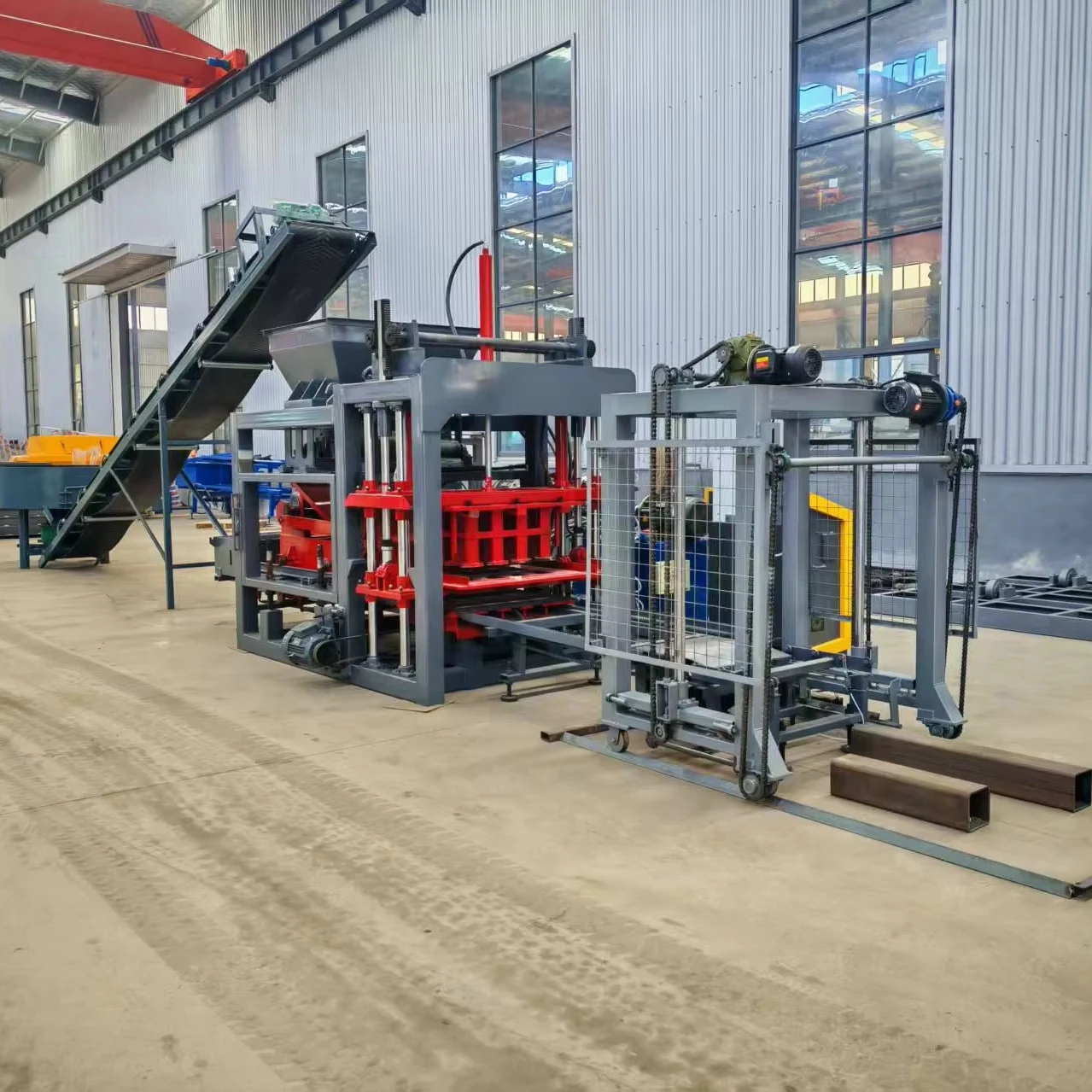
 Stationary block machine