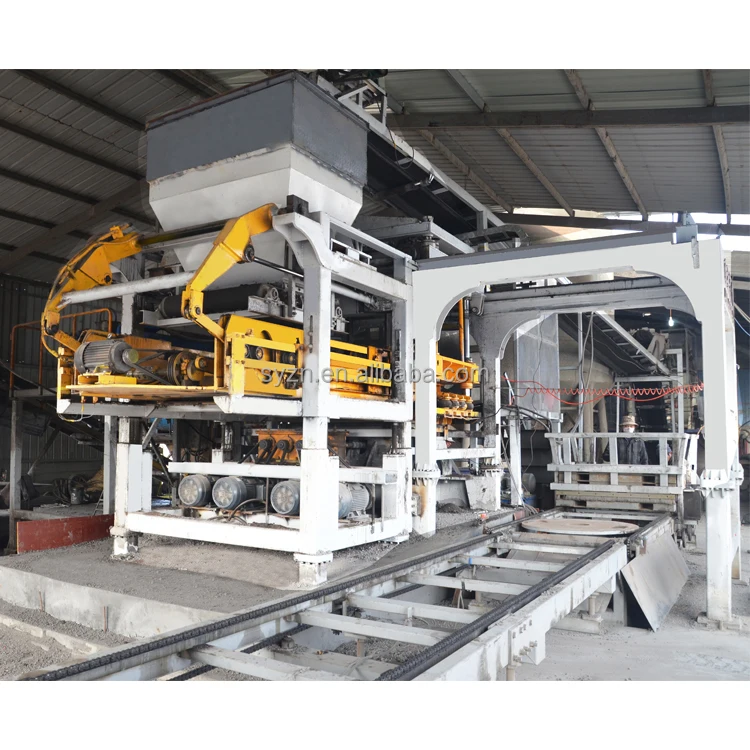
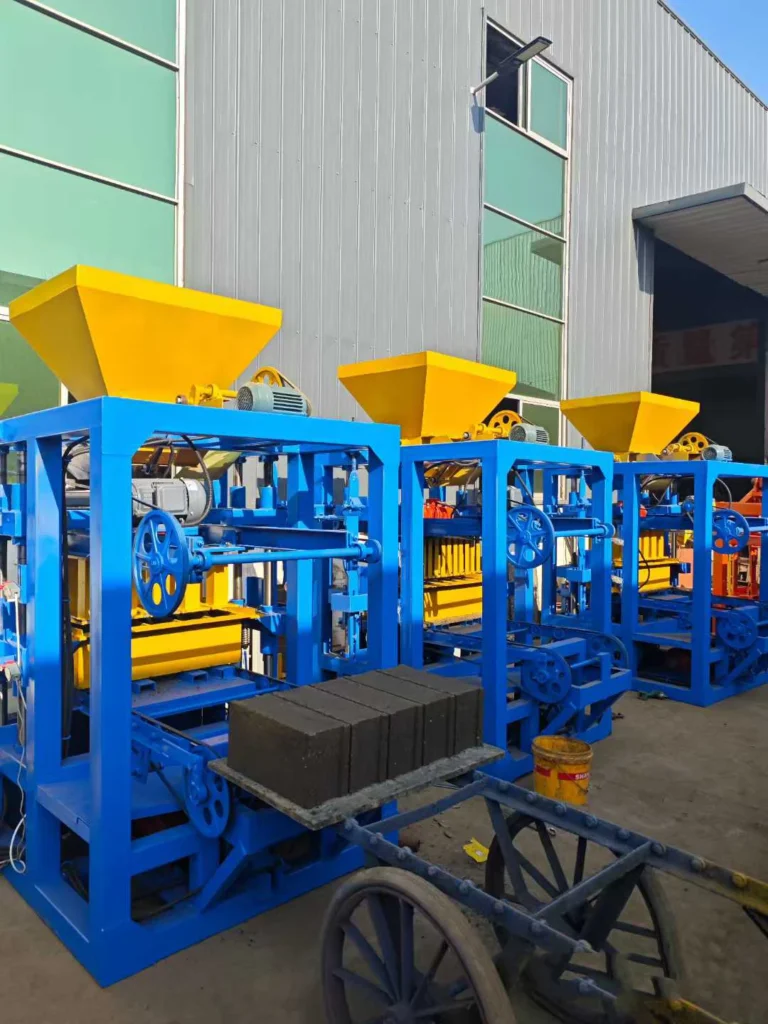
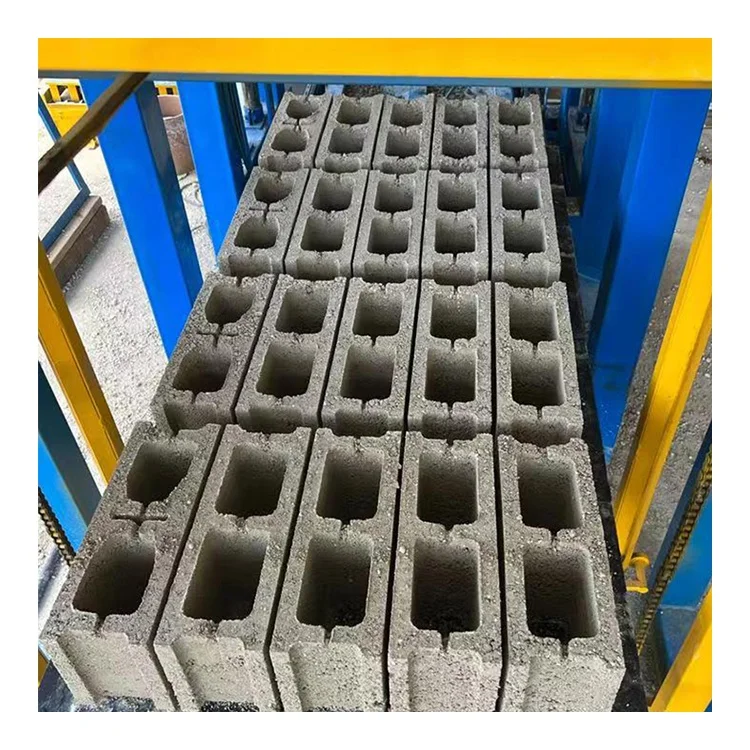
Matched Vibration Tuned to Your Mix — we set the QTJ4-24 upper and lower vibrator powers after seeing your local sand and aggregate samples, not from a catalogue default.
Technical Specifications
| Parameter |
Value |
| Model |
QTJ4-24 |
| Product Type |
Stationary Block Making Machine |
| Overall Dimensions (L×W×H) |
3600×1700×2560 mm |
| Pallet Size |
850×450 mm |
| Molding Cycle |
24–26 s |
| Overall Power |
11.95 kW |
| Vibration Force |
45 kN |
| Upper Vibrators |
2×1.5 kW |
| Lower Vibrators |
2×3 kW |
| Reducer for Mold Lifting |
350-type |
| Material Distribution |
Full-automatic spiral |
| Total Mass |
2 T |
| Molding Method |
Mechanical |
| Compatible Materials |
Cement, sand, stone |
| Automation Level |
Semi-automatic |
| Output Capacity |
(basis to be confirmed — depends on block format, material, and thickness) |
| Hydraulic Pressure |
(basis to be confirmed — value not stated in source) |
| Voltage & Frequency |
(basis to be confirmed — verify against target market) |
| Control System |
(basis to be confirmed) |
Application Suitability
| Application |
Material or Output |
| Hollow block production for low-rise residential walls |
Cement, sand, and crushed stone aggregates |
| Solid block manufacturing for load-bearing partitions |
Dense concrete mixes with local gravel |
| Interlocking brick runs for landscape and retaining walls |
Cement-stabilized sand with fine aggregate |
| Paving brick batches for walkways and yards |
High-cement-content mixes with coarse stone dust |
| On-site contractor block production |
Available site materials with portable mixer feeding |
What "Cycles per Hour" Leaves Out About a Stationary Block Making Machine for Sale
A molding cycle number only becomes a daily output figure once you name the exact block format, wall thickness, and mix design running through the press.
I have watched buyers in West Africa and Southeast Asia compare stationary block machine quotes purely on the cycles-per-hour column, then arrive at the job site to find their hollow blocks come out with cracked faces because the vibration force was set for a different aggregate gradation. The QTJ4-24 molding cycle of 24–26 seconds was measured under controlled conditions; the sand you source locally may need the lower vibrators adjusted and the cycle extended to hold dimensional tolerance [NEED_CITE: vibration tuning for local aggregate properties in block presses]. When the mix contains more fines than expected, the spiral feeder delivers a denser charge and the press needs a longer settling window. That is the conversation we have before the order is placed, not after the container arrives.

Where the QTJ4-24 Fits in a First Plant Layout
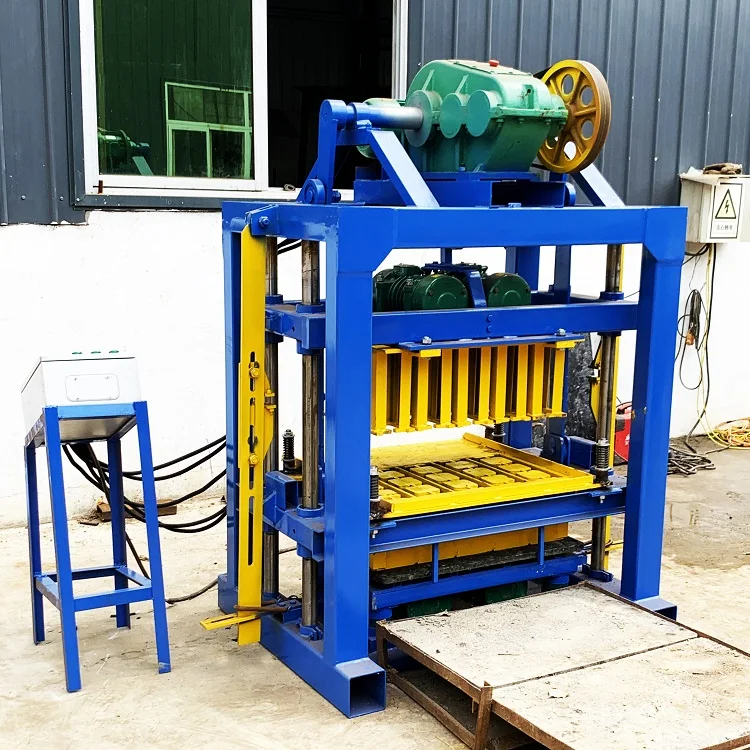
A stationary block making machine for sale at this tier is typically the press inside a small workshop or a contractor’s staging yard, not a continuous high-volume line. The 3600×1700 mm footprint leaves room on either side for a manual pallet return path and a small raw material stockpile. Buyers setting up their first block plant often pair this machine with a pan mixer and a wheelbarrow-based curing circuit, keeping the total investment within a single workshop bay. The semi-automatic spiral feeder handles material distribution so the operator focuses on pallet loading and block stripping rather than shoveling mix into the mold box.
Choosing Pallet Size Before You Choose the Press
The 850×450 mm pallet dimension dictates how many blocks cure per square meter of yard space and which forklift tine width can handle the loaded pallets. I have seen curing yards redesigned twice because the buyer ordered a machine with a pallet size that did not match the racking they already owned [NEED_CITE: pallet-to-curing-yard layout planning for block plants]. Before we confirm the QTJ4-24 order, we ask for your curing area dimensions, the stacking height your local labor can manage safely, and the pallet material preference — bamboo, PVC, or steel — because each changes the vibration damping and the finished block surface texture.
How 45 kN Vibration Force Translates to Block Density
The integrated vibration system pairs two 1.5 kW upper vibrators with two 3 kW lower vibrators to deliver 45 kN of total vibration force through the mold box. In mechanical molding, the upper vibrators settle the face mix while the lower units compact the body; if either set is underpowered for the aggregate size, the block exits with a weak core or spalled edges. The 350-type reducer on the mold lifting mechanism is rated for continuous cycling at this vibration load, which matters when the press runs six or more hours without a break. Molding cycle and vibration amplitude must be evaluated together against your target block compressive strength.
When a Mismatched Configuration Costs More Than the Machine
Ordering a stationary block making machine for sale without confirming the local voltage and frequency can idle the entire press for weeks while a replacement motor is shipped overseas [NEED_CITE: electrical specification mismatches in exported machinery]. I have stood on sites where the 350-type reducer overheated because the buyer ran the machine on a generator that could not sustain the startup current of the combined 9 kW vibrator load. The pallet specification is another silent cost: ordering bamboo pallets for a high-vibration setting shortens their service life and forces early replacement. Each of these mismatches is avoidable when the configuration sheet is reviewed line by line before production starts.
Why Buyers Source the QTJ4-24 Here
Block machinery is our single product focus, so the press, mold, pallet, and spiral feeder are specified as one matched system rather than assembled from separate suppliers. We configure the vibration settings and molding cycle against your actual mix design and the block formats your market sells, not a catalogue default. Custom mold drawings are available when your buyers ask for a format outside the standard hollow and solid range. The automation level is selectable within the range, so a buyer starting with the QTJ4-24 semi-automatic setup can plan a future move to a higher tier without replacing the pallet circuit or the curing yard layout. Installation guidance and operator training are part of the dispatch process, not an optional extra.
Documentation & Verification
- Line layout drawing showing QTJ4-24 footprint, pallet flow path, and curing yard relationship
- Capacity calculation sheet stating the block format assumed for each output figure
- Mold drawing and format list covering the block types your market currently demands
- Pallet specification matching your curing rack spacing and forklift tine width
- Voltage, frequency, and control language confirmation signed off before production
- Factory test record run on a mix profile close to your local material sample
Installation, Commissioning & Support
- Foundation pad leveled to within 5 mm across the 3600×1700 mm machine footprint
- Dedicated power circuit sized for the 11.95 kW total draw plus mixer startup surge
- Vibration motor wiring verified against confirmed voltage and frequency before first run
- Mold box alignment and 350-type reducer lubrication checked during commissioning
- Operator training covering spiral feeder adjustment, mold change, and daily greasing points
- Wear parts list with lead times for vibrator mounts, spiral blades, and mold liners
What to Include in Your Inquiry
Send the block formats your market sells most, including wall thickness and any interlocking profile requirements. Share a sample or lab analysis of your local sand and stone so we can tune the vibration parameters before the press is built. Confirm your site voltage, frequency, and the control panel language your operators read, along with the curing yard dimensions and pallet material you plan to use.
Frequently Asked Questions
Q: What block formats can the QTJ4-24 produce, and what is the realistic daily output per format?
A: The press accepts molds for hollow blocks, solid blocks, interlocking bricks, and paving bricks within the 850×450 mm pallet envelope. Realistic daily output depends on the specific block format, wall thickness, and mix design running through the machine. We provide a capacity calculation sheet that states the assumed format for each output figure so your production plan matches what the press actually delivers on your site.
Q: How do I confirm voltage, frequency, and control language for my target market?
A: We request your site electrical specifications and operator language preference before production begins. The motor winding, control panel labeling, and any indicator text are then set to match. This confirmation is documented in writing so the QTJ4-24 arrives ready for connection without rewiring or panel replacement delays.
Q: What pallet size does this machine require, and how does it affect my curing yard layout?
A: The QTJ4-24 uses an 850×450 mm pallet, and the material — bamboo, PVC, or steel — affects vibration damping and block surface finish. Your curing yard rack spacing, stacking height, and forklift tine width must all accommodate this pallet dimension. We review your yard layout before dispatch to confirm the pallet specification fits your existing handling equipment.
Q: Can I start semi-automatic now and upgrade automation later within the same range?
A: The QTJ4-24 operates as a semi-automatic press with full-automatic spiral material distribution. The range includes higher automation tiers with automatic pallet feeding, stacking, and cubing. Planning the pallet circuit and curing yard with a future upgrade in mind allows you to add automation stations later without relocating the press or rebuilding the foundation.
Q: What is included in the quotation — does it cover pallets, molds, and material feeding, or just the press?
A: The quotation covers the QTJ4-24 press, the spiral feeder, the mold or molds specified for your block formats, and an initial set of pallets matched to your curing setup. Supporting equipment such as mixers and conveyors is listed separately if required. Every line item is stated on the configuration sheet so there are no missing components when the machine arrives.

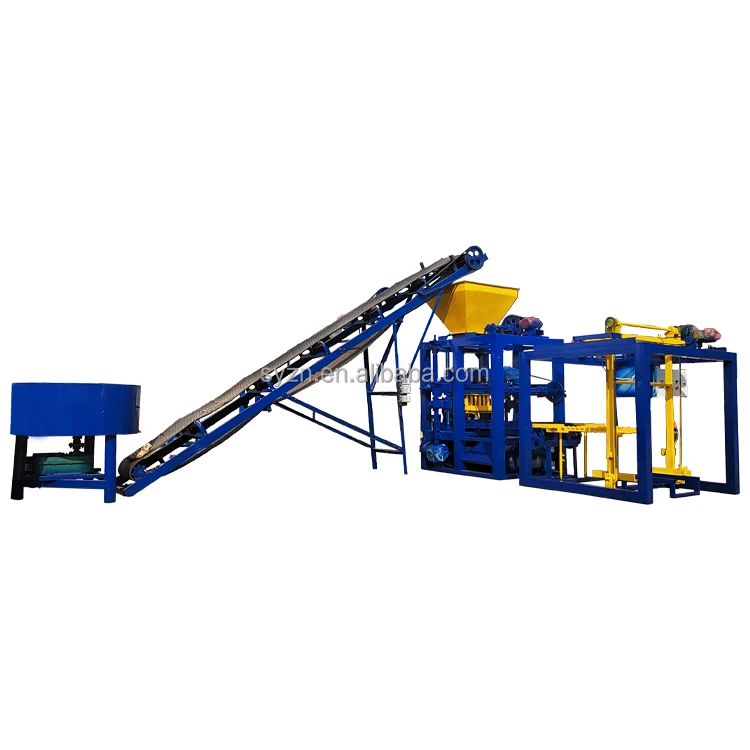
 Stationary block machine