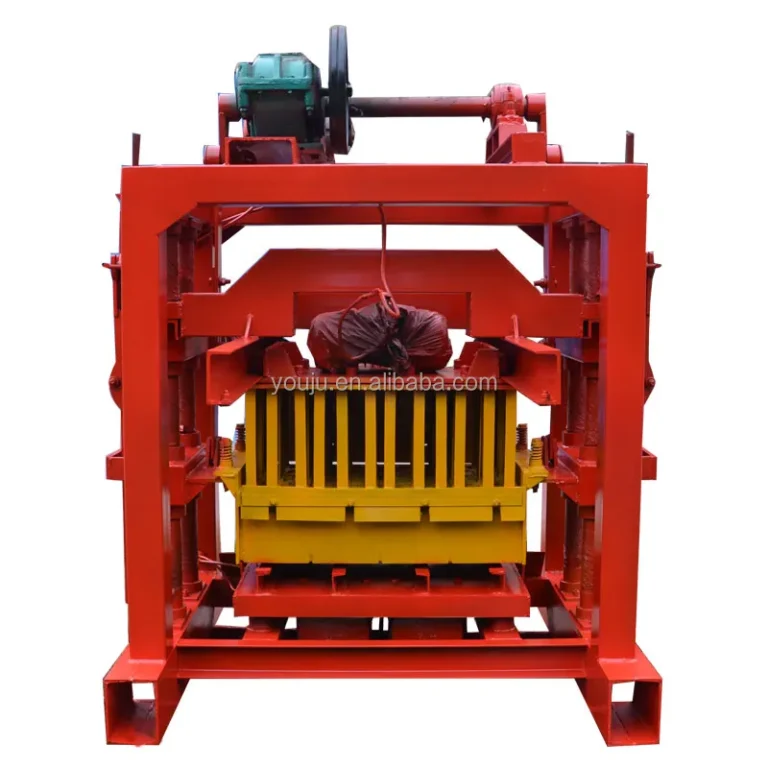
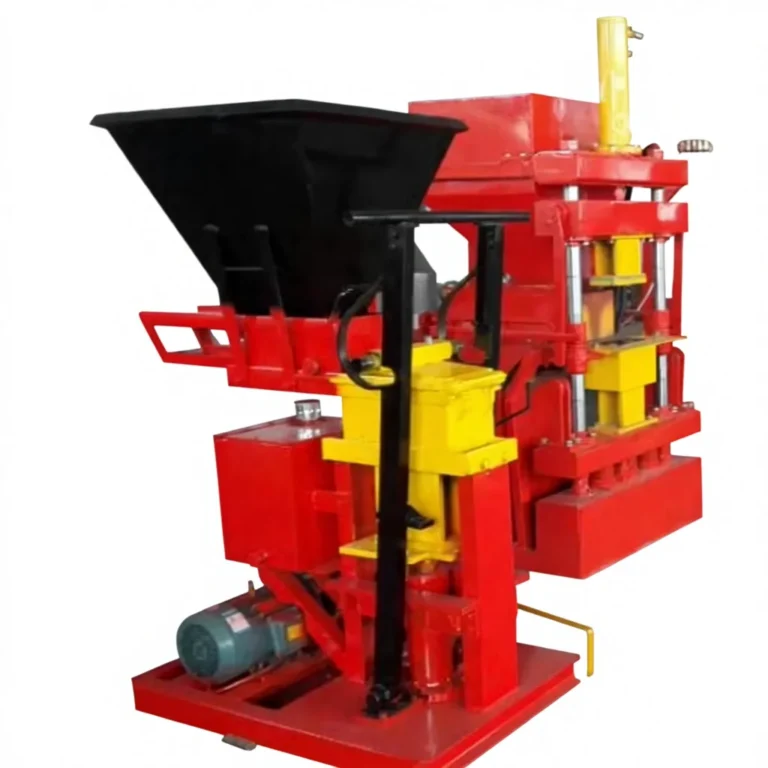
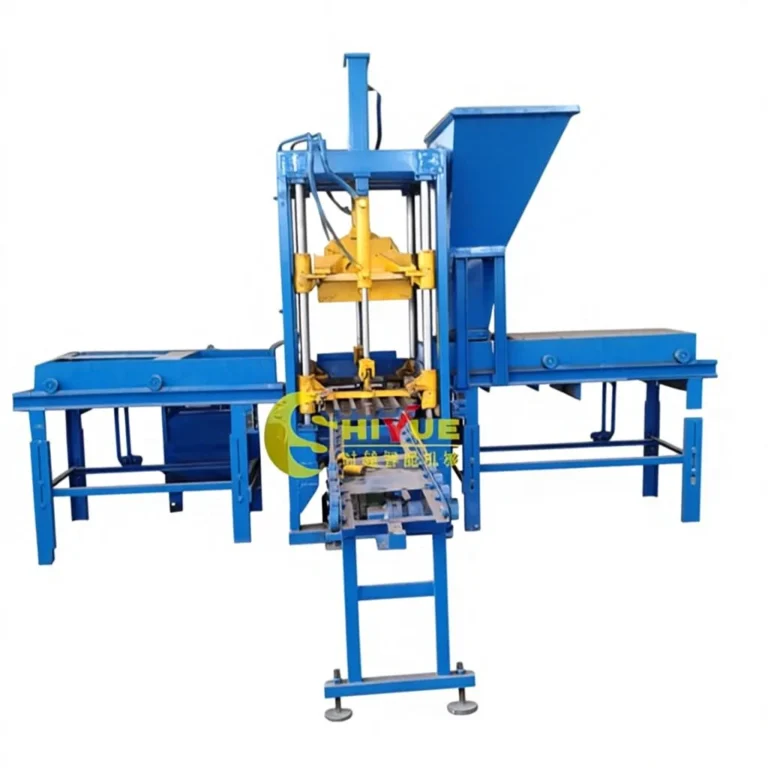
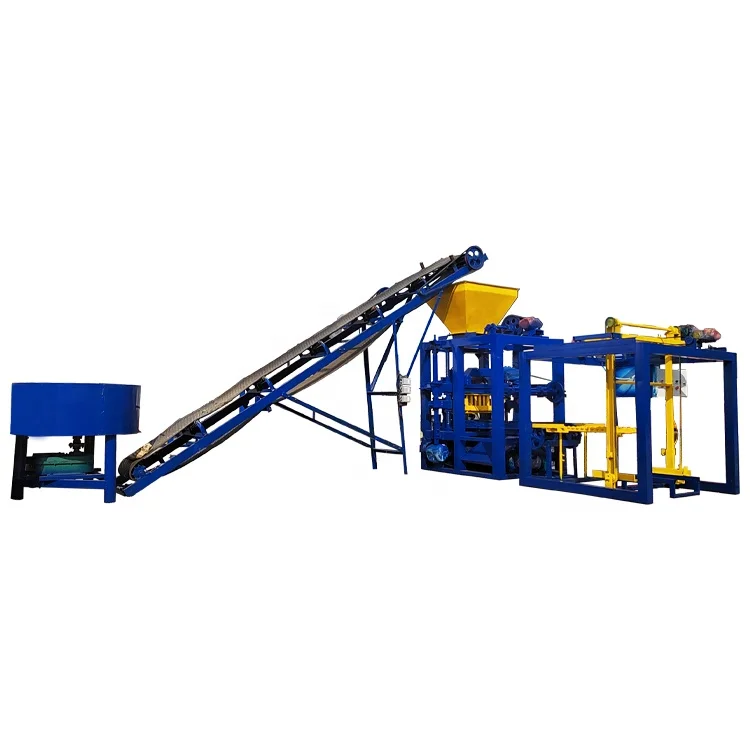
Matched System Design — The QTJ4-24 is specified alongside its JQ350 mixer, 6m belt conveyor, pallet size and optional stacker as one coordinated line, so cycle times align and no station waits on another.
Technical Specifications
| Parameter |
Value |
| Model |
QTJ4-24 |
| Product Type |
Semi-Automatic Stationary Concrete Block Making Machine |
| Molding Type |
Platform Vibration |
| Overall Dimensions (L×W×H) |
3600mm × 1700mm × 2560mm (working state) |
| Total Mass |
1750kgs |
| Pallet Size |
850mm × 450mm |
| Overall Power |
14.25KW |
| Vibration System |
Lower platform vibration (2 × 3kW motors) + Upper vibration (1.5kW attached device) |
| Mould Format |
390mm × 190mm × 190mm (4 pcs/mould); 240mm × 115mm × 53mm (21 pcs/mould) |
| Machine Frame |
Dragon gate style, super steel construction, four vertical wear-resisting shafts |
| Elevating System |
Cone-shape motor, JZQ250 speed reducer, V-shape triangle belt drive |
| Delivery Device |
Cycloidal pin wheel speed reducer, chains, V-shape triangle belt, self-conveying frame |
| Material Storing Device |
Material releasing hopper + material storing hopper (bolt-fixed) |
| Control System |
Electronic controlling part (PLC type to be confirmed) |
| Voltage & Frequency |
To be confirmed before shipment |
| Automation Level |
Semi-automatic (mechanical + electronic combined operation) |
| Support Equipment (basic) |
JQ350 pan mixer, 6m belt conveyor |
| Support Equipment (optional) |
Auto stacker (3–6 layers depending on block height), trolley (included as standard) |
| Hydraulic Pressure |
Not applicable (mechanical vibration type) |
| Output Capacity |
(basis to be confirmed — depends on block format, material and cycle time) |
Application Suitability
| Application |
Material or Output |
| Small-scale hollow block production |
Crushed stone, sand, cement and local aggregate blends |
| Solid brick manufacturing for housing projects |
Fly ash, sand, cement mixes |
| Paving block and kerbstone runs |
High-density aggregate with cement binder |
| Contractor on-site block production |
Locally sourced raw materials matched to site conditions |
| First block plant setup by entrepreneurs |
Standard masonry materials with modest capital outlay |
What "Cycles per Hour" Does Not Tell You About the QTJ4-24
Output figures only mean something when tied to a specific block format and material.
I watched a buyer in Southeast Asia sign off on a machine based on a single cycles-per-hour number, only to find that the same cycle produced a fraction of the expected daily pallets once the mould switched from hollow blocks to solid bricks. The vibration parameters that worked for clean river sand collapsed when the local aggregate carried a high clay content, and the output dropped noticeably [NEED_CITE: aggregate composition effects on vibration compaction]. With the QTJ4-24, we state the mould format behind every output figure — four hollow blocks or twenty-one solid bricks per cycle — so buyers can model realistic daily volumes before the deposit goes down. This is the approach any reliable semi-automatic stationary block machine manufacturer should follow.

Where the QTJ4-24 Fits in the Full Machine Range
The QTJ4-24 occupies the entry point of our stationary line — a semi-automatic, platform-vibration press built for plants that need dependable output without the footprint and capital of a fully automatic system. Buyers comparing options across our range will find this model suits workshops where floor space is limited and labour is available to handle pallet transfer via the included trolley. As a semi-automatic stationary block machine manufacturer, we position this unit so that the jump to a higher automation tier remains straightforward when demand grows.
Automation Tiers and the Upgrade Path
Starting with the QTJ4-24 means beginning with mechanical pallet handling and an electronic control system that manages the vibration and elevating cycles. The trolley included as standard carries loaded pallets to the curing yard. When output requirements increase, an auto stacker capable of three to six layers can be added to reduce manual handling at the press exit. This step-up approach lets a plant owner scale without replacing the core press [NEED_CITE: typical automation upgrade intervals in small block plants]. The semi-automatic stationary block machine manufacturer specification ensures that the control wiring and mechanical interfaces are prepared for that future addition.
Reading the Specifications That Matter on Site
The dual vibration system pairs two 3kW lower platform motors with a 1.5kW upper vibration device. Lower vibration consolidates the base of each block while the upper device tightens the surface — together they produce consistent density across both hollow and solid formats. The dragon gate frame with four vertical wear-resisting shafts keeps the mould aligned through thousands of vibration cycles, preventing the uneven wall thickness that shows up when guide posts wear unevenly. The 850mm × 450mm pallet size is chosen so that a standard small-plant curing yard and a common warehouse forklift can handle loaded pallets without modification. The overall power draw of 14.25KW means the machine can run from a reasonably sized generator when grid supply is unreliable.
The Hidden Cost of Mismatched Support Equipment
A block press that arrives without its pallet specification matched to the buyer’s existing curing racks creates an immediate bottleneck — pallets that are too wide for the rack slots or too heavy for the forklift sitting in the yard slow every downstream step. Voltage and frequency left unconfirmed until the crate arrives can delay commissioning for weeks while a transformer is sourced locally [NEED_CITE: common commissioning delays from unconfirmed electrical supply]. Mould formats not discussed before the order may mean the machine arrives set up for a block size the local market does not buy, forcing an expensive mould re-order and idle production days.
Why Source This Line Through Our Range
Block machinery is our single focus, which means the QTJ4-24 press, its JQ350 pan mixer, belt conveyor, pallets and optional stacker are specified as one matched system rather than assembled from separate suppliers. Configuration is set against the buyer’s actual mix design and target block format, not a catalogue default. Mould design and supply covers the formats the buyer’s market demands, including custom drawings. The automation level is selectable, so a buyer can start semi-automatic and upgrade later. Installation support includes operator training so the crew understands the vibration settings, mould change procedure and daily maintenance from the first shift.
Documentation & Verification
- Line layout showing QTJ4-24 station positions and pallet flow path
- Capacity calculation sheet stating output per mould format assumed
- Mould drawing and format list with cycle time per block type
- Voltage and control language confirmation before production begins
- Factory test record and packing photographs provided before dispatch
Installation, Commissioning & Support
- Foundation pad sized to the 3600mm × 1700mm working footprint of the QTJ4-24
- Dedicated electrical circuit rated for the 14.25KW total draw confirmed before wiring
- Machine shipped in dismantled state with reassembly guide and bolt-torque sequence
- First-run vibration and elevating parameter tuning on buyer’s actual material blend
- Operator training covering mould change, pallet loading and daily lubrication schedule
- Wear parts and mould list supplied for first replacement planning
Before You Send the Inquiry
To size the QTJ4-24 correctly for your plant, we need the block formats your market buys, the daily output target tied to those formats, and the raw materials available locally — including aggregate type and any clay or ash content. Confirm your site voltage, frequency and the language your operators require on the control display. If you have an existing curing yard or forklift, share the pallet dimensions those systems accept so the 850mm × 450mm standard can be verified or adjusted.
Frequently Asked Questions
Q: How is the output capacity of the QTJ4-24 calculated for each block format?
A: Output is stated per mould format rather than as a single number. The QTJ4-24 produces four hollow blocks of 390mm × 190mm × 190mm or twenty-one solid bricks of 240mm × 115mm × 53mm per cycle. Daily volume depends on cycle time, material, shift length and pallet handling speed, all confirmed in the capacity sheet before order.
Q: What electrical and control details are confirmed before the machine ships?
A: Voltage, frequency and control display language are confirmed in writing before production begins. This prevents the situation where a machine arrives at a site with a three-phase supply that does not match, or where operators cannot read the interface, both of which delay commissioning by weeks.
Q: How does the semi-automatic tier differ from fully automatic lines?
A: The semi-automatic tier uses a trolley for pallet transport to the curing yard and requires operators at the press for pallet loading and block removal. Fully automatic lines add automatic pallet feeding, stacking and cubing, reducing labour but requiring more floor space and higher capital investment.
Q: Can I start with the QTJ4-24 and add automation later?
A: The QTJ4-24 control wiring and mechanical interfaces accommodate an auto stacker that handles three to six layers depending on block height. This addition can be made when daily output grows enough to justify reducing manual pallet handling at the press exit.
Q: What mould formats are available and how does mould change work on this machine?
A: Standard moulds cover hollow blocks and solid bricks, with custom mould design available to buyer drawings. The platform-vibration system uses four vertical wear-resisting shafts for mould alignment. Mould change procedure and estimated time per format are documented in the operation manual supplied with each unit.

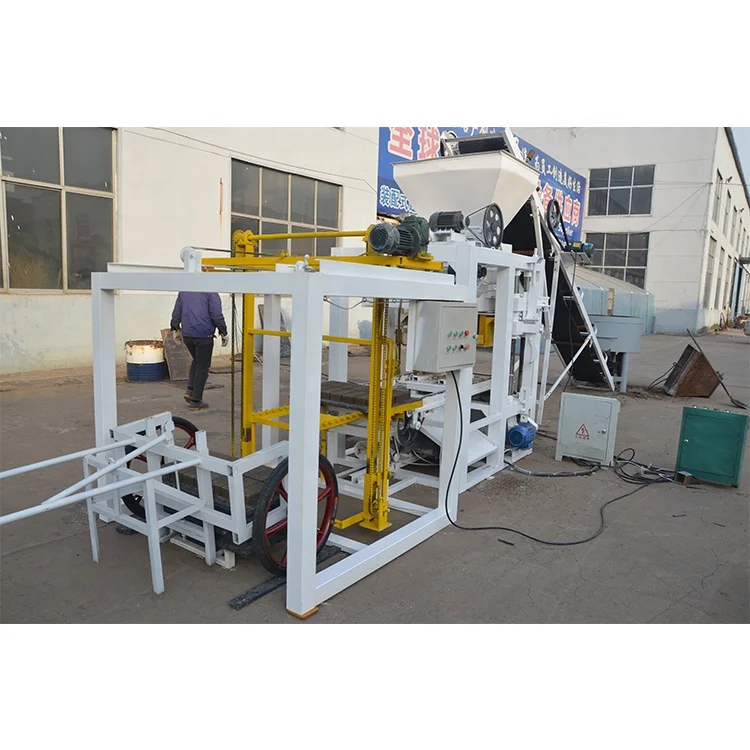
 Stationary block machine