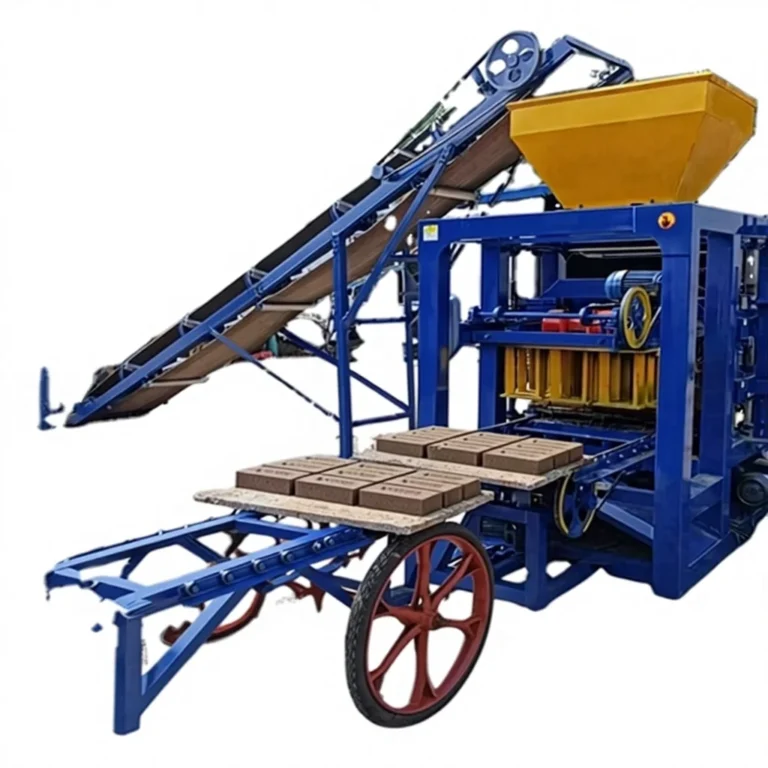
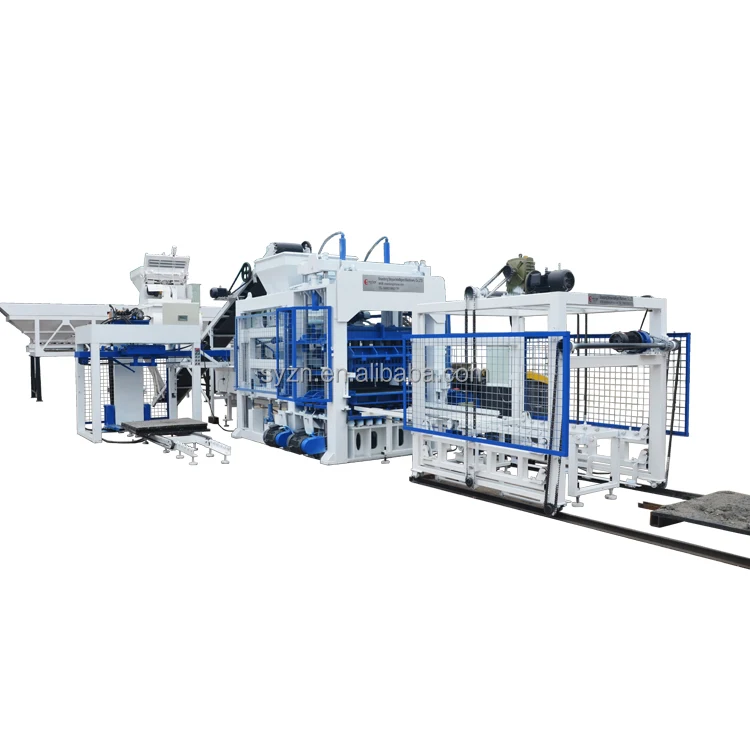
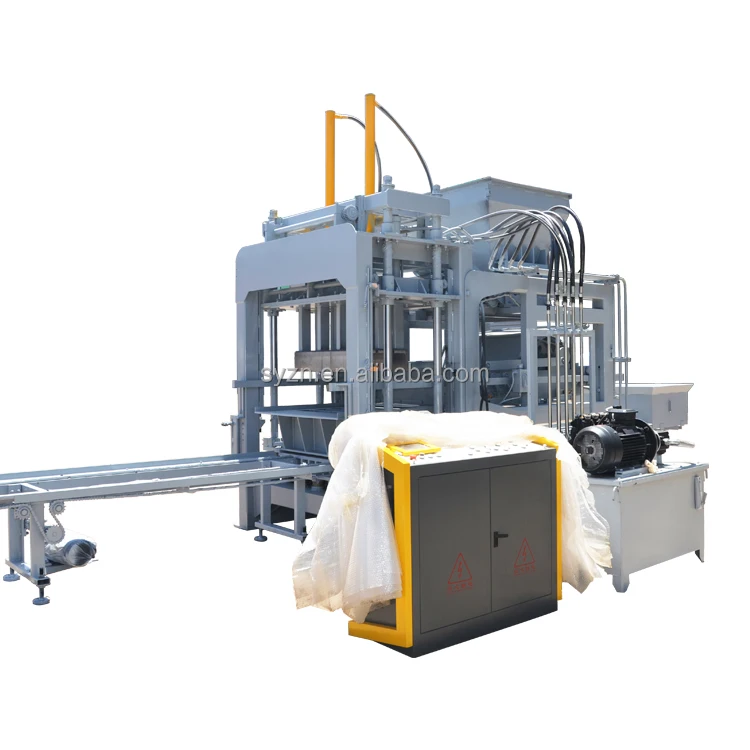
Matched System Design — the QTJ4-40 block machine, JQ350 mixer, mould and pallet are specified as one verified set, eliminating mismatched components from separate suppliers.
Technical Specifications
| Parameter |
Value |
| Model |
QTJ4-40 |
| Product Type |
Manual Concrete Block Making Machine |
| Rated Power |
10.4 kW |
| Overall Dimensions |
1350 × 1460 × 1800 mm |
| Total Mass |
1200 kg |
| Molding Cycle |
40 s |
| Output Capacity |
2400 pcs/hour, 19200 pcs/day (based on 400×200×200mm hollow block, 5 pcs/mould) |
| Pallet Size |
850 × 450 × 20 mm |
| Vibration Frequency |
2800 r/min |
| Automation Level |
Manual (mechanical and electric combination) |
| Configuration |
Host machine 1 set, block mould 1 set, JQ350 mixer |
| Control System |
Electrical control with mechanical interworking |
| Voltage & Frequency |
Configurable to buyer site requirement (basis to be confirmed) |
| Assembly State |
Stationary, requires flat cement ground foundation |
Application Suitability
| Application |
Material or Output |
| First-time block plant startups |
Hollow block production from local sand, crushed stone and cement |
| On-site contractor production |
Project-specific hollow blocks using available site aggregate |
| Small workshop manufacturing |
Low-volume concrete masonry units for regional distribution |
What the QTJ4-40 Output Figure Actually Means
Every capacity number is tied to a specific block format and mould, not a generic hourly claim.
I have seen buyers compare machines based on a single output figure, only to find the quoted number assumed a solid paver while they needed hollow blocks. The QTJ4-40 block machine manufacturer specification states 2,400 pieces per hour explicitly based on the 400×200×200mm hollow block format with five cavities per mould and a 40-second cycle. Change the format, and the cycle time, mould cavity count and daily total all shift. [NEED_CITE: block format impact on cycle time and daily output]
Where the QTJ4-40 Sits on the Full Range
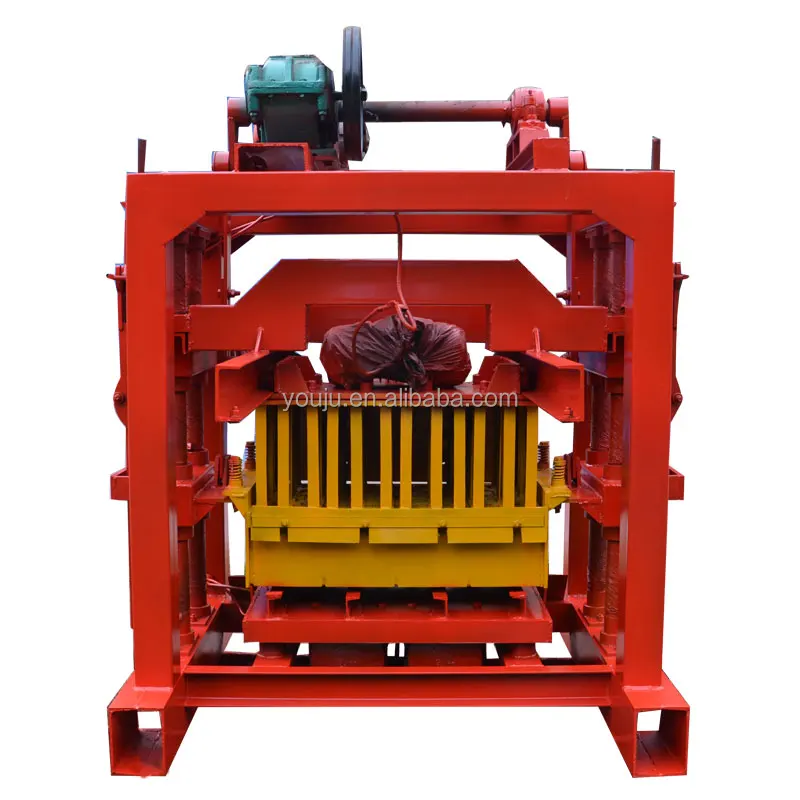
The QTJ4-40 is the entry tier of our stationary block machine lineup. It gives entrepreneurs and small contractors a starting point that requires minimal capital and floor space. The mechanical-electric control keeps operation straightforward without PLC complexity, which suits buyers who plan to run one or two operators on the floor.
The Upgrade Path from Manual to Automatic
Starting with a manual stationary unit does not lock a buyer into that tier forever. As production volume grows, the next step is typically a semi-automatic line that adds pallet feeding and stacking, followed by a fully automatic configuration with batching, cubing and curing rack handling. The QTJ4-40 block machine manufacturer range is structured so each tier shares compatible pallet dimensions and mould mounting patterns, making the transition practical rather than a complete replacement. [NEED_CITE: block plant upgrade path from manual to automatic operation]
Reading the Specs That Matter for Block Quality
Vibration frequency at 2,800 r/min drives the table vibration that compacts the concrete mix during the 40-second molding cycle. This frequency, combined with the mechanical pressure applied during forming, determines the density and compressive strength of the finished block. The 850 × 450 × 20 mm pallet size must match the curing area layout and the forklift or hand cart the buyer already uses, because wet blocks on pallets move from the machine to the curing zone every cycle. The 10.4 kW rated power covers both the vibration motor and the JQ350 mixer in the standard configuration, which is a relevant consideration when planning the electrical supply at a small workshop site.

What Happens When the Mix Does Not Match the Machine
A block machine configured for standard river sand will underperform when the buyer feeds it volcanic ash or crushed limestone aggregate. The vibration force and cycle timing that work for one material profile produce weak, crumbly blocks with another. This is why confirming the local aggregate type and mix ratio before finalizing the QTJ4-40 configuration is necessary — the machine settings must match what the buyer can actually source. [NEED_CITE: aggregate type effect on concrete block compressive strength]
Why a Matched Configuration Matters
Our block machinery focus means the QTJ4-40 host machine, mould, pallet and JQ350 mixer are specified together as one system. The mould drawing and format list are confirmed before production, so the buyer knows exactly which block dimensions are included. Voltage and frequency are verified against the buyer’s site supply before the machine is built, preventing commissioning delays after arrival. Factory testing runs the actual block format the buyer ordered, not a generic test cycle.
Documentation & Verification
- Line layout and capacity calculation stating the 400×200×200mm hollow block format assumed
- Machine specification sheet with confirmed voltage, frequency and control language
- Mould drawing and format list showing included block dimensions
- Factory test record on the buyer’s specified block format before dispatch
- Packing photographs and customs documentation support for shipment
Installation, Commissioning & Support
- Flat cement ground foundation required; machine footprint is 1350 × 1460 mm
- 10.4 kW total power draw needs a dedicated circuit at the confirmed site voltage
- Host machine ships assembled; mould and JQ350 mixer packed separately for container loading
- First production run supervised with cycle timing verified against the specified block format
- Operator training covers mould change procedure, vibration adjustment and daily maintenance checkpoints
- Wear parts list and mould specifications provided for local sourcing or reorder
What to Include in Your Inquiry
To configure the QTJ4-40 correctly, share the target block format and dimensions, the daily output you need, and the local aggregate type you plan to use. Confirm your site voltage and frequency so the electrical system is built to match. Let us know the available floor space and whether you already have pallets or handling equipment on site.
Frequently Asked Questions
Q: How is the QTJ4-40 daily output calculated and which block format does it assume?
A: The stated output of 19,200 pieces per day is calculated from a 40-second molding cycle producing five 400×200×200mm hollow blocks per mould. If you need a different block format, the cycle time and cavity count change, so we recalculate daily output based on your specific product before quoting.
Q: Where does the QTJ4-40 sit on the full machine range, and what is the upgrade path?
A: The QTJ4-40 is the entry-level stationary unit, designed for first-time buyers and small workshops. As volume grows, buyers can move to semi-automatic lines with pallet feeding and stacking, then to fully automatic configurations. Pallet and mould compatibility across tiers keeps the transition practical.
Q: What voltage and frequency options are available for my market?
A: Voltage and frequency are confirmed with each buyer before production. We configure the electrical system and control panel to match your local supply standard. This is verified during the inquiry stage to avoid commissioning delays when the machine arrives at your site.
Q: What is included in the standard configuration, and what do I need to add?
A: The standard package includes the QTJ4-40 host machine, one block mould set and a JQ350 mixer. Pallets, curing racks and material handling equipment are not included but can be specified separately. We confirm what you already have on site before finalizing the configuration.
Q: How much floor space and what foundation does the QTJ4-40 require?
A: The machine footprint is 1350 × 1460 mm with a height of 1800 mm. It requires a flat cement ground foundation and additional space for the mixer, pallet staging and curing area. We provide a line layout showing the recommended arrangement based on your available workshop dimensions.

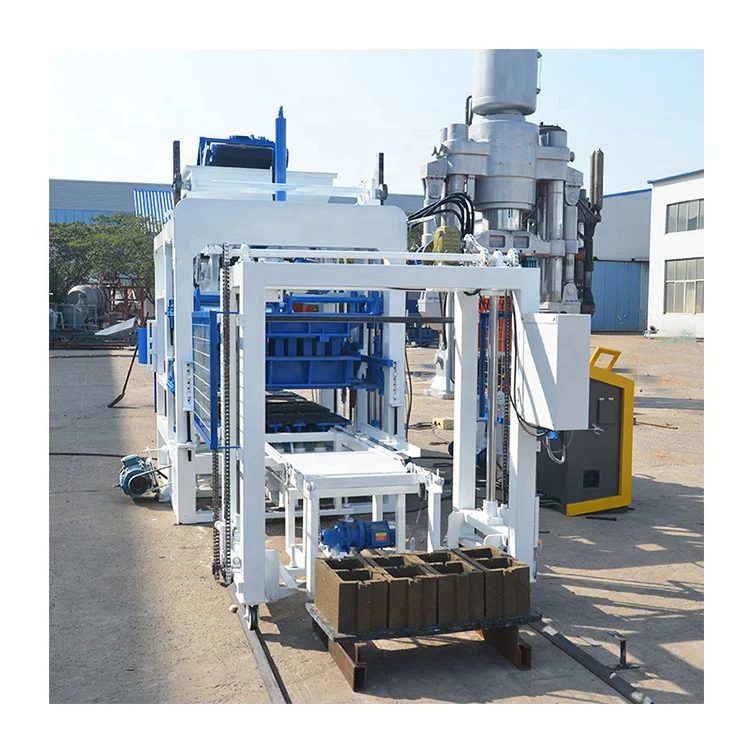 Stationary block machine