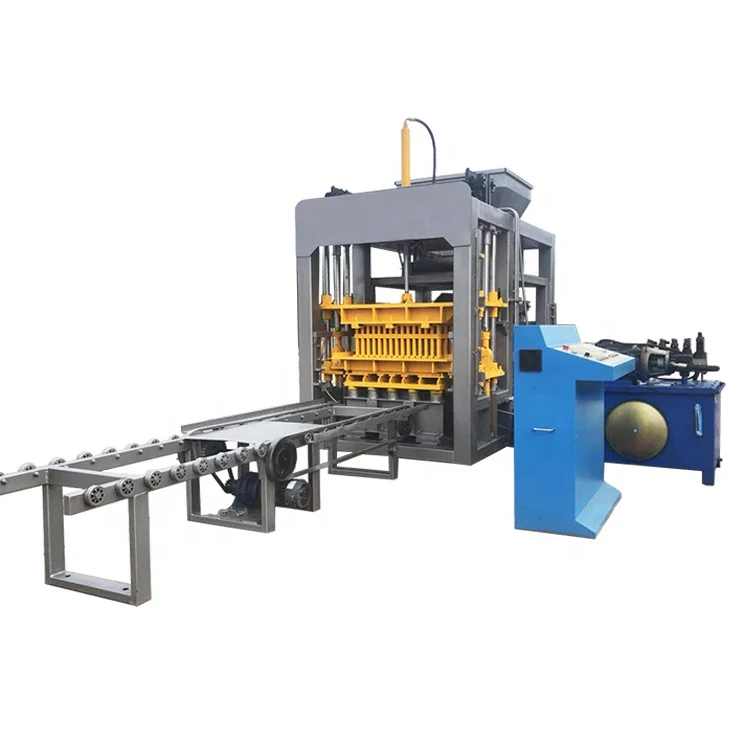
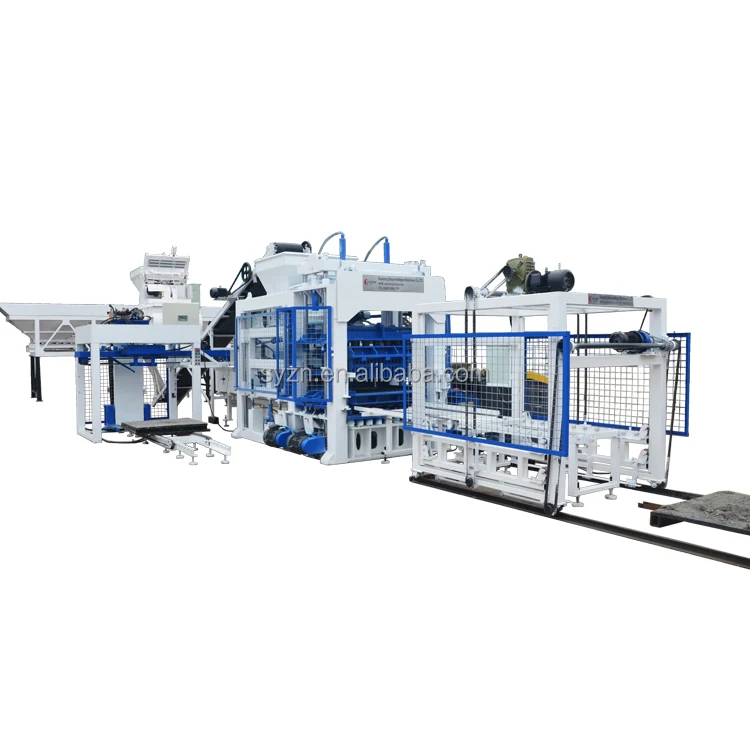
Hydraulic Drive Consistency — Every QTF3-20 leaving our Linyi facility is tested with the buyer’s specified block format and local aggregate sample before the crate is sealed, so vibration force and hydraulic pressure are matched to what will actually run on your shop floor.
Technical Specifications
| Parameter |
Value |
| Model |
QTF3-20 |
| Product Type |
Stationary Hydraulic Block Making Machine |
| Overall Dimensions (L×W×H) |
4000×3500×2300 mm |
| Total Mass |
2870 kg |
| Total Power |
17.5 kW |
| Vibration Form |
Platform Vibration |
| Control Style |
Semi-Automatic |
| Output Capacity |
4320 pcs/day (basis not stated in source — confirm block format / material / thickness) |
| Hydraulic System |
Yes (hydraulic drive) |
| Host Machine Structure |
#12 U-bar welded overall frame |
| Material Feeding |
Double layer (raw material and color surface material) |
| Proximity Switch Type |
No-contact proximity switch |
| Suggested Mixer Pairing |
JQ350 mixer with 8-meter conveyor belt |
| Electrical & Hydraulic Components |
Imported from Germany or Chinese famous brand |
Application Suitability
| Application |
Material or Output |
| Hollow brick production |
Cement, sand, coarse aggregate |
| Interlocking paver manufacturing |
Cement, fly ash, slag with color surface layer |
| Porous brick and grass brick |
Permeable aggregate mixes for landscaping |
| Standard solid brick |
Local river sand or crushed stone with cement binder |
| Slope protection block |
Heavy aggregate blends for civil engineering projects |
What "4320 Pieces Per Day" Actually Means for Your Plant
Daily output figures on block machines are meaningless without naming the exact block format, wall thickness, and curing cycle assumed in the calculation.
I have watched buyers sign off on a QTF3-20 stationary block machine manufacturer quote showing a single capacity number, then discover on commissioning day that their primary product — say a 400×200×200mm hollow block — runs at a completely different cycle time than the standard solid brick used for the factory test. The press itself is not the bottleneck; the mismatch between quoted format and actual format is. [NEED_CITE: block format assumptions in capacity quotations] When you evaluate any model in our stationary range, the first document we prepare is a line layout that states the daily output separately for every block format you intend to produce, not a single blended figure.

Where the QTF3-20 Sits in the Stationary Range
The QTF3-20 occupies the mid-tier semi-automatic position. Buyers who are setting up a first block plant or replacing an aging manual press typically start here because the capital outlay stays contained while the hydraulic platform vibration delivers consistent density across hollow, solid, and paving formats. The semi-automatic control style means an operator is still involved in pallet handling, but the pressing cycle, material feed, and vibration sequence run on programmed logic.
Positioning Against Fully Automatic and Mobile Alternatives
If your site has limited curing space and you need blocks produced directly onto the ground, a mobile egg-laying machine is the correct tier — but it sacrifices the hydraulic pressure and platform vibration that give stationary presses their density advantage. Fully automatic lines with stackers and cubing systems sit above the QTF3-20 and reduce labor per block, yet they demand a larger footprint and a higher initial investment. The QTF3-20 stationary block machine manufacturer configuration is designed for buyers who want the structural output quality of a stationary press without committing to full automation on day one. [NEED_CITE: automation tier selection for block plant startups]
Reading the Specs That Determine Real Output
The #12 U-bar welded frame is not a marketing detail — it is the mass that absorbs vibration energy so the mold cavity fills uniformly rather than bouncing. Platform vibration combined with hydraulic pressure determines whether your hollow block achieves the compressive strength your local building code requires; vibration alone compacts, but hydraulic pressure locks the aggregate matrix. The double-layer feeding system lets you run a structural base mix and a color surface layer in the same cycle, which is essential for interlocking pavers and color-faced bricks. Total power at 17.5 kW means this press can run from a standard industrial three-phase supply without a dedicated transformer upgrade, but the voltage and frequency must be confirmed before the electrical cabinet is wired.
The Cost of Skipping the Format Conversation
Buyers who confirm a machine order without specifying their exact block formats, local aggregate gradation, and available pallet size regularly face commissioning delays. The mold arrives, but it was sized for a pallet the buyer does not stock. The vibration frequency was set for crushed stone, but the buyer sources river sand with a different moisture profile, and the blocks crack during curing. [NEED_CITE: aggregate moisture impact on block curing] These are not machine defects — they are specification gaps that a detailed pre-order configuration prevents.
Why Source This Stationary Press Here
Block machinery is our single focus, so the QTF3-20 press, its molds, pallets, and supporting conveyors are specified as one matched system rather than assembled from unrelated suppliers. Configuration is set against your actual mix design and target block format, not a catalogue default. We design and supply molds for the formats your market sells, including custom drawings when standard cavity layouts do not fit. The semi-automatic architecture leaves a clear upgrade path — buyers can add automatic pallet feeding and stacking later without replacing the host machine. Installation support includes operator training on your specific block formats, and our documentation package covers every verification point from factory test to commissioning.
Documentation & Verification
- Line layout with capacity calculated per block format for the QTF3-20
- Machine specification sheet confirming hydraulic pressure and vibration force ratings
- Mold drawing and format list for every cavity included in the order
- Voltage, frequency, and control language confirmation before cabinet wiring
- Factory test record showing the QTF3-20 running the buyer’s target block format
- Packing photographs and customs documentation support for shipment
Installation, Commissioning & Support
- Foundation pad sized to the 4000×3500 mm footprint with anchor bolt template provided
- Dedicated three-phase circuit rated for the 17.5 kW total power draw with voltage confirmed pre-build
- Host frame arrives as a single welded unit, reducing on-site assembly to pallet feeder and conveyor alignment
- First production run supervised with vibration and hydraulic pressure adjusted to the buyer’s confirmed mix design
- Operator training covers mold change procedure, no-contact proximity switch calibration, and daily lubrication points
- Wear parts list and mold maintenance schedule provided with the QTF3-20 at handover
What to Include in Your Inquiry
Tell us which block formats your market demands, the daily volume you target for each, and the raw materials available at your site — including aggregate type and source. Confirm your local voltage, frequency, and preferred control language so the electrical cabinet matches your grid on arrival. If you already have a mixer, pallets, or a curing area in place, share those dimensions so the supporting line equipment integrates without rework.
Frequently Asked Questions
Q: How is the QTF3-20 daily output calculated and which block format does it assume?
A: The 4320 pieces per day figure listed in general specifications is based on a reference format that may not match your primary product. We prepare a separate capacity calculation for every block format you intend to produce — hollow, solid, paver, or porous — stating the cycle time and assumed mix for each, so you can compare output realistically before placing an order.
Q: Where does the QTF3-20 sit compared to fully automatic and mobile models?
A: It is a mid-tier stationary press with semi-automatic control. Mobile machines trade hydraulic density for ground-level production flexibility, while fully automatic lines add stacking and cubing to reduce labor. The QTF3-20 delivers stationary-press block quality at a contained investment, with an upgrade path to higher automation later.
Q: What plant footprint and supporting equipment does the QTF3-20 require?
A: The press itself occupies a 4000×3500 mm footprint, with additional space needed for the JQ350 mixer, 8-meter conveyor belt, pallet feeder, and block conveyor. A level concrete foundation and a three-phase power supply matching the 17.5 kW total draw are required. Curing area size depends on your pallet dimensions and daily output target.
Q: Can the QTF3-20 be upgraded to a higher automation tier later?
A: Yes. The semi-automatic control architecture supports adding automatic pallet feeding, stacking, and cubing modules as your production volume grows. The host frame, hydraulic station, and vibration platform remain in place; the upgrade focuses on material handling and control logic expansion.
Q: What voltage, frequency, and control language options are available?
A: The electrical cabinet is configured to your confirmed site voltage and frequency before shipment. The control panel display language is set to your operator preference. Confirming these details during the quotation stage prevents commissioning delays once the QTF3-20 stationary block machine manufacturer unit arrives at your facility.

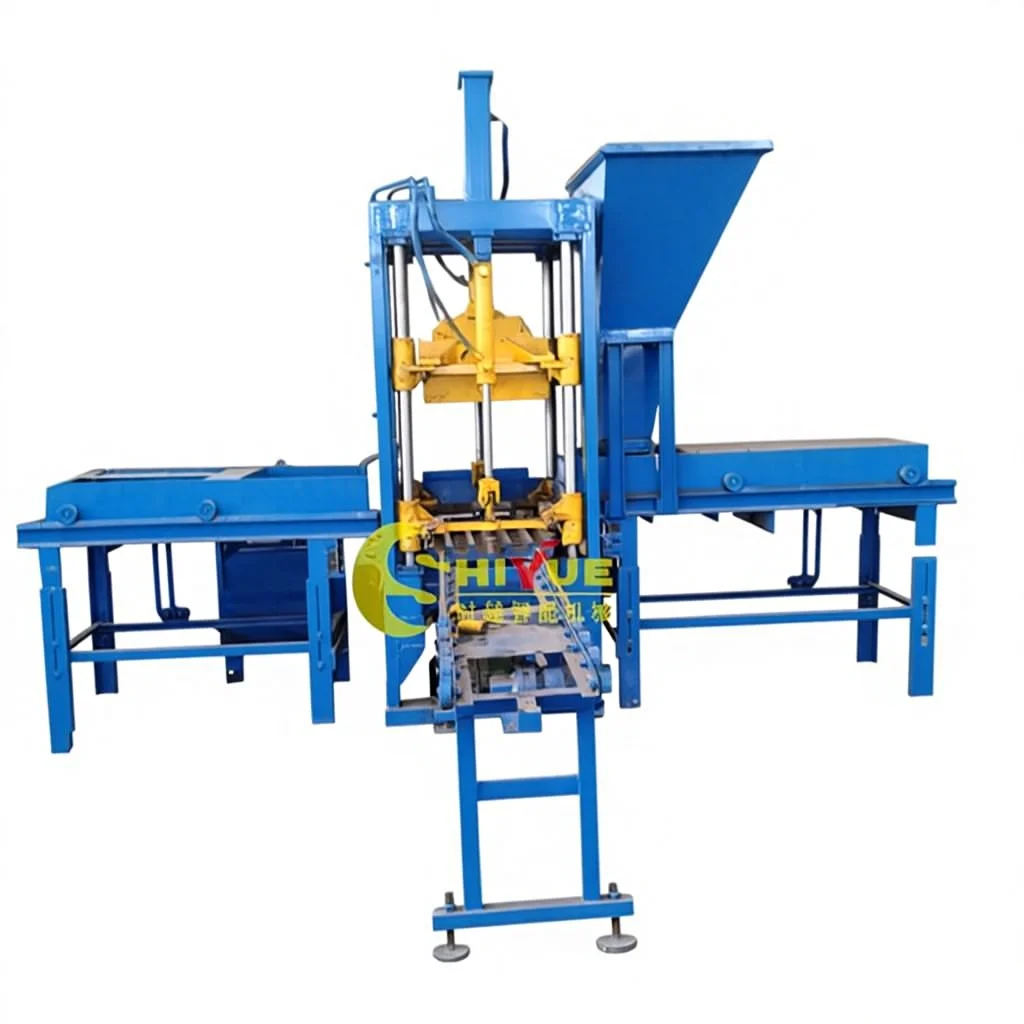
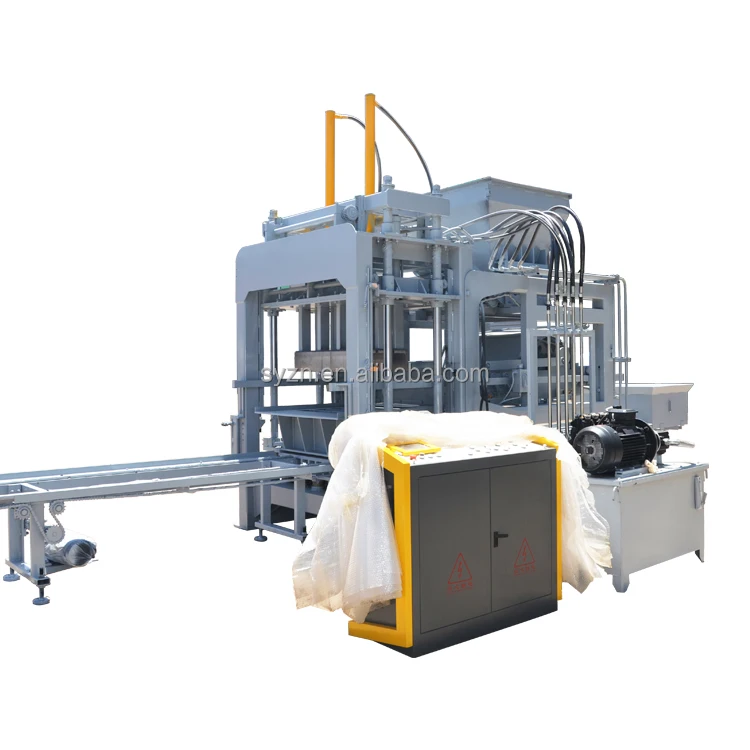 Stationary block machine