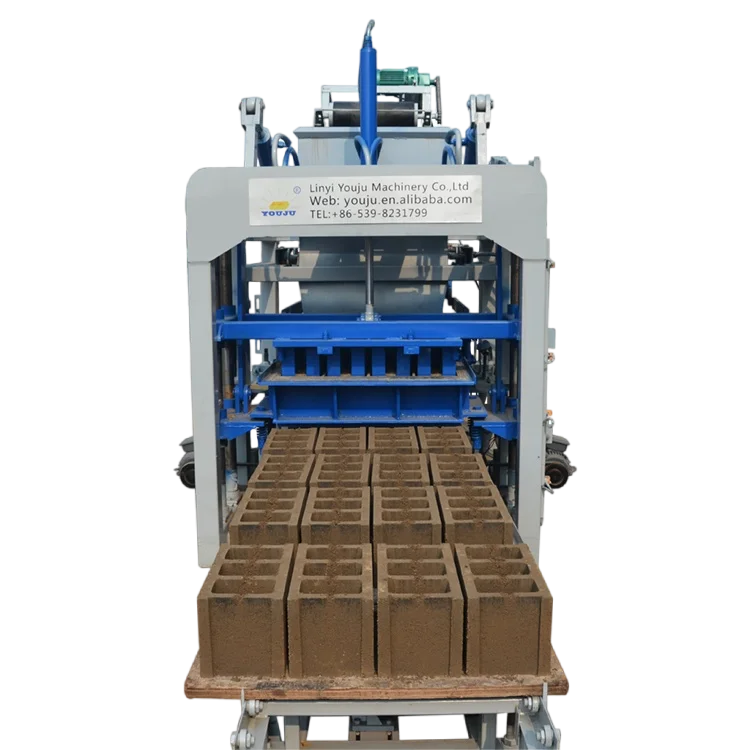
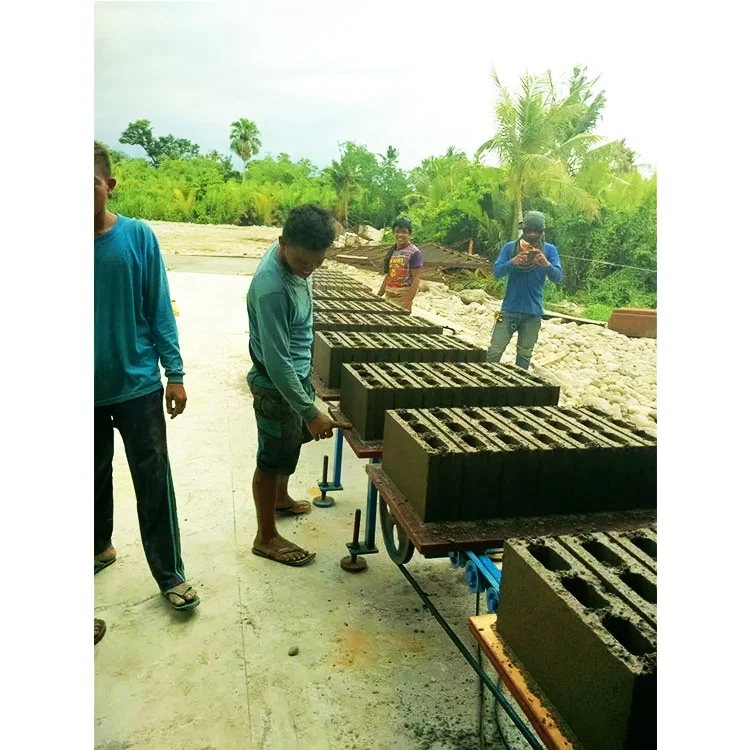
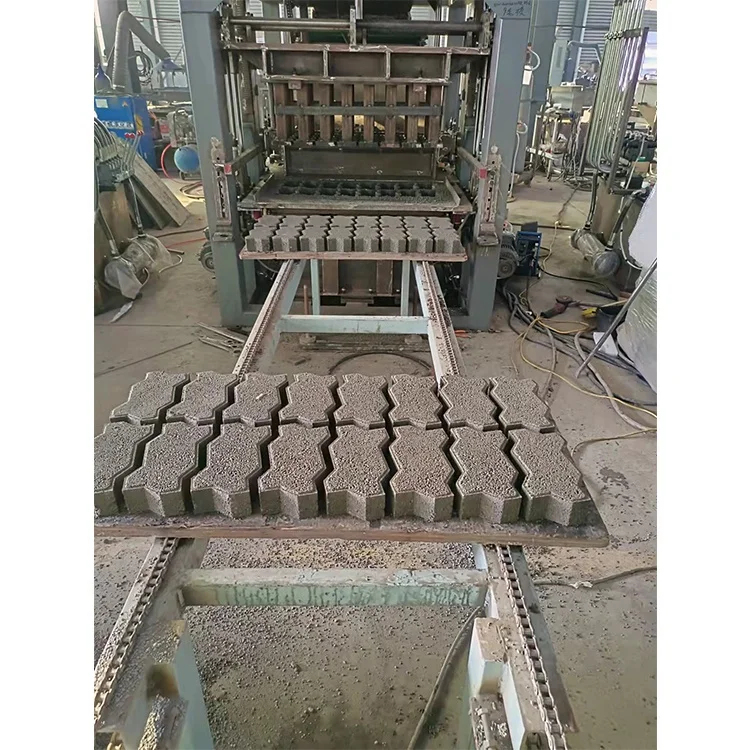
Matched System Sizing — every QT6-15 configuration we ship pairs the press with pallets, moulds, and handling gear rated for the same cycle time, so the line runs as one unit rather than a collection of mismatched stations.
Technical Specifications
| Parameter |
Value |
| Model |
QT6-15 |
| Product Type |
Hydraulic Concrete Block Making Machine |
| Overall Dimensions (L×W×H) |
8200 × 1700 × 2950 mm |
| Total Mass |
7 T |
| Overall Power |
37 kW |
| Vibration Frequency |
0-60 Hz (adjustable) |
| Vibration Form |
Platform Vibration |
| Vibration Force |
45 kN |
| Moulding Mode |
Automatic loading, vibration moulding |
| Demolding Method |
Hydraulic |
| Pallet Size |
880 × 850 mm |
| Molding Cycle |
15-20 s |
| Control System |
PLC (Programmable Controller) with touch screen |
| Block Compressive Strength |
>15 MPa |
| Output — Hollow block 400×200×200 mm |
1080-1440 pcs/h, 8640-11520 pcs/8hr |
| Output — Hollow block 400×150×200 mm |
1440-1920 pcs/h, 11520-15360 pcs/8hr |
| Output — Solid brick 240×115×53 mm |
5760-7680 pcs/h, 46080-61440 pcs/8hr |
| Output — Rectangular paver 200×100×60 mm |
17280-23040 pcs/8hr (basis: 20-25s cycle) |
| Output — Zigzag paver 225×112.5×60 mm |
17280-23040 pcs/8hr (basis: 20-25s cycle) |
| Automation Level |
High (automatic loading, PLC controlled, touch screen) |
| Raw Material Adaptability |
Waste ash, slag, various aggregates |
| Factory Area Required |
1200 m² |
| Warranty |
1 year (excluding spare parts) |
| Standards |
CE declaration where applicable |
Application Suitability
| Application |
Material or Output |
| Hollow block production for residential and commercial walls |
Crushed stone, river sand, or slag aggregate with Portland cement |
| Solid brick manufacturing for load-bearing and partition walls |
Fly ash, waste ash, or local quarry sand blended with cement |
| Rectangular paving block laying for driveways and walkways |
Fine aggregate and cement mix producing >15 MPa compressive strength |
| Zigzag interlocking paver production for heavy-traffic areas |
Graded aggregate with cement, hydraulic pressure and vibration matched to mix |
| On-site block production for housing project contractors |
Locally sourced aggregate, reducing transport cost of finished blocks |
Why Quoted Capacity Numbers Mislead Block Plant Buyers
The QT6-15 concrete block machine manufacturer lists output per block format with its cycle time — not a single headline number.
Capacity figures that omit the assumed block format create a gap between what the buyer expects and what the plant actually ships each day. A press running solid bricks cycles differently than one pressing large hollow blocks, yet many quotations state only the highest figure. When I first started configuring lines, a buyer in Southeast Asia received a machine quoted at a rate based on small solid bricks while his market demanded 200 mm hollow blocks; his real daily output fell noticeably short of the number on the proforma invoice. Stating each format’s cycle time and eight-hour output removes that ambiguity and lets the buyer calculate revenue against the product he actually sells [NEED_CITE: block format impact on daily plant throughput].

Where the QT6-15 Sits in the Full Machine Range
The QT6-15 occupies the mid-to-high tier of our automatic block press lineup, bridging the gap between entry-level semi-automatic models and the largest fully automatic lines. Buyers moving up from manual pallet handling find the PLC-controlled cycle and automatic loading a meaningful step forward without the footprint and capital outlay of a high-capacity plant. For entrepreneurs planning a first block factory, this model offers a balance of format flexibility and investment level, while established producers use it to add paver or solid brick formats alongside existing hollow block output.
Matching Automation Tier to Your Plant Footprint
A 1200 m² factory area is required for a standard QT6-15 layout, which includes raw material staging, the press itself, pallet return, and initial curing rack space. Semi-automatic plants can run with a smaller footprint because pallet handling is manual, but labour cost and cycle consistency suffer. Fully automatic lines demand more floor space for stackers and cubing systems. The QT6-15 lets a buyer start at a high automation level for the press cycle and add pallet stacking or curing rack handling later, spreading capital expenditure across phases rather than committing to a full line on day one [NEED_CITE: phased automation investment in block plants].
Reading the Specs That Shape Daily Output
Platform vibration at 0-60 Hz combined with 45 kN vibration force and hydraulic demolding determines how densely the mix is compacted — and therefore the block’s compressive strength and weight consistency. The 880 × 850 mm pallet size must align with the curing racks and forklifts the buyer already operates; specifying a pallet dimension that mismatches existing handling equipment forces a costly replacement of racks or lift trucks. The 37 kW overall power rating means a dedicated circuit with adequate breaker capacity is necessary before the machine arrives, and PLC control with a touch screen interface allows cycle parameters to be stored per mould, so operators switch formats without re-tuning vibration and pressure manually each time. Raw material flexibility — waste ash, slag, and various local aggregates — keeps cement dosage in check while maintaining strength above 15 MPa.
The Cost of Skipping Configuration Checks
A QT6-15 concrete block machine manufacturer that ships without confirming the buyer’s aggregate type, voltage supply, or PLC language leaves expensive problems for the installation week. I once spent four days on-site adjusting vibration force because the sample mix used standard river sand while the customer’s local supply was volcanic aggregate — the density and water absorption were completely different. Voltage mismatches delay commissioning further when the local grid frequency does not match the motor rating. Skipping a factory test on the buyer’s actual mix means the first production run becomes the test run, wasting raw material and eroding confidence before the plant even starts selling [NEED_CITE: on-site commissioning delays from unconfirmed specifications].
Why Buyers Source This Range Through Us
Block machinery is our single focus, so the press, mould, pallet, and handling equipment are specified as one matched system rather than assembled from separate suppliers. Every QT6-15 configuration is set against the buyer’s actual mix design and target block format, not a catalogue default. Mould design covers the formats the buyer’s market sells, including custom drawings for non-standard shapes. The automation level is selectable, allowing a semi-automatic start with a defined upgrade path. Installation support includes on-site commissioning and operator training so the line runs within the first week rather than after a prolonged learning curve.
Documentation & Verification
- Line layout and capacity calculation stating the block format assumed for each output figure
- Machine specification sheet confirming pallet size, vibration force, and power rating
- Mould drawing and format list showing included and optional moulds
- Voltage, frequency, and PLC display language confirmation before production
- Factory test record on the buyer’s specified mix design and local aggregate
Installation, Commissioning & Support
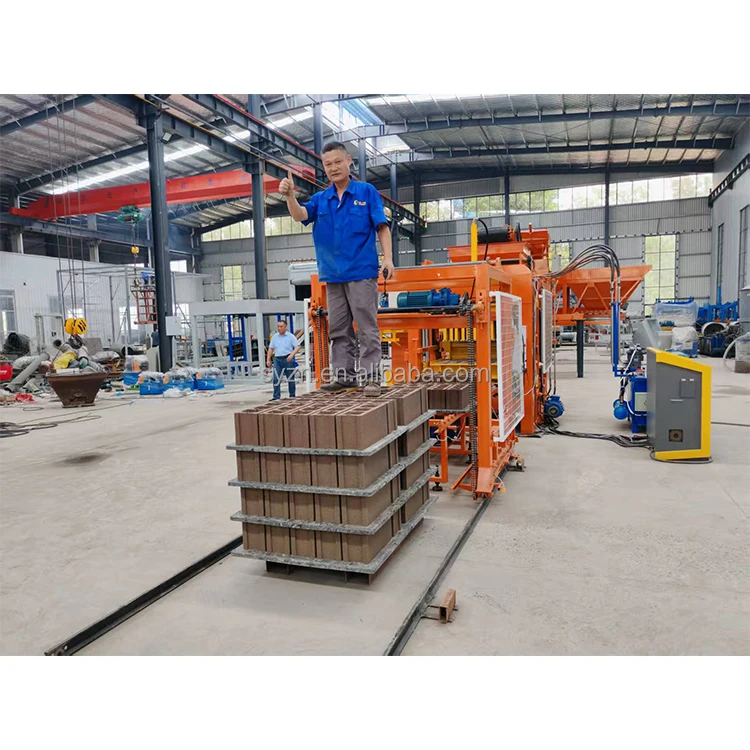
- 1200 m² factory area with level concrete floor and drainage for the QT6-15 layout
- 37 kW dedicated power circuit with breaker rating matching local voltage and frequency
- Machine shipped in dismantled state for container loading, reassembled on-site
- PLC touch screen parameters set to buyer’s mould formats during first commissioning run
- Operator training covering mould change, cycle adjustment, and daily maintenance routines
- Wear parts and hydraulic seal list supplied with first spare parts order
What We Need to Configure Your Line
Send us your target block formats, daily output goal, and the local aggregate type you plan to use. Include your site’s voltage and frequency, PLC language preference, and the pallet dimensions your existing curing racks accept. If you are comparing this QT6-15 against a semi-automatic or higher-tier model, tell us your available factory area so we can map the right tier to your space.
Frequently Asked Questions
Q: How is QT6-15 output calculated for each block format?
A: Each capacity figure is tied to a specific block dimension and cycle time. For example, hollow blocks at 400×200×200 mm run a 15-20 second cycle yielding 8640-11520 pieces per eight-hour shift, while rectangular pavers assume a 20-25 second cycle. This format-by-format breakdown lets you plan production around the products your market actually buys.
Q: Where does the QT6-15 sit compared to semi-automatic and higher-tier models?
A: It occupies the mid-to-high tier of the automatic range, requiring a 1200 m² factory area and 37 kW power supply. Semi-automatic models need less floor space and lower capital but rely on manual pallet handling. Higher-tier lines add full stacking and cubing automation, increasing both footprint and investment.
Q: Can I start semi-automatic and upgrade later?
A: Yes. The QT6-15 press can be configured with manual pallet handling initially and upgraded with automatic pallet feeding, stacking, and cubing as production volume grows. The PLC control system supports additional automation modules without replacing the core machine.
Q: What voltage and PLC language options are available?
A: Voltage and frequency are configured to match your local grid before production begins. The PLC touch screen display language is confirmed during the order stage so operators can read menus and fault diagnostics in their working language upon commissioning [NEED_CITE: voltage and frequency standards by export market].
Q: What supporting equipment is needed alongside the QT6-15?
A: A complete line typically includes raw material feeding and mixing, pallet feeding and return, curing rack handling, and stacking or cubing. The 880×850 mm pallet size must match your curing racks and forklift. We specify these stations together so cycle times align and the press is not left waiting between stages.

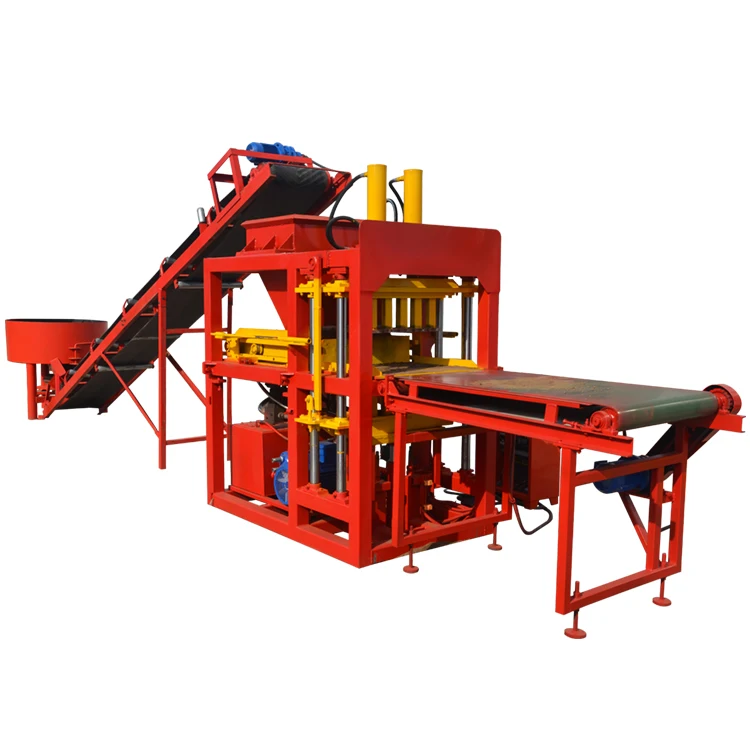 High quality block machine