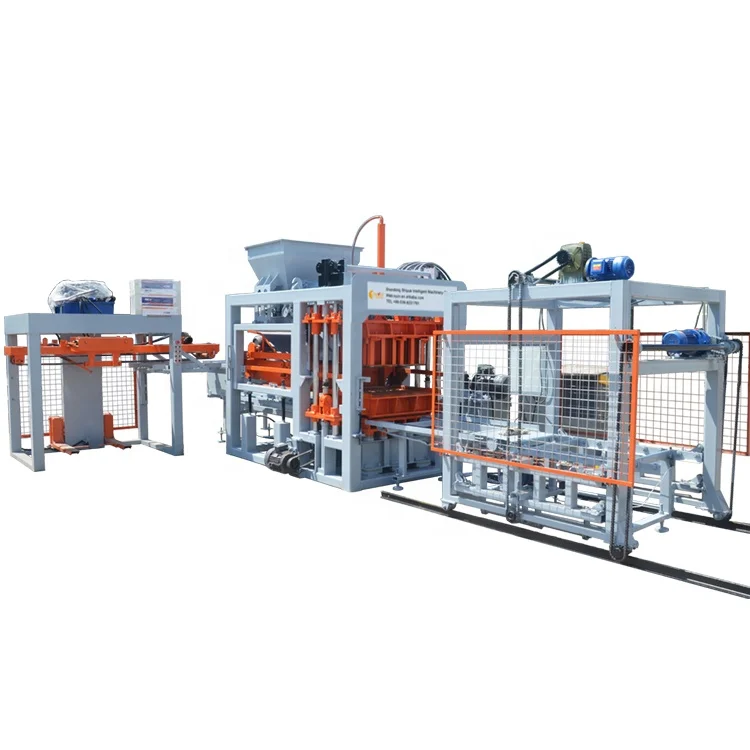
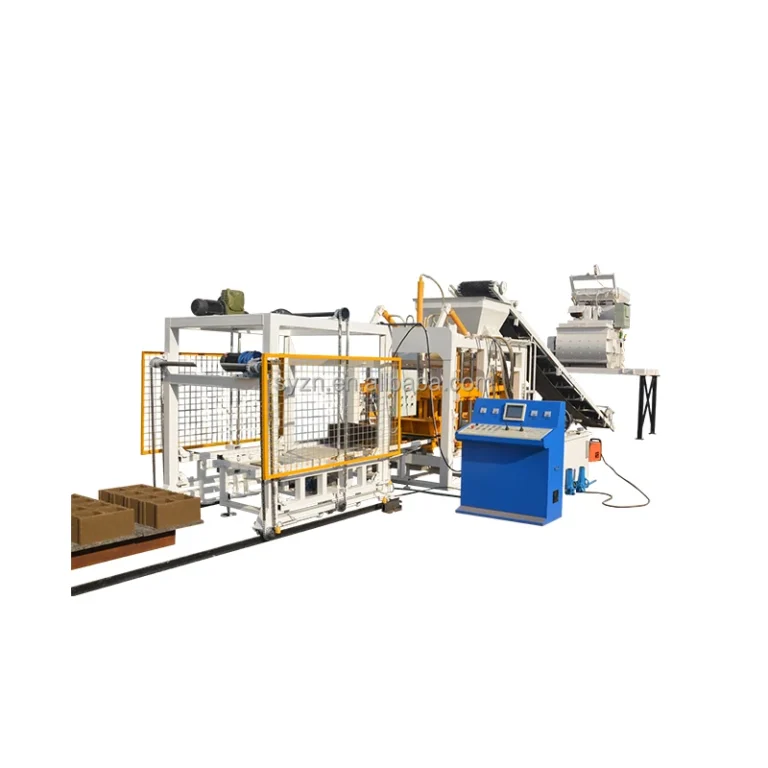
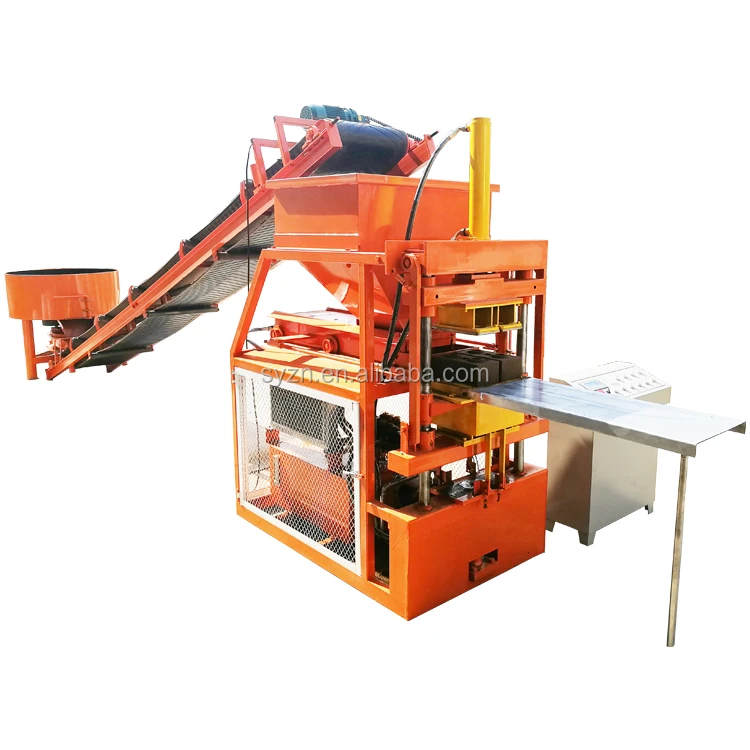
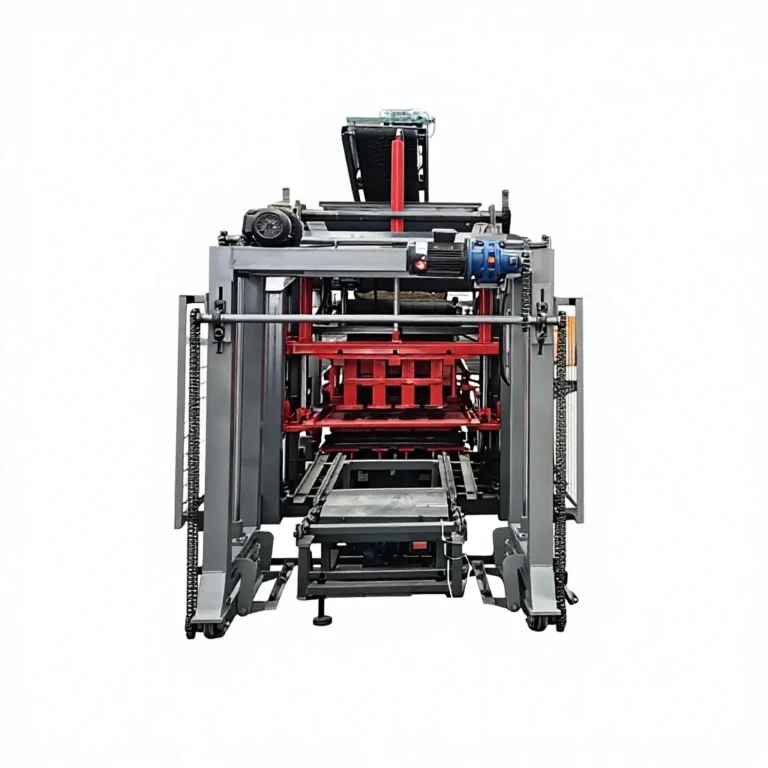
Matched System Design — the LY4-10 automatic clay interlocking brick making machine is specified as a complete set of press, mould, pallet and handling rather than a standalone unit pulled from a catalogue.
Technical Specifications
| Parameter |
Value |
| Model |
LY4-10 |
| Product Type |
Automatic Clay Interlocking Brick Making Machine |
| Machine Power |
11 kW |
| Molding Cycle |
10–15 s (basis not stated in source — confirm block format / material / thickness) |
| Output per Cycle |
4 bricks per cycle (basis not stated in source — confirm block format / size) |
| Raw Material Compatibility |
Clay, soil, earth, mud, concrete, cement, fly ash, water |
| Overall Dimensions (L×W×H) |
2260 × 1500 × 2380 mm |
| Control System |
PLC control system |
| Hydraulic System |
Equipped (pressure rating not stated in source — confirm MPa) |
| Operation Mode |
Automatic (material feeding, mould pressing, mould lifting) |
| Mould Change Capability |
Supports different interlocking brick formats by changing moulds |
| Automation Level |
Automatic with PLC |
| Voltage & Frequency |
To be confirmed before production |
| Pallet Size |
To be confirmed based on curing area and handling equipment |
| Net Weight |
To be confirmed |
Application Suitability
| Application |
Material or Output |
| Interlocking brick production for local housing projects |
Clay, soil and earth-based mixes with cement stabilisation |
| On-site brick making for construction contractors |
Locally sourced mud and soil with available water supply |
| Small-scale brick plant for entrepreneurs |
Cement and fly ash interlocking brick formats |
| Building material distributors adding new formats |
Concrete and fly ash mixes for interlocking profiles |
What "4 Bricks per Cycle" Actually Means for Your Daily Output
Real throughput depends entirely on which interlocking brick format you plan to run, not just the cycle counter on the PLC screen.
When an automatic clay interlocking brick making machine manufacturer quotes output, the figure often assumes a standard block size that may not match the profile your market actually buys. A thinner interlocking brick cures and releases differently from a thick earth-based block, and the 10–15 second cycle window shifts depending on material behaviour and mould geometry [NEED_CITE: block format impact on cycle time and daily throughput]. I have seen buyers receive a machine rated at a certain cycles-per-hour figure, only to find that their specific interlocking profile added seconds to each press and cut daily volume noticeably. That gap is why we ask for your target brick drawing before we finalise a capacity number.

Mapping the Automatic Tier Within the Block Machine Range
The LY4-10 occupies the automatic tier of our single-focus block machinery line, positioned above semi-automatic and mobile egg-laying options. Buyers who need consistent output with reduced manual intervention choose this tier because material feeding, mould pressing and mould lifting all run under PLC control. For a first interlocking brick plant, the automatic clay interlocking brick making machine removes the heaviest manual steps while keeping the footprint compact enough for a modest workshop or project site.
Where This Machine Sits in Investment and Footprint
At 2260 × 1500 × 2380 mm and 11 kW total power, the LY4-10 fits into a production bay that does not require a large dedicated facility. Contractors producing interlocking blocks on a housing development site, or entrepreneurs starting with one press before adding pallet handling and stacking later, typically land here. The key decision at this tier is which mould formats to include from day one, because the machine supports format changes and you want the profiles your local market actually moves [NEED_CITE: interlocking brick market demand by region].
Reading the Specs That Matter on the Shop Floor
The 11 kW machine power drives both the hydraulic press and the vibration system, and the balance between hydraulic pressure and vibration force determines whether a clay-soil mix compacts evenly or cracks at the edges. If your local aggregate contains a high clay fraction, the pressure setting needs adjustment compared to a clean sand-cement mix — something we confirm by testing your material sample before the machine leaves the factory. The PLC control system manages the automatic cycle sequence, but its value depends on the display language matching your operators and the voltage matching your site supply. Mould change capability lets you run multiple interlocking profiles on one press, yet the actual changeover time determines whether format switching is a practical daily option or something you do once a month.
The Cost of Skipping Format and Voltage Confirmation
Buyers who confirm price before confirming brick format often discover that the standard mould shipped with the machine does not match their market’s best-selling interlocking profile, forcing a second mould order and weeks of delay. Voltage and frequency left unspecified until after production can hold up commissioning by days or weeks once the machine arrives, because the PLC and motor wiring need to match the local grid exactly [NEED_CITE: voltage and frequency standards by export market]. Pallet size chosen without considering the curing racks and forklift the buyer already has leads to double-handling that cancels out the automation advantage.
Why Buyers Source This Machine Here
Block machinery is our single focus, so the LY4-10 press, moulds, pallets and handling equipment are specified as one matched system rather than assembled from unrelated suppliers. We set the hydraulic and vibration configuration against your actual mix design and local aggregate, not a catalogue default. Mould design covers the interlocking profiles your market sells, including custom drawings when your format is not in the standard range. Automation level is selectable, meaning a buyer can start with the automatic cycle and add pallet feeding or stacking stations as volume grows. Installation support includes operator training on the specific PLC interface your machine ships with.
Documentation & Verification
- Line layout and capacity calculation stating the interlocking brick format assumed for daily output
- Mould drawing and format list supplied with quotation for buyer approval before order
- Voltage, frequency and PLC display language confirmed in writing before production begins
- Factory test record with the buyer’s specified mould installed demonstrating cycle performance
- Hydraulic and electrical schematic provided for local maintenance reference
Installation, Commissioning & Support
- Foundation pad sized to the 2260 × 1500 mm footprint with level tolerance for hydraulic alignment
- Dedicated power circuit matching confirmed voltage and frequency for the 11 kW load
- Machine shipped with mould installed and tested; on-site reassembly covers press and PLC connection
- First-run parameter tuning against the buyer’s clay or cement mix for target brick strength
- Operator training on PLC cycle control, mould change procedure and daily maintenance checkpoints
- Wear parts list and mould inventory document supplied for first replacement planning
Before You Request a Quote
Tell us which interlocking brick profile your market buys most, the daily volume you need to hit, and the raw material you can source locally — including a sample if possible. Confirm your site voltage, frequency and preferred PLC display language so we can match the electrical and control build from the start. If you already have curing racks or pallet handling equipment, share the dimensions so we size the pallets to fit.
Frequently Asked Questions
Q: How is daily output calculated, and which interlocking brick format does the capacity figure assume?
A: We calculate daily output by multiplying the confirmed cycle time for your specific interlocking brick format by the number of bricks per cycle and the planned shift hours. The 4-brick-per-cycle and 10–15 second cycle figures only hold meaning once the block size and material are defined, so we always state capacity against a named format in our quotation document.
Q: Which voltage, frequency and PLC display language options are confirmed before shipment?
A: We confirm your site voltage and frequency in writing before production starts, and the PLC display is set to the language your operators read. This avoids rewiring or reprogramming after the machine arrives, which is a common cause of delayed commissioning on export shipments.
Q: How is the hydraulic pressure matched to my local clay, soil or cement mix design?
A: We ask you to send a raw material sample so we can test compaction behaviour and adjust hydraulic pressure and vibration force settings before the factory test. A mix with high clay content responds differently from a clean sand-cement blend, and matching these settings prevents weak or cracked bricks on your first production run.
Q: What is the mould change procedure, and how many formats can the LY4-10 support on one line?
A: The LY4-10 supports multiple interlocking brick formats by swapping moulds, and the changeover involves releasing the mould clamps, lifting the current mould, and seating the replacement. The practical number of formats you run depends on how much changeover time your shift schedule allows, which we discuss when selecting the mould set for your quotation.

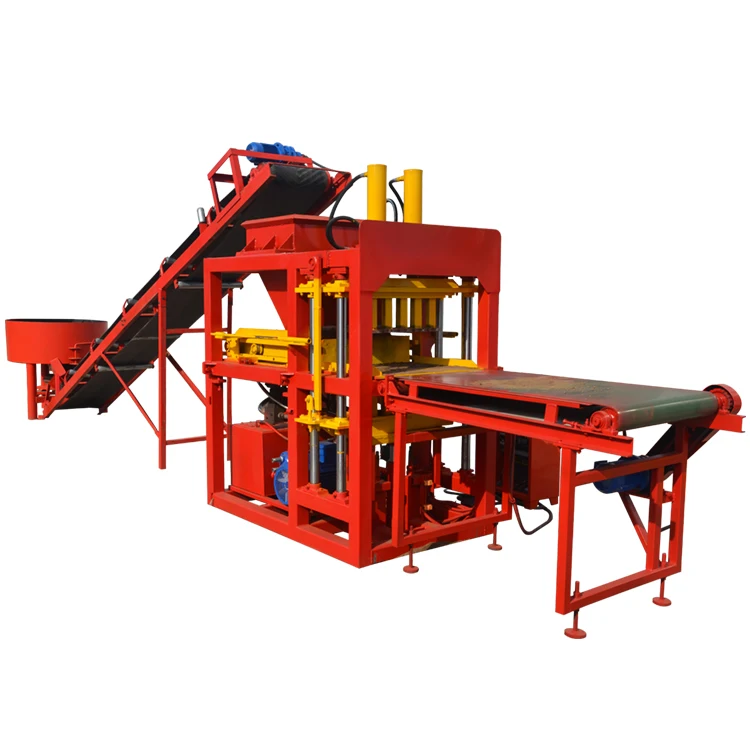
 High quality block machine