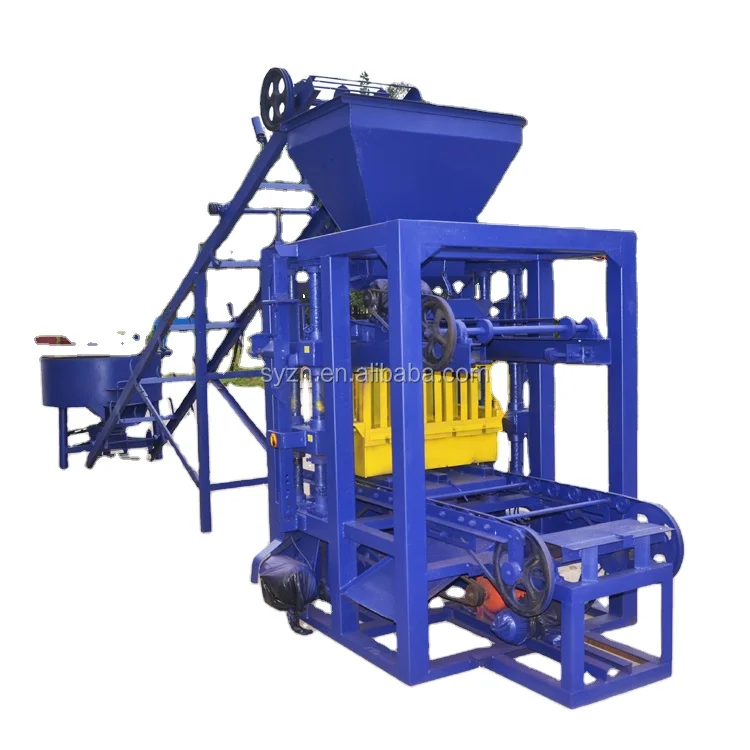
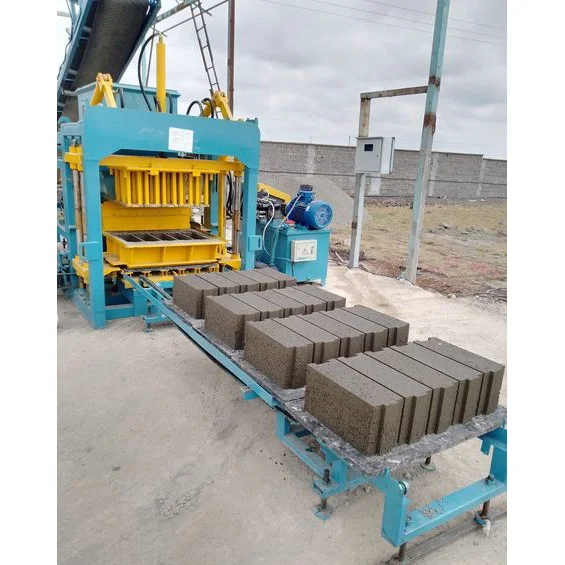
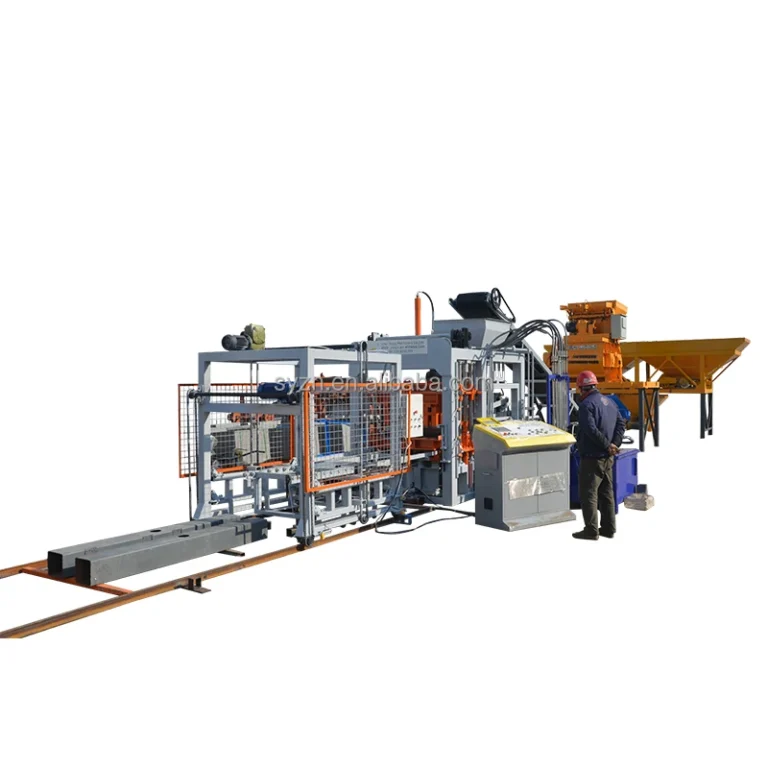
Specified for Your Market — the QT5-15 Automatic Block Making Machine is configured against your local aggregate, target format, and site voltage before production starts, not shipped as a catalogue default.
Technical Specifications
| Parameter |
Value |
| Model |
QT5-15 |
| Product Type |
Automatic Concrete Block Making Machine |
| Overall Dimensions (L×W×H) |
7100 × 1600 × 2610 mm |
| Molding Cycle |
15 s |
| Vibration Frequency |
0–60 Hz |
| Vibration Force |
40 kN |
| Total Power |
33.5 kW |
| Mixer Model |
JS500 |
| Pallet Size |
1100 × 550 mm |
| Total Weight |
5 T |
| Control System |
PLC control system |
| Applied Products |
Paver, solid block, hollow block, curbstone |
| Raw Materials |
Crushed stones, sand, cement, dust, fly ash |
| Output Capacity (Hollow block 400×200×200 mm) |
450 pcs/hr, 3600 pcs/8 hr |
| Output Capacity (Hollow block 400×150×200 mm) |
540 pcs/hr, 4320 pcs/8 hr |
| Output Capacity (Solid brick 400×100×200 mm) |
720 pcs/hr, 5760 pcs/8 hr |
| Included Equipment |
Block making machine, hydraulic station, PLC control system, pallet feeder, brick conveyor, block sweeper |
| Hydraulic Pressure |
(basis to be confirmed) |
| Mould Change Time |
(basis to be confirmed) |
Application Suitability
| Application |
Material or Output |
| Hollow block production |
Crushed stone, sand, cement, fly ash — 400×200×200 mm and 400×150×200 mm formats |
| Solid brick production |
Cement and fine aggregate blends — 400×100×200 mm format |
| Paver and curbstone production |
High-density concrete mixes for load-bearing and roadside formats |
| On-site contractor production |
Mobile batching with locally sourced sand and crushed stone |
| Building material distributor stock |
Multiple format runs using interchangeable moulds on one press |
Why "Pieces per Hour" Means Nothing Without the Block Format
A capacity number without a format assumption is a guess, not a specification.
I have sat across the table from buyers who signed for a block machine quoted at a headline output figure, only to discover on the first production week that their actual block format ran at barely half that rate. The cycle time stays fixed, but the number of cavities per mould shifts dramatically between a 400×200×200 hollow block and a 400×100×200 solid brick. When a supplier lists a single capacity number, they are almost always quoting the format that yields the most impressive figure. [NEED_CITE: common practice in block machine capacity quotation standards]
The QT5-15 Automatic Block Making Machine for sale here lists three separate output lines, each tied to a named format and an eight-hour shift. That way, you can map the machine to the block your market actually buys instead of the one that photographs best in a brochure.

Where the QT5-15 Sits in the Full Machine Range
The SHIYUE range spans mobile egg-laying machines at one end and high-capacity fully automatic lines at the other. The QT5-15 occupies the mid-to-upper tier, aimed at buyers who have outgrown a semi-automatic workshop setup or are commissioning a first plant with room to scale. It delivers a complete matched package — press, hydraulic station, PLC cabinet, pallet feeder, brick conveyor, and block sweeper — so the line operates as a single system rather than a collection of mismatched stations. For a buyer surveying the range, the key distinction is that this model supports automatic pallet feeding and PLC-controlled cycles while still fitting within a moderate plant footprint.
Matching Machine Tier to Your Project Timeline
Buyers working to a construction deadline often over-specify, choosing a high-capacity line they cannot staff or feed with raw material in time. The QT5-15 Automatic Block Making Machine for sale at this tier balances output with a manageable operator count and a JS500 mixer that keeps pace without demanding a dedicated batching crew. The 7100 mm machine length means a standard 40-foot container handles shipment, and the 5 T weight falls within the lifting range of most site forklifts. [NEED_CITE: container loading limits for industrial block making equipment]
Reading the Specs That Actually Matter on Site
The 40 kN vibration force paired with hydraulic pressure determines the density and compressive strength of every block that leaves the press. If vibration is high but hydraulic pressure is low, the block will look solid on the outside but crumble under load testing. The QT5-15’s 0–60 Hz adjustable vibration frequency lets the operator tune the cycle to the specific aggregate gradation available locally, which varies widely between river sand regions and crushed basalt areas. The 1100 × 550 mm pallet size must match your curing rack spacing and the fork width of the forklift you already have — ordering a pallet dimension without checking this creates a bottleneck that no amount of press speed can fix. Total connected power of 33.5 kW requires a dedicated supply circuit; sharing a feeder with welding equipment causes voltage dips that interrupt the PLC mid-cycle. The 15-second molding cycle is consistent across formats, meaning the output differences you see in the table come purely from cavity count per mould.
What a Mismatched Pallet Size Costs You in the First Month
I have watched a newly commissioned line sit idle because the curing racks on site were built for 900 mm pallets, and the machine arrived with 1100 mm boards. Every pallet had to be re-stacked by hand before it could enter the curing area, wiping out the labor savings the automatic pallet feeder was supposed to deliver. [NEED_CITE: pallet handling compatibility in concrete block production] The 1100 × 550 mm pallet on the QT5-15 is fixed by the press frame geometry, so this dimension must be validated against your curing layout and transport equipment before the order is confirmed, not after the container arrives.
Why Buyers Source This Model Through SHIYUE
Block machinery is the single focus here, which means the press, mould, pallet, and handling equipment are specified together rather than assembled from unrelated vendors. The configuration process starts with your target block format, local aggregate type, and daily output requirement, producing a capacity calculation that names the format behind every number. Mould design covers the formats your market sells, with custom drawings available when your region uses a non-standard dimension. The automation level is selectable — a buyer can begin with the included pallet feeder and conveyor, then add automatic stacking and cubing later without replacing the press. Voltage, frequency, and PLC display language are confirmed line by line before production begins, avoiding the two-day standstill I once caused by shipping a Chinese-language interface to a Jamaican site.
Documentation & Verification
- Line layout drawing showing QT5-15 footprint with pallet flow and curing rack zones
- Capacity calculation sheet stating output per named block format and shift length
- Mould drawing package covering all ordered formats with cavity and dimension detail
- Voltage, frequency, and PLC language confirmation signed before build starts
- Factory test record with video of your block format running to cycle time
- Packing photographs showing dismantling and container loading arrangement
Installation, Commissioning & Support
- Foundation pad leveled to ±3 mm across the 7100 × 1600 mm machine footprint
- Dedicated 33.5 kW supply circuit with confirmed voltage and frequency before energization
- Press, hydraulic station, and pallet feeder reassembled and aligned on site
- PLC parameters loaded for your confirmed block format, language, and cycle settings
- Operator training covering mould change, pallet loading, and daily lubrication points
- Wear parts list identifying hydraulic seals and vibration springs with reorder intervals
What to Share When You Are Ready to Move Forward
To size the QT5-15 correctly within the range, send your target block format and dimensions, the daily volume you need to sustain, and the aggregate materials you can source locally. Confirm your site voltage, frequency, and preferred PLC display language so the control cabinet is built to match. If you already have curing racks or a forklift in place, share the pallet dimensions they accommodate so the 1100 × 550 mm board is validated before production.
Frequently Asked Questions
Q: How is the QT5-15’s output capacity calculated, and which format does each figure assume?
A: Each output line in the specification table states the exact block format, pieces per hour, and an eight-hour shift total. The 15-second molding cycle is constant; the difference between 450 and 720 pieces per hour comes from the number of cavities in each mould. No single headline number is quoted without its format attached.
Q: Where does this model sit compared to smaller semi-automatic and larger fully automatic machines?
A: The QT5-15 is in the mid-to-upper tier, offering PLC-controlled automatic cycling with pallet feeding included. It suits buyers moving beyond a manual workshop setup who are not yet ready for a high-capacity line with full stacking and cubing automation.
Q: What voltage, frequency, and PLC language can be specified for my country?
A: Voltage and frequency are configured to your local grid standard, and the PLC display language is confirmed in writing before the control cabinet is assembled. This prevents commissioning delays caused by an unreadable operator interface on arrival.
Q: What supporting equipment beyond the press is included in the standard package?
A: The QT5-15 package covers the block making machine, hydraulic station, PLC control system, pallet feeder, brick conveyor, and block sweeper. A JS500 mixer is listed; automatic stacking and curing rack handling are configurable additions depending on your automation preference.
Q: Can I order custom moulds if my market uses non-standard block dimensions?
A: Custom moulds are designed to buyer drawings and manufactured to match the press platen and cavity layout. The mould drawing package is reviewed and approved before production so the finished tooling fits the QT5-15 without field modification.

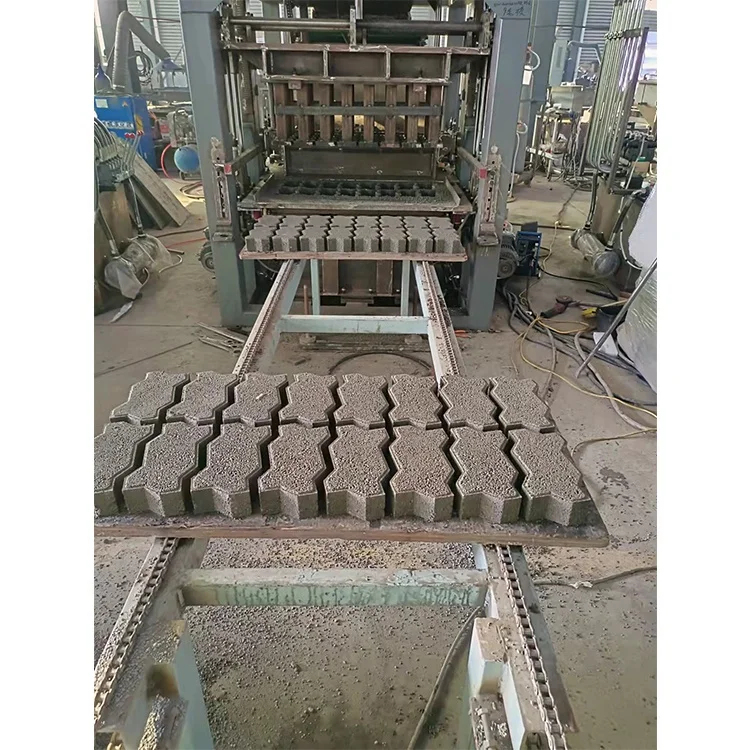
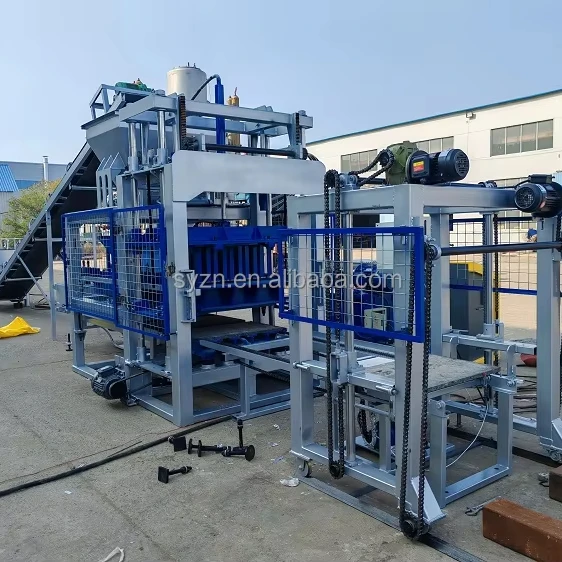 High quality block machine