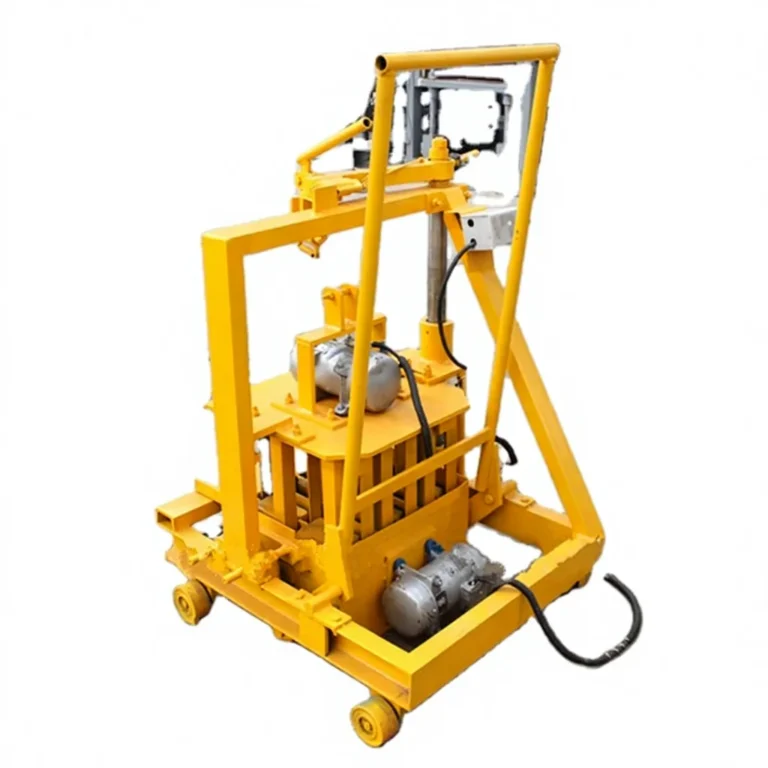
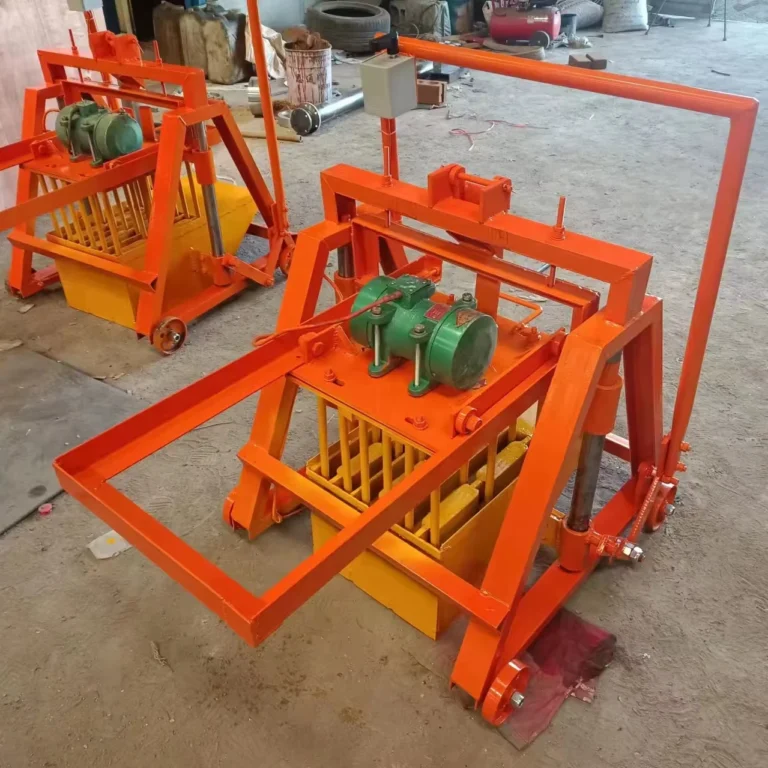
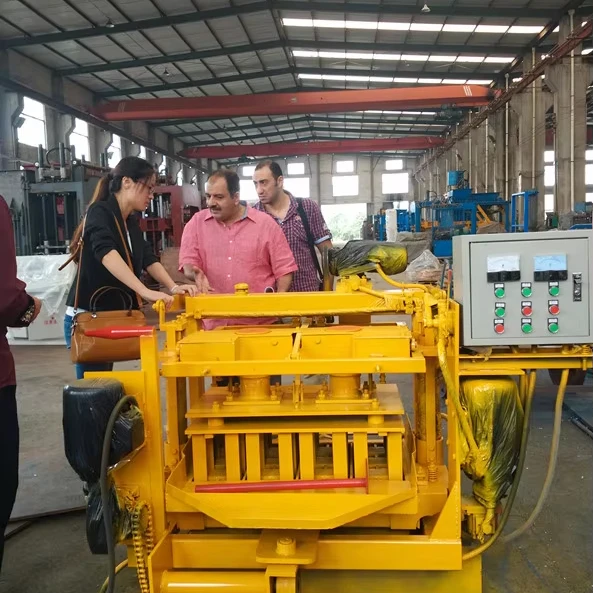
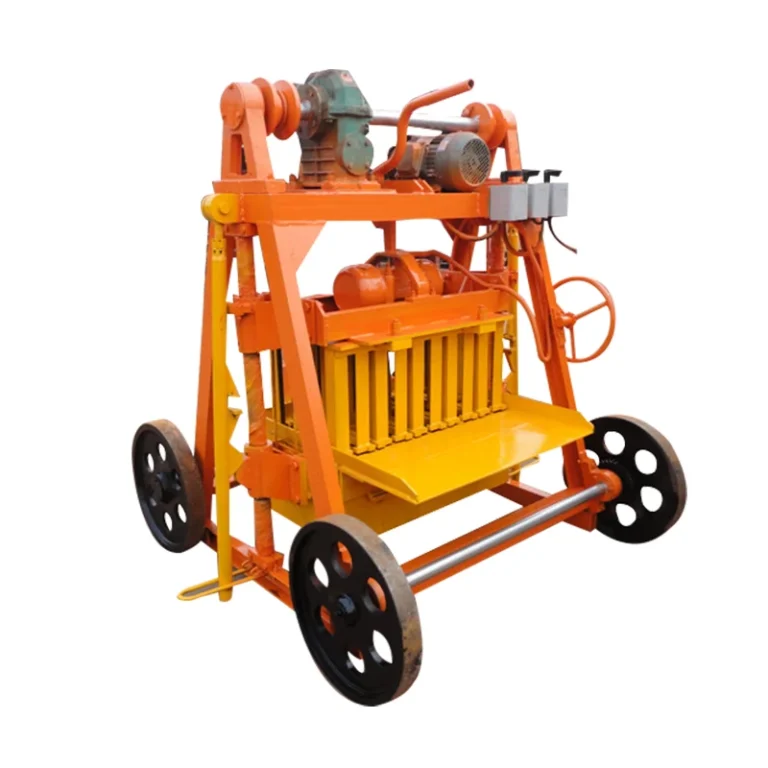
Matched System Design — every QMY10-15 mobile block machine leaves the factory with moulds, mixer and electrical settings specified as one coordinated package rather than a collection of separate components.
Technical Specifications
| Parameter |
Value |
| Model |
QMY10-15 |
| Product Type |
Mobile Concrete Block Making Machine |
| Molding Capacity |
10 pcs/mold |
| Molding Cycle |
10 s – 15 s |
| Total Power |
16 kW |
| Output Capacity |
11,000 pcs/day (8 h) (basis not stated in source — confirm block format and material) |
| Vibration System |
Dual vibration motors |
| Hydraulic System |
Controls upper and lower demoulding, equipped with heat dissipator |
| Movement |
Electric walking, hydraulic steering |
| Pallet Requirement |
No pallets needed (egg-laying type) |
| Automation Level |
Semi-automatic with hydraulic pressure and vibration |
| Basic Equipment |
QMY10-15 host machine, JS7500 concrete mixer, dump truck |
| Optional Equipment |
PL1200 batching machine, cement silo, screw conveyor, loader |
| Standards |
CE |
Application Suitability
| Application |
Material or Output |
| On-site hollow block production at construction projects |
Crushed stone, sand, cement blends |
| Remote housing developments without fixed plant |
Local aggregate with varying gradation |
| Entrepreneur-run block yards with limited space |
Standard hollow and solid concrete blocks |
| Contractor self-supply on infrastructure jobs |
Site-specific mix designs adjusted for local sand |
What "11,000 Pieces per Day" Really Means on Site
The daily output figure is only meaningful once the block format, mix design, and local aggregate are defined.
Catalog sheets for mobile block machines often quote peak capacity without naming the block size or material behind that number. I have watched contractors in the Middle East receive a machine, run it on their own sand, and discover that real output sits well below the brochure. The QMY10-15 Mobile Block Machine manufacturer specification of 11,000 pieces per day assumes an eight-hour shift, but the block format and mix that produce that figure must be confirmed before the order is placed. [NEED_CITE: block output variation by format and aggregate type]

Where the Mobile Block Machine Fits in Your Project Timeline
The QMY10-15 is built for buyers who need block production at the job site without investing in a fixed plant. Its egg-laying design means freshly formed blocks are placed directly on the ground, removing the cost and storage space that pallet-based systems require. Electric walking and hydraulic steering let a single operator reposition the machine along a casting bed as production progresses, keeping pace with the daily construction schedule.
Matching the Mixer and Batching Gear to the Press
A mobile block machine is only as productive as the feed reaching its hopper. The standard JS7500 concrete mixer is sized to keep the QMY10-15 supplied during continuous molding cycles. When higher consistency is needed, the optional PL1200 batching machine and cement silo give controlled proportioning of aggregates and binder, reducing batch-to-batch strength variation that can appear when mixing is done by volume on site. [NEED_CITE: concrete batching accuracy and block compressive strength]
Reading the Spec Sheet Against Your Local Aggregate
The 16 kW total power drives both the dual vibration motors and the hydraulic demoulding circuit. Vibration frequency and hydraulic pressure together determine block density; if the local sand contains high fines or clay, vibration energy is absorbed differently and cycle time may need to extend beyond the quoted 10 s – 15 s range. The heat dissipator fitted to the hydraulic circuit keeps oil temperature stable during long shifts in hot climates, preventing the pressure drop that causes inconsistent demoulding. Understanding how your aggregate behaves under vibration is essential before locking in the 10 pcs/mold capacity figure.
The Hidden Cost of Skipping the Aggregate Sample
When a buyer confirms a machine configuration without sharing a local sand and gravel sample, the factory tests on a standard mix that may not match field conditions. Blocks can emerge with lower compressive strength, forcing the operator to slow the cycle or increase cement content. On a remote housing project, that extra cement cost accumulates across thousands of blocks, and the slower cycle erodes the daily volume the contractor was counting on. [NEED_CITE: effect of aggregate fines content on concrete block strength]
Why Source This Mobile Block Machine From Shiyue
Block machinery is the single production focus, so the host machine, mould, and optional batching equipment are specified together rather than assembled from unrelated suppliers. Mould design covers the hollow, solid, and paving formats the buyer’s local market actually demands, with custom drawings available when standard formats do not match. Configuration is set against the buyer’s mix design and target block format, not a default catalog entry. Voltage, frequency, and control language are confirmed before production begins, avoiding commissioning delays after arrival. Factory test records document actual cycle performance under stated conditions, giving the buyer a verifiable baseline.
Documentation & Verification
- Line layout stating the specific block format used for capacity calculation
- Machine specification sheet with confirmed voltage and control language
- Mould drawing and format list with cycle time per block type
- Factory test record showing output under agreed mix conditions
- CE declaration with hydraulic and electrical schematics
- Packing photographs taken before container loading
Installation, Commissioning & Support
- Flat concrete casting bed prepared to the machine’s walking width before arrival
- 16 kW power supply on a dedicated circuit matching confirmed voltage and frequency
- Machine arrives assembled; hydraulic steering and electric walking tested on site
- First production run supervised to set cycle time against the buyer’s actual mix
- Operator training covers mould change procedure and dual vibration motor maintenance
- Heat dissipator inspection included in the daily hydraulic system check
- Wear parts list with mould and hydraulic seal reorder references provided at handover
Getting the Configuration Right Before You Order
Send a sample of the sand and aggregate you plan to use, along with the block formats your market requires and the daily volume you need to sustain. Include your site’s available voltage and frequency so the electrical system is built to match. If you already own a loader or batching equipment, let us know so the optional PL1200 and cement silo can be included or excluded accordingly.
Frequently Asked Questions
Q: How is the 11,000 pcs/day capacity calculated and which block format does it assume?
A: The figure assumes an eight-hour shift on the QMY10-15 with a specific block size and standard mix. The exact format behind that number must be confirmed during the proposal stage. We provide a capacity calculation sheet that names the block dimensions, mix proportions, and cycle time used, so you can compare it directly against your project requirements.
Q: What voltage and frequency configurations are available for different target markets?
A: The electrical system is built to the voltage and frequency confirmed at the order stage. Common configurations include 380 V / 50 Hz and 440 V / 60 Hz, with PLC display language set to the operator’s preference. Confirming these details before production prevents commissioning delays once the machine reaches your site.
Q: Which block formats can the QMY10-15 produce and how long does a mould change take?
A: The machine handles hollow blocks, solid blocks, and other formats matched to your market demand through interchangeable moulds. Mould change involves releasing the hydraulic clamps and swapping the mould box. We provide a format list and mould drawing with each order so you can plan production schedules around the changeover time.
Q: How do local aggregate conditions affect block strength and machine setup?
A: High clay or mud content in local sand absorbs vibration energy differently than clean crushed stone, often requiring a longer cycle or adjusted mix to reach target strength. I always ask buyers for an aggregate sample before we finalize the configuration so the dual vibration motors and hydraulic pressure are set for the material you will actually use.
Q: How does the QMY10-15 integrate with optional batching and mixing equipment?
A: The standard JS7500 mixer feeds the machine directly. Adding the PL1200 batching machine and cement silo introduces weighed proportioning of aggregates and cement, improving batch-to-batch consistency. A screw conveyor or loader completes the feed loop, and all components are sized so the press is never left waiting for material.

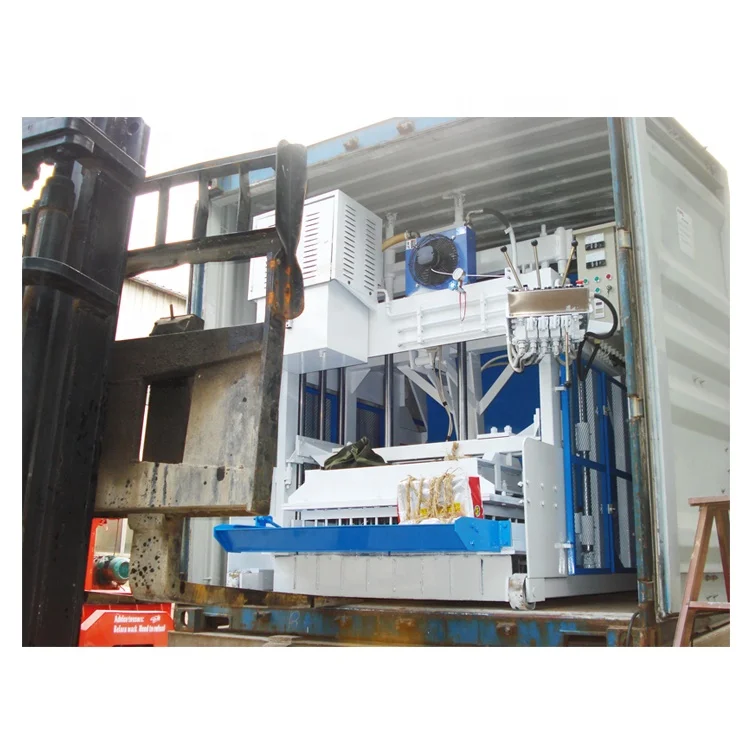
 Mobile block machine