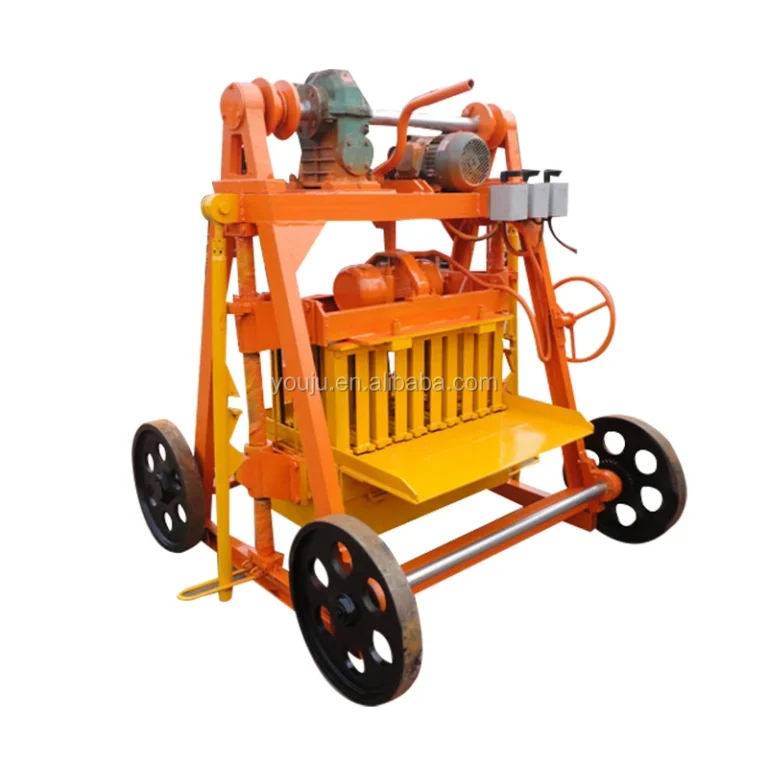
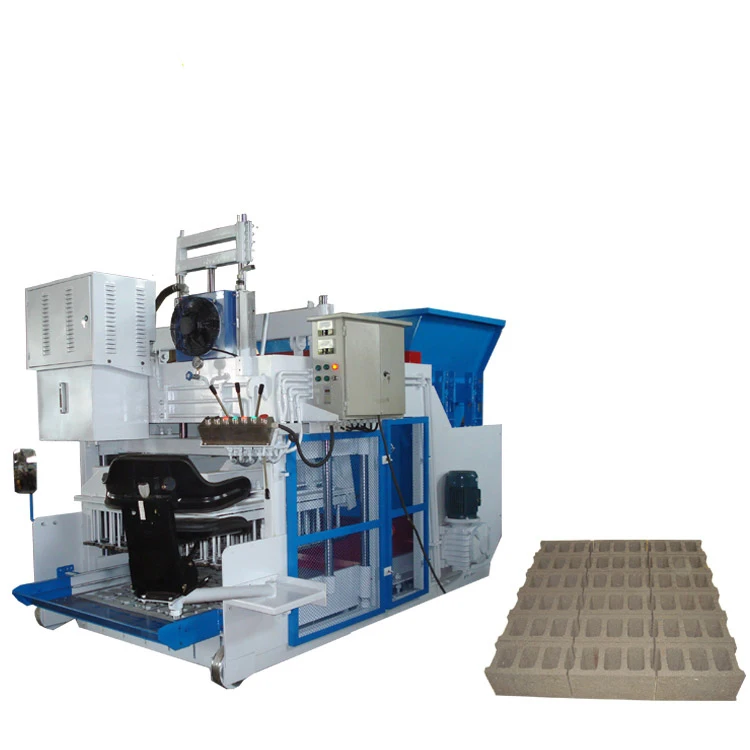
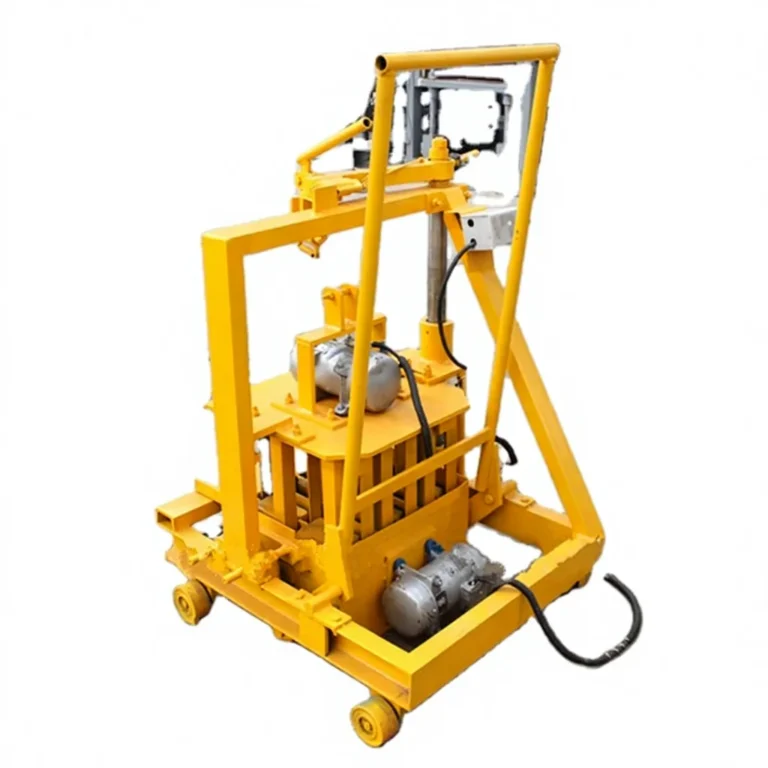
Single-Focus Machinery Alignment — the QMY4-30 is configured against your actual block format, local aggregate and site power, not a default catalogue sheet.
Technical Specifications
| Parameter |
Value |
| Model |
QMY4-30 |
| Product Type |
Mobile Concrete Block Making Machine |
| Molding Cycle |
30 seconds |
| Output Capacity (400×200×200 mm hollow block, 4 pcs/mold) |
480 pcs/hour, 3,840 pcs/8 hours |
| Output Capacity (400×150×200 mm hollow block, 5 pcs/mold) |
600 pcs/hour, 4,800 pcs/8 hours |
| Output Capacity (400×100×200 mm hollow block, 7 pcs/mold) |
840 pcs/hour, 6,720 pcs/8 hours |
| Mould Format |
Hollow block and solid brick |
| Raw Materials |
Cement, sand, crushed stones, slag |
| Rated Power |
5 kW |
| Voltage & Frequency |
Configurable to destination market (basis to be confirmed before production) |
| Control System |
Semi-automatic (basis to be confirmed) |
| Overall Dimensions (L×W×H) |
1,200 × 1,200 × 1,100 mm |
| Net Weight |
950 kg |
| Automation Level |
Semi-automatic, mobile egg-laying type |
| Warranty |
Five years (verify against current manufacturer policy) |
Application Suitability
| Application |
Material or Output |
| On-site hollow block production for housing projects |
Cement, sand and crushed stone blended to local mix design |
| Solid brick manufacturing for small workshops |
Cement and slag or sand aggregate |
| First plant setup by entrepreneurs with limited infrastructure |
Any standard concrete block mix without fixed curing racks |
| Contractor-run production at remote development sites |
Locally sourced aggregate, no pallet return system required |
What "480 Blocks per Hour" Actually Means on Site
Capacity only matters when the block format behind the number is named.
Many mobile block machines are quoted at a peak cycle rate without specifying which block size that rate assumes. The result is a buyer who expects one daily output and discovers another once the mould is changed to the format their market actually demands. A mobile block machine manufacturer should state the format, the pieces per mould and the cycle time together so the comparison is honest. On a Lagos housing site I visited, a machine rated at an impressive hourly figure was running a smaller hollow block the contractor had not planned for, and the crew could not keep up with the curing space they had prepared [NEED_CITE: common misalignment between quoted capacity and actual block format on mobile machines].

Where the QMY4-30 Sits in the Full Machine Range
The QMY4-30 occupies the entry-level, mobile tier of our block machine range. It is designed for buyers who do not yet need a fixed plant, a pallet return conveyor or an automatic stacking system. The egg-laying design means the machine moves along the production floor, laying blocks directly on the ground or a prepared surface, which eliminates the need for pallets entirely. This mobile block machine manufacturer positions it for contractors and first-time entrepreneurs whose investment priority is getting production running without building a dedicated curing area.
Footprint and Investment Compared to Fixed Plant Tiers
A fixed automatic line requires a building, a curing rack system, pallet circulation and a higher power supply. The QMY4-30 removes all of that from the initial investment. Its overall dimensions of 1,200 × 1,200 × 1,100 mm mean it operates in an open yard or a simple shelter. The 5 kW power requirement can be met by a standard workshop supply or a portable generator, which matters on sites where grid connection is unreliable [NEED_CITE: typical power availability constraints on remote construction sites in West Africa and Southeast Asia]. Buyers who later need higher output can move up to a semi-automatic or fully automatic tier without replacing the mould inventory, because the mould mounting standard is shared across the range.
Reading the Specifications That Matter for Daily Output
The 30-second molding cycle applies across all listed formats, so the output difference comes entirely from the number of cavities in each mould. A 400×200×200 mm hollow block mould carries 4 cavities, producing 480 pieces per hour. Switching to a 400×100×200 mm hollow block mould increases that to 7 cavities and 840 pieces per hour. The vibration force and the hydraulic pressure behind the mold must be matched to the buyer’s specific mix design — a sand-heavy mix requires different compaction energy than one using crushed stone or slag. Getting this wrong produces blocks that pass the visual check but fail a drop test after curing. The raw material flexibility listed here means the machine can handle cement blended with sand, crushed stones or slag, but the exact ratio must be confirmed before the mould is finalized.
The Cost of Skipping the Voltage Conversation
Voltage and frequency confirmation is often left to the end of the ordering process, and it is the single most common cause of idle machines on arrival. A mobile block machine manufacturer must lock the voltage, frequency and control panel language before production starts, not after the machine is crated. I once saw an egg-laying machine sit on a Nigerian site for three weeks because the motor was wound for a voltage the local grid could not supply, and the crew was paid to stand around while a step-down transformer was shipped in [NEED_CITE: voltage mismatch incidents reported on industrial equipment imports to Sub-Saharan Africa]. That delay cost more than the transformer itself in idle labour and missed project milestones.
Why Buyers Source This Tier from a Single-Focus Manufacturer
Block machinery is our only product line, so the machine, the mould and the handling are specified as one matched system rather than assembled from separate suppliers. The QMY4-30 is configured against the buyer’s target block format, local aggregate and site conditions instead of being shipped as a catalogue default. Mould design and supply cover the hollow block and solid brick formats the buyer’s market actually sells, and custom mould drawings are available if the product range expands later. Automation level is selectable, meaning a buyer can start with this mobile tier and move to a semi-automatic line using the same block format standards. Installation support includes operator training on the specific mix and mould combination the buyer will run.
Documentation & Verification
- Line layout stating the block format assumed for each output figure on the QMY4-30
- Machine specification sheet with voltage, frequency and control language confirmed before dispatch
- Mould drawing and format list showing cavity count for each supplied hollow block and solid brick mould
- Factory test record with photographs taken on the buyer’s specified block size
- Packing photographs showing dismantling arrangement for container loading
Installation, Commissioning & Support
- Level concrete floor or compacted ground required across the production area before the QMY4-30 arrives
- Power supply matched to confirmed voltage and frequency, with a dedicated circuit for the 5 kW rated load
- Machine arrives assembled; only the mould and hopper need mounting on site
- First-run commissioning covers mould alignment, cycle timing and mix adjustment to local aggregate
- Operator training addresses mould change procedure between hollow block and solid brick formats
- Wear parts list supplied with the machine identifies vibration pads and mould liners by part number
Before You Send an Inquiry
Tell us the hollow block or solid brick format you plan to sell, including the exact dimensions and the daily output you need. Confirm your local voltage and frequency so the motor and control panel are wound correctly before the QMY4-30 enters production. Let us know what raw materials are available on your site — specifically the type of sand or crushed stone and whether slag is an option — so we can match the vibration setting and mould cavity design to your mix.
Frequently Asked Questions
Q: How is the capacity of the QMY4-30 verified for each block format?
A: Every output figure we quote states the block dimensions, the number of cavities per mould and the 30-second cycle time. The 480 pcs/hour figure applies specifically to a 400×200×200 mm hollow block with 4 cavities. If your target format differs, we recalculate the hourly and daily output for that exact size before you commit.
Q: Which voltage and frequency options can the QMY4-30 be built for?
A: The motor and control panel are configured to the voltage and frequency of your destination market before production begins. We confirm the exact supply standard during the inquiry stage — typically 220V, 380V or 415V at 50Hz or 60Hz — so no transformer is needed on arrival.
Q: Does the quotation include pallets or stacking equipment?
A: The QMY4-30 is an egg-laying mobile block machine, so it lays blocks directly on the ground and does not use pallets. The quotation covers the machine, the specified moulds and the hopper. Stacking and curing are done manually by your crew, which keeps the initial investment at the entry-level tier.
Q: What is the typical lead time from order to dispatch?
A: Standard configurations of the QMY4-30 with common hollow block moulds can often be dispatched within a few weeks. Built-to-order configurations requiring custom mould drawings or non-standard voltage winding follow a longer production schedule, and we confirm the exact dispatch date before you place the order.
Q: Can additional mould formats be added after the machine is installed?
A: Yes. The QMY4-30 accepts additional hollow block and solid brick moulds that share the same mounting standard. If your market expands to new block sizes, we supply the mould with a drawing for your approval and the cavity count is matched to the new format so output remains predictable.

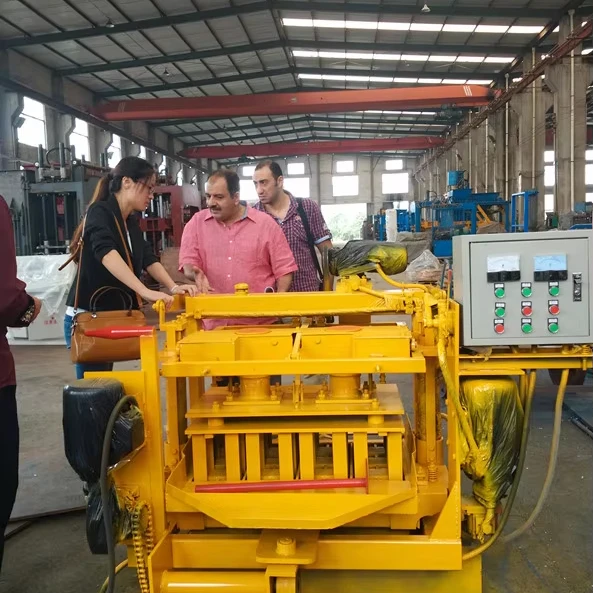
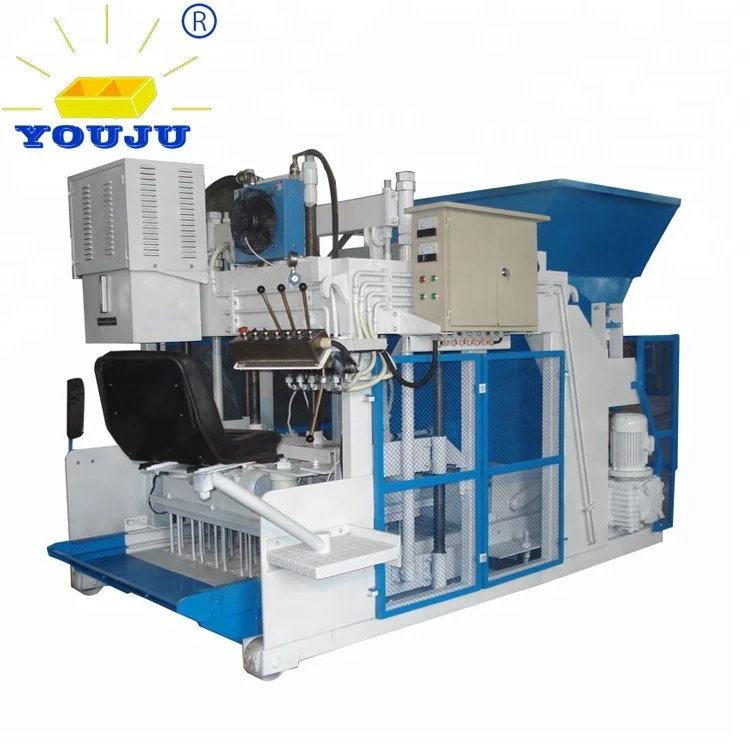 Mobile block machine