
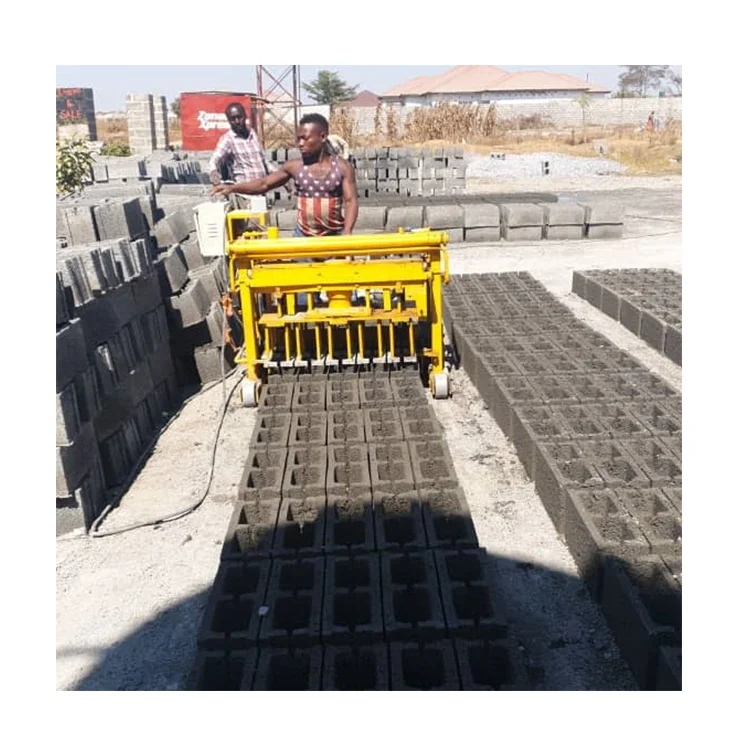
 Mobile block machine
Home
Products
Mobile block machine
Mobile Egg-Laying Block Machine QMJ4-45 for Hollow Block – Manufacturer
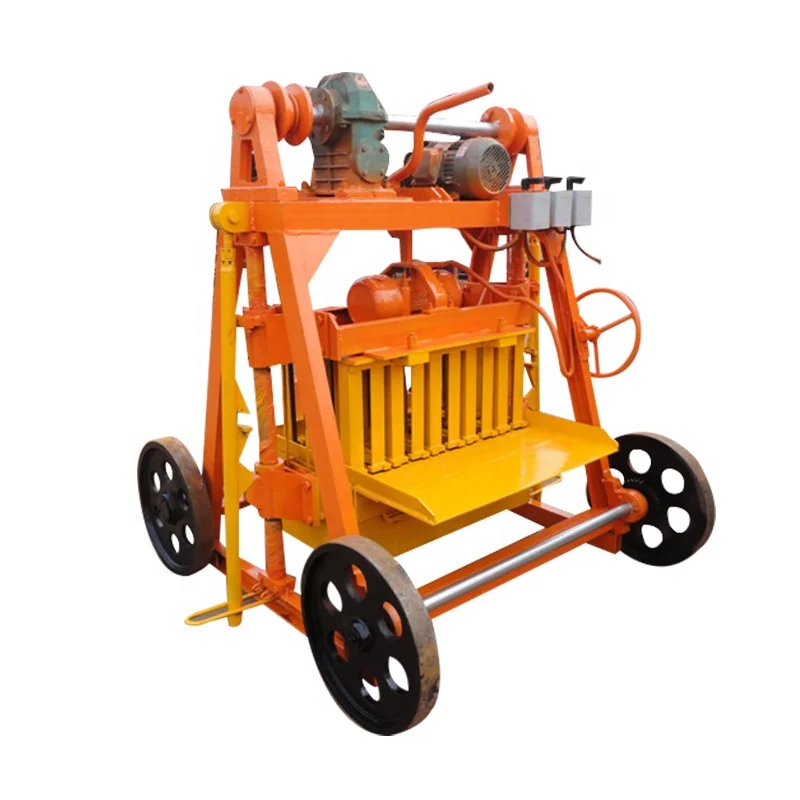 Mobile block machine
Concrete Machinery
Mobile Egg-Laying Block Machine QMJ4-45 for Hollow Block – Manufacturer
<p><strong>QMJ4-45 Mobile Egg-Laying Block Machine, 6KW, 45s Molding Cycle, Manual Operation</strong> — designed for on-site hollow block production without pallets or a fixed plant setup.</p> <ul> <li>This model sits at the entry tier of our mobile range, helping buyers match output tier to project scale before considering semi-automatic or automatic lines.</li> <li>Twice-vibration molding core delivers higher block density; diesel/petrol engine option supports sites without grid electricity.</li> <li>Egg-laying design eliminates pallet consumption, reducing daily operating cost for contractors and first-time plant owners.</li> </ul> <p>Backed by configuration matched to your local aggregate and mix design, with factory test records demonstrating cycle time and block density before shipment.</p>
CE Certified
European Standards
Ships 15-30 Days
Fast Delivery
108+ Countries
Global Export
After-Sales Support
Training Included
24h Response
Free Technical Consultation
Product Details
Matched System Sourcing — machine, mould and egg-laying layout specified together so daily output on your site matches the capacity sheet you hold in your hand.
Technical Specifications
| Parameter | Value |
|---|---|
| Model | QMJ4-45 |
| Product Type | Mobile Egg-Laying Block Making Machine |
| Mould Capacity | 4 pcs/mould (basis not stated in source — confirm block format) |
| Vibration Frequency | 2400 r/m |
| Productivity | 2600-4000 pcs/day (basis not stated in source — confirm block format) |
| Vibration Method | Mold vibration |
| Demould Method | Manual |
| Turning Method | Manual |
| Total Power | 6KW |
| Power Source | Diesel/Petrol engine |
| Molding Cycle | 45S |
| Automation Level | Manual / Egg-laying (mobile, no pallets required) |
| Hollow Block 400×200×200 mm | 4 pcs/mould, 40-45s cycle, ~3000 pcs/day (8 hours) |
| Hollow Block 400×150×200 mm | 5 pcs/mould, 40-45s cycle, ~3500 pcs/day (8 hours) |
| Hollow Block 400×120×200 mm | 6 pcs/mould, 40-45s cycle, ~4500 pcs/day (8 hours) |
| Standards | CE |
Application Suitability
| Application | Material or Output |
|---|---|
| On-site hollow block production for building contractors | Cement, local sand, crushed stone aggregate |
| Entrepreneur-led first block plant start-up | Standard concrete mix with locally sourced gravel |
| Housing project block supply without transport logistics | River sand or crushed rock with cement binder |
Why "Daily Output" Needs a Format Attached
Every capacity figure we quote names the exact block size it assumes, so your real shift output matches the plan you built your schedule around.
I once watched a buyer in West Africa commit to a production target based on a brochure number that assumed a small 120mm block, while his contract required 200mm hollows. The cycle time stretched, his output halved, and his crew blamed the mobile block machine for sale they had just paid for. The QMJ4-45 produces roughly 3000 pieces per eight-hour day for a 400×200×200 mm hollow block, but shifts to around 4500 pieces if you run the narrower 120 mm format. Stating the format up front is the only way the number means anything on your job site [NEED_CITE: block format impact on cycle time and daily throughput].
Where the QMJ4-45 Fits in the Range
This machine sits at the entry point of our mobile block machine lineup, built for contractors and first-time plant owners who need production on the ground today, not a fixed facility six months from now. The egg-laying design means blocks are placed directly onto a prepared floor, eliminating the pallet investment and handling labour that semi-automatic and fully automatic lines require. You walk behind it, lay a row, move forward, and repeat.
Power Source Options for Off-Grid Job Sites
Many project sites in South Asia and sub-Saharan Africa lack reliable three-phase electricity during early construction phases. The QMJ4-45 is available with either a diesel or petrol engine, letting you start production before the grid connection is ready. Once permanent power arrives, some buyers swap to an electric motor variant for lower running cost and reduced noise in residential zones [NEED_CITE: diesel versus electric motor selection criteria for remote construction sites].
Reading the Vibration and Cycle Specs
The 2400 r/m mould vibration frequency is paired with a 45-second molding cycle, which together define the compaction energy delivered to each block before demoulding. Higher vibration frequency generally improves particle rearrangement in the mix, producing denser walls on the hollow block. The manual demould and turning method keeps the mechanical system simple, which reduces the spare parts you need to stock in remote locations. Power draw stays at 6KW, small enough to run from a portable generator when the site has no transformer yet. Mould capacity ranges from four pieces for the largest 200 mm block to six pieces for the 120 mm version, so output tier selection starts with knowing which format your local market actually buys.
The Cost of Skipping the Aggregate Test
I had a customer pour local river sand with high clay content into his egg-laying machine without a prior mix test. The clay absorbed water unpredictably, block strength dropped, and the crew had to stretch the cycle time to compensate. Daily output fell far below expectation, and his build schedule slipped by several weeks. A simple aggregate sample sent before shipment lets us confirm whether your local material needs an adjusted water ratio or a different cement content, so the 45-second cycle holds and block strength stays consistent [NEED_CITE: effect of clay content in sand on concrete block compressive strength].
Why Buyers Source This Tier Through Us
We specify the machine, mould, and egg-laying floor preparation as one matched package, so nothing arrives mismatched or missing. Capacity calculations are stated per block format, not buried behind a single headline number. The mould options cover the hollow block sizes your market actually demands, and custom drawings are available if your region uses a non-standard format. Automation is selectable — you can start with the QMJ4-45 and later move to a pallet-based semi-automatic line from the same supplier without relearning an entirely different control system. Factory testing runs your actual mix when possible, confirming cycle time and block density before the crate is sealed.
Documentation & Verification
- Line layout showing egg-laying path and daily output per hollow block format
- Machine specification sheet confirming diesel or petrol engine selection
- Mould drawing and format list for every hollow block size included
- Factory test record documenting cycle time and block density before shipment
- Operation and maintenance manual covering manual demould and turning procedures
- Packing photographs and customs documentation support for your port of entry
Installation, Commissioning & Support
- Prepared concrete floor required, level within tolerance for egg-laying operation
- 6KW power demand, confirm generator rating if no grid connection available
- Shipped partially assembled, reducing on-site bolt-up time
- First-day commissioning covers mix ratio tuning and cycle time validation
- Operator training on manual demould technique and mould change procedure
- Wear parts list and mould supply for ongoing hollow block production
What to Prepare Before You Request a Quote
Tell us which hollow block formats your market buys and the daily volume your project schedule demands. Share a sample or lab report of your local sand and aggregate so we can confirm the mix before we lock in the configuration. If your site has no grid power yet, confirm whether diesel or petrol is easier to source locally, and we will match the engine to your fuel supply.
Frequently Asked Questions
Q: How is daily output calculated and which block format does each figure assume?
A: Each output figure is tied to a specific hollow block size and an eight-hour shift. The QMJ4-45 produces around 3000 pieces per day for 400×200×200 mm blocks and up to 4500 pieces for the narrower 400×120×200 mm format. We state the format with every capacity number so your schedule is built on real data, not a generic headline.
Q: Diesel engine versus electric motor — which suits my site?
A: Diesel is the default choice when no grid connection exists during early project phases, common on remote housing developments. Petrol engines serve smaller sites where fuel logistics are simpler. Once permanent three-phase power is installed, some buyers convert to an electric variant for quieter operation and lower running cost over the life of the project.
Q: What block formats and mould sizes are available?
A: The QMJ4-45 covers 400×200×200 mm, 400×150×200 mm, and 400×120×200 mm hollow blocks as standard. Mould capacity ranges from four to six pieces depending on format. Custom mould drawings are available if your local market requires a size or wall thickness outside this range.
Q: Where does this machine sit compared to semi-automatic and automatic models?
A: The QMJ4-45 is the entry tier — egg-laying, pallet-free, and operator-driven. Semi-automatic models add pallet feeding and mechanical stacking, while automatic lines include batching, pallet circulation, and cubing. This mobile block machine for sale is chosen when production must start immediately on a bare site with minimal capital outlay.
Q: What ground conditions are needed for egg-laying operation?
A: A level, compacted concrete floor is required so blocks release cleanly and the machine moves forward without tilting. The floor must be strong enough to bear freshly laid blocks without surface indentation. We include floor preparation guidance in the documentation package before your QMJ4-45 ships.
Get a Quote
Request Price for Mobile Egg-Laying Block Machine QMJ4-45 for Hollow Block – Manufacturer
Fill in your requirements and our export manager will respond within 24 hours with pricing, specs and a customized solution.
You May Also Like
Related Products
Mobile block machine
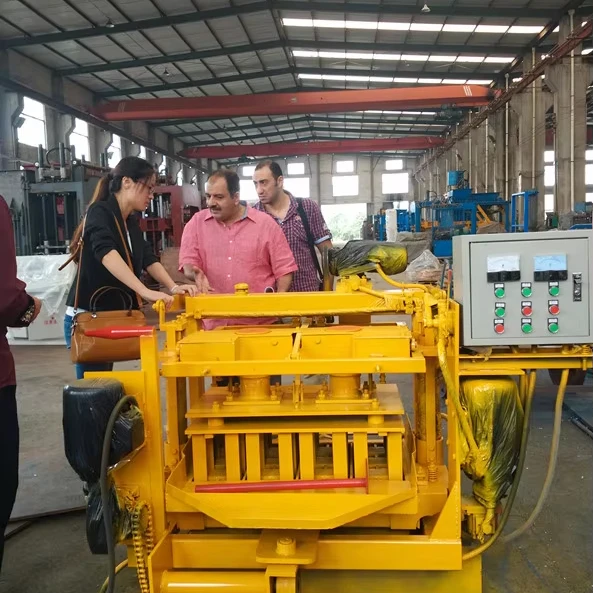 Mobile block machine
QMY4-30 Mobile Concrete Block Making Machine – Manufacturer Full Range84
QMY4-30 Mobile Block Machine, 5KW, 30-Second Molding Cycle — configured for on-site hollow block and...
View Details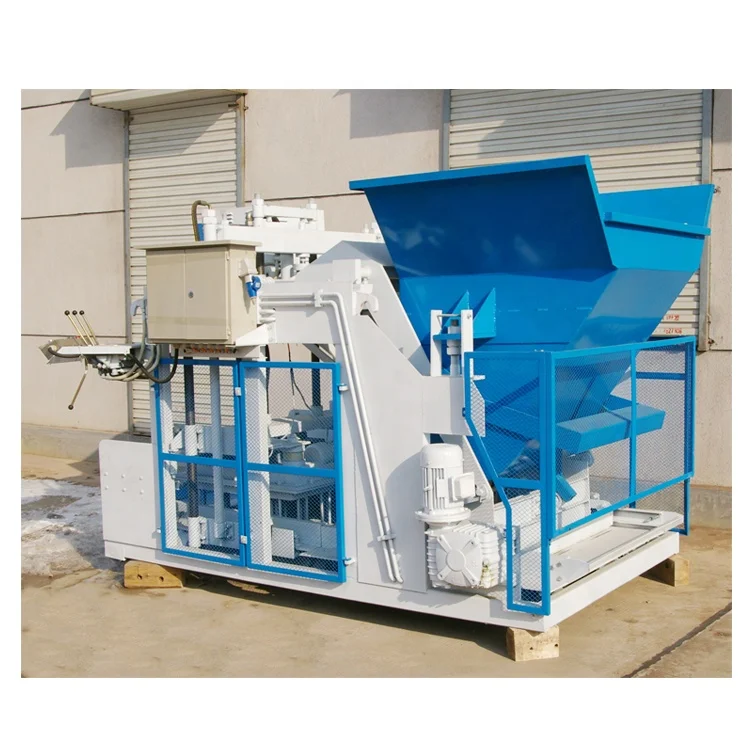 Mobile block machine
QMY10-15 Mobile Hollow Interlocking Concrete Automatic Brick Molding Machine with Hydraulic Pressure and Engine High Efficiency
Products Description Molding10 pcs/moldMolding Cycle10s-15sTotal Power16 KWCapacity11000pcs/day(8 hours)Basic EquipmentQMY10-15 Host Machine. JS7500 Concrete Mixer. Dump...
View Details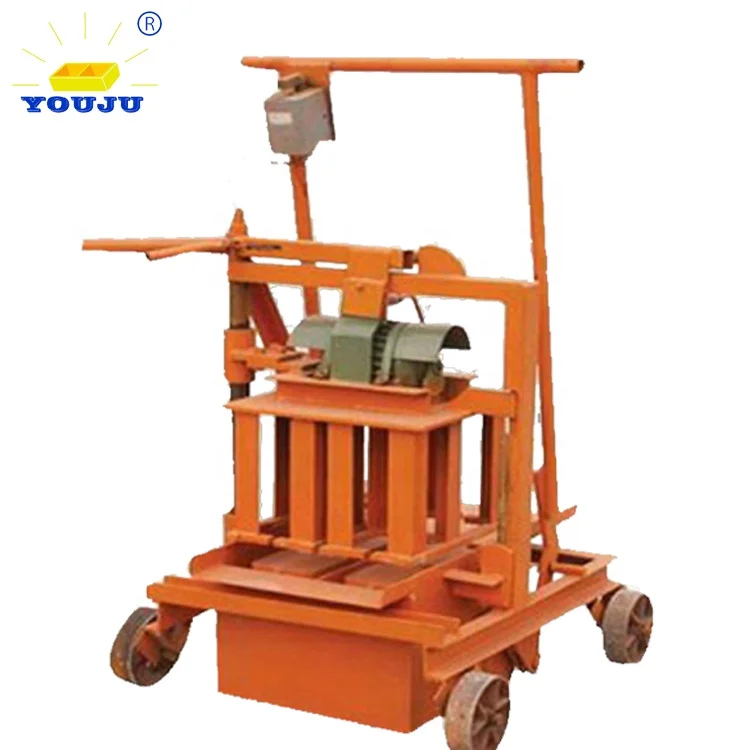 Mobile block machine
QMJ2-45 Mobile Block Making Machine for Hollow Brick – Manufacturer
QMJ2-45 Mobile Block Making Machine, pallet-free egg-laying design, 1–3 workers, 25–30 s cycle — produces...
View Details
Established Manufacturer · Since 2005
Ready to Start Your Concrete Production Line?
Our 320+ engineers will design a customized solution for your local materials, voltage and site conditions. Get a free layout plan and ROI estimation within 24 hours.
108+ Countries Exported
46,000㎡ Factory
320+ Engineers
24h Response Guaranteed