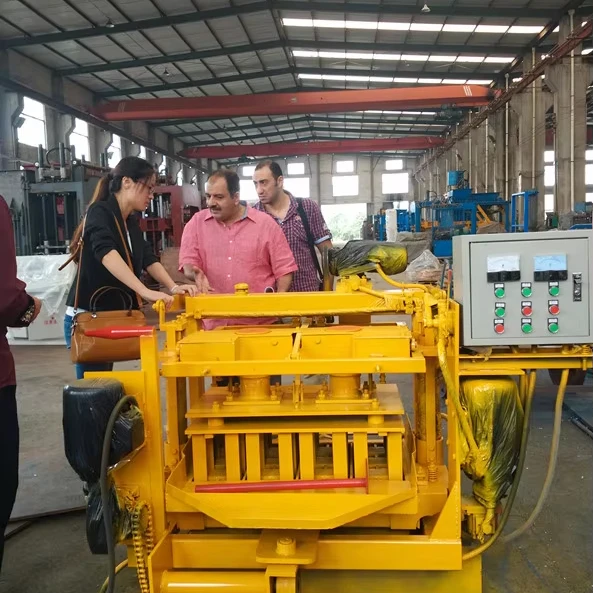
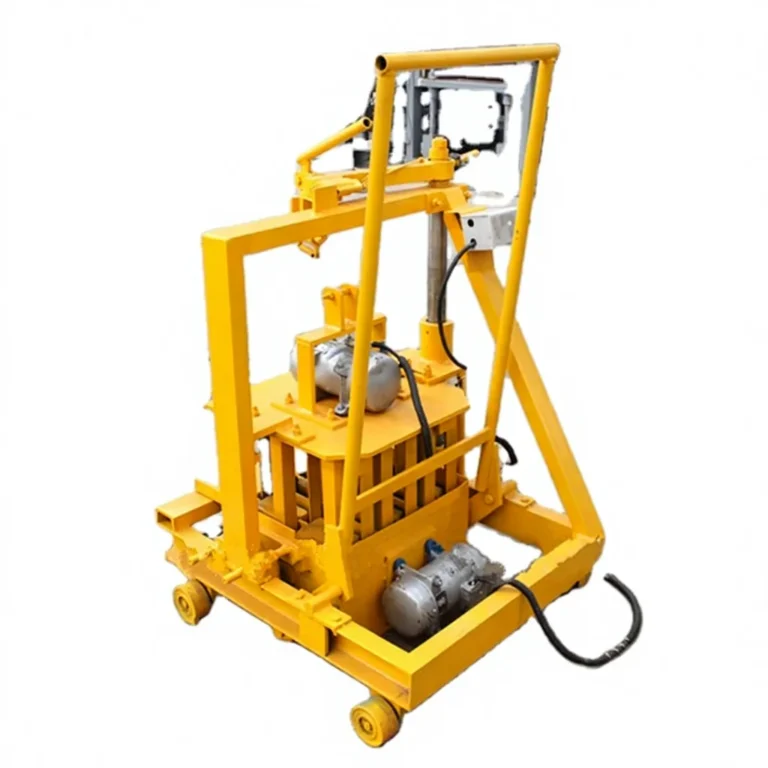
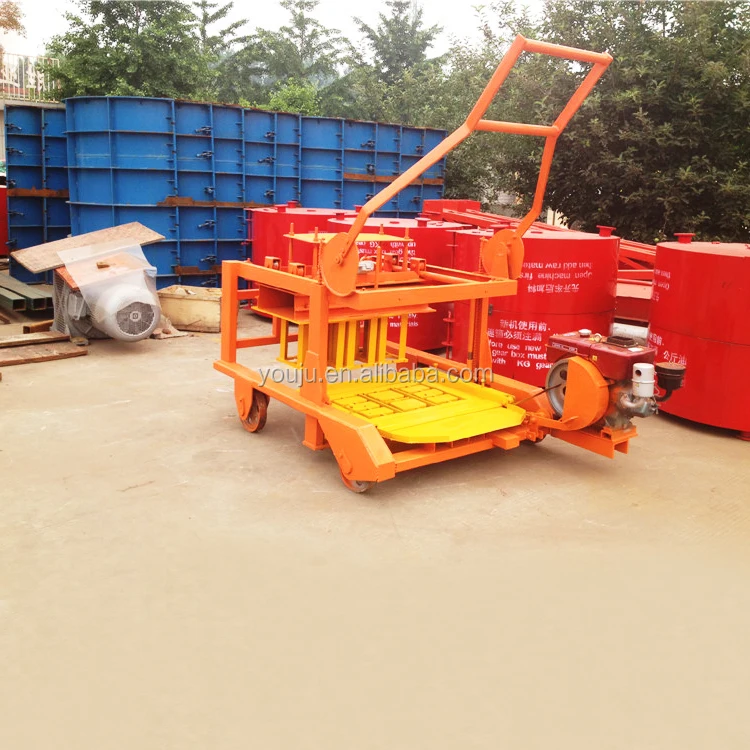
Single-Focus Block Machinery Alignment — The QMJ2-45 mobile block making machine is configured as a matched system of frame, mould and power rather than assembled from disconnected components, keeping pallet-free hollow brick production predictable from the first shift.
Technical Specifications
| Parameter |
Value |
| Model |
QMJ2-45 |
| Product Type |
Mobile Block Making Machine |
| Machine Type |
Hand-pushed mobile (egg-laying) block making machine |
| Pallet Requirement |
None (pallet-free egg-laying operation) |
| Power Source |
Electric motor |
| Control System |
Manual operation |
| Labour Requirement |
1 to 3 workers |
| Mould Change |
Interchangeable moulds for different hollow brick formats |
| Cycle Time |
25–30 s (basis not stated in source — confirm block format and mix design) |
| Output Capacity (Format A) |
160 pcs/h | 1,280 pcs/8 hr — based on 400×200×200 mm hollow brick, 2 pcs per mould |
| Output Capacity (Format B) |
240 pcs/h — based on 400×150×200 mm hollow brick, 3 pcs per mould (basis not stated in source — daily figure to be confirmed) |
| Output Capacity (Format C) |
320 pcs/h | 2,560 pcs/8 hr — based on 400×100×200 mm hollow brick, 4 pcs per mould |
| Mould Format Options |
400×200×200 mm / 400×150×200 mm / 400×100×200 mm hollow brick |
| Vibration Force |
Not stated in source — to be confirmed |
| Automation Level |
Manual (hand-pushed, no PLC) |
| Stacking Method |
Manual |
| Operating Environment |
Small-space and on-site use; no fixed plant required |
| Standards |
ISO 9001:2000, CE (verify certificate validity and scope) |
Application Suitability
| Application |
Material or Output |
| On-site hollow block production |
Crushed stone, sand, cement, and local aggregate for housing or infrastructure contractors without a fixed plant |
| Small-scale block workshops |
First-time block plant entrepreneurs producing hollow bricks with minimal capital and no pallet infrastructure |
| Multi-format hollow brick supply |
Multiple hollow brick sizes via mould interchange to serve varied local building codes |
| Space-constrained project sites |
Pallet-free egg-laying production where ground area is limited and curing rack logistics are absent |
What "Pieces per Hour" Hides When Sizing a Mobile Block Making Machine for Sale
Capacity numbers mean nothing without the block format attached to them.
I once watched a buyer in Bogotá argue with a supplier because the quoted hourly figure assumed a 100 mm wall block, but the project specified 200 mm. The QMJ2-45 produces at different rates depending on which mould is loaded, so the 320 pieces per hour figure only holds for 400×100×200 mm hollow bricks. Switch the mould to 400×200×200 mm and you are looking at 160 pieces per hour instead. This mobile block making machine for sale forces that conversation upfront because the mould determines the cycle [NEED_CITE: honest capacity disclosure in block machinery quotations].

Where the QMJ2-45 Sits in the Full Machine Range
The QMJ2-45 occupies the entry point of the mobile block machine lineup. It sits below semi-automatic stationary lines that require pallets, batching stations, and curing racks, and it serves buyers who have not yet committed to a fixed plant. The hand-pushed, egg-laying design means blocks are laid directly onto a prepared ground surface, removing the need for pallet purchasing, handling, and storage infrastructure entirely.
Pallet-Free Operation as a Line Simplification Decision
Choosing a pallet-free mobile block making machine for sale is not just about saving on pallet cost. It eliminates an entire material-handling loop — pallet return, pallet cleaning, pallet stacking — that a stationary line demands. For a contractor pouring hollow blocks on a housing site with a narrow timeline, the QMJ2-45 lets production start the day the machine arrives, provided the ground is level and the mix is ready. The trade-off is that output volume stays within small-scale territory [NEED_CITE: pallet-free versus pallet-based block production logistics].
Reading the Specs That Actually Shape Daily Output
Cycle time on the QMJ2-45 runs between 25 and 30 seconds per mould, but that interval only translates into a predictable shift total when the block format and mix design are locked in. The three listed mould sizes — 400×200×200, 400×150×200, and 400×100×200 mm — change not just the piece count but also the weight of each press, which affects how fast a single operator can push the machine forward and reposition. Vibration force, though not stated in the source data, will govern whether a local aggregate like volcanic scoria or river gravel achieves sufficient compaction. A mix that works with standard sand in the factory test may produce crumbly edges on site if the vibration characteristics do not match the aggregate hardness. That mismatch is the most common reason blocks fail compressive strength checks after delivery.
The Cost of Skipping the Mix-Test Step
When a buyer orders a mobile block machine without sending a sample of local aggregate for a trial run, the machine ships with factory-default vibration settings. Blocks may look intact coming off the mould but crack during curing or transport because the compaction density was never calibrated to the actual material. I have seen entire shipments of hollow bricks rejected at the project gate for this exact reason — the machine worked, but the configuration did not match the ground truth [NEED_CITE: aggregate mismatch in mobile block production].
Why Source the QMJ2-45 Through a Single-Focus Supplier
Block machinery is the only product line here, which means the QMJ2-45 is specified alongside the correct mould set, power rating, and operating documentation as one matched package rather than sourced piecemeal. Configuration is set against the buyer’s actual mix design and target block format, not a catalogue default. Mould design extends to custom formats when the local market demands sizes outside the three standard options. The automation level is selectable across the broader range, so a buyer starting with this manual mobile unit can step up to a semi-automatic line later without changing suppliers. Installation support includes on-site commissioning and operator training so the first production run is supervised.
Documentation & Verification
- Line layout and capacity calculation stating the hollow brick format assumed for each output figure
- Mould drawing and format list confirming included and optional mould sizes
- Voltage and frequency confirmation sheet before production begins
- Factory test record demonstrating cycle time and block quality on the buyer’s target mix
- Operation and maintenance manual covering mould change and daily greasing intervals
- Packing photographs and customs documentation support for export shipment
Installation, Commissioning & Support
- Level ground preparation with compacted surface for pallet-free egg-laying operation
- Voltage and frequency confirmed pre-production to match local supply standards
- Machine arrives assembled; mould change requires basic hand tools only
- First-run commissioning with mix adjustment to local aggregate characteristics
- Operator training covering cycle rhythm, mould swap, and manual stacking workflow
- Wear parts list with recommended reorder intervals for vibration components
Before Requesting a Quotation
Share the hollow brick format your local market actually buys, the daily output target, and a sample or description of the aggregate you plan to use. Confirm the voltage and frequency at your site so the motor can be wound correctly before the QMJ2-45 mobile block making machine for sale enters production.
Frequently Asked Questions
Q: How is the QMJ2-45’s hourly capacity calculated, and which block format does each figure assume?
A: Each capacity figure is tied to a specific mould size. The 160 pieces per hour rate assumes 400×200×200 mm hollow bricks at 2 per mould, while 320 pieces per hour assumes 400×100×200 mm at 4 per mould. All figures are based on a 25–30 second cycle time, though actual output should be verified against your confirmed mix design and aggregate type.
Q: What voltage and frequency options are available for the target market?
A: Voltage and frequency are not preset and must be confirmed before production. Supplying your local electrical standard — for example 220V/60Hz or 380V/50Hz — ensures the motor is wound correctly and avoids commissioning delays once the machine arrives on site.
Q: Which hollow brick mould sizes are included, and can custom moulds be designed?
A: The QMJ2-45 supports three standard hollow brick formats: 400×200×200, 400×150×200, and 400×100×200 mm. Custom mould designs can be produced to buyer drawings when local building codes or market demand require non-standard dimensions.
Q: What site preparation is needed for pallet-free mobile operation?
A: The QMJ2-45 lays blocks directly on the ground, so a level, compacted surface is essential. Raw material mixing should be positioned within easy wheeling distance of the production path, and sufficient open area must be available for blocks to cure in place before they are moved.
Q: When should a buyer consider stepping up from the QMJ2-45 to a semi-automatic model?
A: When daily output requirements consistently exceed what a manual, hand-pushed unit can deliver, or when block strength demands require higher and more consistent vibration and hydraulic pressure than a mobile egg-laying machine can provide, a semi-automatic stationary line with pallets becomes the logical next step.

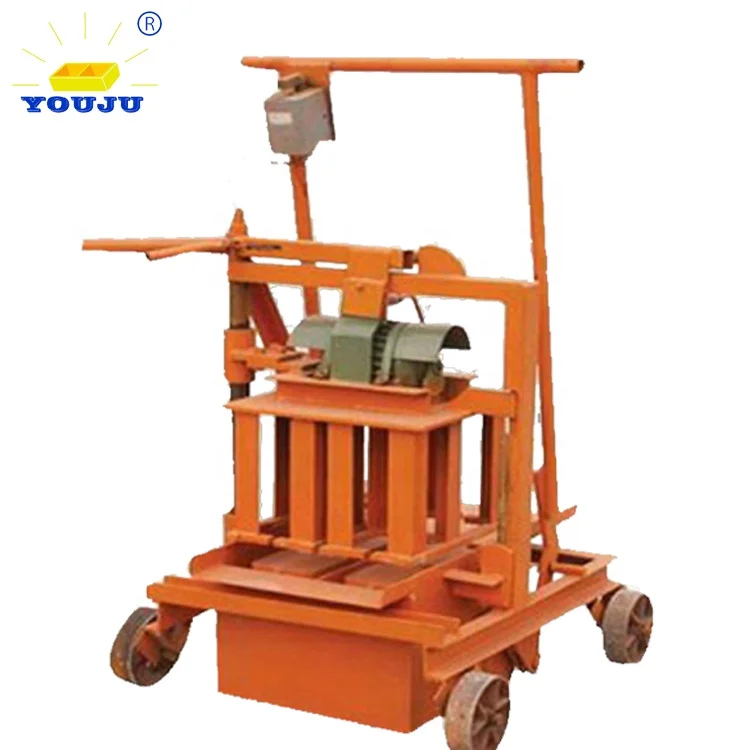
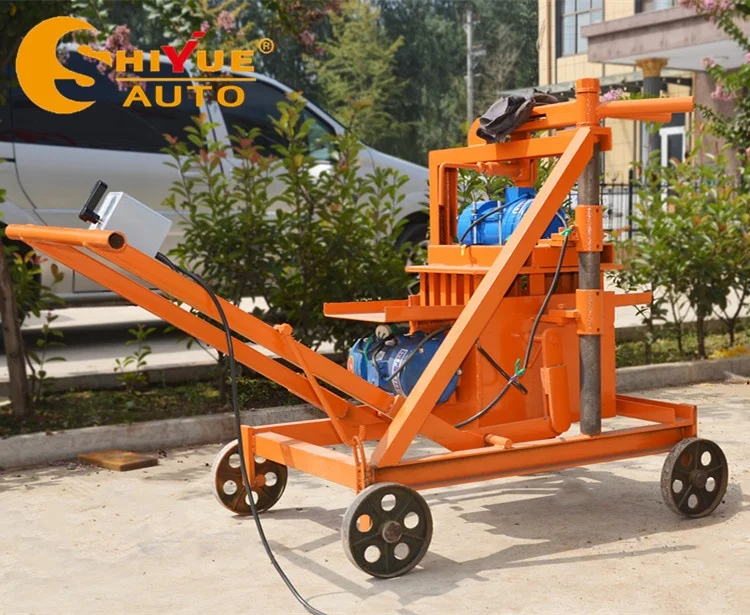 Mobile block machine