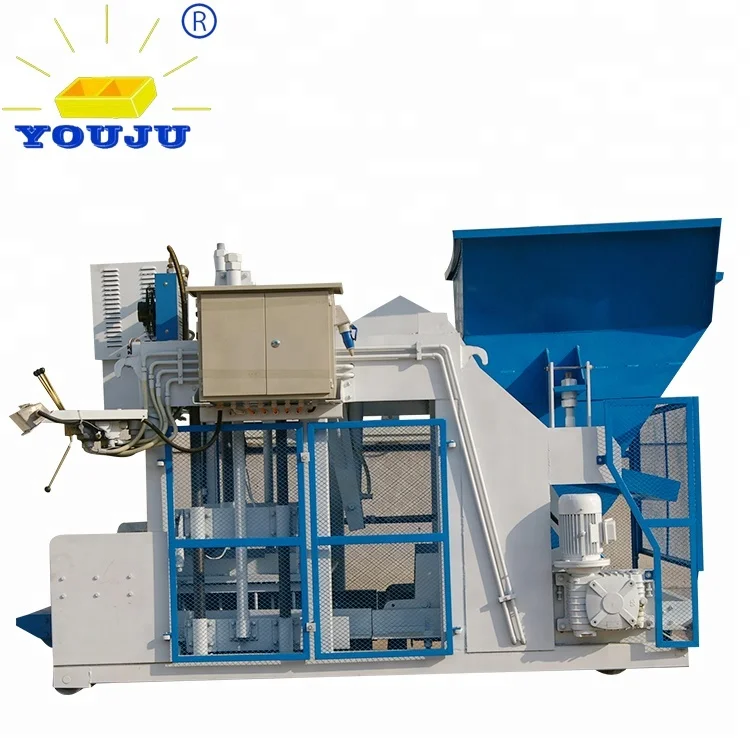
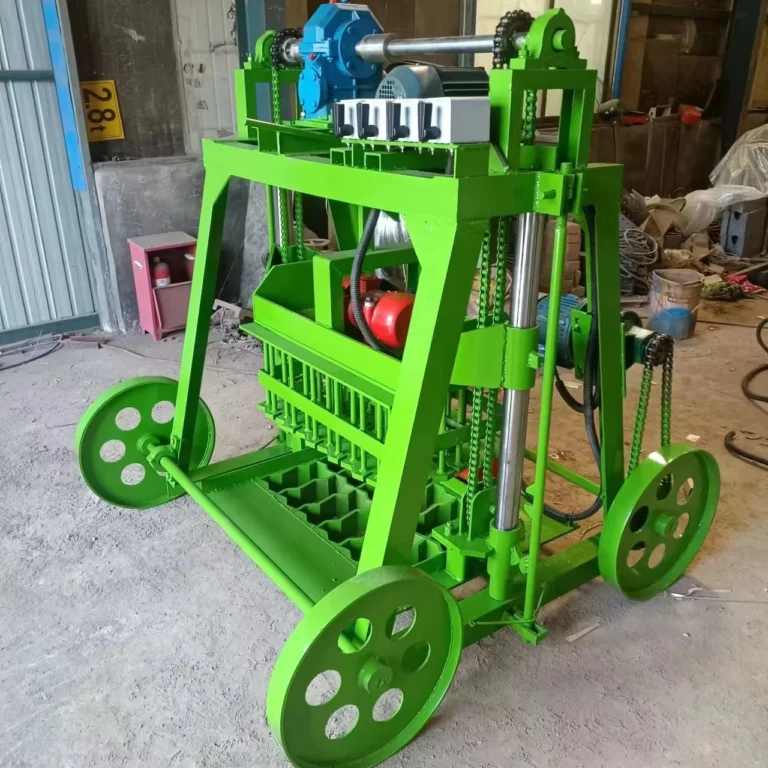
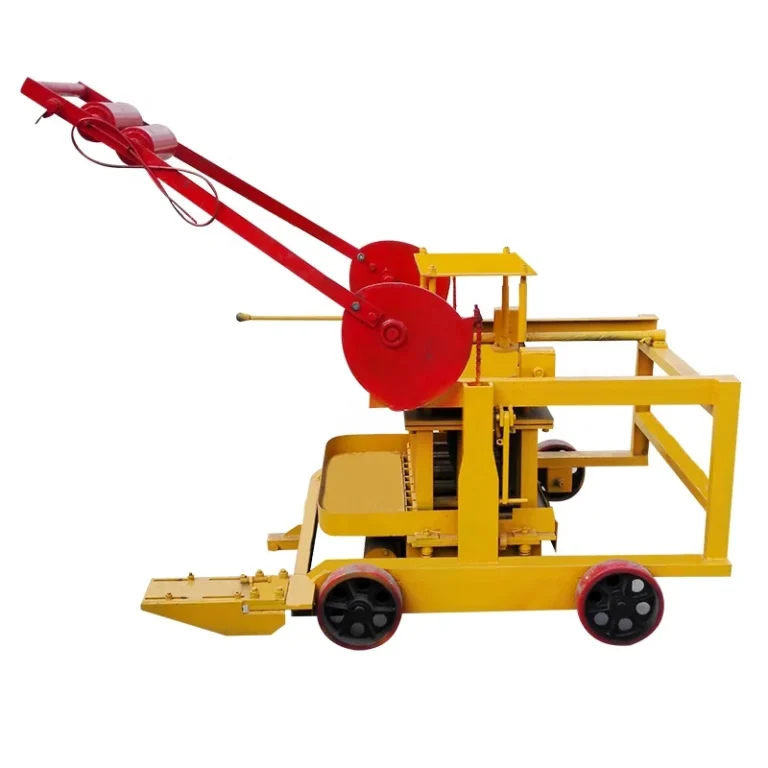
Matched System Configuration — the QMJ4-45 mobile egg laying block making machine for sale is specified alongside its moulds and engine type as one working unit, avoiding the mismatch that happens when press, power source, and block format are sourced separately.
Technical Specifications
| Parameter |
Value |
| Model |
QMJ4-45 |
| Product Type |
Mobile Egg Laying Block Making Machine |
| Molding Capacity |
4 pcs/mold for 400×200×200 mm hollow block; 5 pcs/mold for 400×150×200 mm; 6 pcs/mold for 400×120×200 mm |
| Productivity |
~3000 pcs/day (400×200×200 mm hollow block); ~3500 pcs/day (400×150×200 mm); ~4500 pcs/day (400×120×200 mm) |
| Molding Cycle |
40–45 s |
| Vibration Frequency |
2400 r/m |
| Hydraulic Method |
Mold vibration |
| Demold Method |
Manual |
| Turning Method |
Manual |
| Total Power |
6 kW |
| Power Source |
Diesel or petrol engine |
| Automation Level |
Manual (egg-laying, no pallet required) |
| Pallet Requirement |
None |
| Warranty |
One year for the whole machine |
Application Suitability
| Application |
Material or Output |
| On-site hollow block production at building sites |
Crushed stone, sand, and cement mixes deposited directly on leveled ground |
| First block plant with minimal infrastructure |
Low-capital setup using diesel power where grid electricity is unavailable |
| Rural and remote housing projects |
Hollow blocks from locally sourced aggregate, cured in open-air yards |
| Contractor self-production for masonry walls |
Standard 400×200×200 mm hollow blocks laid on a flat concrete slab |
What "3000 Pieces per Day" Actually Means for a Mobile Block Machine
Every output figure on this page is tied to a specific hollow block size and a 40–45 second cycle, because quoting capacity without naming the format is how buyers end up disappointed.
When a mobile egg laying block making machine for sale is listed with a single daily number, that figure usually assumes the smallest block the mould can produce. I once watched a crew in West Africa expect 4500 hollow blocks daily from a QMJ4-45, only to learn that number applied to the 120 mm partition wall format, not the 200 mm load-bearing block their project required. Real output dropped to roughly 3000 units on the format they actually needed. [NEED_CITE: block format assumptions in capacity quotations]
The vibration frequency and manual cycle timing also shift depending on the mix stiffness and operator rhythm. A crew that has worked together for a month will pull more cycles per hour than a team on its first week, so the daily figure is a ceiling, not a guarantee.

Where the Egg-Laying Design Fits in the Full Range
The QMJ4-45 sits at the entry point of the mobile tier. It requires no pallets, no curing racks, and no fixed factory floor — the machine walks forward on its own wheels, laying each mould of blocks directly on the ground. For a first-time buyer or a contractor who needs blocks at the building site itself, this removes the largest line items from the initial investment.
Compared to semi-automatic stationary presses further up the range, the mobile egg laying block making machine for sale trades cycle speed and automation for portability and zero pallet cost. Buyers who plan to scale output later can treat this tier as a proof-of-market step before moving to a fixed line with automatic stacking and cubing.
Deployment Without Grid Power
Because the QMJ4-45 runs on a diesel or petrol engine rather than an electric motor, it can be dropped onto a site where grid connection is weeks away or entirely absent. This matters for housing projects in rural districts, post-disaster reconstruction zones, and remote mining camps where bringing in a generator large enough for a stationary press would add a separate capital line. [NEED_CITE: off-grid construction equipment deployment]
The engine also simplifies customs and voltage matching. There is no three-phase supply to confirm, no frequency mismatch to worry about, and no PLC language to set before first run. The operator pulls the starter, lets the engine warm, and begins the first mould.
Vibration, Cycle Time, and Block Density
The 2400 r/m vibration frequency and 40–45 second moulding cycle work together to consolidate the concrete mix inside the mould cavity. Higher vibration frequency reduces the time needed for aggregate particles to settle, but only if the hydraulic pressure applied through the mould head is sufficient to squeeze out trapped air. On the QMJ4-45, mould vibration is the primary compaction method, so the operator must watch for a uniform surface finish as the signal that consolidation is complete before demolding.
Manual demold and manual turning mean the cycle length depends partly on crew coordination. A two-person team — one feeding the hopper, one operating the release lever and pushing the machine forward — can sustain a rhythm close to the rated 45-second cycle, while a single operator will see longer intervals between moulds. The 6 kW total power rating covers the vibration motor driven by the engine; it does not include any auxiliary conveyor or mixer, which are separate units in the line.
What Happens When Ground Preparation Is Skipped
The egg-laying design removes pallet cost, but it transfers the flatness requirement to the ground itself. If the production yard is not leveled and compacted, blocks will rock on uneven soil, and the bottom course of every wall built with them will require extra mortar to compensate. I have seen crews pour blocks on loose gravel and then wonder why corner joints showed hairline cracks after curing. [NEED_CITE: ground preparation standards for egg-laying block production]
Skipping a simple concrete slab or compacted sand base also accelerates wear on the machine wheels and the mould bottom edge, because each forward push drags the steel frame across abrasive aggregate. Replacing a worn mould edge is straightforward, but it is a cost that proper ground preparation would have prevented.
Why Procure From a Single-Focus Block Machinery Source
The QMJ4-45 is quoted as one matched unit — engine, vibration system, and mould sized to the hollow block format the buyer actually sells. Configuration is set against the buyer’s local aggregate and mix design, not a catalogue default. Mould drawings are supplied before production so the buyer can confirm dimensions against local building codes. [NEED_CITE: CE machinery directive requirements for industrial equipment]
Documentation arrives with the machine: line layout showing the production yard footprint, a factory test record run on the specified block format, and a wear parts list that identifies every item likely to need replacement in the first year. Operator training covers the engine start-up sequence, mould release technique, and daily greasing points, so the crew is self-sufficient before the technician leaves site.
Documentation & Verification
- Capacity calculation sheet listing daily output per hollow block format and assumed cycle time
- Mould drawing and format list confirming included block dimensions before production starts
- Factory test record on the buyer’s specified mix design and target block size
- Engine specification sheet confirming diesel or petrol type, displacement, and fuel consumption
- Operation and maintenance manual with daily greasing schedule and wear parts replacement intervals
Installation, Commissioning & Support
- Production yard requires a leveled, compacted surface — a concrete slab is recommended for the QMJ4-45 wheel track
- No electrical connection needed; diesel or petrol engine eliminates three-phase supply and voltage matching
- Machine ships fully assembled; only the engine fluids and hopper bolts require on-site attention
- First-day commissioning includes mould release timing and vibration duration adjustment for the local mix
- Operator training covers engine warm-up, cycle rhythm, and manual demold technique
- Wear parts list identifies vibration springs, mould liner plates, and wheel bearings for first-year stocking
Sizing the QMJ4-45 to Your Project
Tell us which hollow block formats your market demands, the daily volume your crew targets, and whether your site has reliable flat ground or needs base preparation guidance. If electricity is available, let us know the local voltage and frequency so we can advise whether a stationary press might suit you better. Share your aggregate type — crushed granite, river sand, volcanic scoria — so the mould and vibration settings can be matched before the machine leaves the factory.
Frequently Asked Questions
Q: How is daily output calculated and which block format does each figure assume?
A: Each output figure is tied to a specific hollow block dimension and a 40–45 second cycle. For the 400×200×200 mm block, the QMJ4-45 produces four pieces per mould, yielding approximately 3000 units per day. The 150 mm format yields five per mould at roughly 3500 daily, and the 120 mm format yields six per mould at around 4500 daily. Actual output depends on crew coordination and mix consistency.
Q: Can the QMJ4-45 run on diesel, petrol, or both?
A: The machine can be configured with either a diesel or a petrol engine depending on fuel availability and cost in your region. Diesel is typically preferred for continuous heavy-duty operation and better torque at low RPM, while petrol engines are lighter and easier to service in areas where diesel mechanics are scarce. Specify your preference during inquiry.
Q: What ground preparation is needed for egg-laying production without pallets?
A: The production yard must be flat, level, and compacted so blocks sit evenly and the machine wheels roll smoothly. A poured concrete slab is ideal, but well-compacted sand or crusher dust on firm soil also works. Uneven ground causes block rocking, accelerates mould edge wear, and forces extra mortar use during wall construction.
Q: Which mould formats are included and can I order additional sizes later?
A: Standard supply includes one mould for the 400×200×200 mm hollow block. Additional moulds for 150 mm and 120 mm partition formats, as well as solid block and paving formats, can be ordered at any time. Mould drawings are provided before production so you can verify dimensions against your local building code requirements.
Q: What does the one-year warranty cover and how are wear parts supplied?
A: The warranty covers the entire machine, including the vibration motor, engine, and structural frame, against manufacturing defects for one year from dispatch. Wear parts such as mould liners, vibration springs, and wheel bearings are listed in the supplied parts manual and can be reordered directly with part numbers. A recommended first-year spare parts package is quoted alongside the machine.

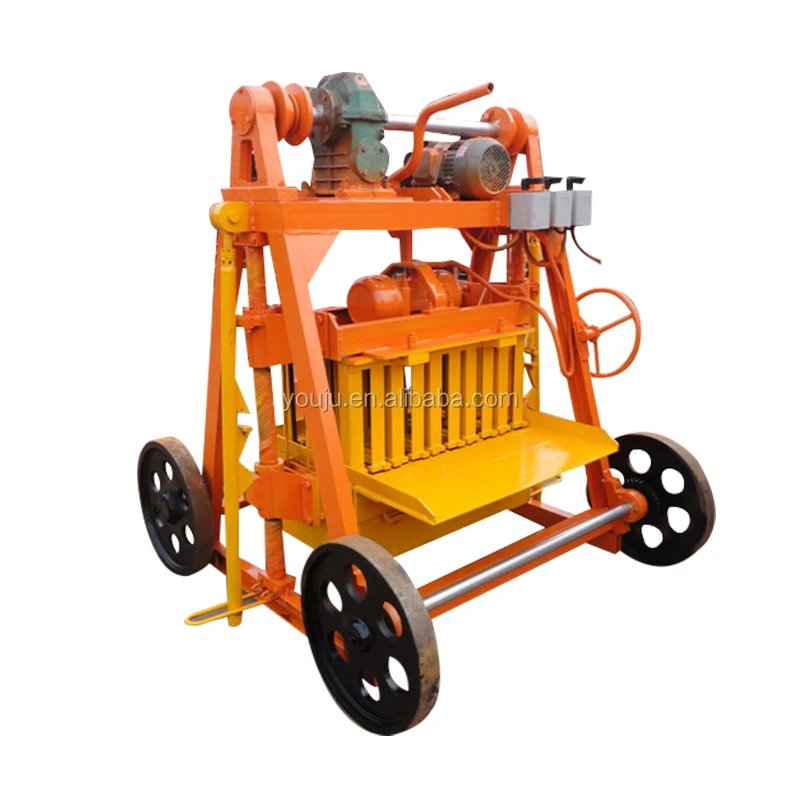
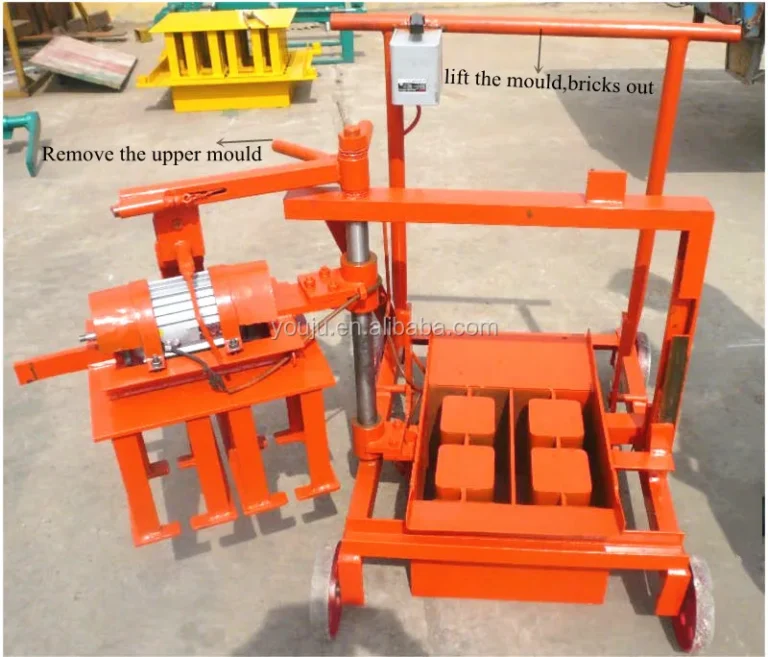 Mobile block machine