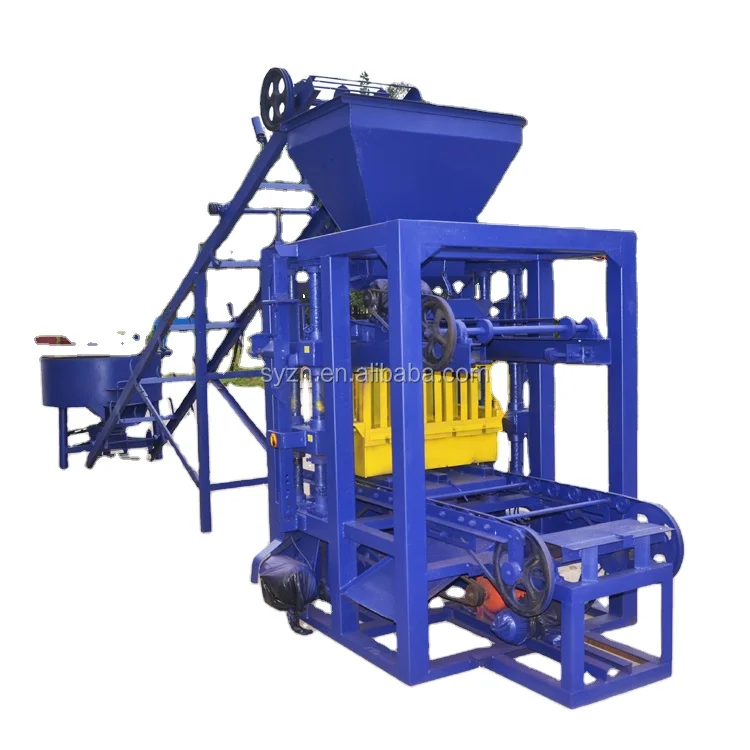
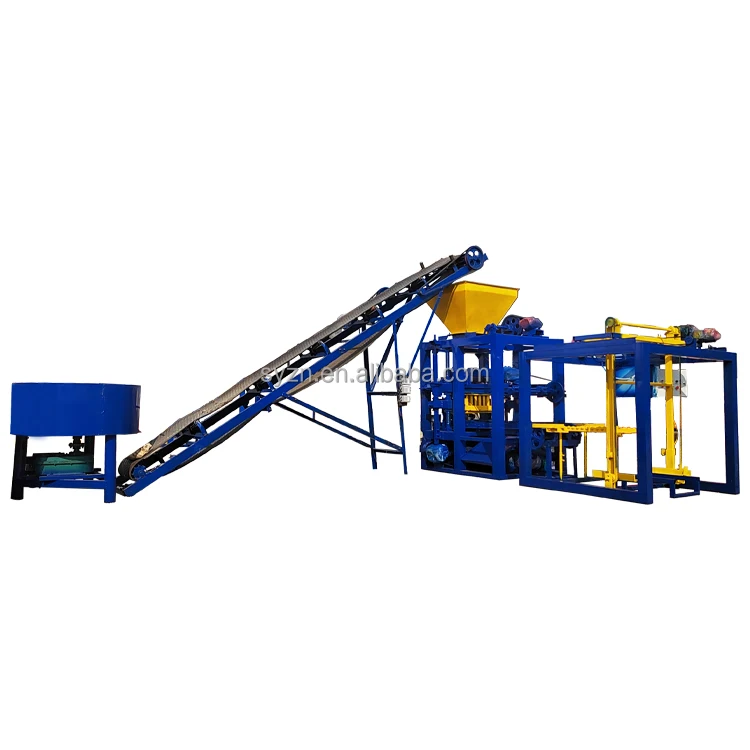
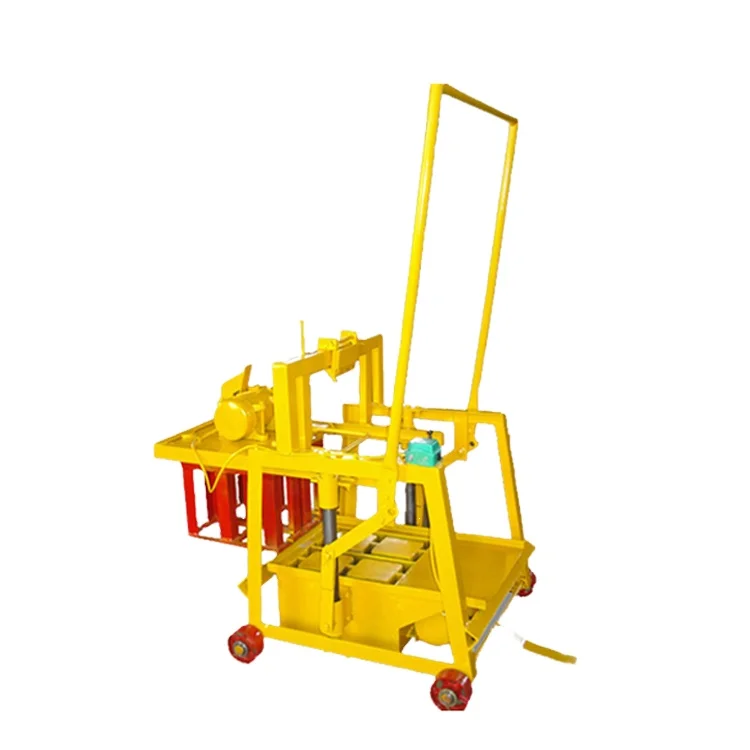
Matched System Spec — the QMJ2-45 mobile egg laying block making machine for sale is configured with its mould and vibration motor as one tested unit, so density and cycle time reflect the format you will actually run.
Technical Specifications
| Parameter |
Value |
| Model |
QMJ2-45 |
| Product Type |
Mobile Egg Laying Block Making Machine |
| Rated Power |
1.5 kW |
| Molding Cycle |
45 s |
| Output Capacity |
1280 pcs/8hours (based on 300×150×100mm block format, 2 pcs/mould) |
| Exciting Power |
2 pcs/mould |
| Net Weight |
150 kg |
| Overall Dimensions (L×W×H) |
920×800×1258 mm |
| Raw Material |
Concrete, sand, cement |
| Automation Level |
Semi-automatic |
| Voltage |
Configurable to buyer’s local voltage and frequency |
Application Suitability
| Application |
Material or Output |
| On-site hollow block production for housing projects |
Concrete, sand and cement mixes laid directly on prepared ground |
| First block plant for entrepreneurs entering the market |
Hollow blocks at entry-level investment without a fixed production line |
| Remote or temporary job sites needing relocated production |
Standard concrete mixes with local sand and aggregate |
What "1280 Blocks per Shift" Actually Means for Your Site
Capacity only tells the truth when the block format is named alongside it.
A cycle time printed on a brochure rarely mentions which block size was running during the test. The QMJ2-45 reaches its stated output based on the 300×150×100 mm hollow format with two blocks per mould; switching to a larger or multi-cavity format shifts that figure. Buyers who skip this step often find their daily tally well below the number they budgeted against [NEED_CITE: common causes of output shortfalls in small-scale block production]. A mobile egg laying block making machine for sale should always carry a format-stamped capacity line, not a single headline number.

Where the QMJ2-45 Sits in a Buyer’s First Machine Decision
This machine occupies the entry tier for contractors who need blocks on a job site without building a fixed plant. The semi-automatic operation means an operator feeds material and guides the machine while the mould vibration and compression handle forming. For a first-time buyer, the mobile egg laying block making machine for sale removes the pallet system and curing rack from the initial investment, letting production start on a flat concrete slab with basic hand tools for handling.
Relocating Production as the Project Moves
The 150 kg weight and compact 920×800×1258 mm footprint allow the QMJ2-45 to be lifted by a small crane or loaded onto a flatbed between sites. Housing developments that spread across multiple phases benefit from a machine that follows the work rather than forcing blocks to be hauled from a distant yard [NEED_CITE: logistics cost comparison between fixed plant and on-site mobile production]. Contractors producing kerbstones or small wall blocks on infrastructure projects use this mobility to keep curing areas close to where the blocks are laid.
Reading the Specs That Shape Daily Output
The 1.5 kW rated power drives both the vibration motor and the mould compression mechanism within a 45-second cycle. On a mobile egg-laying machine, vibration force and mould squeeze must work together: too little vibration leaves voids in the block wall, while excessive force without matching hydraulic pressure causes edge crumbling. The two vibration motors per mould deliver bed-level and upper-mould vibration simultaneously, which helps maintain consistent wall thickness across the 300×150×100 mm format. Because this is an egg-laying design, blocks are deposited directly onto the ground, so floor flatness and surface preparation directly affect block dimensional accuracy. Buyers planning to run a different format should confirm mould availability and revised cycle expectations before ordering.
The Cost of Skipping the Voltage Conversation
Commissioning delays on small mobile machines almost always trace back to a voltage mismatch discovered after the crate is opened. A 1.5 kW motor wound for one frequency will overheat or underperform on another, and rewinding on site is rarely an option in remote project locations [NEED_CITE: motor failure rates from voltage and frequency mismatch in export equipment]. Confirming local supply in writing before production avoids a machine that sits idle while a replacement motor is shipped.
Why Buyers Source the QMJ2-45 Through This Range
Block machinery is the single focus here, so the QMJ2-45 arrives with its mould matched to the format the buyer’s market actually sells. Configuration is set against the buyer’s local aggregate and mix design rather than a catalogue default, preventing the costly material substitution that occurs when a machine is tuned for sand it cannot source. Voltage and control language are confirmed in writing before the machine leaves the workshop. The automation level is selectable across the range, so a buyer starting with the QMJ2-45 can move to a semi-automatic stationary line later without learning a new control philosophy. Installation support and operator training accompany delivery so the first shift of production is not spent troubleshooting.
Documentation & Verification
- Factory test record run on the 300×150×100 mm format before dispatch
- Machine specification sheet confirming voltage and frequency to buyer’s grid
- Mould drawing and format list showing cavity dimensions and block wall thickness
- Operation and maintenance manual covering vibration motor servicing and mould alignment
- Packing photographs documenting machine condition at the point of loading
Installation, Commissioning & Support
- Flat concrete floor required across the production area to maintain block dimensional accuracy with the egg-laying system
- Single-phase or three-phase power supply confirmed to match the 1.5 kW motor winding before the machine ships
- Machine arrives fully assembled at 150 kg and can be positioned by two operators or a small hoist
- First-run commissioning includes cycle timing verification on the buyer’s actual sand and cement mix
- Operator training covers mould change procedure, vibration adjustment and daily greasing points
- Wear parts list identifies vibration motor brushes and mould liner as first-replacement items
Before You Request a Quote
Send the block format your market sells most, along with a sample of the sand or aggregate you plan to use. Confirm your site voltage, frequency and the language you need on any control labels. If the production area is outdoors or on uneven ground, describe the slab preparation you have in place so the machine can be configured for your actual conditions.
Frequently Asked Questions
Q: How is the 1280 pcs/8hours capacity calculated, and what happens if I switch block format?
A: That figure is based on the 300×150×100 mm hollow block format with two cavities per mould and a 45-second cycle. A larger format or a solid block design changes the number of pieces per cycle and may extend the molding time, so daily output must be recalculated against the specific format you intend to run.
Q: What voltage and frequency options are available for the QMJ2-45?
A: The motor can be wound to match the buyer’s local supply before production. You need to confirm the exact voltage, frequency and phase in writing so the machine arrives ready to connect. Control panel labels can also be produced in the buyer’s preferred language.
Q: What site conditions does this mobile egg laying block making machine for sale require?
A: A flat, level concrete surface is essential because the machine deposits blocks directly onto the ground. Adequate curing space must be available nearby, and a stable power connection matching the 1.5 kW motor rating must be within cable reach of the production area.
Q: Can the automation level be upgraded later from the QMJ2-45?
A: The QMJ2-45 serves as the entry point of the range. Buyers who outgrow manual handling and egg-laying production can move to a semi-automatic or fully automatic stationary line from the same supplier, keeping the control logic and mould standards consistent across the transition.
Q: What mould formats are available, and how long does a change take?
A: Moulds can be supplied for the standard hollow block format as well as other sizes the buyer’s market demands, including custom designs from buyer drawings. Mould change on this class of machine involves unbolting and realigning the mould box, which a trained operator can complete within a single shift once familiar with the procedure.

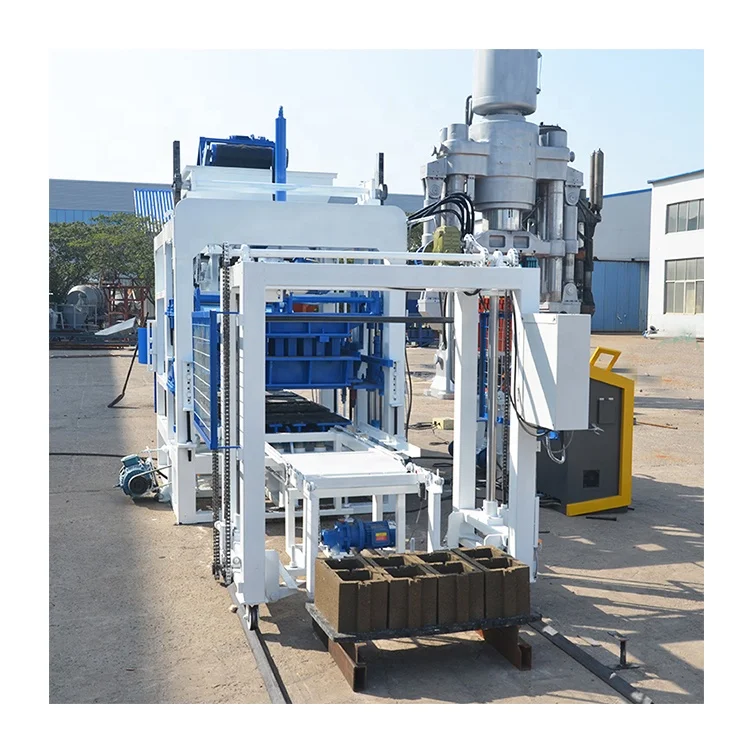 High quality block machine