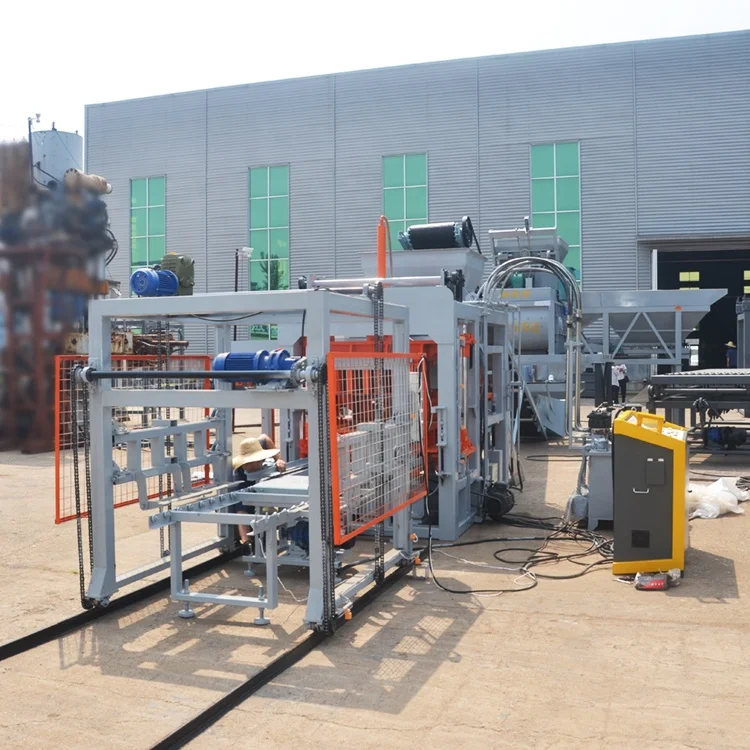
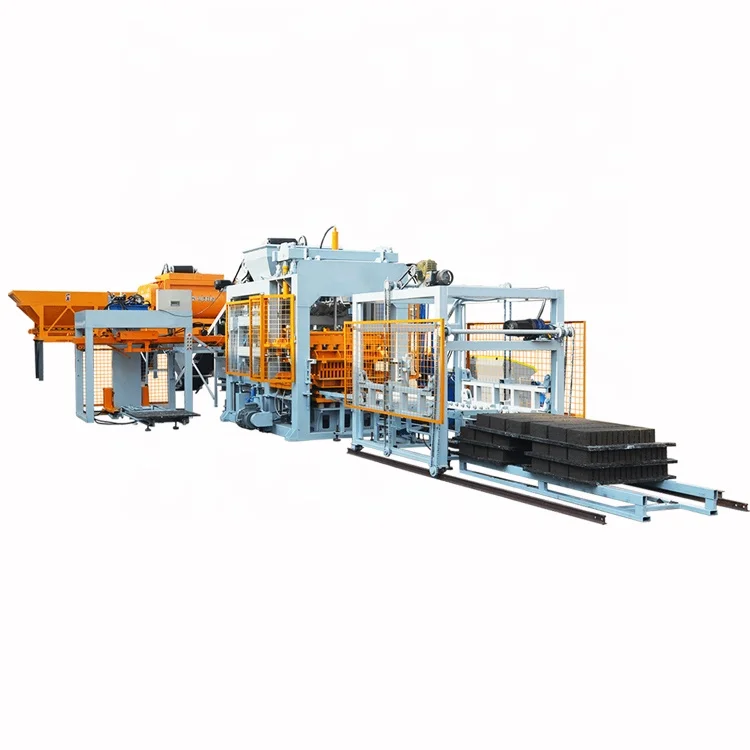
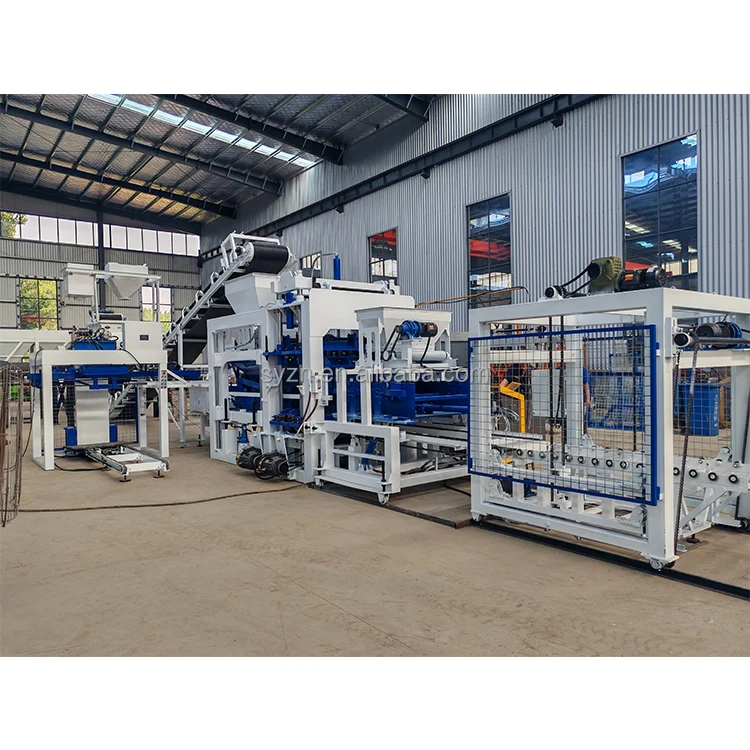
Matched System Design — the QT6-15 is specified alongside its mould, pallet and handling line so that output capacity, curing footprint and automation level align before the machine ships rather than after it arrives.
Technical Specifications
| Parameter |
Value |
| Model |
QT6-15 |
| Product Type |
Automatic Hydraulic Block Making Machine |
| Overall Dimensions (L×W×H) |
8200 × 1700 × 2950 mm |
| Pallet Size |
880 × 850 mm |
| Vibration Force |
45 kN |
| Vibration Frequency |
0–60 Hz |
| Vibration Form |
Platform Vibration |
| Moulding Mode |
Automatic loading, vibration moulding |
| Molding Cycle |
15–20 s (standard blocks); 20–25 s (pavers) |
| Demolding Method |
Hydraulic |
| Hydraulic System |
Independent integrated hydraulic station |
| Overall Power |
37 kW |
| Total Mass |
7 T |
| Control System |
PLC with touch screen, built-in fault diagnosis |
| Safety Logic |
Interlock control circuit |
| Block Compressive Strength |
>15 MPa |
| Output – Hollow Block 400×200×200 mm |
1080–1440 pcs/h (8640–11520 pcs/8 hr shift) |
| Output – Hollow Block 400×150×200 mm |
1440–1920 pcs/h (11520–15360 pcs/8 hr shift) |
| Output – Solid Brick 240×115×53 mm |
5760–7680 pcs/h (46080–61440 pcs/8 hr shift) |
| Output – Rectangular Paver 200×100×60 mm |
2160–2880 pcs/h at 20–25 s cycle (17280–23040 pcs/8 hr shift) |
| Output – Zigzag Paver 225×112.5×60 mm |
2160–2880 pcs/h at 20–25 s cycle (17280–23040 pcs/8 hr shift) |
| Raw Material Adaptability |
Waste ash, slag, various local aggregates |
| Factory Area Required |
1200 m² |
Application Suitability
| Application |
Material or Output |
| Hollow block production for wall construction |
Crushed stone, sand and cement with optional waste ash replacement |
| Solid brick manufacturing |
Fine aggregate and cement mixes achieving >15 MPa compressive strength |
| Rectangular paving block for roads and yards |
Coarse aggregate blends at 20–25 s molding cycle |
| Zigzag interlocking paver |
Graded aggregate with hydraulic pressure and platform vibration |
| Multi-cellular and partition block |
Lightweight aggregate including slag and fly ash blends |
What "Pieces per Hour" Really Means on an Automatic Block Making Machine Manufacturer Quotation
Capacity only matters when the block format, cycle time and raw material are all named together.
I have watched buyers sign off on a block machine because the quoted number looked right, only to discover weeks later that the figure assumed a hollow block while their market pays for interlocking pavers. The cycle for a 400×200×200 mm hollow block is typically shorter than for a 200×100×60 mm paver because the paver demands a longer vibration window to reach surface density. When the format switches, the hourly rate changes with it. An honest automatic block making machine manufacturer will tie every output figure to a named format and a stated cycle so you can plan shifts, curing space and pallet circulation without surprises [NEED_CITE: block format and cycle time relationship in concrete block production].

Where the QT6-15 Sits Across the Full Range
Buyers evaluating their first plant or a replacement press need to know how this model relates to the machines above and below it. The QT6-15 occupies the mid-to-high tier of the Shiyue automatic block making machine range, with a pallet size of 880×850 mm that supports moderate-to-high daily volumes. Smaller semi-automatic models use smaller pallets and manual pallet return, while higher-tier automatic lines add full stacking and cubing. Understanding this tier placement helps a buyer decide whether the QT6-15 matches the daily tonnage their curing yard can absorb.
Matching the Machine to the Block Your Market Actually Buys
The block formats that sell in one region may not sell in another. Hollow blocks dominate in parts of West Africa for wall construction, while interlocking pavers move faster in South Asian municipal projects. The QT6-15 covers both territory types: hollow blocks at 15–20 s cycles and pavers at 20–25 s cycles, with mould changes possible between formats. The key is specifying the mould list and pallet size against the buyer’s actual product mix before production begins, not after the machine is bolted to the floor [NEED_CITE: regional block format demand in construction markets].
Reading the Specs That Actually Shape Daily Output
Vibration force and hydraulic pressure work as a pair. The 45 kN platform vibration compacts the aggregate from below while the hydraulic head applies downward pressure, and both must be tuned to the mix design. If the local aggregate is porous volcanic scoria rather than dense granite, the vibration frequency and dwell time need adjustment or the block will crumble at demolding. The independent hydraulic station sits apart from the main frame so vibration and dust do not degrade seals and valve response over time. Meanwhile, the 880×850 mm pallet size dictates how many blocks cure per square meter of yard — a buyer who already owns a forklift and curing racks sized for a different pallet will face unnecessary handling friction.
The Hidden Cost of Skipping Configuration Details
When voltage, frequency and PLC display language are left unconfirmed until the machine arrives, commissioning stalls while replacement contactors or transformers are sourced locally. I have seen a three-phase supply mismatch delay a plant opening by weeks because the motor winding did not match the site transformer. The same applies to pallet material: a buyer who specified wooden pallets for a humid coastal site found them warping within months, forcing an unplanned switch to PVC pallets and a new pallet feeder setting. These are not machine faults — they are configuration gaps that an automatic block making machine manufacturer should close before the crate leaves the factory [NEED_CITE: industrial equipment voltage and frequency compatibility standards].
Why Source the QT6-15 Through This Range
Block machinery is the single focus here, which means the press, mould, pallet and handling equipment are specified as one system rather than assembled from separate vendors. Configuration starts from the buyer’s actual mix design and target block format, not a catalogue default. Mould design covers the formats the buyer’s local market sells, with custom drawings available. Automation level is selectable, so a plant can begin with semi-automatic pallet handling and add stacking later. Installation support includes operator training on the PLC touch screen and the built-in fault diagnosis system so the crew can respond to alarms without waiting for a remote call.
Documentation & Verification
- Line layout with capacity calculation tied to each block format and its cycle time
- Machine specification sheet confirming pallet size 880×850 mm and 37 kW power draw
- Mould drawing and format list for hollow, solid, rectangular and zigzag products
- Hydraulic and electrical schematic for on-site troubleshooting
- Voltage, frequency and PLC display language confirmation record before production
- Factory test record showing actual molding cycle on the buyer’s chosen format
Installation, Commissioning & Support
- Foundation pad sized to 8200×1700 mm footprint with vibration isolation for the 45 kN platform
- Dedicated three-phase circuit rated for the 37 kW overall power draw
- Machine shipped in dismantled sections for standard container loading
- First-run parameter tuning of vibration frequency and hydraulic pressure to local aggregate
- PLC touch screen operator training covering fault diagnosis and mould change procedure
- Wear parts and mould maintenance schedule aligned with the 1200 m² factory area
What to Prepare Before Requesting a Quotation
To move from general interest to a firm configuration, share the block formats your market buys, the daily output you need per format, and a sample of the aggregate or ash you plan to use. Also confirm the site voltage and frequency, the PLC language your operators read, and the dimensions of your existing curing area and forklift. With those details in hand, a capacity calculation and line layout can be drafted without a second round of clarification.
Frequently Asked Questions
Q: How is the capacity of the QT6-15 calculated and which block format does each figure assume?
A: Each output figure is tied to a specific block size and its molding cycle. For example, the hollow block 400×200×200 mm rate of 1080–1440 pcs/h assumes a 15–20 s cycle, while the rectangular paver 200×100×60 mm rate of 2160–2880 pcs/h assumes a 20–25 s cycle. A capacity table is provided with every quotation so no figure is left without its format context.
Q: Where does the QT6-15 sit in the Shiyue range compared to semi-automatic and higher-tier models?
A: The QT6-15 is the mid-to-high automatic tier, using an 880×850 mm pallet for moderate-to-high daily volumes. Below it, semi-automatic models use smaller pallets and manual pallet return. Above it, higher-tier lines add fully automatic stacking and cubing. Buyers can start at this tier and upgrade handling later.
Q: What voltage, frequency and PLC language options are available for my market?
A: Voltage and frequency are configured to match the buyer’s site supply before production begins, and the PLC touch screen display language is confirmed at the same stage. This prevents commissioning delays caused by mismatched contactors or unreadable alarm messages after the machine arrives on site.
Q: What factory area and supporting equipment does the QT6-15 require?
A: The machine itself requires a section of a 1200 m² factory area, with additional space for raw material feeding, pallet circulation and curing racks. Supporting equipment within the line includes the mixer, pallet feeder and handling system, all specified together so cycle times match and the press is not left waiting between stages.
Q: Can the automation level be upgraded later if I start with a more basic configuration?
A: Yes. The QT6-15 platform supports a selectable automation path. A buyer can begin with semi-automatic pallet handling and add automatic stacking or cubing modules as production volume grows, without replacing the press or hydraulic station itself.


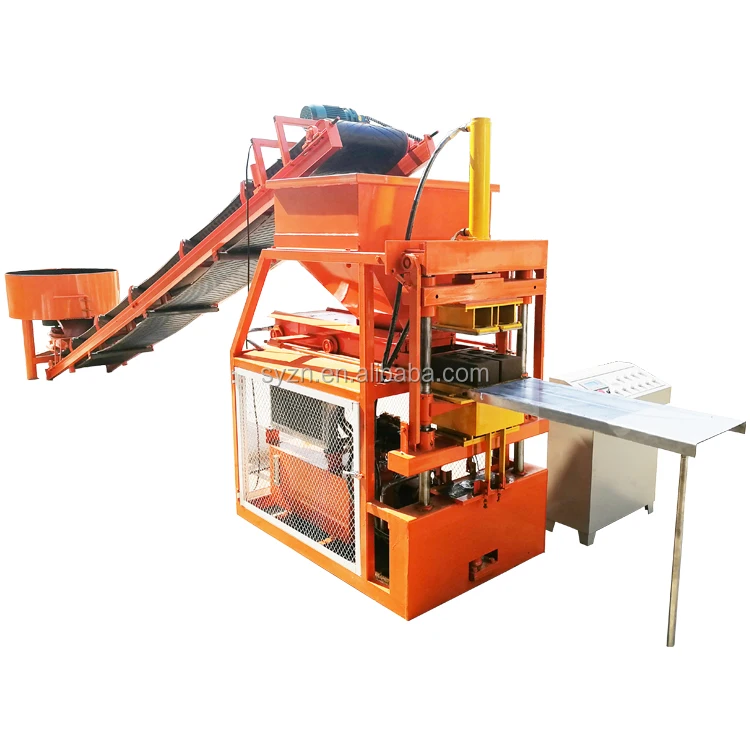 High quality block machine