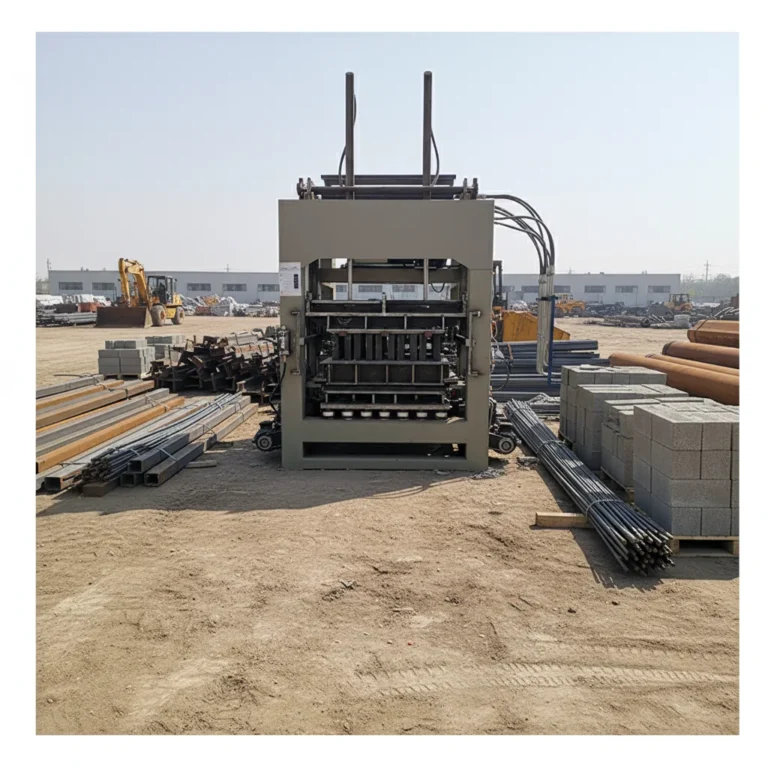
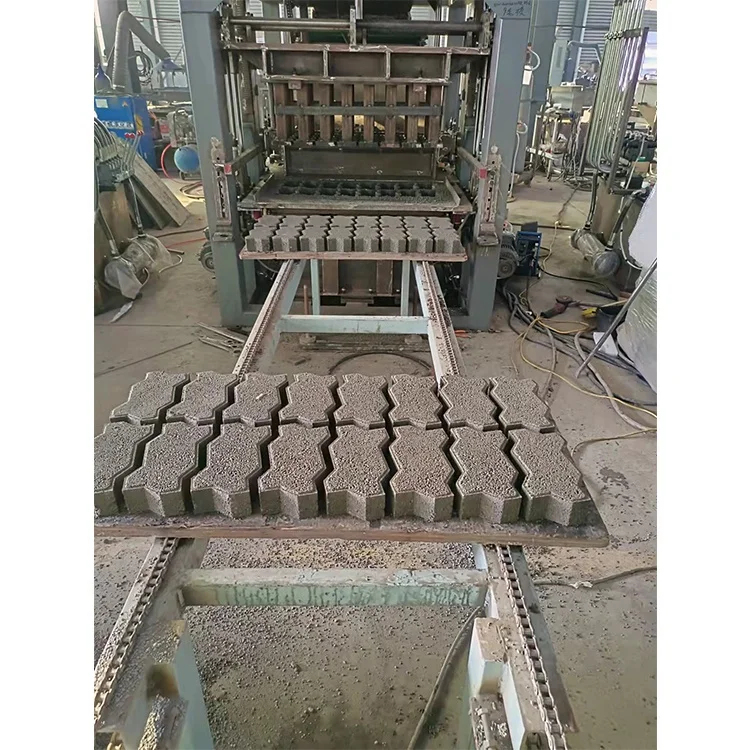
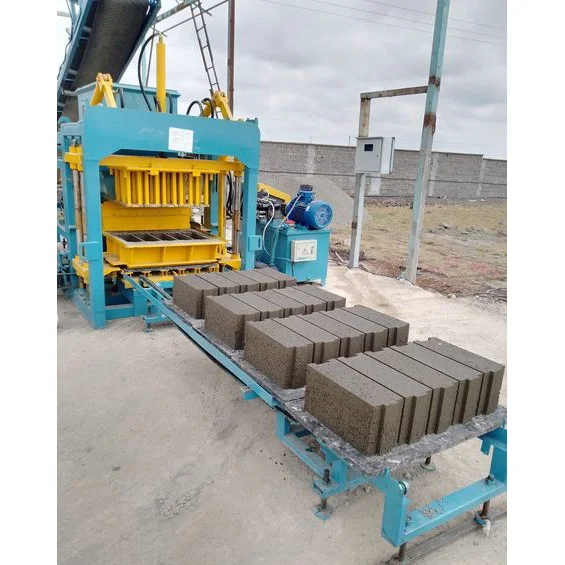
Matched System Design — the QT4-15B is specified as one complete block making line, so the press, moulds, pallets, and handling equipment are sized to work together rather than sourced separately.
Technical Specifications
| Parameter |
Value |
| Model |
QT4-15B |
| Product Type |
Fully Automatic Concrete Block Making Machine |
| Control System |
PLC computer control, fully automatic |
| Vibration Mode |
Multiaxis synchronizer vibration (vertically downward) |
| Hydraulic System |
High thermal efficiency, low heat productivity design |
| Guide Bearing |
Long-period over length guide bearing for upper mould and mould box alignment |
| Mixer System |
Multiaxis forced mixer system |
| Rack Construction |
High strength steel with special welding technique, vibration shock resistant |
| Cycle Time |
15–20s (basis not stated in source — confirm block format and material) |
| Output Capacity |
900–1,200 pcs/h based on 400×200×200mm hollow block, 4 pcs/mould |
| Output Capacity |
1,080–1,440 pcs/h based on 400×150×200mm block, 5 pcs/mould |
| Output Capacity |
1,440–1,920 pcs/h based on 400×100×200mm block, 8 pcs/mould |
| Output Capacity |
2,880–3,840 pcs/h based on 200×100×60mm paving block, 16 pcs/mould |
| Output Capacity |
5,930–6,720 pcs/h based on 240×115×53mm solid brick, 28 pcs/mould |
| Daily Output (8hr) |
7,200–9,600 pcs based on 400×200×200mm hollow block |
| Daily Output (8hr) |
47,400–53,700 pcs based on 240×115×53mm solid brick |
| Automation Level |
Fully automatic (computer controlled, low labor intensity) |
| Warranty |
1 year (excluding spare parts) |
| Certification |
CE (declaration where applicable) |
Application Suitability
| Application |
Material or Output |
| Hollow block production |
Crushed stone, sand, cement, fly ash aggregates |
| Solid brick manufacturing |
Local sand and cement blends for structural masonry |
| Paving block and kerbstone |
Dense concrete mixes for exterior surface applications |
| Interlocking and porous brick |
Specialized aggregate blends for permeable or dry-stack formats |
| On-site block production for housing projects |
Adapted to locally available raw materials confirmed by mix trial |
Why "Cycle Time" Alone Tells You Almost Nothing
A cycle time figure only becomes meaningful once the block format, mould cavity count, and raw material density are stated alongside it.
I have seen quotations land on a buyer’s desk stating 15–20 seconds per cycle with no mention of which block that number assumes. The buyer signs, the machine ships, and on the first production day the hollow blocks run fine but the pavers take nearly twice as long because the vibration dwell was never matched to the denser paving mix. This is where the fully automatic concrete block making machine manufacturer must present capacity per format, not a single headline number. The QT4-15B output table above ties every figure to a specific mould and cavity count so you can project realistic daily volumes for the products your market actually buys. [NEED_CITE: block format assumptions in capacity quotations]

Placing the QT4-15B on the Automatic Range
The QT4-15B occupies the mid-tier position within the Shiyue fully automatic lineup. Buyers moving up from a semi-automatic egg-laying machine will notice the PLC-controlled batching and pallet feeding immediately — manual pallet handling is removed from the operator’s workflow. At the same time, the footprint and supporting equipment requirements stay manageable for a first automatic plant, keeping the initial investment measured while still delivering consistent block density through the multiaxis synchronizer vibration system.
How Output Shifts Across the Mould Catalogue
The same press produces vastly different daily volumes depending on the format loaded. Switching from a 4-cavity hollow block mould yielding around 900–1,200 pieces per hour to a 28-cavity solid brick mould pushing 5,930–6,720 pieces per hour illustrates the spread. This is why every capacity conversation here starts with the buyer’s target format list. A fully automatic concrete block making machine manufacturer that quotes without locking the format first is asking the buyer to plan a business around an unknown variable. [NEED_CITE: mould cavity count and output relationship in block production]
Reading the Spec Sheet Against Real Production
The multiaxis synchronizer vibration directs force vertically downward, which matters when you are pressing a tall hollow block where sidewall density must match the top face. The long-period over length guide bearing keeps the upper mould aligned with the mould box through thousands of cycles, preventing the uneven wear that shows up as flashing on block edges after a few months. The hydraulic system’s high thermal efficiency design reduces heat buildup during continuous shifts in tropical climates — a detail that pays off in Southeast Asian workshops where ambient temperature already pushes oil coolers hard. The multiaxis forced mixer handles everything from coarse crushed stone to fine fly ash without requiring a fundamental recipe overhaul, which is practical when local aggregate sources change between seasons.
The Cost of Skipping Voltage and Language Confirmation
I once watched a fully automatic concrete block making machine sit idle for three weeks on a job site because the PLC display was in Chinese and the local electrician had no way to navigate the fault codes. The machine itself was fine. The oversight was in the paperwork. When the supply voltage and frequency are not pinned down before production starts, the motor winding and transformer specifications may arrive mismatched to the grid, and re-sourcing components locally adds delay on top of delay. [NEED_CITE: voltage and frequency confirmation before equipment export]
What This Tier Gives You Over Semi-Automatic
Stepping from a semi-automatic press to the QT4-15B means the PLC takes over pallet indexing, vibration timing, and hydraulic pressure sequencing. Operator involvement drops to monitoring and occasional mould changes. For a plant running two shifts, the consistency gain compounds — blocks pressed at 6 AM match those pressed at 4 PM because the computer does not fatigue. The forced mixer and automatic material feeding further reduce the variables a single operator must manage, which matters when skilled labor is scarce in your area.
Documentation & Verification
- Line layout drawing showing QT4-15B footprint and supporting equipment placement
- Capacity calculation sheet with output stated per confirmed block format
- Mould drawing and format list with cavity count for each product type
- Voltage, frequency, and PLC display language written into the order confirmation
- Factory test record with photographs before container loading
- Operation and maintenance manual with wear parts and hydraulic schematic
Installation, Commissioning & Support
- Foundation slab must accommodate QT4-15B rack weight and vibration isolation pads
- Dedicated power circuit sized to the confirmed voltage and frequency specification
- PLC language set and verified during factory test before the machine is crated
- Multiaxis forced mixer commissioned with your local aggregate sample on site
- Mould change procedure trained with your operators using your target format set
- Wear parts list supplied with recommended reorder intervals for guide bearings and hydraulic seals
Before You Request a Quote
Send your target block formats with dimensions, the daily output you need for each, and your workshop floor area so we can confirm the QT4-15B fits your space and production plan. Include your local supply voltage and frequency along with your preferred PLC display language — these details lock the electrical build and prevent commissioning delays after the machine arrives. If you have existing pallets or curing racks, share their dimensions so the pallet feeding system can be matched.
Frequently Asked Questions
Q: How is the QT4-15B capacity calculated per block format, and which format gives the highest daily output?
A: Each capacity figure is tied to a specific mould and cavity count. The 28-cavity solid brick mould rated at 5,930–6,720 pieces per hour based on 240×115×53mm bricks produces the highest hourly count. Hollow block output is lower because fewer cavities fit per mould. We provide a written capacity sheet matching your confirmed formats before you commit.
Q: Where does the QT4-15B sit compared to semi-automatic and high-capacity automatic models in the Shiyue range?
A: The QT4-15B is the mid-tier fully automatic option. It removes manual pallet handling and adds PLC-controlled batching, sitting above semi-automatic machines in consistency while requiring a smaller footprint and lower investment than the highest-capacity lines. It suits buyers ready to scale without building a large-format plant.
Q: What voltage, frequency, and PLC language options are available, and when must they be confirmed?
A: The QT4-15B electrical system is configured to your site supply — voltage and frequency must be confirmed before production begins, along with the PLC display language. These details are locked in the order confirmation so the motor, transformer, and control panel arrive matched to your grid. Late changes require component swaps that delay commissioning.
Q: What plant footprint and supporting equipment does the QT4-15B require at this automation tier?
A: The press itself needs a level reinforced slab with vibration isolation. Supporting equipment includes the forced mixer, pallet feeder, and material batching station, all positioned in a continuous flow layout. We provide a line layout drawing showing clearances and equipment placement based on your workshop dimensions before the order is finalized.
Q: Can I start with the QT4-15B semi-automatic and upgrade to fully automatic later?
A: The automation level is selectable. Some buyers begin with manual pallet handling to lower initial investment and add automatic pallet feeding and stacking as production volume grows. The QT4-15B press and PLC architecture support this upgrade path, though the pallet conveyor and stacker modules must be specified early to ensure mounting points are included in the initial build.

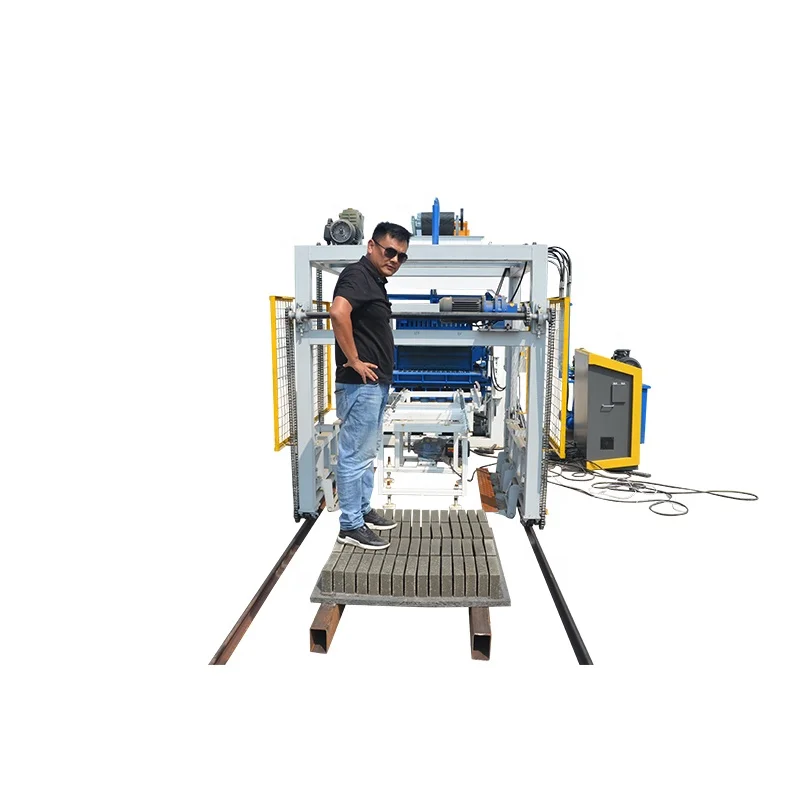
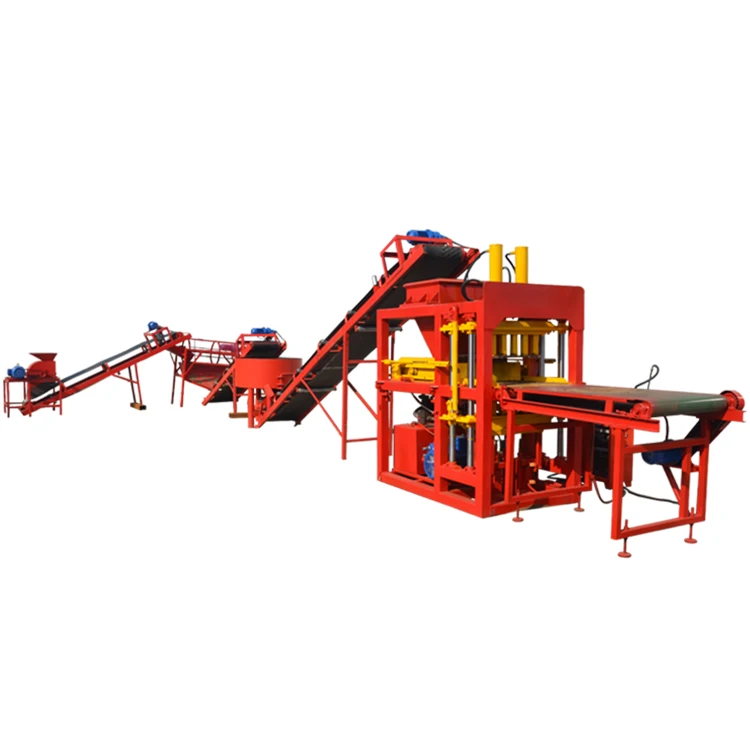 High quality block machine