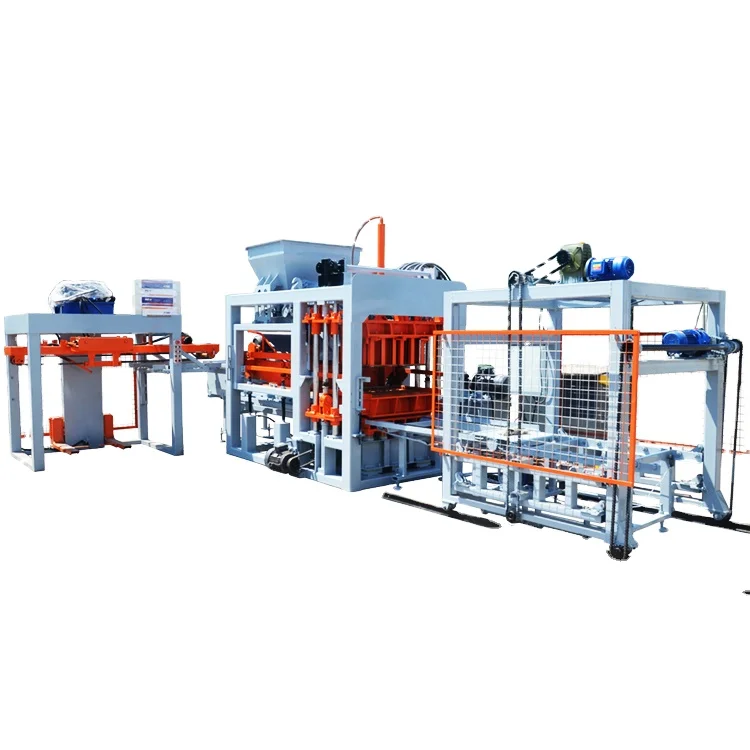
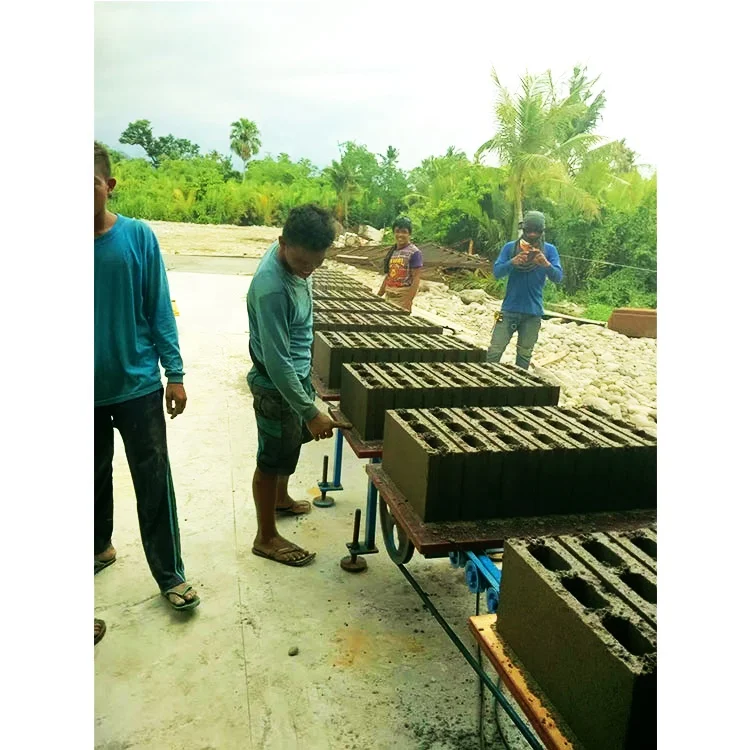
Matched System Sizing — every output figure for this block machine manufacturer is tied to a specific block format and mould piece count, so buyers know what the line actually produces before committing.
Technical Specifications
| Parameter |
Value |
| Model |
QT4-15A |
| Product Type |
Automatic Concrete Block Making Machine |
| Overall Dimensions (L×W×H) |
7100 × 1600 × 2610 mm |
| Molding Cycle |
15–25 s |
| Vibration Frequency |
4600 r/min |
| Exciting Force |
40–50 kN |
| Total Power |
18.45 kW |
| Mixer Model |
JQ350 |
| Pallet Size |
850 × 550 × 25 mm |
| Total Weight |
3 T (source value — verify against manufacturer catalog) |
| Output Capacity |
408 pcs/h based on 400×200×200 mm hollow block, 4 pcs/mould |
| Output Capacity |
510 pcs/h based on 400×150×200 mm hollow block, 5 pcs/mould |
| Output Capacity |
2100 pcs/h based on 240×115×53 mm solid brick, 18 pcs/mould |
| Daily Output (8 hr) |
3264 pcs based on 400×200×200 mm hollow block |
| Daily Output (8 hr) |
4080 pcs based on 400×150×200 mm hollow block |
| Daily Output (8 hr) |
17000 pcs based on 240×115×53 mm solid brick |
| Automation Level |
Semi-automatic |
| Hydraulic Station |
Equipped |
| Stacking Method |
Automatic stacker included |
| Applied Products |
Paver, solid block, hollow block, curbstone |
| Raw Materials |
Crushed stone, sand, cement, dust, fly ash |
| Control System |
To be confirmed (PLC / relay / language options) |
| Voltage & Frequency |
To be confirmed for target market |
| Certification |
CE (verify per unit) |
Application Suitability
| Application |
Material or Output |
| Hollow block production for residential and commercial walls |
Crushed stone, sand, cement, fly ash mixes; 400×200×200 mm and 400×150×200 mm formats |
| Solid brick manufacturing for load-bearing and partition masonry |
Cement, sand, and industrial dust blends; 240×115×53 mm standard brick |
| Paver and curbstone production for landscaping and municipal projects |
Aggregate-cement mixes with higher compression requirements |
| On-site contractor block production at construction project locations |
Portable raw material feeds using locally available sand and crushed stone |
| Small to medium-scale block plant startups |
Semi-automatic operation with manual pallet handling and automatic stacking |
What "Pieces per Hour" Actually Means for the QT4-15 Block Machine
Capacity is only meaningful when the block format is named alongside the number.
Too many quotations list a single headline figure without stating which block size produced it. A buyer comparing machines on that basis ends up with equipment that cannot deliver the volume their market demands. The QT4-15 block machine for sale here shows three distinct output rates — each one calculated from a specific mould configuration and piece count per cycle. [NEED_CITE: block format assumptions in capacity quotations across the industry]. When the block format changes, the cycle time, vibration setting, and pallet turnover rate all shift, so the output follows. This machine sits in the mid-tier of the range, and understanding where it fits helps a buyer decide whether to start here or step up to a higher-capacity line from this block machine manufacturer.

Placing the QT4-15 Within the Full Machine Range
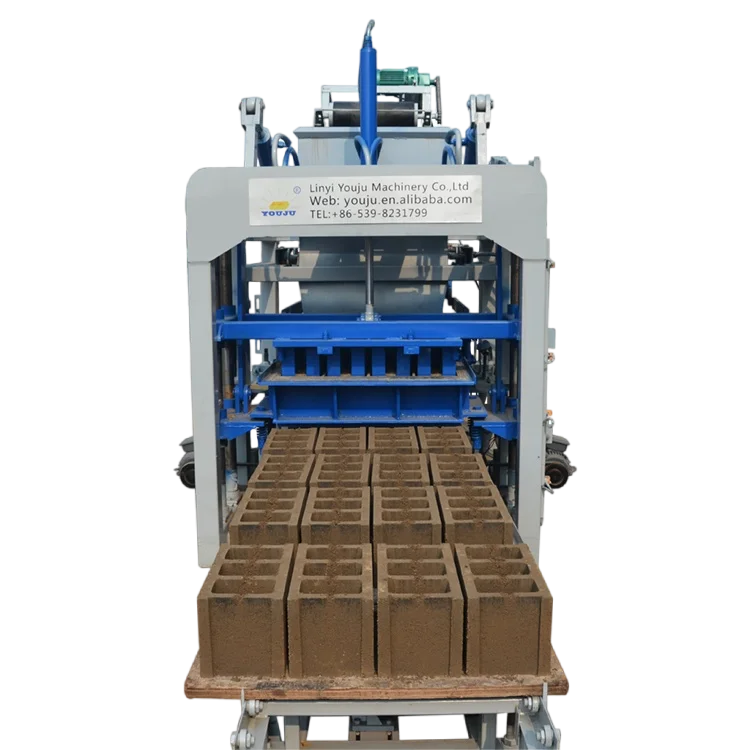
The QT4-15 automatic block machine bridges two distinct buyer profiles. Entrepreneurs launching a first block plant find it accessible because the semi-automatic configuration keeps initial investment contained while still delivering hydraulic pressing and vibration forming. Distributors evaluating the broader range see it as the entry point where automation begins to reduce manual pallet handling. The host machine, mixer, and automatic stacker ship as one matched set, meaning the buyer does not assemble the line from separate suppliers. For a block machine manufacturer, offering a clear tier ladder means the buyer can survey the complete range — from mobile egg-laying units up to fully automatic high-capacity lines — and place themselves accurately before narrowing down.
How Plant Footprint Scales Across Output Tiers
At this tier, the 7100 × 1600 × 2610 mm host machine footprint fits a modest workshop. The curing area required depends on pallet size and daily volume: with 850 × 550 mm pallets and output reaching into the thousands of pieces per shift, a buyer needs to confirm their yard space and forklift capacity match. [NEED_CITE: typical curing area requirements for mid-tier block plants]. Moving up to a higher tier in the range means a larger press, more pallets in circulation, and a proportionally larger curing zone. This block machine manufacturer structures each tier so that supporting equipment — raw material feeding, pallet circulation, stacking — scales alongside the press, preventing a bottleneck at any single station.
Vibration Force, Hydraulic Pressure, and the Mould Itself
The 40–50 kN exciting force at 4600 r/min works in combination with hydraulic station pressure to compact the mix into the mould cavity. If the vibration force is too low for a dense aggregate blend, the block emerges with weak edges and inconsistent density. If hydraulic pressure is not matched to the mould design, the upper compression plate either over-compacts or leaves voids. The pallet size of 850 × 550 × 25 mm must also align with the curing racks and transport forklift already on site — choosing a pallet dimension without checking downstream handling is a common source of delay after installation. The JQ350 mixer feeds the press at a rate matched to the 15–25 s molding cycle, so the press is not left waiting between charges.
The Cost of Skipping Configuration Details Early
When voltage, frequency, and PLC display language are not confirmed before production starts, commissioning stalls on arrival. A machine wired for a different grid standard sits idle while transformers are sourced locally. When pallets are quoted separately or omitted, the buyer discovers after delivery that stacking is a manual task. [NEED_CITE: commissioning delays from unconfirmed electrical specifications in exported machinery]. Mould change time also matters: if the buyer’s market demands multiple block formats but the mould change procedure was never demonstrated, the format flexibility they paid for goes unused during most shifts. These are not defects in the machine — they are gaps in the specification conversation that a block machine manufacturer should close before the quotation is issued.
Why Source This Tier from Shiyue
Block machinery is the single focus here, so the QT4-15 block machine for sale ships with mould, pallet, and handling equipment specified as one system rather than assembled from separate vendors. Configuration is set against the buyer’s actual mix design and local aggregate, not a catalogue default. Mould design covers the formats the buyer’s market actually sells, including custom drawings when standard formats do not match. The automation level is selectable — a buyer can start with semi-automatic operation and plan an upgrade path. Installation and commissioning support includes operator training, and wear parts lists travel with the machine so the first replacement does not trigger a production shutdown.
Documentation & Verification
- Line layout and capacity calculation stating the block format assumed for each output tier
- Machine specification sheet with hydraulic and electrical schematics for the QT4-15A
- Mould drawing and format list covering hollow block, solid brick, paver, and curbstone
- Pallet specification matched to 850 × 550 mm dimensions and curing area requirements
- Voltage and control language confirmation document signed before production begins
- Factory test record and packing photographs provided prior to container loading
Installation, Commissioning & Support
- Foundation pad leveled for 7100 × 1600 mm footprint with anchor bolt template provided
- Dedicated electrical circuit sized for 18.45 kW total power draw at confirmed voltage and frequency
- Host machine, mixer, and stacker shipped dismantled with reassembly sequence documented
- First-run commissioning with molding cycle tuned between 15–25 s for target mix design
- Operator training covering mould change procedure and hydraulic station maintenance intervals
- Wear parts list including hydraulic seals and mould springs shipped with the initial order
Moving Forward with Your Inquiry
To size the QT4-15 correctly within the full range, share the block formats your market sells and the daily volume you need for each. Confirm the raw materials available locally — particularly aggregate type and cement grade — so the mix design and vibration settings can be matched. Provide your site voltage, frequency, and preferred control language so the electrical package is built to your grid standard before the machine leaves the factory.
Frequently Asked Questions
Q: How is capacity verified, and which block format does each output figure assume?
A: Every output figure for this QT4-15 block machine for sale is tied to a named block format and mould piece count. For example, 408 pieces per hour assumes a 400×200×200 mm hollow block with four pieces per mould. Daily figures are calculated over an eight-hour shift. The capacity calculation document provided with the quotation states these assumptions clearly, so there is no ambiguity about what the line produces.
Q: Where does the QT4-15 sit within the full range, and when should I step up to a higher tier?
A: This model occupies the mid-tier from this block machine manufacturer, suited to first-time plant owners and small-to-medium producers. If your daily volume targets exceed the stated outputs for your block format, or if you need fully automatic pallet circulation and cubing, stepping up to a higher tier in the range is the next conversation. The tier structure is designed so supporting equipment scales alongside the press.
Q: What voltage, frequency, and control language options are available for my market?
A: These parameters are confirmed during the quotation stage and documented before production begins. The electrical package is built to match your local grid standard, and the control display language is set to your operator’s preference. This confirmation step prevents commissioning delays that arise when a machine arrives wired for a different electrical system. [NEED_CITE: common electrical mismatch issues in exported industrial machinery].
Q: What is included in the quotation — pallets, mixer, stacker, or just the host machine?
A: The standard quotation for the QT4-15A includes the host machine, JQ350 mixer, hydraulic station, and automatic stacker as a matched set. Pallets are specified to the 850 × 550 × 25 mm dimension and can be included or excluded based on your existing inventory. The quotation lists every line item, so you know exactly what ships and what remains your responsibility before the order is placed.
Q: What plant footprint and investment level should I expect at this tier?
A: The host machine measures 7100 × 1600 × 2610 mm, but the total line footprint includes mixer placement, raw material storage, pallet circulation space, and curing area. At this semi-automatic tier, the footprint is modest compared to a fully automatic line. The block machine manufacturer provides a line layout drawing showing every station, so you can verify the space requirement against your available workshop or yard before committing.

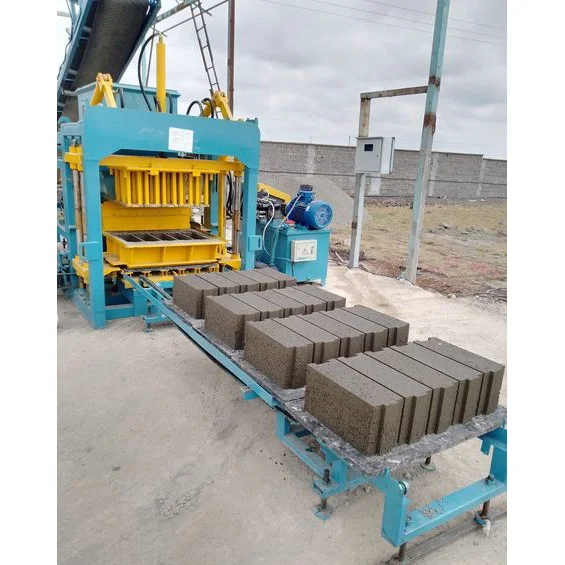
 High quality block machine