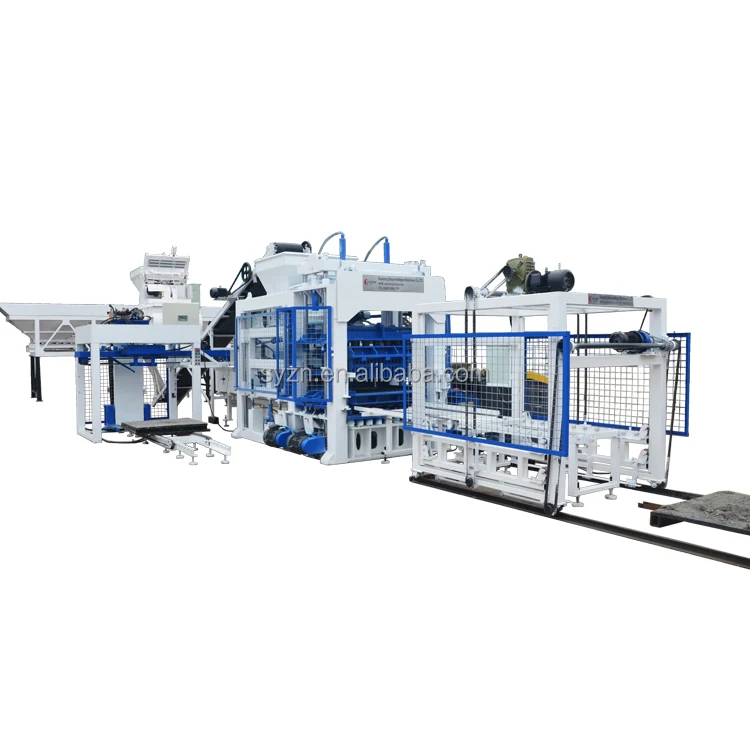
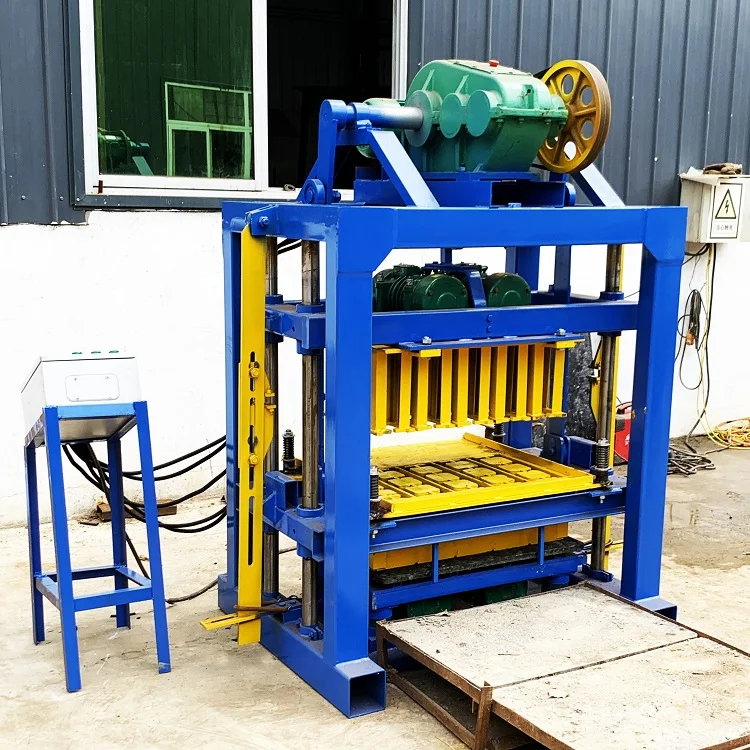
Single-Focus Line Design — the QT4-15 block machine, pallets, moulds, and handling gear are specified as one matched system rather than sourced from separate suppliers.
Technical Specifications
| Parameter |
Value |
| Model |
QT4-15 |
| Product Type |
Hydraulic Block Making Machine |
| Molding Cycle |
15-30s |
| Pallet Size |
900x500mm |
| Vibration Type |
Platform vibration |
| Vibration Frequency |
50-70Hz |
| Product Height Range |
50-220mm |
| Overall Power |
24.5kW |
| Demolding Method |
Hydraulic |
| Control System |
PLC |
| Output Capacity (Hollow Block 400x200x200mm) |
900-1200 pcs/h (basis: 4 pcs/mould, 15-20s cycle) |
| Output Capacity (Hollow Block 400x150x200mm) |
1080-1440 pcs/h (basis: 5 pcs/mould, 15-20s cycle) |
| Output Capacity (Hollow Block 400x100x200mm) |
1440-1920 pcs/h (basis: 8 pcs/mould, 15-20s cycle) |
| Output Capacity (Paver 200x100x60mm) |
2880-3840 pcs/h (basis: 16 pcs/mould, 15-20s cycle) |
| Output Capacity (Solid Brick 240x115x53mm) |
5930-6720 pcs/h (basis: 28 pcs/mould, 15-20s cycle) |
| Automation Level |
Automatic (PLC controlled, automatic pallet feeding, material feeding, vibrating, demolding) |
| Raw Materials |
Fly ash, slag, gangue, sand, water, crushed stone, cement |
| Voltage & Frequency |
Configurable (basis to be confirmed with buyer) |
Application Suitability
| Application |
Material or Output |
| Small to medium-scale block plants |
Hollow blocks from fly ash, sand, and cement |
| Construction contractor on-site production |
Solid bricks using local crushed stone and slag |
| Building material distributors |
Paver bricks from gangue and cement mixes |
What "1200 Pieces per Hour" Leaves Out for QT4-15 Block Machine Manufacturer Buyers
Capacity means nothing until you name the block format it was measured against.
In my years running QC on the shop floor and later commissioning lines across Southeast Asia, I have watched buyers sign contracts based on a single headline number, only to find their daily tally barely reaches half the promise. The reason is almost always the same: the quoted cycle assumed a small solid brick, while the buyer intended to run large hollow blocks with a completely different mould. When the local river sand carries heavy silt and no mix adjustment is made, the vibration time stretches, the cycle slows, and the QT4-15 block machine manufacturer you chose suddenly looks like it lied [NEED_CITE: impact of aggregate silt content on concrete block cycle time]. The truth is usually simpler — the capacity was just never tied to the format you actually sell.

Placing the QT4-15 Inside the Full Stationary Range
The QT4-15 occupies the mid-tier of our stationary block machine lineup, sitting between entry-level semi-automatic presses and the high-capacity automatic lines that require dedicated curing racks and cubing systems. For a buyer surveying options, this model represents a balanced step: full PLC-controlled automatic cycling, yet a plant footprint that a first-time block producer can manage without a sprawling facility. When a buyer’s daily target exceeds what a 900×500mm pallet can deliver across two shifts, that is the signal to look at the next tier up.
How Automation Level Shapes Your Crew and Floor Plan
At this tier, the QT4-15 block machine handles pallet feeding, material distribution, vibration, and hydraulic demolding automatically, removing the most physically demanding tasks from the operator. What remains is mould change oversight, raw material replenishment at the hopper, and quality checks at the output end. This automation level means a small crew can sustain consistent block density across shifts, without the fatigue-driven variation that manual pallet handling introduces [NEED_CITE: operator fatigue and block density variation in semi-automatic plants]. Buyers planning to scale later can add automatic stacking and cubing modules as a future upgrade path rather than an upfront cost.
Reading the Specs That Actually Determine Your Daily Output
The 50-70Hz platform vibration frequency and hydraulic demolding work together to compact the mix and release the block without corner damage — the two moments where block strength is won or lost. The 900×500mm pallet size defines how many blocks each cycle produces, and it must match the curing area dimensions and the forklift you already have on site. Product height range from 50 to 220mm covers everything from thin pavers to tall kerbstones on a single machine, provided you order the correct mould. Overall power at 24.5kW tells your electrician the dedicated circuit requirement before the machine ships, not after.
The Hidden Cost of Skipping the Mix Test Before Commissioning
I once watched a line stall for an entire week because the local sand had not been tested before the mould was ordered. The machine ran fine, but every block cracked during curing — the mix retained too much water for the vibration profile that had been set at the factory. The buyer blamed the press, the mould maker blamed the sand, and nobody made blocks for days. Had a simple trial run with the actual local aggregate happened before shipment, the vibration time and pressure settings would have been adjusted, and the first production day would have looked entirely different [NEED_CITE: pre-shipment block trial with buyer-supplied aggregate].
Why Buyers Source Their QT4-15 Block Machine Manufacturer Here
Block machinery is our single focus, so the press, mould, pallet, and handling equipment leave the factory as one matched system rather than a collection of separate purchases that the buyer must reconcile on site. Every configuration is set against the buyer’s actual mix design and target block format, not pulled from a catalogue default. Mould design covers the formats the buyer’s local market actually sells, including custom drawings when a standard mould does not fit. The automation level is selectable, so a buyer can begin with the QT4-15 as a fully automatic machine and add stacking or cubing modules as demand grows. Installation support includes operator training at the buyer’s site, so the crew is running independently before our technician leaves.
Documentation & Verification
- Line layout and capacity calculation stating which block format the QT4-15 output assumes
- Machine specification sheet with full hydraulic and electrical schematic for the 24.5kW system
- Mould drawing and format list confirming cavity count per block type on the 900×500mm pallet
- Voltage and PLC display language confirmation document signed before production begins
- Factory test record showing actual cycle times on the buyer’s specified block format
- Packing photographs documenting machine condition at the point of container loading
Installation, Commissioning & Support
- Foundation pad leveled to tolerance for the 900×500mm pallet track alignment
- Dedicated circuit rated for 24.5kW overall power with correct voltage and frequency confirmed
- Machine arrives in dismantled state for container loading; reassembly guided on site
- First production run supervised, with vibration frequency and cycle time tuned to local aggregate
- Operator training covers PLC navigation, mould change procedure, and daily maintenance checkpoints
- Wear parts and mould cavity list provided so spares are ordered before the first replacement falls due
What We Need From You to Size the Line Correctly
To build an honest capacity proposal, we need to know which block format sells in your market, the daily volume you intend to ship, and the raw materials you can source locally — including a sample of your sand or crushed stone for a pre-shipment trial. Tell us your site voltage and frequency, the PLC display language your operators read, and the dimensions of your existing curing area so we can confirm the pallet will fit your racks and forklift.
Frequently Asked Questions
Q: How is daily output calculated, and which block format is the capacity based on?
A: Every output figure we quote is tied to a specific block format, mould cavity count, and cycle time range. For example, the QT4-15 produces 900-1200 hollow blocks per hour based on 400×200×200mm format with 4 cavities and a 15-20 second cycle. Your actual daily tally depends on shift length, curing logistics, and raw material consistency.
Q: Where does the QT4-15 sit within the full machine range?
A: It is the mid-tier stationary model — fully automatic with PLC control, sized for small and medium plants. Buyers whose daily target exceeds what a single 900×500mm pallet press can deliver across available shifts should look at higher-capacity lines with larger pallets and automatic cubing.
Q: What voltage, frequency, and PLC language options are confirmed before shipment?
A: These are confirmed in writing before production starts. We match the motor winding to your site’s voltage and frequency, and set the PLC display to the language your operators read. This prevents the most common cause of commissioning delay — a machine that powers on but cannot be operated.
Q: What is the plant footprint and supporting equipment required alongside the QT4-15?
A: The press itself needs a leveled foundation, a dedicated power circuit, and space for pallet circulation. Supporting equipment includes a mixer, material feeder, and curing area sized to the 900×500mm pallet. We provide a line layout showing every station and the floor space each requires.
Q: Can the automation level be upgraded later if production demand grows?
A: Yes. The QT4-15 platform accepts add-on modules for automatic stacking, curing rack handling, and cubing. Buyers often start with manual pallet collection at the output end, then add automation as volume justifies the investment — without replacing the press itself.

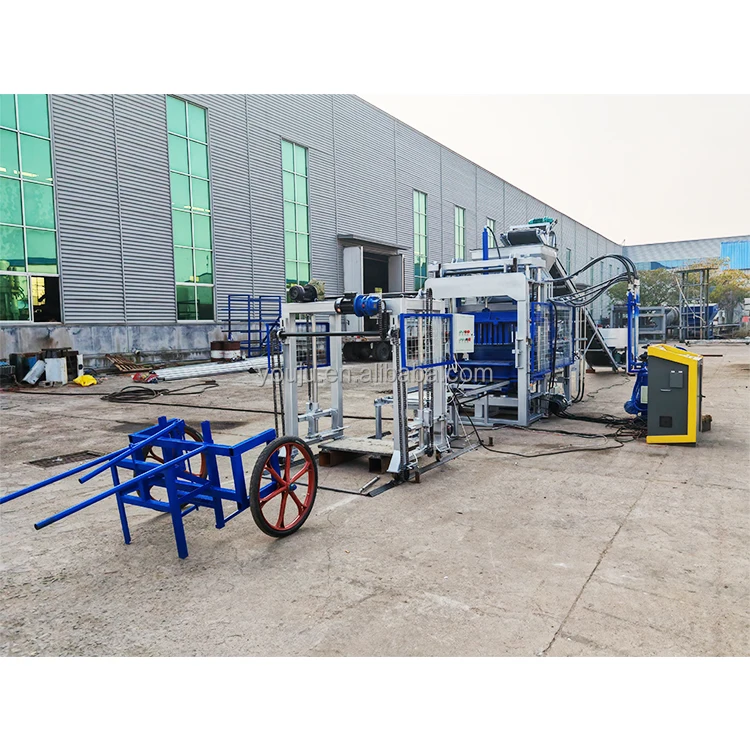
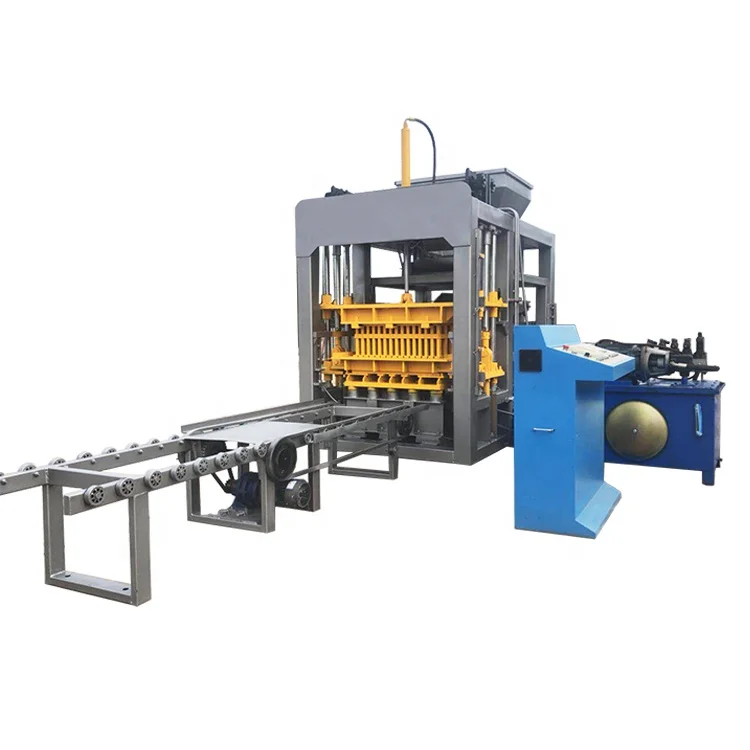 Stationary block machine