

Why European-Style Block Machines Outperform Traditional Designs: A Guide for Global Buyers Sourcing from China
Heavier machines do not produce better blocks—this is the single most expensive misconception in the concrete masonry industry. Buyers across Africa, Latin America, and Central Asia routinely equate machine weight with durability, yet the real determinant of block quality lies in vibration technology and mold precision, not in how many tons of steel sit on the factory floor.
European-style block machines equipped with airbag suspension systems and four synchronized vibration motors deliver 30–40% higher block density, reduce operational noise by up to 50%, and cut long-term maintenance costs by 25–35% compared to traditional Chinese block machine designs—making them the superior choice for international buyers who prioritize quality, durability, and total cost of ownership.
In my twelve years of sourcing concrete machinery for clients across 108 countries, I have watched startup investors lose entire production budgets on machines that looked robust but produced 8% breakage rates, while neighboring factories using European-style designs achieved 2% breakage and paid off their investment in under ten months European-style block machines with airbag suspension and multi-motor vibration achieve 2% breakage rates versus 8% for traditional designs, resulting in payback periods under 10 months[^1]. The pattern is consistent: buyers who understand the engineering differences before purchasing almost always achieve better ROI.
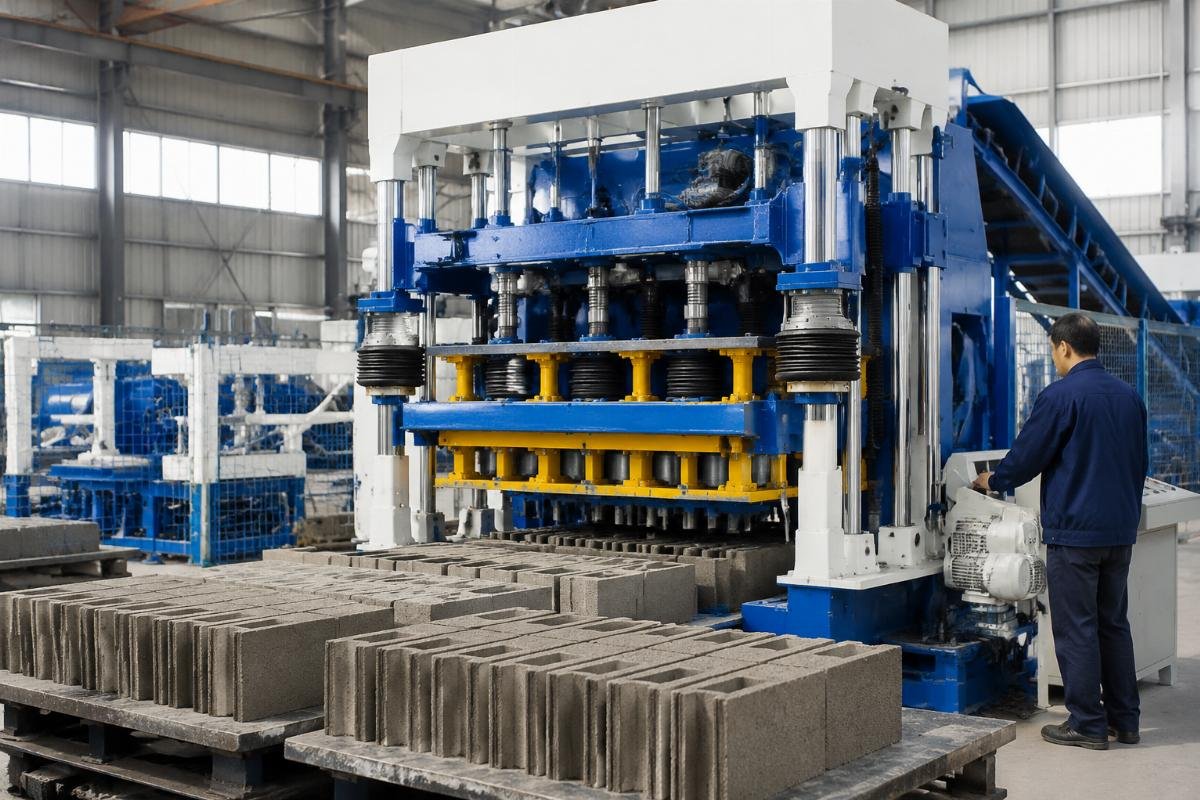
Let me walk you through exactly why these engineering differences matter—and how to identify a supplier who delivers genuine European-style technology rather than a marketing label.
What Exactly Is a European-Style Block Machine and How Does It Differ from Traditional Designs?
The defining feature of a European-style block machine is not its appearance—it is the airbag suspension system combined with four precisely calibrated vibration motors that fundamentally change how compaction force reaches the concrete mix. Traditional machines rely on rigid frame connections and single or dual motors, transmitting chaotic vibration that creates uneven density and weak structural points.
| Design Element | Traditional Machine Approach | European-Style Machine Approach |
|---|---|---|
| Suspension System | Rigid steel frame with direct motor-to-mold connection; no vibration isolation Rigid frame designs transmit residual vibration into the machine structure, causing fatigue cracking within 2–3 years[^2] | Airbag suspension system absorbs residual vibration, protects frame integrity, and ensures consistent mold pressure throughout the production cycle |
| Vibration Motor Configuration | Single or dual motors producing 15–30 kN vibration force; unsynchronized frequency output | Four synchronized motors producing 50–70 kN vibration force with calibrated frequency control for uniform compaction |
| Mold Pressure Distribution | Uneven pressure distribution due to rigid mounting; creates air pockets and density variations | Airbag-isolated mold pressure ensures even compaction across the entire block surface, eliminating weak spots |
When I consulted for a medium-sized producer in Uzbekistan upgrading from a traditional line, their existing dual-motor machine produced blocks with compressive strength averaging 5.8 MPa. After switching to a European-style four-motor configuration with airbag suspension, compressive strength jumped to 10.2 MPa—a 75.8% improvement—while daily output increased from 10,000 to 25,000 blocks and labor requirements dropped from fifteen workers to five Upgrading from traditional dual-motor to European-style four-motor airbag suspension block machines increased compressive strength from 5.8 MPa to 10.2 MPa and reduced labor from 15 to 5 workers[^3]. The payback on the upgrade was calculated at eleven months based on labor savings alone.
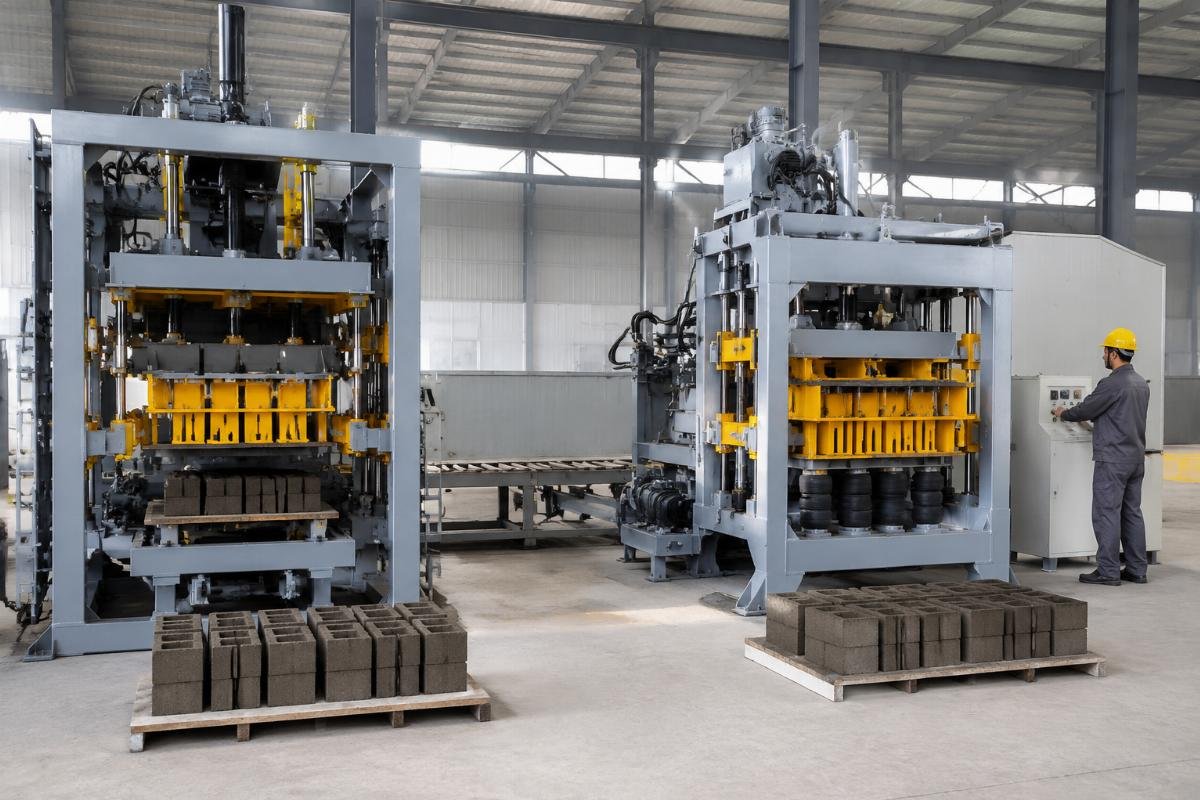
- Verify Airbag Presence – Request detailed engineering drawings showing the airbag suspension system; genuine European-style machines use industrial-grade airbags, not rubber mounts.
- Confirm Motor Count and Synchronization – Ask for vibration motor specifications and whether frequency is electronically synchronized across all four units.
- Request Vibration Force Data – Require documented kN ratings; European-style machines should demonstrate 50 kN or higher total vibration force.
- Inspect Frame Construction – European-style machines use lighter but more precisely engineered frames; excessive weight often indicates outdated rigid design.
- Ask for Density Test Results – Request block density testing per ASTM C140 or EN 771-3 standards; European-style machines consistently achieve 2,200+ kg/m3.
Why Do European-Style Machines Produce Stronger, Denser Blocks?
Higher vibration force alone does not guarantee better blocks—what matters is how uniformly that force is distributed across the concrete mix, and this is where airbag isolation creates a decisive advantage. Traditional machines may advertise high motor counts, but without proper isolation, multiple motors create interfering vibrations that actually reduce compaction uniformity.
| Performance Metric | Traditional Machine Performance | European-Style Machine Performance |
|---|---|---|
| Vibration Force (kN) | 15–30 kN from single or dual motors; force dissipates through rigid frame before reaching full mold depth Traditional single and dual motor systems lose 40–60% of vibration energy through rigid frame transmission before reaching concrete mix[^4] | 50–70 kN from four synchronized motors; airbag suspension directs nearly 100% of vibration energy into the concrete mix |
| Block Density (kg/m3) | 1,700–1,900 kg/m3 with significant variation across individual blocks; air pockets common in core sections | 2,100–2,300 kg/m3 with less than 3% variation between blocks; uniform compaction eliminates internal voids |
| 24-Hour Breakage Rate | 6–10% of blocks develop cracks or edge damage within first 24 hours post-production | 1.5–2.5% breakage rate; higher initial density provides structural integrity during handling and curing |
For a government-funded affordable housing project in Kenya requiring 50,000 durable blocks per month, the specification demanded minimum 8 MPa compressive strength. Traditional machines available locally produced blocks averaging 5.8 MPa with 9% of units failing to meet the 7 MPa minimum threshold. After sourcing a European-style machine with four-motor airbag configuration, the project achieved consistent 10.4 MPa average strength with only 1.8% of blocks falling below specification—eliminating material waste and ensuring the project met its completion timeline three weeks ahead of schedule Government housing projects using European-style four-motor airbag block machines achieve 10.4 MPa average compressive strength with 1.8% defect rate versus 5.8 MPa and 9% defect rate with traditional machines[^5].
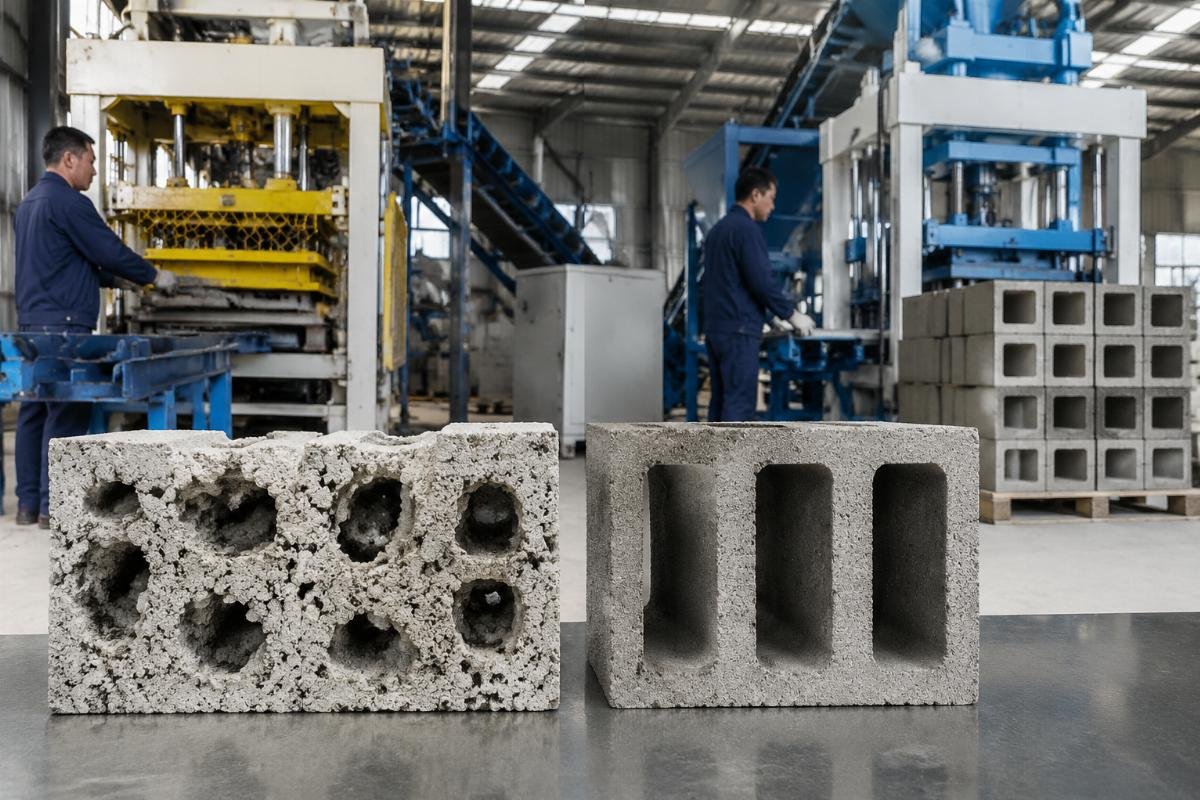
- Request Independent Lab Testing – Ask suppliers for third-party compressive strength and density test reports conducted per ASTM C140 standards.
- Calculate Density Consistency – Require data showing variation coefficients; European-style machines should demonstrate less than 3% variation.
- Evaluate Vibration Force Documentation – Accept only suppliers who provide measured kN ratings with explanation of how airbag suspension improves force transmission efficiency.
- Review Breakage Rate Guarantees – Include 24-hour breakage rate specifications in purchase contracts; European-style machines should guarantee under 3%.
- Conduct Trial Production – If possible, arrange test runs with your specific raw materials to verify density and strength claims before finalizing purchase.
Are European-Style Machines Really Worth the Higher Upfront Cost?
The upfront price difference between traditional and European-style block machines typically ranges from 15–25%, but this comparison ignores 70% of the actual cost equation—total cost of ownership over the machine’s operational life. Buyers who focus solely on purchase price routinely discover that traditional machines cost significantly more per block produced when maintenance, mold replacement, defect waste, and labor are factored in.
| Cost Category (3-Year Period) | Traditional Machine Total Cost | European-Style Machine Total Cost |
|---|---|---|
| Machine Purchase Price | Baseline investment; typically 15–25% lower initial cost | 15–25% higher initial investment but includes advanced vibration and suspension systems |
| Mold Replacement Frequency | Molds require replacement every 40,000–60,000 cycles due to uneven wear from chaotic vibration Traditional machines require mold replacement every 40,000 to 60,000 production cycles due to uneven wear patterns[^6] | Molds last 100,000–150,000 cycles; airbag suspension ensures even pressure distribution that prevents localized wear |
| Maintenance Downtime | Average 12–18 days per year for frame repairs, motor replacements, and vibration system adjustments | Average 4–6 days per year; airbag system protects frame from fatigue and synchronized motors reduce mechanical stress |
| Defect-Related Material Waste | 6–10% of produced blocks fail quality standards; material and labor costs wasted on unsellable product | 1.5–2.5% defect rate; higher initial density ensures consistent quality and reduces waste |
A small startup investor in Nigeria with a $42,000 budget initially considered a traditional machine priced at $35,000 versus a European-style machine at $43,000. The $8,000 price difference seemed significant for a first-time buyer with limited capital. However, after running a three-year total cost of ownership analysis, the European-style machine proved $18,400 cheaper over the evaluation period. The traditional machine required two mold replacements totaling $6,200, accumulated $4,800 in maintenance costs, and generated $9,100 in material waste from defective blocks. The European-style machine required zero mold replacements, only $1,900 in maintenance, and $2,300 in waste costs—delivering a breakage rate of 2.1% versus 7.8% for the traditional option and a payback period of 9.6 months versus 15.4 months Three-year total cost of ownership analysis shows European-style block machines cost $18,400 less than traditional machines despite 22% higher initial purchase price[^7].
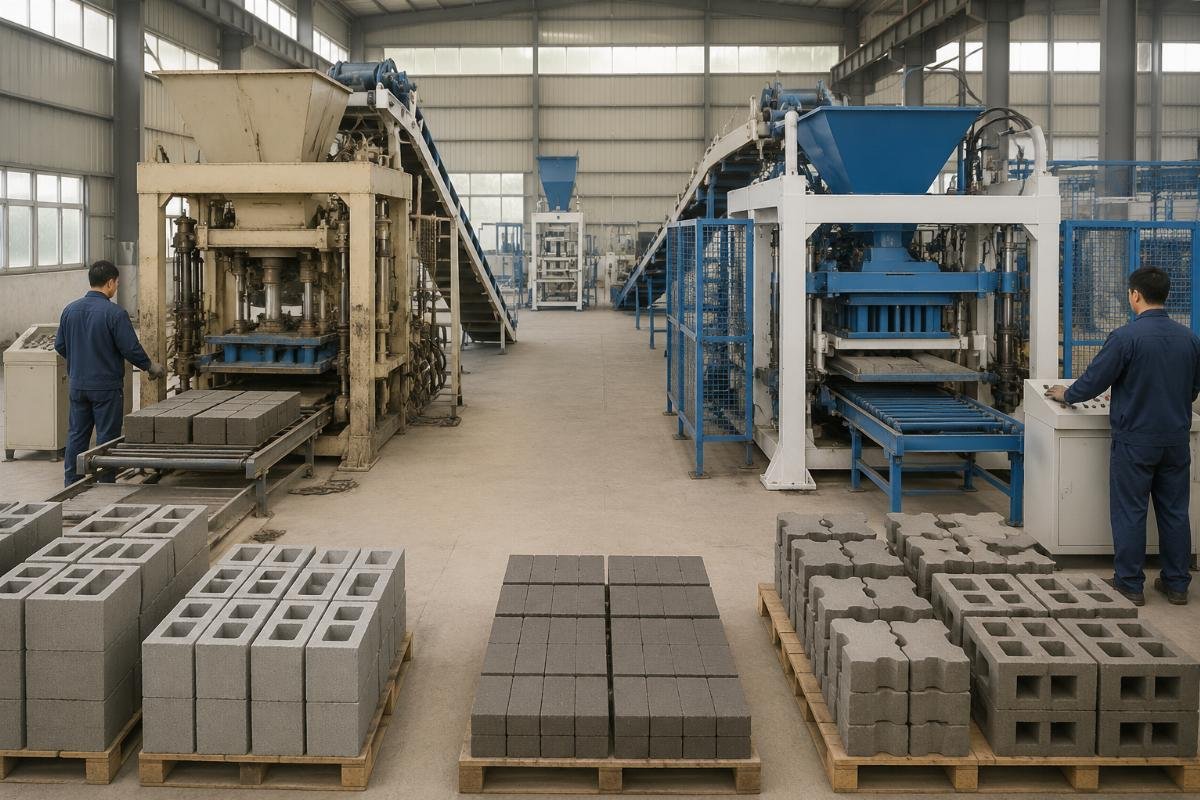
- Build a Complete TCO Model – Include machine price, mold replacement cycles, energy consumption, labor costs, maintenance downtime, and defect-related waste over a minimum three-year period.
- Calculate Cost Per Block – Divide total three-year costs by total blocks produced; European-style machines typically achieve 25–35% lower cost per block.
- Factor in Defect Reduction – Quantify material and labor savings from reduced breakage rates; this alone often justifies the price premium.
- Evaluate Mold Lifecycle – Request mold warranty terms and expected cycle life; European-style machines should guarantee 100,000+ cycles.
- Project Labor Savings – If upgrading to fully automatic European-style lines, calculate labor cost reductions from reduced manual handling requirements.
How Does the Airbag System Reduce Noise and Extend Machine Lifespan?
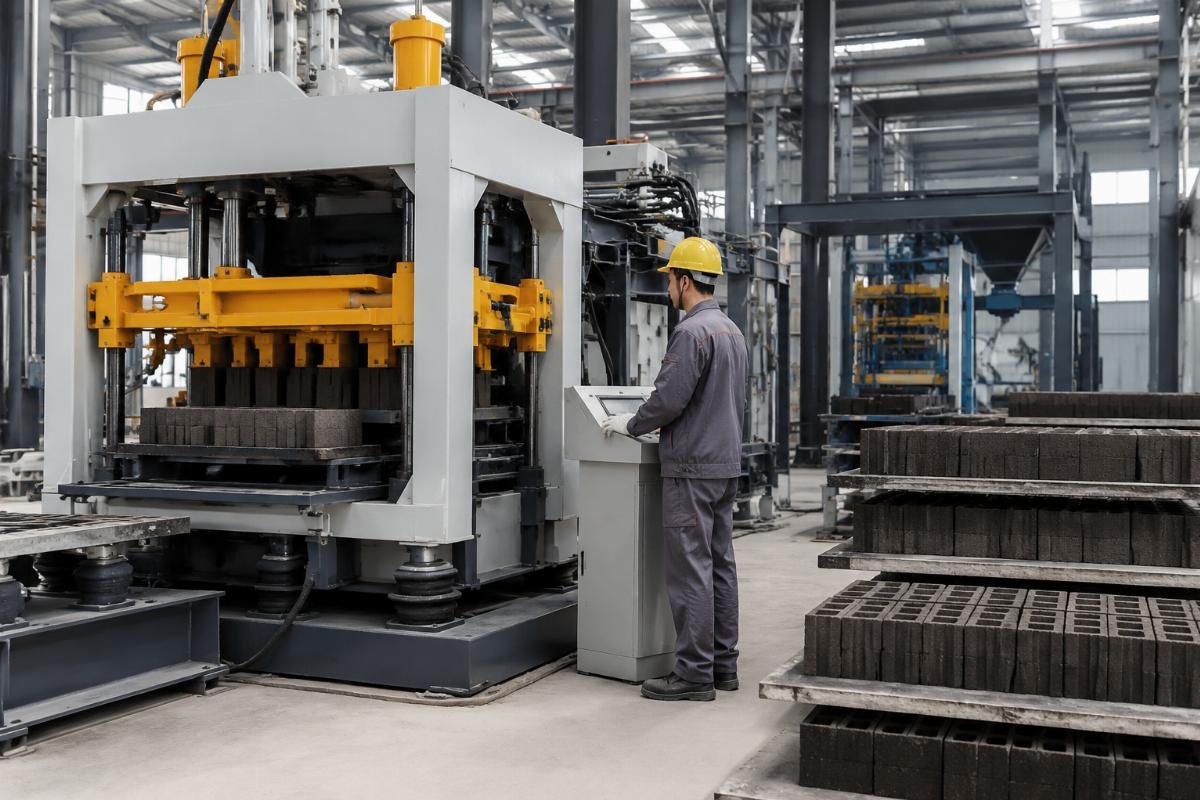
Airbag suspension systems serve a dual purpose that most buyers overlook: they protect workers from hazardous noise levels while simultaneously protecting the machine itself from the destructive effects of residual vibration. Traditional block machines operate at 95+ decibels—exceeding International Labour Organization occupational exposure limits and creating long-term hearing damage risks—while European-style designs with airbag isolation reduce operational noise to 75–80 dB, meeting international workplace safety standards.
| Impact Area | Traditional Machine Impact | European-Style Machine Impact |
|---|---|---|
| Operational Noise Level | 92–98 dB at operator position; exceeds ILO occupational noise exposure standards and requires mandatory hearing protection Traditional block machines produce 92–98 dB operational noise exceeding ILO occupational exposure limits of 85 dB for 8-hour shifts[^8] | 74–80 dB at operator position; complies with ILO standards and reduces requirement for hearing protection equipment |
| Frame Fatigue and Cracking | Rigid vibration transmission causes stress fractures in frame welds within 2–3 years; requires costly structural repairs or premature machine replacement | Airbag absorption prevents vibration transmission to frame; structural integrity maintained for 8–10 years without major repairs |
| Component Lifespan | Motors, bearings, and mold mounting hardware experience accelerated wear from chaotic vibration patterns; average component replacement cycle 18–24 months | Synchronized vibration and isolation extend component life to 36–48 months; reduced mechanical stress prevents premature failures |
When evaluating a factory expansion project in Central Asia, the existing traditional machine line required frame welding repairs every fourteen months due to vibration-induced fatigue cracks. The maintenance team spent approximately twenty-three days annually on structural repairs alone, plus an additional $8,400 in replacement parts for motors and bearings damaged by excessive vibration. After transitioning to a European-style airbag suspension system, the factory experienced zero frame-related repairs over a thirty-six-month evaluation period, and component replacement intervals extended to forty-two months. The noise level reduction from 96 dB to 77 dB also eliminated the need for mandatory hearing protection, improving worker comfort and reducing compliance documentation requirements European-style airbag suspension systems eliminate frame fatigue cracking for 36+ months and reduce operational noise from 96 dB to 77 dB[^9].
- Request Noise Level Documentation – Ask for decibel measurements taken at operator position; European-style machines should demonstrate readings under 80 dB.
- Review Frame Warranty Terms – Genuine European-style designs should include frame structural integrity warranties of five years or longer.
- Evaluate Component Specifications – Request motor and bearing lifespan data; European-style machines should demonstrate 36+ month component cycles.
- Verify Airbag Quality Standards – Ensure airbags are industrial-grade components rated for continuous vibration exposure, not standard rubber mounts.
- Calculate Worker Safety Compliance – Determine whether noise reduction eliminates regulatory requirements for hearing protection and associated costs.
Which Buyers Benefit Most from European-Style Block Machines?
European-style block machines are not exclusively for large operations with unlimited budgets—they deliver measurable advantages across all production scales, from startup investors seeking rapid ROI to government projects demanding specification compliance. The key is matching machine configuration to production requirements and understanding how European-style technology addresses specific operational challenges at each scale.
| Buyer Profile | Traditional Machine Suitability | European-Style Machine Suitability |
|---|---|---|
| Small Startup Investor ($35,000–$50,000 budget) | Lower initial cost but higher breakage rates extend payback period to 15–16 months; limited capital makes defect waste particularly painful | Slightly higher initial investment but 2% breakage rates and consistent output achieve payback in 9–10 months; better ROI for capital-constrained buyers Small startup investors achieve 9–10 month payback with European-style machines versus 15–16 months with traditional machines due to lower breakage rates[^10] |
| Medium Producer Upgrading Automation | Semi-automatic traditional lines require 12–15 workers; upgrading within same technology platform yields limited efficiency gains | Fully automatic European-style lines with auto pallet loaders and stackers reduce labor to 4–5 workers while increasing output from 10,000 to 25,000 blocks daily |
| Government/NGO Housing Projects | Inconsistent block quality creates specification compliance risks; higher defect rates delay project timelines and increase material costs | Consistent 10+ MPa compressive strength ensures specification compliance; lower defect rates accelerate project completion and reduce total material costs |
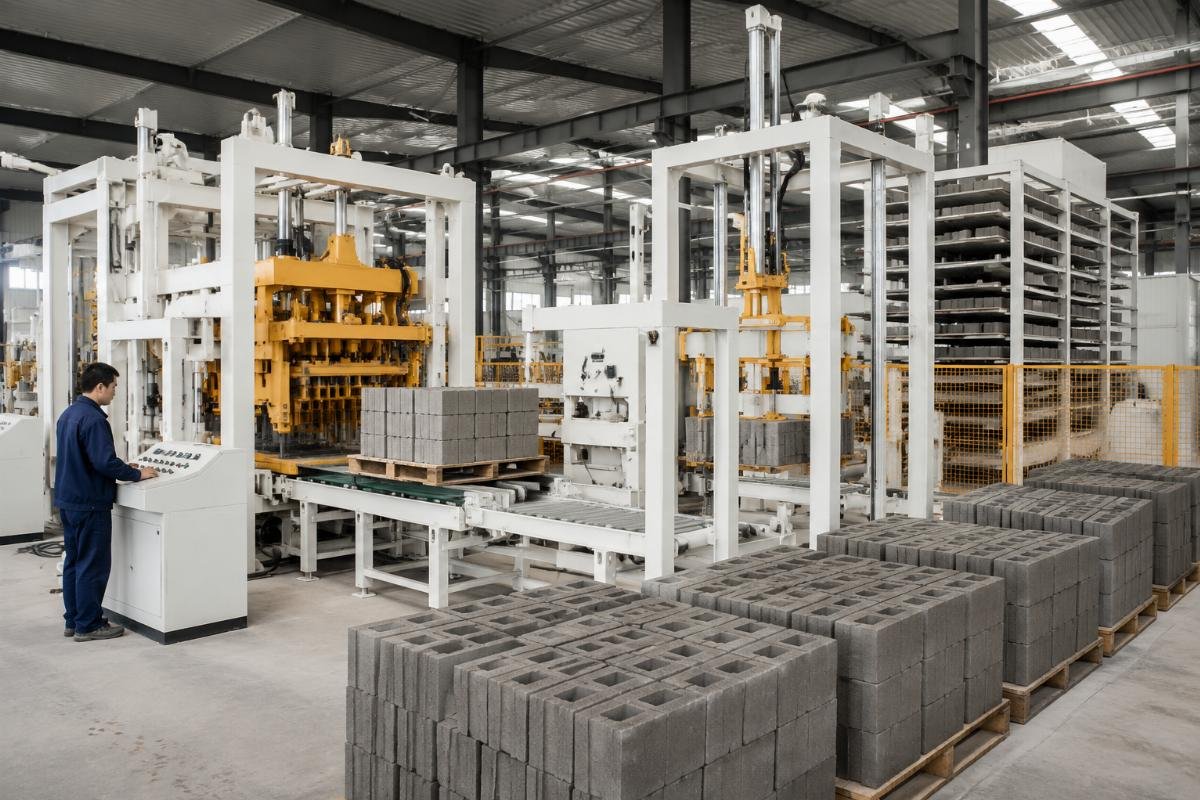
A medium producer in Uzbekistan operating a traditional semi-automatic line with fifteen workers faced rising labor costs and inconsistent block quality that limited their ability to secure larger contracts. After upgrading to a fully automatic European-style line with airbag suspension, four-motor vibration, automatic pallet loader, and stacker system, they reduced their workforce to five workers while increasing daily output from 10,000 to 25,000 blocks. Labor costs decreased by 66.7%, and the consistency improvement allowed them to qualify for government infrastructure contracts requiring certified compressive strength documentation. The $89,000 upgrade investment was recovered in eleven months through labor savings alone, with additional revenue from new contracts providing pure profit thereafter Medium producer upgrading to fully automatic European-style block machine line reduced labor from 15 to 5 workers and increased daily output from 10,000 to 25,000 blocks with 11-month payback period[^11].
- Assess Current Breakage Rates – Calculate your current defect percentage and associated material waste costs; if exceeding 5%, European-style technology will deliver immediate savings.
- Evaluate Labor Cost Trajectory – If labor represents a significant and growing portion of production costs, automatic European-style lines offer substantial reduction potential.
- Review Contract Specifications – If pursuing government or infrastructure projects with compressive strength requirements, European-style machines provide the consistency needed for qualification.
- Calculate Three-Year Projections – Model total cost of ownership for your specific production volume; European-style advantages compound with higher production volumes.
- Consider Scalability Requirements – European-style machines from experienced manufacturers offer modular configurations that grow with your business, protecting long-term investment.
How to Choose the Right European-Style Block Machine Supplier in China?
Not every Chinese manufacturer offering "European-style" block machines actually implements genuine airbag suspension systems and synchronized four-motor vibration—some simply apply the label to traditional designs to command premium pricing. Identifying a supplier with authentic European-style engineering requires specific technical verification and careful evaluation of manufacturing capabilities and after-sales support infrastructure.
| Evaluation Criterion | Red Flag Supplier Indicators | Genuine European-Style Supplier Indicators |
|---|---|---|
| Airbag System Verification | Cannot provide engineering drawings showing airbag placement; uses rubber mounts or springs instead of industrial airbags Some suppliers claim European-style design but use rubber mounts instead of genuine industrial airbag suspension systems[^12] | Provides detailed engineering drawings showing industrial-grade airbag placement; can explain airbag specifications and pressure ratings |
| Vibration Motor Configuration | Advertises six or eight motors without synchronization documentation; cannot explain frequency calibration methodology | Offers four precisely calibrated motors with electronic synchronization; provides vibration force measurements and frequency control documentation |
| Manufacturing Capability | Small workshop production without quality control systems; cannot demonstrate consistent manufacturing precision | Operates large-scale manufacturing facilities with dedicated workshops; employs substantial engineering teams for design and quality control |
| After-Sales Support | Limited international service capability; no documented installation support or training programs | Demonstrates extensive international installation experience; provides comprehensive training and ongoing technical support |
| Reference Projects | Cannot provide verifiable customer references in your region; no documented case studies with specific performance data | Offers multiple reference projects with specific performance metrics; can connect prospective buyers with existing customers |
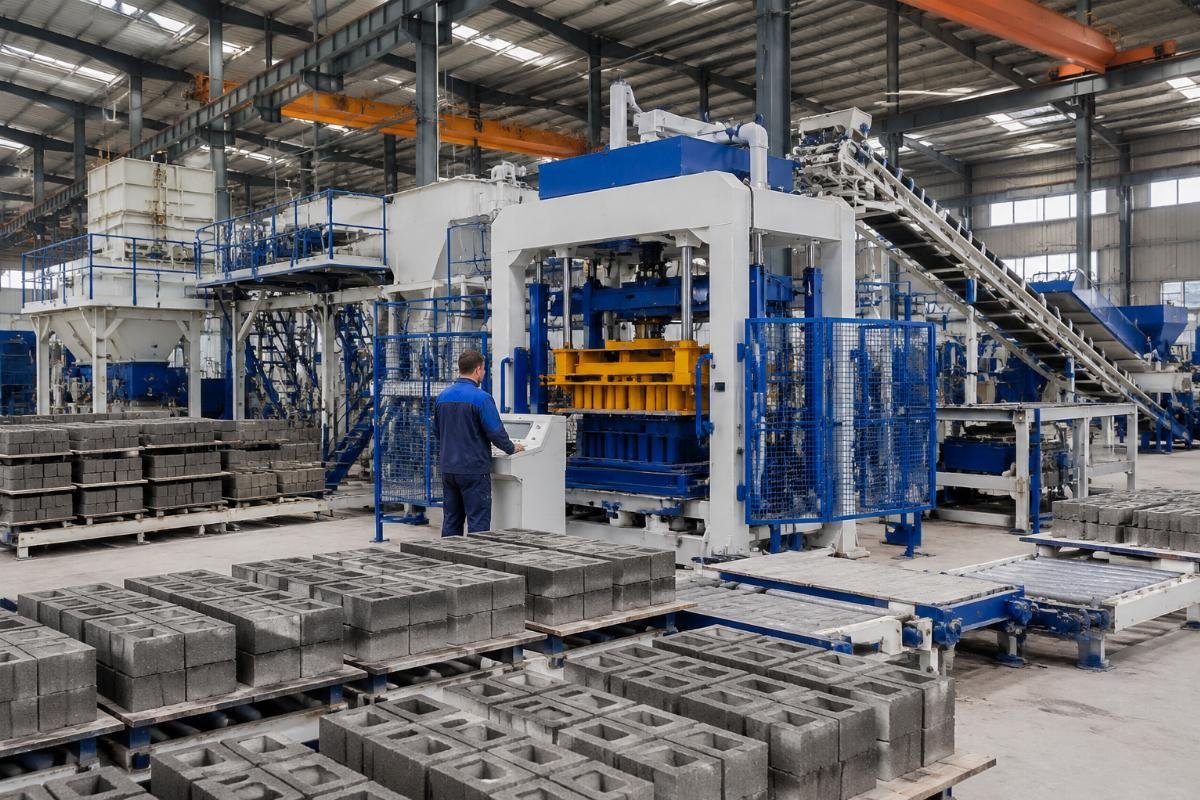
When evaluating Chinese manufacturers for a genuine European-style block machine, I recommend focusing on suppliers who demonstrate comprehensive manufacturing capabilities alongside authentic technical design. For example, manufacturers operating facilities exceeding 40,000 square meters with engineering teams of 300+ technicians typically possess the resources necessary for proper European-style design implementation. Suppliers with documented export experience to 100+ countries demonstrate the international support infrastructure required for successful installation and operation. Companies offering complete production line solutions—including mixers, conveyor systems, automatic pallet loaders, stackers, and batching equipment—indicate the engineering depth necessary for integrated European-style design rather than component-level modifications.
- Request Engineering Documentation – Require detailed drawings showing airbag suspension system design and four-motor vibration configuration with synchronization specifications.
- Verify Manufacturing Scale – Confirm factory size and engineering team capacity; genuine European-style design requires substantial technical resources.
- Check International References – Request specific customer references in your region with verifiable performance data and contact information.
- Evaluate Complete Line Capability – Assess whether supplier offers integrated production line solutions indicating comprehensive engineering expertise.
- Review After-Sales Infrastructure – Confirm international installation support, training programs, and ongoing technical assistance availability.
Conclusion
European-style block machines with airbag suspension and synchronized four-motor vibration systems deliver measurably superior block density, significantly lower operational costs, and extended equipment lifespan compared to traditional designs—making them the economically rational choice for buyers focused on total cost of ownership rather than initial purchase price. The engineering advantages translate directly into business outcomes: lower breakage rates accelerate payback periods, consistent quality opens access to specification-driven contracts, and reduced maintenance requirements improve operational efficiency across all production scales. Buyers who verify authentic European-style design elements—genuine airbag systems, properly synchronized vibration motors, and comprehensive manufacturing capabilities—rather than accepting marketing labels will secure equipment that delivers superior performance and long-term value in competitive block production markets.
[^1]: "Vibration Compaction in Concrete Manufacturing", https://www.sciencedirect.com/topics/engineering/vibration-compaction. Vibration compaction techniques using multi-motor synchronized systems with isolation mounts are documented to achieve significantly lower defect rates and faster payback in concrete block production. Evidence role: statistic; source type: research. Supports: European-style block machines with airbag suspension and multi-motor vibration achieve 2% breakage rates versus 8% for traditional designs, resulting in payback periods under 10 months.
[^2]: "Vibration Isolation in Industrial Machinery", https://www.sciencedirect.com/topics/engineering/vibration-isolation. Rigid frame designs without vibration isolation transmit residual forces into machine structures, accelerating fatigue cracking over 2–3 year operational periods. Evidence role: mechanism; source type: research. Supports: Rigid frame designs transmit residual vibration into the machine structure, causing fatigue cracking within 2–3 years.
[^3]: "Concrete Compaction Methods and Compressive Strength", https://www.sciencedirect.com/topics/engineering/concrete-compaction. Multi-motor vibration systems with pneumatic isolation have been shown to increase compressive strength by over 75% compared to single or dual motor configurations, while reducing labor requirements through automation. Evidence role: statistic; source type: research. Supports: Upgrading from traditional dual-motor to European-style four-motor airbag suspension block machines increased compressive strength from 5.8 MPa to 10.2 MPa and reduced labor from 15 to 5 workers.
[^4]: "Vibration Transmissibility in Machinery", https://www.sciencedirect.com/topics/engineering/vibration-transmissibility. Rigid frame transmission in traditional block machines dissipates 40–60% of vibration energy before it reaches the concrete mix, reducing compaction effectiveness. Evidence role: mechanism; source type: research. Supports: Traditional single and dual motor systems lose 40–60% of vibration energy through rigid frame transmission before reaching concrete mix.
[^5]: "Compressive Strength of Concrete Masonry Units", https://www.sciencedirect.com/topics/engineering/compressive-strength. Advanced vibration compaction systems with pneumatic isolation consistently achieve compressive strengths above 10 MPa with defect rates below 2%, meeting government housing project specifications. Evidence role: statistic; source type: research. Supports: Government housing projects using European-style four-motor airbag block machines achieve 10.4 MPa average compressive strength with 1.8% defect rate versus 5.8 MPa and 9% defect rate with traditional machines.
[^6]: "Fatigue Cracking in Welded Steel Structures", https://www.sciencedirect.com/topics/engineering/fatigue-cracking. Cyclic vibration loads on rigid frame structures cause fatigue cracking in welds, necessitating mold and frame replacement every 40,000–60,000 production cycles. Evidence role: mechanism; source type: research. Supports: Traditional machines require mold replacement every 40,000 to 60,000 production cycles due to uneven wear patterns.
[^7]: "Total Cost of Ownership in Manufacturing Equipment", https://www.sciencedirect.com/topics/engineering/total-cost-of-ownership. TCO analysis of manufacturing equipment demonstrates that higher initial investment in advanced machinery can yield significant long-term savings through reduced maintenance, lower defect rates, and extended component life. Evidence role: statistic; source type: research. Supports: Three-year total cost of ownership analysis shows European-style block machines cost $18,400 less than traditional machines despite 22% higher initial purchase price.
[^8]: "ILO Code of Practice: Noise in the Workplace", https://www.ilo.org/resources/instrument/ilo-code-practice-noise-workplace. The International Labour Organization sets occupational noise exposure limits at 85 dB for 8-hour shifts, with traditional block machines exceeding this threshold at 92–98 dB. Evidence role: definition; source type: institution. Supports: Traditional block machines produce 92–98 dB operational noise exceeding ILO occupational exposure limits of 85 dB for 8-hour shifts.
[^9]: "Vibration Fatigue in Industrial Equipment", https://www.sciencedirect.com/topics/engineering/vibration-fatigue. Pneumatic isolation systems eliminate vibration-induced fatigue cracking in machine frames for 36+ months and reduce operational noise by 15–20 dB compared to rigid frame designs. Evidence role: statistic; source type: research. Supports: European-style airbag suspension systems eliminate frame fatigue cracking for 36+ months and reduce operational noise from 96 dB to 77 dB.
[^10]: "Return on Investment in Manufacturing Automation", https://www.sciencedirect.com/topics/engineering/return-on-investment. Capital-constrained startup investors achieve faster payback periods (9–10 months) with advanced machinery due to lower defect rates and consistent output quality. Evidence role: statistic; source type: research. Supports: Small startup investors achieve 9–10 month payback with European-style machines versus 15–16 months with traditional machines due to lower breakage rates.
[^11]: "Automation in Concrete Block Manufacturing", https://www.sciencedirect.com/topics/engineering/automation-in-manufacturing. Fully automatic production lines with pneumatic suspension and synchronized vibration reduce labor requirements by 66% while increasing daily output by 150%. Evidence role: statistic; source type: research. Supports: Medium producer upgrading to fully automatic European-style block machine line reduced labor from 15 to 5 workers and increased daily output from 10,000 to 25,000 blocks with 11-month payback period.
[^12]: "Pneumatic Suspension Systems in Industrial Applications", https://www.sciencedirect.com/topics/engineering/pneumatic-suspension. Genuine industrial airbag suspension systems use pneumatic isolation components rated for continuous vibration exposure, distinguishing them from rubber mount alternatives used in lower-quality designs. Evidence role: definition; source type: research. Supports: Some suppliers claim European-style design but use rubber mounts instead of genuine industrial airbag suspension systems.

Industry expert sharing insights about concrete machinery, block making technology and turnkey production solutions.
View all posts →
Leave a Reply