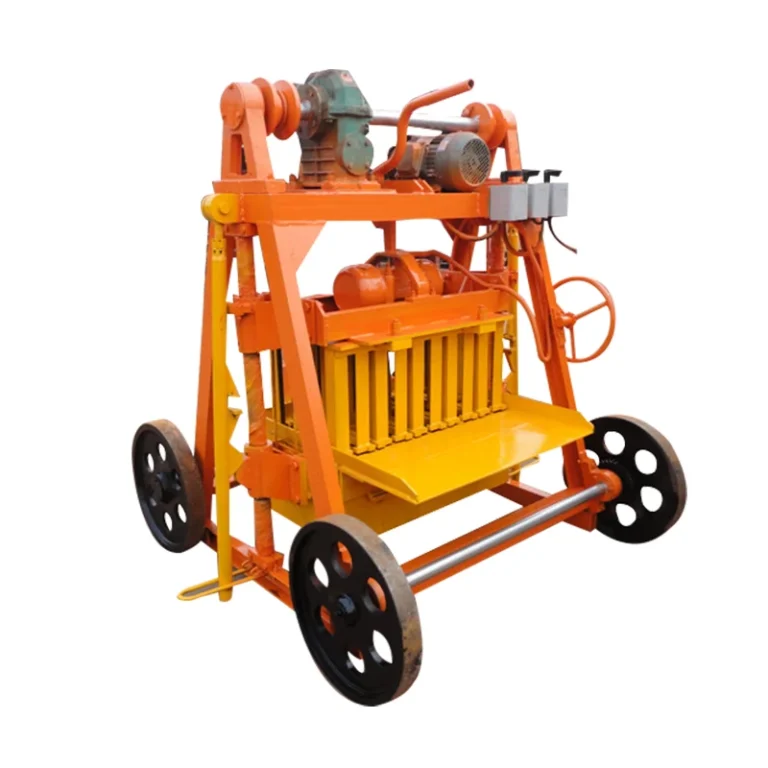
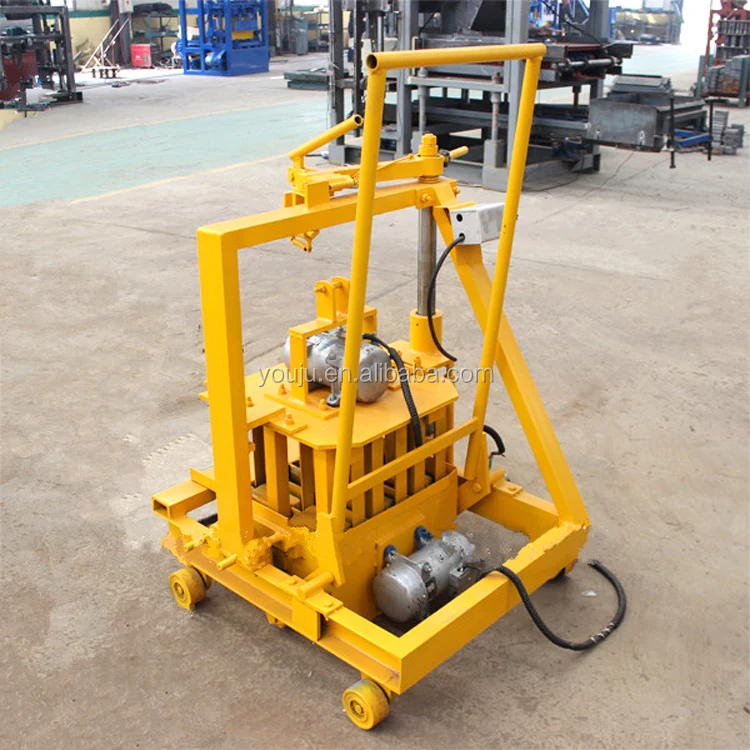
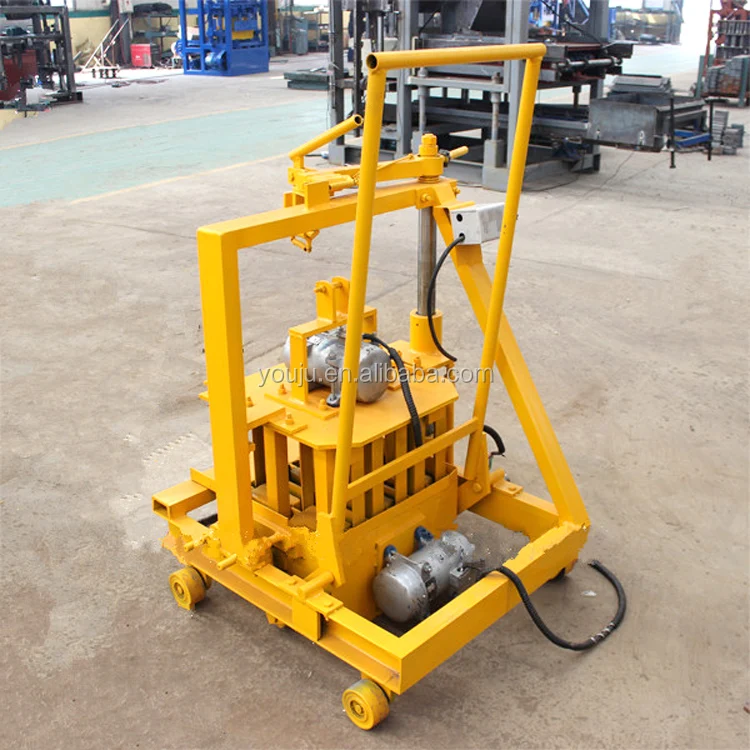
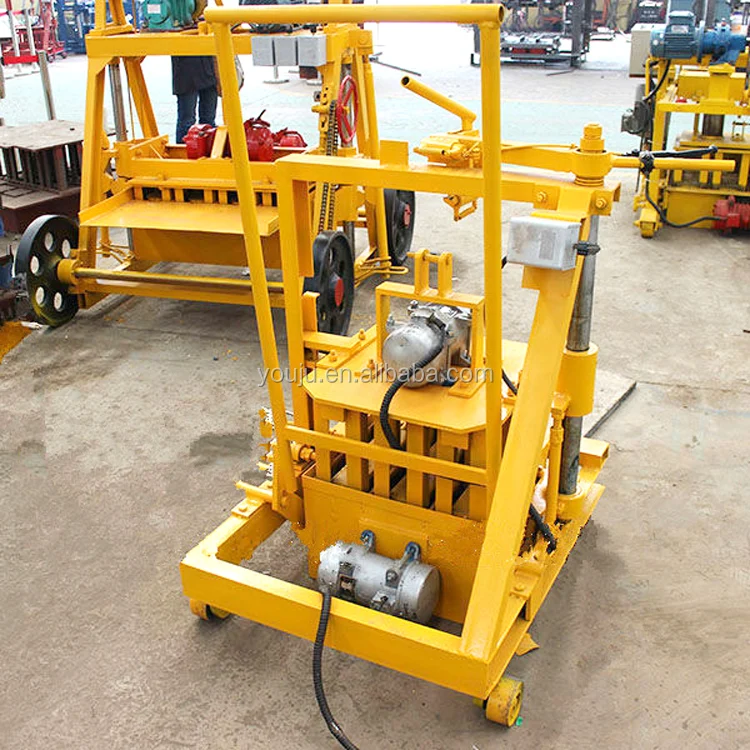
Matched system thinking — the QMJ2-45 mobile block making machine is specified alongside its mould options and palletless operation, so buyers evaluate output, format, and site footprint as one decision instead of three separate guesses.
Technical Specifications
| Parameter |
Value |
| Model |
QMJ2-45 |
| Product Type |
Mobile Block Making Machine |
| Automation Level |
Manual / Mobile (egg-laying, palletless) |
| Mould Format |
Hollow brick (interchangeable moulds) |
| Output — 400×200×200 mm |
2 pcs/mould, 25–30 s cycle, 160 pcs/h, 1280 pcs/8 hr |
| Output — 400×150×200 mm |
3 pcs/mould, 25–30 s cycle, 240 pcs/h, 4800 pcs/8 hr (basis not stated in source) |
| Output — 400×100×200 mm |
4 pcs/mould, 25–30 s cycle, 320 pcs/h, 2560 pcs/8 hr |
| Mould Change |
Manual, quick-change design |
| Pallet Requirement |
None (egg-laying operation) |
| Labor Requirement |
1 to 3 workers |
| Mould Technology |
Heat treatment & carburization |
| Power Source |
Electric (voltage and frequency to confirm) |
| Certification |
ISO 9001:2000, CE |
Application Suitability
| Application |
Material or Output |
| Small-scale hollow block plant |
Crushed stone, sand, cement mix — 1280 to 2560 hollow bricks per 8-hour shift depending on block size |
| On-site housing project production |
Local aggregate and cement, blocks laid directly on ground without pallets |
| Remote or temporary block demand |
Freely movable unit, minimal footprint, no fixed curing racks required |
| First-plant entrepreneur setup |
Low-investment entry with room to add semi-automatic equipment later |
What "2400 Pieces per Day" Actually Means on a Mobile Block Machine
Every output figure on this page is tied to a specific block dimension, because cycle time alone tells you nothing without knowing what the mould is pressing.
I used to review quotations where the supplier quoted a single daily number and buried the block format in a footnote. On a construction site in the Gulf, that gap between expectation and reality cost a contractor two weeks of schedule slip. The QMJ2-45 produces 1280 hollow blocks per 8-hour shift at 400×200×200 mm, but if your market primarily buys 400×100×200 mm partition blocks, the same machine delivers 2560 pieces in the same shift [NEED_CITE: common hollow block dimensions by regional market]. Knowing your format before you compare machines changes the entire purchasing conversation.

Where the QMJ2-45 Sits in the Full Machine Range
The QMJ2-45 occupies the entry tier of the mobile block machine range. Buyers who need on-site production without committing capital to a fixed plant start here. The mobile block making machine for sale at this tier eliminates pallet costs entirely — blocks are laid directly on a flat ground surface, which removes a major recurring expense and simplifies curing logistics.
Stepping Up from Mobile to Semi-Automatic Later
Some buyers begin with a mobile unit to validate local demand, then add a semi-automatic stationary line once volumes justify it. The QMJ2-45 supports that path because the mould formats and block dimensions remain compatible across tiers. A buyer who learns the local mix design and aggregate behaviour on a small egg-laying machine carries that knowledge forward into a larger investment [NEED_CITE: typical block plant upgrade paths in emerging construction markets].
Reading the Cycle Time Against Your Block Format
The 25–30 second cycle applies across all three standard hollow block sizes listed, but the per-mould piece count changes the hourly math entirely. Two pieces per mould at the largest format yields 160 blocks per hour, while four pieces per mould at the smallest format doubles that to 320. The vibration mechanism and manual feeding rhythm set the floor for cycle time, so consistent operator pacing matters as much as the mechanical specification. Heat-treated and carburized mould surfaces resist abrasion from harsh local aggregates, extending the interval between mould replacements.
The Cost of Ignoring Local Aggregate in a Mobile Setup
When a mobile unit arrives on site and the local sand contains high clay or silt content, the vibration force may not compact the mix adequately, producing blocks that crack during curing. I have seen egg-laying machines of this class produce unacceptable breakage rates simply because the mix was designed for washed river sand while the site only had desert sand available. That problem compounds on a palletless machine because blocks cannot be re-pressed or easily sorted before they set on the ground [NEED_CITE: effect of aggregate clay content on block compressive strength].
Why Procurement Here Differs from a Catalogue Order
Block machinery is the single focus, so the QMJ2-45 is not assembled from unrelated suppliers — the machine, mould, and operational guidance arrive as a matched set. Configuration discussions start with your actual mix design and target block format rather than defaulting to a catalogue entry. Mould options cover the hollow brick sizes your local market actually buys, and custom mould drawings are available when standard formats do not match. Documentation includes a capacity calculation sheet that states which block size each output figure assumes, removing guesswork before the machine ships.
Documentation & Verification
- Capacity calculation sheet stating block format behind each output figure
- Mould drawing and format list for all hollow brick sizes included
- Voltage and frequency confirmation matched to site before production
- Factory test record captured on the buyer’s target block size
- CE declaration provided with shipment documentation package
- Operation and maintenance manual with mould change procedures
Installation, Commissioning & Support
- Flat, level ground surface required — no fixed foundation or curing racks for the QMJ2-45
- Electrical supply to match confirmed voltage and frequency before the machine energizes
- Quick-change mould design allows first format swap during on-site commissioning
- Operator training covers mix consistency, cycle pacing, and manual mould handling
- Heat-treated mould surfaces extend wear intervals with abrasive local aggregates
- Spare mould and wear parts list provided at dispatch for early reorder planning
Before You Request a Quote
A mobile block making machine for sale at this tier works best when the buyer can share three details up front: the specific hollow block dimensions the local market demands, the type and source of sand or aggregate available on site, and the voltage and frequency standard at the project location. With those inputs, the configuration proposal can confirm realistic daily output and mould selection before any commitment.
Frequently Asked Questions
Q: How is the hourly output calculated, and which block format does each figure assume?
A: Each output tier is calculated from a 25–30 second cycle time multiplied by the number of cavities in that specific mould. The 400×200×200 mm format yields 160 pieces per hour with two cavities, while the 400×100×200 mm format yields 320 pieces per hour with four cavities. Always compare machines using the block size you actually intend to produce.
Q: What voltage and frequency configurations are available for my market?
A: The QMJ2-45 is electric-powered, and voltage and frequency must be confirmed against your site supply before production begins. Markets in the Gulf typically run 415V/50Hz, while other regions may require different configurations. This confirmation is part of the standard sales process to avoid commissioning delays after arrival.
Q: Can I start with the QMJ2-45 mobile tier and upgrade to semi-automatic later?
A: Yes. Many buyers validate local block demand with a mobile egg-laying unit first, then add a semi-automatic stationary line as orders grow. The block formats and mould dimensions remain compatible across tiers, so market relationships and mix design knowledge carry forward into the next investment stage.
Q: What block formats and mould options are available beyond standard hollow brick?
A: The QMJ2-45 supports interchangeable moulds, and the standard range covers three hollow brick sizes. Custom mould design is available when local market demand requires formats outside the standard list. Providing your target block drawing or sample allows the mould to be engineered to your exact dimensions.
Q: What is the footprint and site preparation needed compared to a fixed-plant setup?
A: The QMJ2-45 operates on flat, compacted ground with no fixed foundation, curing racks, or pallet storage area required. One to three workers operate the machine in a small space, and blocks cure directly where they are laid. This makes the mobile block making machine for sale at this tier suitable for project sites where a permanent plant is not feasible.

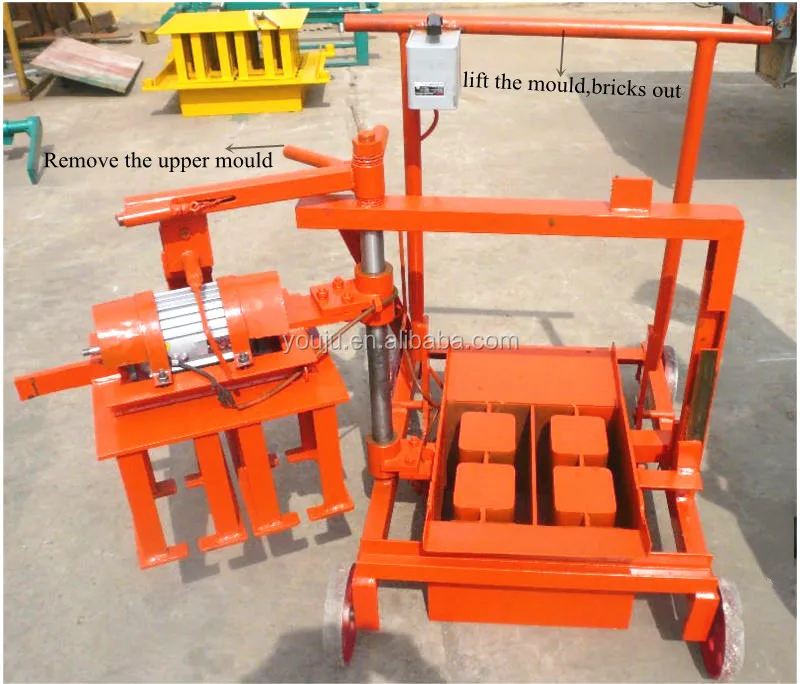
 Mobile block machine