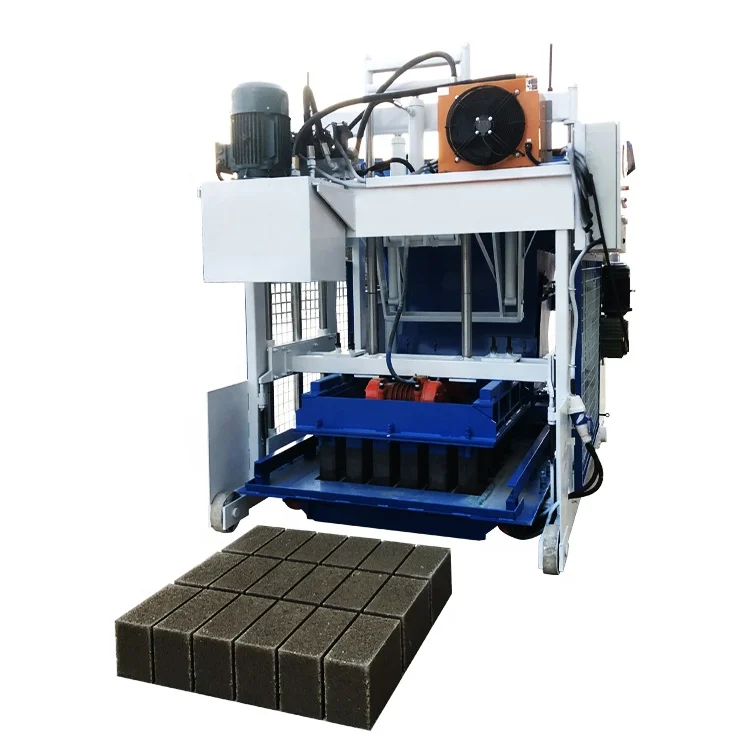
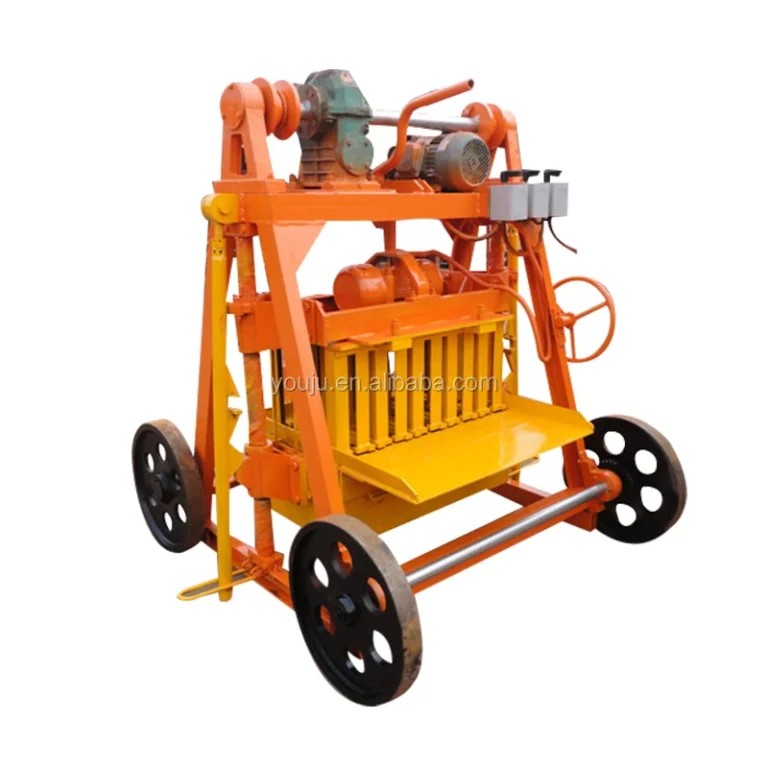
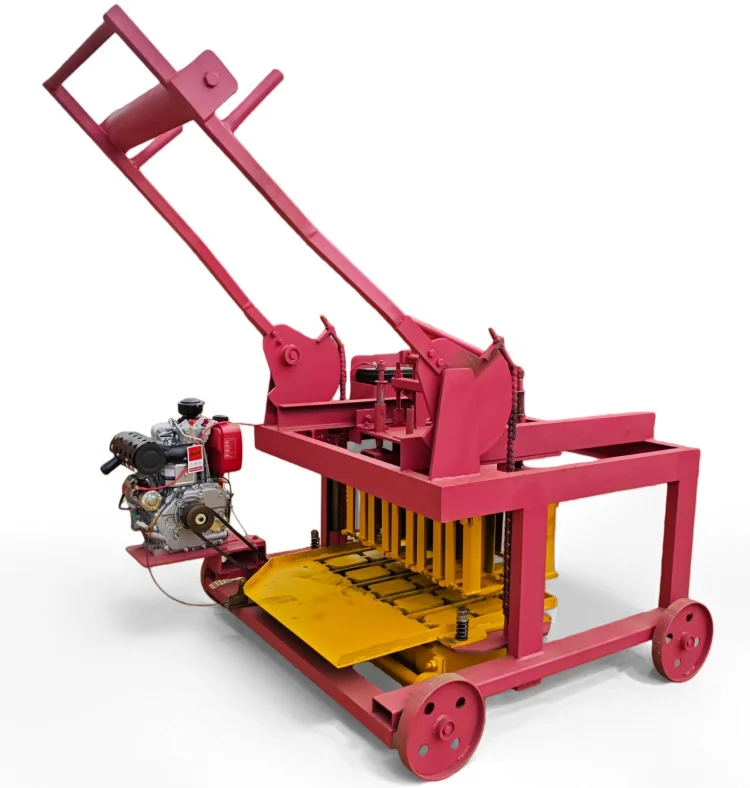
QMJ4-45 Movable Manual Egg Layer Block Making Machine – Full Range
Single-focus block machinery engineering — this QMJ4-45 egg layer block making machine is specified as a matched system where machine, mould, pallet and handling considerations align with your local aggregate and target block format, not assembled from disconnected catalogue defaults.
Technical Specifications
| Parameter |
Value |
| Model |
QMJ4-45 |
| Product Type |
Movable Manual Egg Layer Block Making Machine |
| Machine Category |
Mobile block machine |
| Vibration System |
Twice vibrations of molding core (upgraded from single vibration) |
| Molding Cycle |
30–45s (basis not stated in source — confirm block format / material / thickness) |
| Output Capacity (400×200×200mm hollow block) |
4 pcs/mould, 320 pcs/h, 2,600 pcs/8hr |
| Output Capacity (400×150×200mm hollow block) |
5 pcs/mould, 400 pcs/h, 3,200 pcs/8hr |
| Output Capacity (400×100×200mm hollow block) |
7 pcs/mould, 560 pcs/h, 4,480 pcs/8hr |
| Automation Level |
Manual operation |
| Mobility |
Egg-laying / on-site production without fixed plant |
| Control System |
Manual (no PLC stated in source) |
| Mould Compatibility |
400×200×200mm, 400×150×200mm, 400×100×200mm confirmed; other formats to confirm |
| Mould Treatment |
Heat treatment and carburization technology |
| Steel Quality |
High quality steel (verify grade) |
| Pallet Size |
Not applicable (egg-laying lays directly on ground) |
| Standards |
ISO 9001:2000, CE |
Application Suitability
| Application |
Material or Output |
| On-site hollow block production for building contractors |
Crushed stone, sand, cement mixes laid directly on ground |
| First block plant setup for entrepreneurs |
Low-infrastructure concrete block production at project location |
| Housing and development project block supply |
400×200×200mm, 400×150×200mm, 400×100×200mm hollow blocks |
| Remote or rural construction sites |
Mobile egg-laying production eliminating material transport costs |
What "320 Blocks per Hour" Actually Means on a Mobile Block Machine for Sale
Every capacity number here is tied to a specific block dimension, so you know exactly what you will walk away with at the end of each shift.
Catalogue sheets for egg layer block making machine manufacturers often quote a single output figure and leave out which block size that number assumes. On a real job site in the Middle East, I watched a crew expect over 3,000 hollow blocks per day, only to find the figure was calculated on the smallest solid format. The actual 400×200×200mm hollow block count was nearly half. When a mobile block machine for sale lists 2,600 pcs/8hr, that figure applies to 400×200×200mm hollow blocks specifically; step up to 400×100×200mm hollow blocks and the same machine delivers 4,480 pcs/8hr. [NEED_CITE: block format assumption in capacity calculations for mobile block machines] The difference between these two formats is nearly 2,000 blocks per shift — enough to change your delivery schedule entirely.
Where the QMJ4-45 Sits in the Full Machine Range
The QMJ4-45 occupies the entry tier of the mobile and egg-laying segment. Buyers choosing this egg layer block making machine manufacturer range typically have a project site where blocks are needed immediately, no fixed plant infrastructure, and a workforce that can handle manual pallet and material movement. The machine moves along the ground, laying blocks in place, which eliminates the curing rack and pallet circulation system required by stationary lines. For a contractor producing blocks at a housing development, this means production starts the day the machine arrives rather than weeks after a concrete foundation is poured.
Matching the Machine Tier to Your Next Project
Stepping up within the full range means moving from manual egg-laying to semi-automatic stationary machines and then to fully automatic lines with PLC control, batching, and stacking. The decision point is not simply output volume — it is whether your site can absorb a fixed plant footprint, whether your curing area can accept standard pallets, and whether your local workforce justifies the automation investment. [NEED_CITE: criteria for selecting block machine automation tier based on project scale] A first-time entrepreneur producing for a single housing contract often finds the QMJ4-45 mobile block machine for sale sufficient, while a distributor supplying multiple sites will outgrow manual operation quickly.

How Twice-Vibration and Mould Treatment Shape Block Quality
The QMJ4-45 uses a twice-vibration molding core rather than a single vibration pass. In practice, the first vibration settles the concrete mix into the mould cavity while the second compacts it under pressure, producing a denser block with more uniform wall thickness. This matters especially when local sand contains high clay content — a problem I encountered repeatedly on sites where the aggregate source was not tested before ordering. Without sufficient compaction, blocks with clay-heavy mixes crumble at the edges during demoulding. The moulds themselves undergo heat treatment and carburization, which hardens the contact surfaces against the abrasive action of crushed stone aggregate over thousands of cycles. A carburized mould resists the wear that otherwise widens tolerances and produces undersized blocks after a few months of production. [NEED_CITE: carburization treatment effect on mould wear resistance in concrete block production]
Mould Change Reality and Format Flexibility
The QMJ4-45 supports three confirmed hollow block formats: 400×200×200mm, 400×150×200mm, and 400×100×200mm. Swapping moulds on a manual egg-laying machine involves loosening the mounting bolts, lifting the mould frame out, positioning the new one, and re-securing. On site, this takes a portion of the shift unless the crew has practised the procedure and the moulds are pre-staged. The real format flexibility depends on whether the additional moulds you need are in stock and whether their dimensions match the vibration table travel of this specific tier. Before ordering, confirm the full list of available moulds and the documented change procedure, because paying for format flexibility you cannot exercise on site defeats the purpose.
What Happens When Site Voltage and Mix Design Are Not Confirmed First
A mobile block machine for sale arrives at a site where the generator supplies unstable voltage or the frequency does not match the motor nameplate. The vibration motor runs below rated speed, the compaction force drops, and blocks come out soft. The crew blames the machine, the seller blames the power supply, and two weeks of production vanish. [NEED_CITE: voltage and frequency mismatch impact on vibration motor performance in block machines] Similarly, when the machine is configured for a clean river sand mix but the local quarry supplies high-clay material, the vibration energy dissipates in the clay rather than compacting the aggregate. The result is blocks that pass visual inspection but fail compressive strength tests. Both scenarios are avoidable with a specification exchange before production begins.
Why Specify Through This Range Rather Than a Generic Source
Block machinery as a single focus means the QMJ4-45 is not bundled with a mismatched mixer or undersized pallets from a separate supplier — the machine, mould, and ground conditions are evaluated as one system. Configuration is set against your actual mix design and local aggregate rather than a default catalogue setting, which is the difference between blocks that meet strength requirements on day one and blocks that require weeks of on-site parameter adjustment. Mould design covers the formats your market actually sells, and custom mould drawings are available when your specification falls outside the standard range. The automation level is selectable, so a buyer starting with the QMJ4-45 manual egg layer can transition to a semi-automatic stationary line later without changing equipment philosophy. Installation and commissioning support includes operator training at your site, not just a manual shipped in the crate.
Documentation & Verification
- Line layout and capacity calculation stating the assumed block format for each output tier
- Machine specification sheet with vibration system ratings matched to your mix
- Mould drawing and format list confirming all supported block dimensions
- Voltage and frequency confirmation document signed before production starts
- Factory test record run on your specified block format before dispatch
- Operation and maintenance manual covering mould change and daily inspection
Installation, Commissioning & Support
- Level compacted ground required for egg-laying operation — no concrete foundation needed
- Generator or mains supply with voltage and frequency confirmed before motor wiring
- Machine arrives assembled; site preparation limited to clearing the production path
- First-day commissioning covers vibration timing adjustment to your local mix
- Operator training includes mould change procedure and daily grease-point schedule
- Mould wear parts and vibration motor brushes held in stock for first replacement cycle
What to Share Before Requesting a Quotation
To receive a configuration that matches your site rather than a catalogue default, provide your target block formats and daily volume per format, the source and type of your local sand and aggregate, your available power supply voltage and frequency, and the ground conditions where blocks will be laid. If you are comparing this mobile block machine for sale against a stationary line, note your curing area dimensions and whether you already own pallets or forklifts.
Frequently Asked Questions
Q: How is output capacity verified, and which block format does each number assume?
A: Each capacity figure for the QMJ4-45 is tied to a specific block dimension. The 2,600 pcs/8hr figure assumes 400×200×200mm hollow blocks, while 4,480 pcs/8hr applies to 400×100×200mm hollow blocks. All figures assume a 30–45s molding cycle, which itself depends on your mix design and material thickness. Ask for a written capacity calculation stating your exact target format.
Q: Where does the QMJ4-45 sit in the full machine range and when should I consider stepping up?
A: The QMJ4-45 is the entry tier of the mobile egg-laying segment, suited for on-site production without fixed infrastructure. Consider stepping up to a semi-automatic stationary machine when your daily volume consistently exceeds what a single manual egg layer can deliver, when your market demands multiple block formats per day, or when labour costs justify automatic pallet feeding and stacking.
Q: What site conditions does an egg-laying machine require compared to a fixed plant?
A: An egg layer block making machine manufacturer range requires level, compacted ground where blocks are laid directly — no concrete foundation, no curing racks, and no pallet circulation system. The production path must be clear and wide enough for the machine to travel. A fixed plant needs a poured foundation, pallet inventory, and a dedicated curing area with racking.
Q: What voltage and frequency options are available for my market?
A: Voltage and frequency are not listed as standard in the base specification, so confirmation must happen before production. Provide your local supply details — whether mains or generator, the voltage range, and the frequency — so the vibration motor and any auxiliary components are wound and rated correctly for your site.
Q: What moulds and wear parts are available for future replacement and format expansion?
A: The QMJ4-45 supports confirmed hollow block formats in 400×200×200mm, 400×150×200mm, and 400×100×200mm, with additional formats available subject to confirmation. Moulds undergo heat treatment and carburization for extended life. Request the full mould and wear parts list with your quotation so you know which items to reorder and when the first replacement cycle falls due.

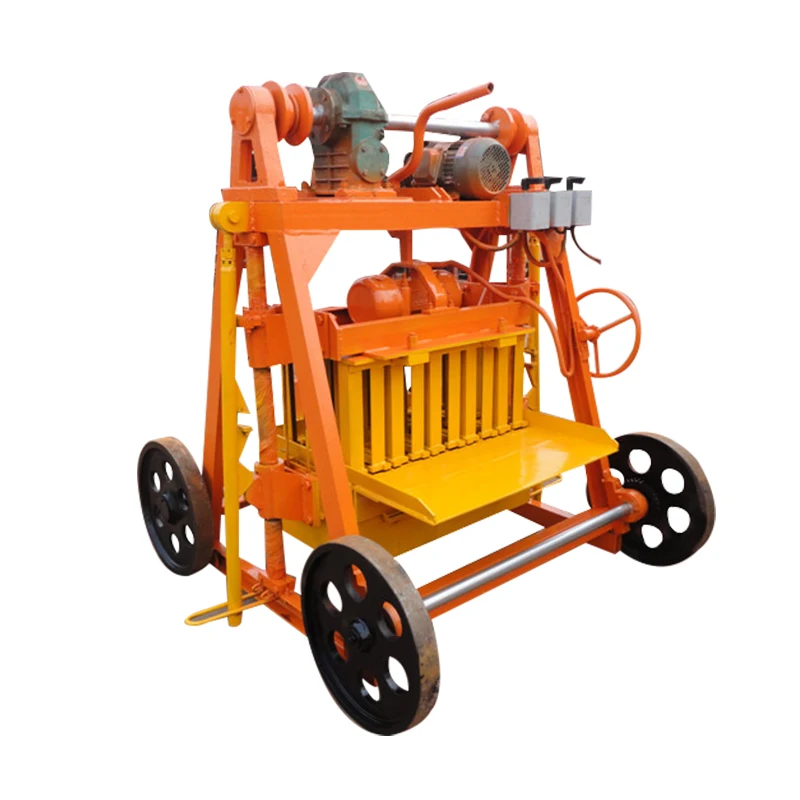
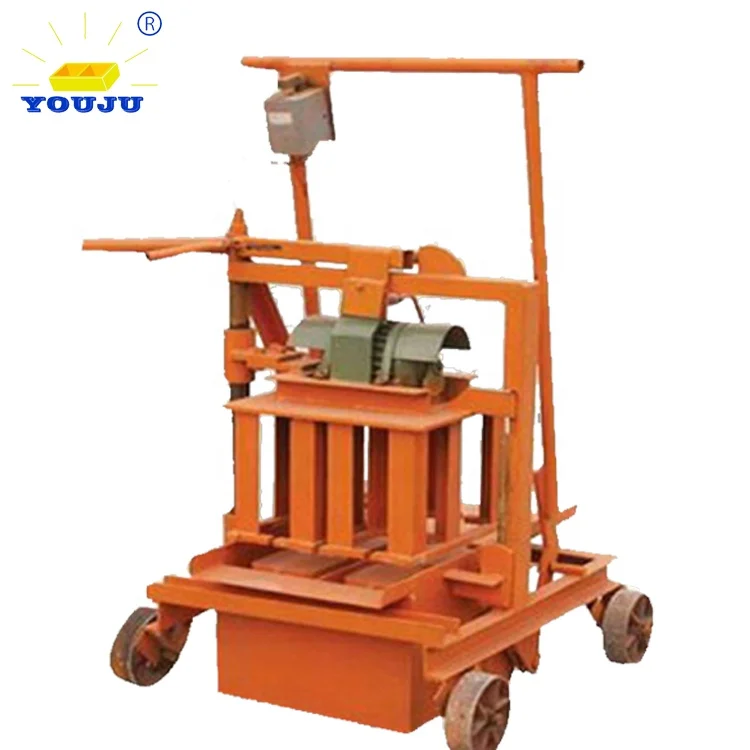 Mobile block machine