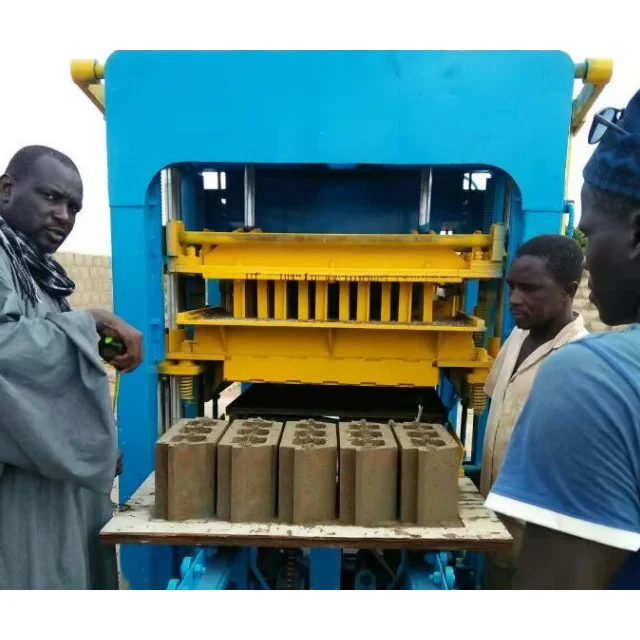
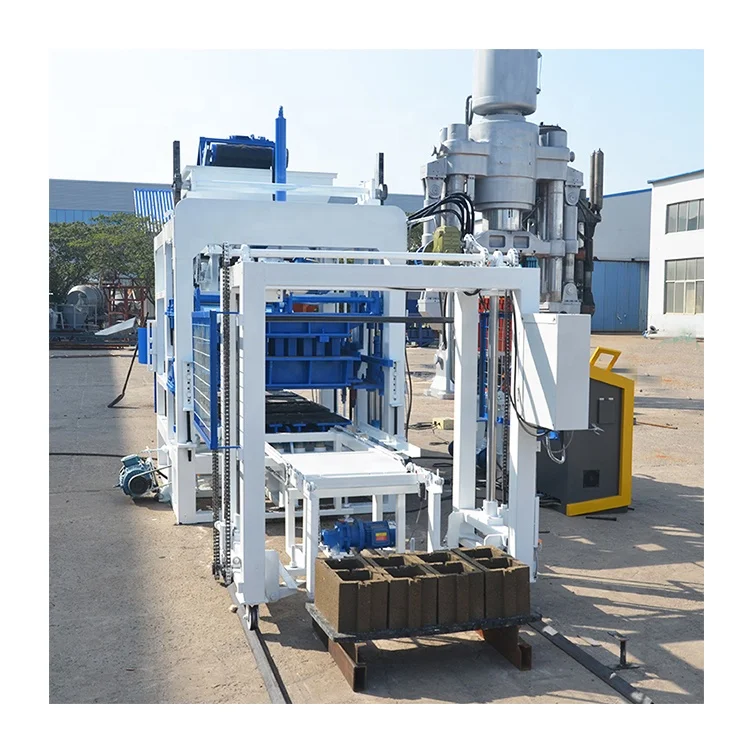
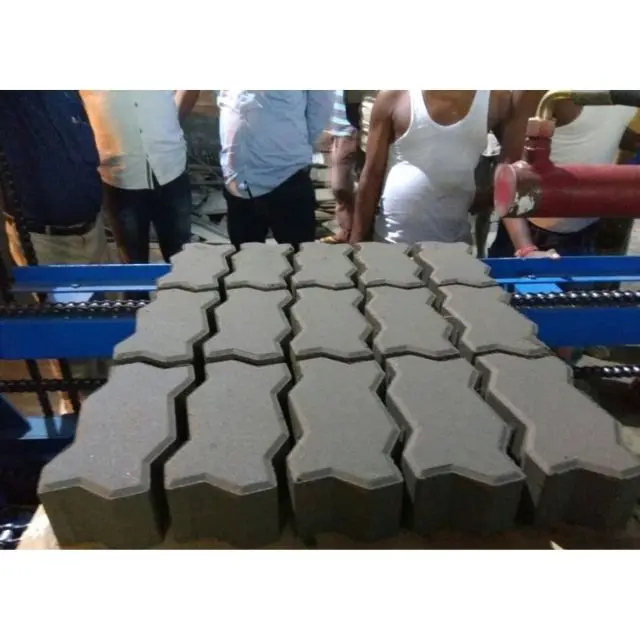
Matched System Approach — The Qt4-26 is specified alongside its pallet, mixer, and handling gear so nothing arrives mismatched at your site.
Technical Specifications
| Parameter |
Value |
| Model |
Qt4-26 |
| Product Type |
Semi-automatic Block Making Machine |
| Overall Dimensions (L×W×H) |
2060 × 1730 × 2580 mm |
| Rated Pressure |
26 MPa |
| Main Vibration Form |
Platform Vibration |
| Vibration Frequency |
4500 r/min |
| Vibration Force |
40 kN |
| Pallet Size |
880 × 480 × 25 mm |
| Molding Cycle |
15–20 s (basis not stated in source — confirm block format and mix) |
| Total Power |
19.75 kW |
| Host Machine Power |
14.25 kW |
| Total Mass |
2 T |
| Demolding Method |
Semi-automatic |
| Mixer Model |
JQ350 |
| Automation Level |
Semi-automatic |
| Voltage & Frequency |
Configurable to target market (confirm before production) |
| Control System |
Confirm PLC or relay logic |
Application Suitability
| Application |
Material or Output |
| Hollow block production for building walls |
Crushed stone, sand, cement, fly ash |
| Solid block manufacturing for load-bearing structures |
Gravel, sand, cement blend |
| Interlocking paver production for walkways and squares |
Colored concrete mixes with fine aggregate |
| Kerbstone forming for road and garden edging |
Coarse aggregate with cement binder |
| On-site block production for housing projects |
Locally sourced sand, slag, and dust |
What "15–20 Seconds per Cycle" Actually Means on the Shop Floor
Cycle time only translates to daily output when the block format, mix design, and pallet handling are all aligned.
A Semi-automatic block machine manufacturer will often quote a single cycle figure without naming the block size or wall thickness behind it. On the Qt4-26, a 15-second cycle might apply to a thin interlocking paver, while a 200 mm hollow block could push closer to 20 seconds or beyond depending on your aggregate gradation. If the mix is too wet or the sand fraction too fine, vibration force does not consolidate properly, and the operator ends up adding seconds to every cycle just to get a clean release [NEED_CITE: effect of aggregate moisture on vibration compaction]. That gap between quoted and real output is where most first-time plant owners lose money.

Where the Qt4-26 Sits on the Full Machine Range
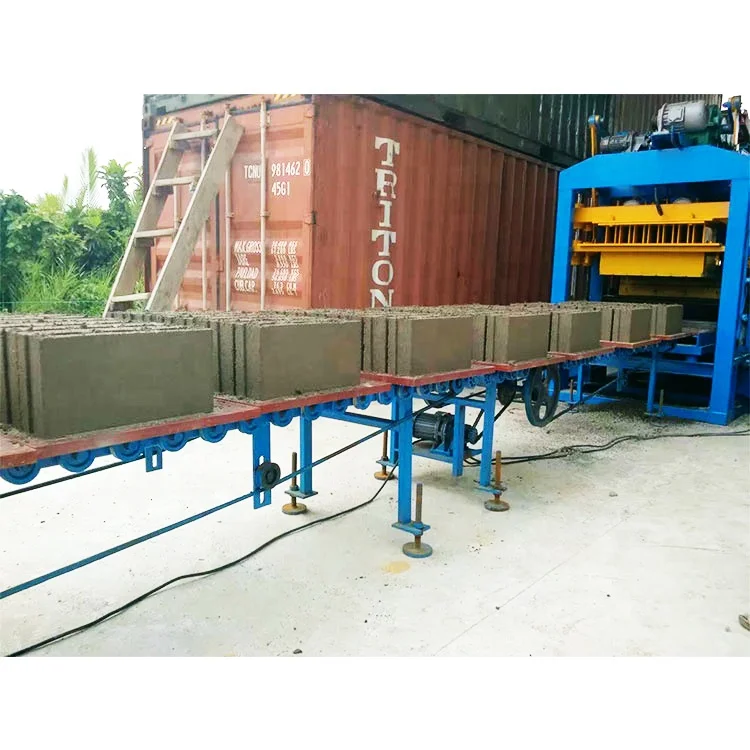
The Qt4-26 occupies the entry tier of our semi-automatic lineup. Buyers comparing their first plant investment against a fully automatic line will find that this model covers the same block formats — hollow, solid, paver, kerbstone — but with manual pallet transfer and stacking. For a contractor running a single housing project, that trade-off often makes sense: lower capital outlay, simpler maintenance, and the option to step up to automatic pallet handling later without replacing the press itself.
Understanding Output Tiers Before You Commit
Plant footprint matters as much as press capacity. A fully automatic line demands curing racks, a cubing station, and a dedicated forklift circuit. The Qt4-26, by contrast, fits a smaller yard where pallets move by hand or with a single pallet jack. The question is not which machine produces more per hour, but which tier matches your site space, labour availability, and curing infrastructure [NEED_CITE: typical plant layout requirements by automation tier]. Oversizing the press while undersizing the curing area creates a bottleneck that no cycle speed can fix.
Pressure, Vibration, and the Block That Holds Together
The 26 MPa rated pressure and 40 kN vibration force work as a pair. Hydraulic pressure compacts the mix from above while platform vibration at 4500 r/min rearranges aggregate particles into a dense matrix. If vibration is too weak for the aggregate size, voids remain and block strength drops. If pressure is too high for a lightweight mix, the block cracks on demolding. The JQ350 mixer feeds a consistent batch so the press sees the same material density every cycle — that consistency is what makes the semi-automatic tier viable for buyers who cannot yet invest in a full batching plant.
Pallet size is another specification that reaches beyond the press. The 880 × 480 × 25 mm pallet must match your curing rack spacing and the fork dimensions of the forklift you already own. Switching pallet sizes later means replacing every board in inventory, a cost that often exceeds the pallets themselves [NEED_CITE: pallet replacement cost in block plant operations].
When the Wrong Tier Costs More Than the Machine
A buyer who picks a high-capacity press but runs it with undersized pallets and no stacking plan ends up with blocks stacked by hand in uneven rows, slowing curing and increasing breakage. The Qt4-26’s semi-automatic design assumes manual pallet handling — if your labour pool cannot support that rhythm, the press sits idle between cycles. Conversely, a buyer who over-automates a small project pays for sensors and stackers that the project duration will never justify.
Why Source the Qt4-26 Through This Range
Every machine on our range is specified as a matched system: press, mould, pallet, and handling are quoted together so nothing arrives incompatible. We configure the vibration frequency and hydraulic pressure against your actual mix design and local aggregate, not a catalogue default. Moulds are designed for the formats your market sells, including custom drawings when standard formats do not fit. The semi-automatic tier lets you start with the Qt4-26 and upgrade automation modules later without swapping the core press. Installation support includes operator training so your team can run a full shift independently from the first week.
Documentation & Verification
- Line layout showing pallet circuit and curing area sized for the Qt4-26
- Capacity calculation stating the block format behind the 15–20 s cycle
- Mould drawing and format list confirming available block types
- Pallet specification sheet with size, material, and forklift compatibility notes
- Factory test record run on your target aggregate blend
- Voltage, frequency, and control language confirmation before dispatch
Installation, Commissioning & Support
- Foundation pad leveled for the 2060 × 1730 mm footprint with anchor bolt pattern
- Dedicated 19.75 kW circuit at confirmed voltage and frequency for the host and mixer
- Machine arrives bolted to pallet frame; on-site assembly covers vibration table and hopper
- First-run parameter setting matches vibration frequency to your aggregate gradation
- Operator training covers mould change sequence and pallet loading rhythm
- Wear parts list with reorder intervals for vibration springs and hydraulic seals
Before You Request a Quote
Send us your target block format and dimensions, the daily volume you need to sustain, and a sample description of your local sand and aggregate. Include your site voltage and frequency, the language you need on the control display, and the pallet size your curing area already uses. With that information, we can confirm whether the Qt4-26 is the right tier or whether stepping to the next level on the range serves your project better.
Frequently Asked Questions
Q: How do I verify the real daily output of the Qt4-26 for the block I actually sell?
A: Request a capacity calculation that names the exact block format, wall thickness, and mix design behind the quoted cycle time. A generic 15–20 second figure may not reflect a 200 mm hollow block or a mix with high fly ash content. We provide format-by-format output projections so your production plan matches what the machine delivers on your materials.
Q: Where does semi-automatic sit on the range, and when should I move to automatic?
A: Semi-automatic handles the same block formats as automatic but with manual pallet transfer and stacking. Move to automatic when your daily volume justifies the curing rack and cubing investment, or when labour availability makes manual handling unreliable across long shifts.
Q: Will the 880 × 480 mm pallet work with my existing curing racks and forklift?
A: Confirm rack slot width and forklift tine spacing before ordering. If your current pallets are a different size, running two sizes in the same yard complicates stacking and curing rotation. We can adjust pallet specification to match your existing infrastructure where the press allows.
Q: Which mould formats are available for this semi-automatic tier, and how long does a change take?
A: The Qt4-26 supports hollow block, solid block, interlocking paver, and kerbstone moulds. Mould change time depends on bolt pattern and whether quick-release clamps are included. Confirm the change procedure and required tools so your team can switch formats without losing a full shift.
Q: What voltage and control language options are confirmed before shipment?
A: Voltage, frequency, and PLC display language must be confirmed before production starts. Shipping a machine wired for the wrong standard delays commissioning by weeks. We verify these details in writing and include them on the factory test record.

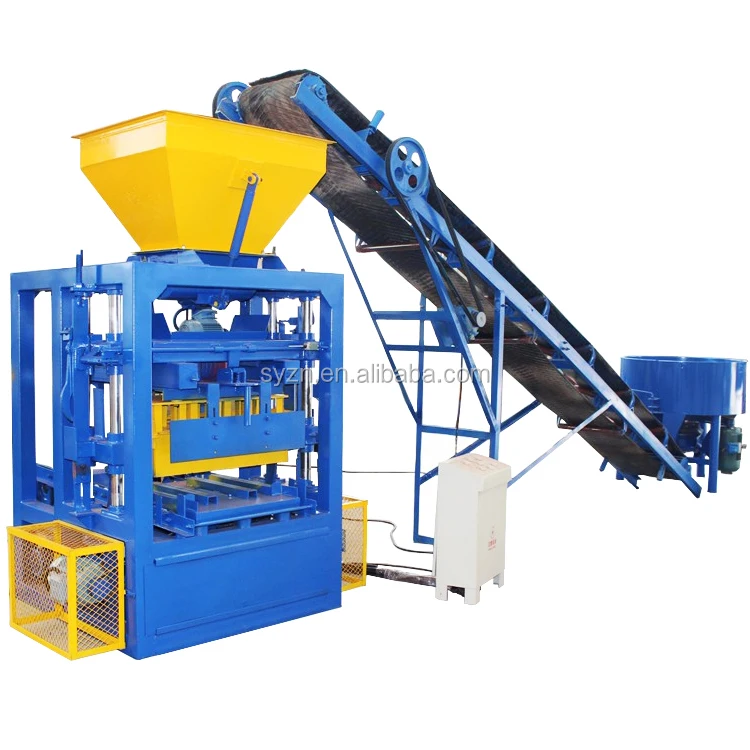
 Automatic block machine