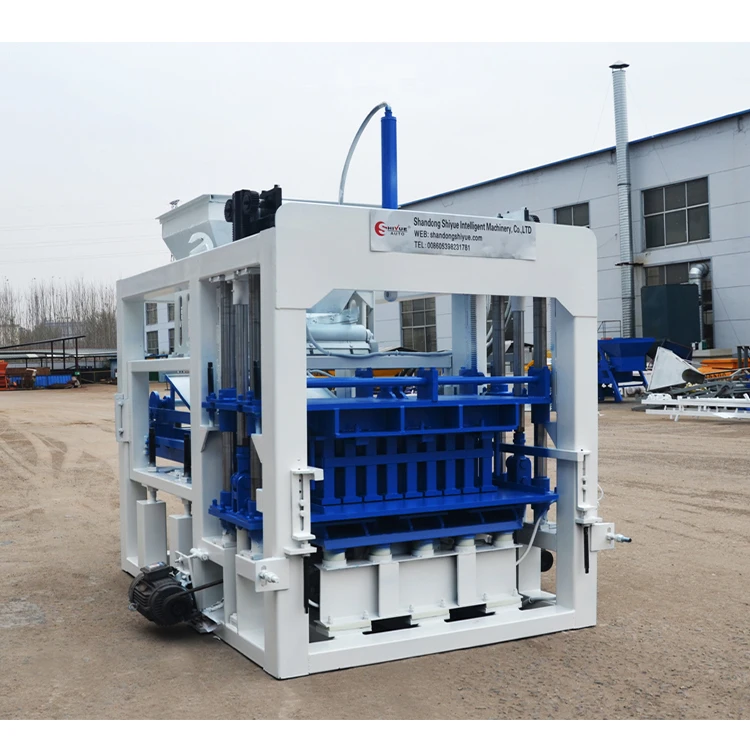
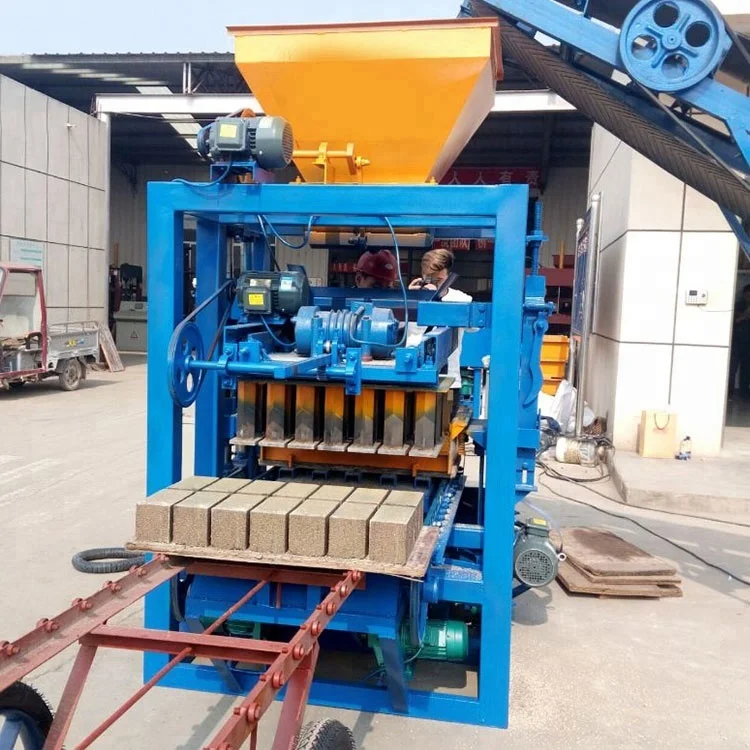
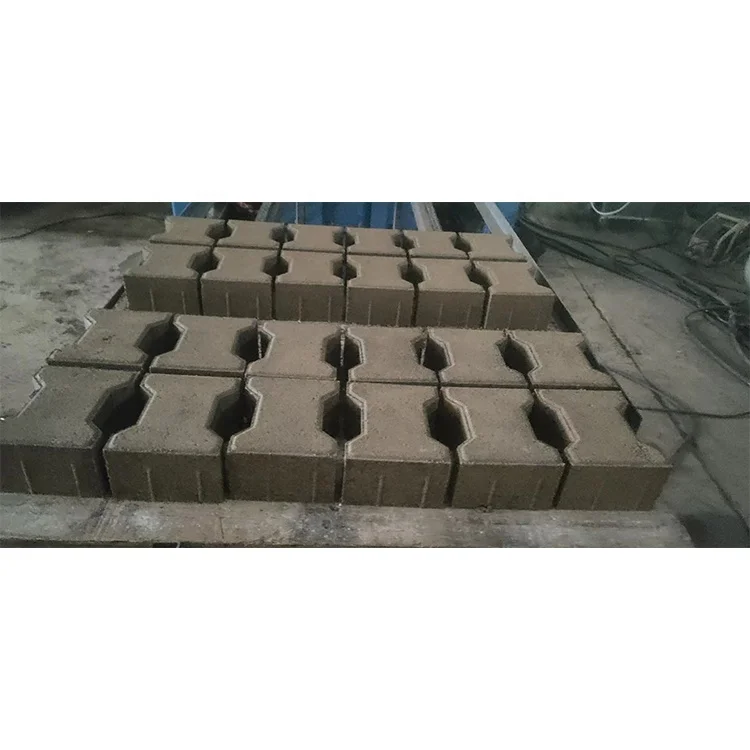
Mid-Tier Hydraulic Automation — The QT4-16 sits at the intersection where buyers outgrow semi-mobile setups but aren’t ready to fund a high-capacity line, and every capacity figure on this page ties back to the block format that produced it.
Technical Specifications
| Parameter |
Value |
| Model |
QT4-16 |
| Product Type |
Automatic Hydraulic Concrete Block Making Machine |
| Overall Dimension |
7400×1950×2800 mm |
| Total Mass |
5 T |
| Rated Pressure |
21 MPa |
| Vibration Force |
40 KN |
| Main Vibration Form |
Platform Vibration |
| Vibration Frequency |
2800–4500 r/min |
| Molding Cycle |
15–20 s (basis not stated in source — confirm block format / material / thickness) |
| Pallet Size |
900×550 mm |
| Demolding Method |
Hydraulic |
| Factory Area Required |
600 m² |
| Control System |
PLC intelligent control with HMI, logic control, malfunction diagnosis, remote function |
| Raw Materials |
Crushed stone, sand, cement, fly ash, gravel, slag, dust |
Application Suitability
| Application |
Material or Output |
| Hollow block production for wall construction |
Crushed stone and cement blends, fly ash aggregates |
| Solid block manufacturing for load-bearing structures |
Sand, gravel and cement mixes |
| Paving block and colored paver runs |
Fine aggregates with pigment additives |
| Interlocking brick and kerbstone formatting |
Coarse aggregate and cement combinations |
| On-site production for housing project contractors |
Locally sourced stone dust and cement |
What "15-20 Seconds per Cycle" Actually Means for Your Daily Tally
Cycle time only matters once you know which block format it was measured on.
I have watched buyers receive a machine quoting an impressive cycles-per-hour number, only to discover the figure assumed a thin paving block while their daily production target was a 200 mm hollow block. With this QT4-16 automatic block machine manufacturer documentation, the 15–20 second molding cycle is listed without a format basis, which means the real daily output can only be calculated after we confirm your target dimensions, wall thickness and aggregate type. [NEED_CITE: block format assumptions behind quoted cycle times across the industry] Skipping this step before signing a purchase order is the single most common reason buyers feel cheated on arrival.

Where the QT4-16 Sits in the Full Machine Range
Buyers surveying options for a first or replacement machine need a clear map of the tiers before committing capital. The QT4-16 occupies the mid-tier automatic hydraulic position, stepping up from semi-automatic and egg-laying mobile machines with a fixed-plant configuration that requires a defined 600 m² footprint. It gives entrepreneurs and growing contractors a PLC-controlled production station without the investment weight of a high-capacity line.
Matching the Tier to Your Actual Volume Target
If your daily volume stays within what a semi-automatic station can handle, moving to this tier adds automation cost you may not recover immediately. Conversely, if your project pipeline demands continuous three-shift output, you may need to step up to a higher tier entirely. The QT4-16 automatic block machine manufacturer range is designed so buyers can start here and add automation modules later, but the decision should be driven by confirmed daily format output rather than catalogue promises. [NEED_CITE: typical output tier selection criteria for first-time block plant buyers]
Reading the Specs Beyond the Brochure Numbers
The 21 MPa rated hydraulic pressure paired with 40 KN vibration force determines the density and compressive strength your blocks will achieve, but only when matched to your local aggregate gradation and cement ratio. Platform vibration at up to 4500 r/min consolidates the mix from below, which suits hollow block formats where core integrity matters. The 900×550 mm pallet size must align with the curing racks and forklifts already in your yard — specifying a pallet that your existing handling equipment cannot lift turns an automatic machine into a bottleneck at the stacking station.
The Hidden Cost of Skipping Configuration Alignment
A machine configured for a mix you cannot source locally forces a material change that erodes margins from day one. Voltage, frequency and PLC display language left unconfirmed before dispatch delay commissioning by weeks once the crate arrives at your port. [NEED_CITE: delays caused by unconfirmed electrical standards on exported industrial machinery] Pallet handling, stacking and curing equipment omitted from the quotation leaves freshly pressed blocks stacked by hand, negating the automation advantage you paid for.
Why Sourcing Through This Range Differs
Block machinery remains the single focus here, so the press, mould, pallet and handling equipment are specified as one matched system rather than assembled from separate suppliers. Configuration is set against your actual mix design and target block format, not a catalogue default. Mould design covers the formats your local market sells, including custom drawings to buyer specifications. Automation level is selectable, meaning a buyer can begin semi-automatic and upgrade the same station as volume grows. Installation support includes operator training so your crew runs the PLC interface confidently from the first shift.
Documentation & Verification
- Line layout showing 600 m² footprint with capacity calculated per your target block format
- Machine specification sheet confirming 21 MPa pressure and 40 KN vibration matched to your aggregate
- Mould drawing and format list covering hollow, solid, paver and interlocking options
- Voltage, frequency and PLC display language confirmation signed before production
- Factory test record on your confirmed block format before dispatch
- Packing photographs and customs documentation support for your import port
Installation, Commissioning & Support
- 600 m² foundation preparation with level tolerance specified for the 7400 mm machine length
- Power supply matching confirmed voltage and frequency with dedicated circuit for 21 MPa hydraulic pump
- Machine dismantled for container loading and reassembled on-site with alignment verification
- PLC malfunction diagnosis system tested in your local language before first production run
- Operator training covering mould change procedure and HMI parameter adjustment
- Hydraulic wear parts and mould inventory list provided with recommended reorder intervals
What to Prepare Before Requesting a Quotation
Share your target block format with exact dimensions, daily output requirement and the raw materials available within your sourcing radius. Confirm the voltage and frequency at your site along with the preferred PLC display language. Let us know your existing curing area dimensions and forklift capacity so the pallet specification aligns before the quotation is issued.
Frequently Asked Questions
Q: How do I verify the QT4-16 daily output for my specific block format?
A: The 15–20 second molding cycle is listed without a format basis, so daily output must be calculated against your confirmed block dimensions, wall thickness and aggregate type. Request a capacity sheet that states the assumed format before comparing machines.
Q: Where does the QT4-16 fit compared to semi-automatic and high-capacity tiers?
A: It occupies the mid-tier automatic hydraulic position with PLC control and platform vibration, suited for buyers stepping up from semi-mobile setups who need fixed-plant consistency without committing to a high-capacity line investment.
Q: Is the stated 600 m² factory area sufficient for full operation?
A: The 600 m² covers the machine station and immediate handling zone. Total site area must also account for raw material storage, curing racks and finished block yard, which vary based on your target daily volume and block format.
Q: How are voltage and control language confirmed before shipment?
A: Electrical specifications and PLC display language are documented and signed off during the quotation stage. A confirmation sheet is issued before production begins to prevent commissioning delays at your site.
Q: Can the automation level be upgraded after initial installation?
A: The platform supports upgrades in pallet feeding, stacking and cubing automation as production volume grows, allowing buyers to start with a configuration matching current demand and expand without replacing the press.

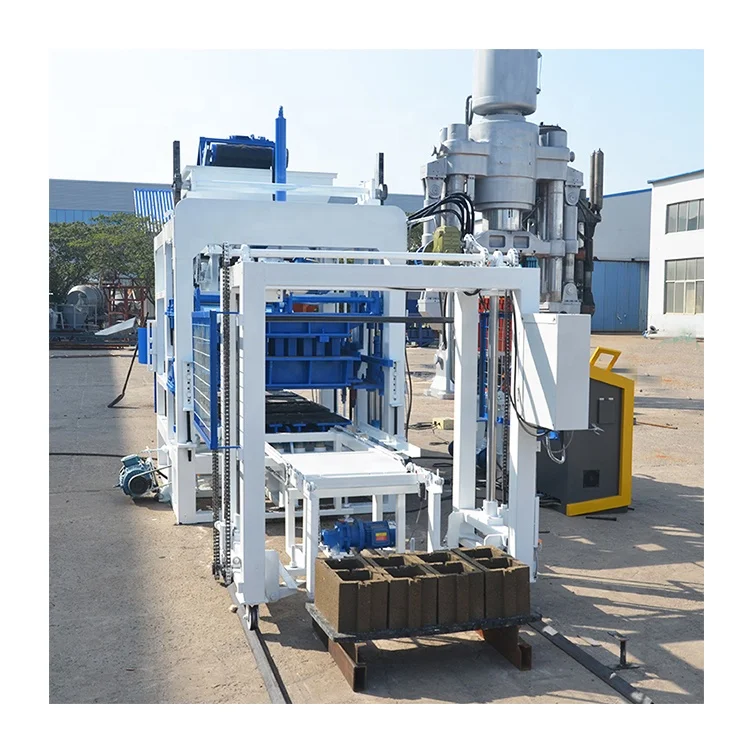
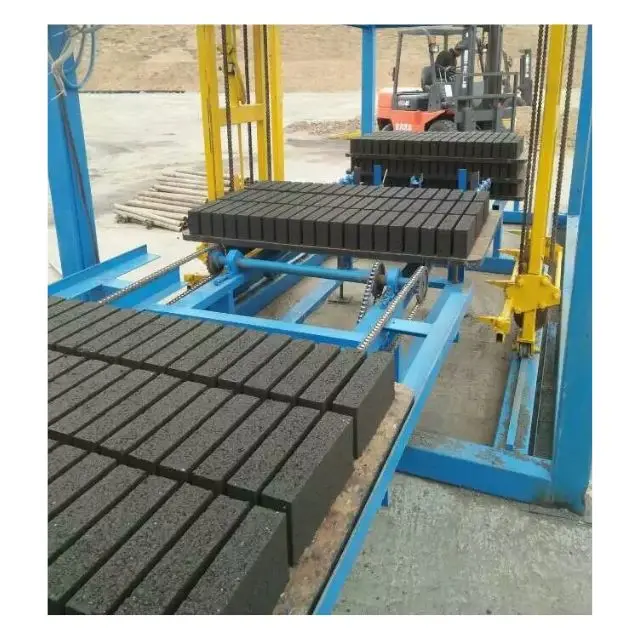 Automatic block machine