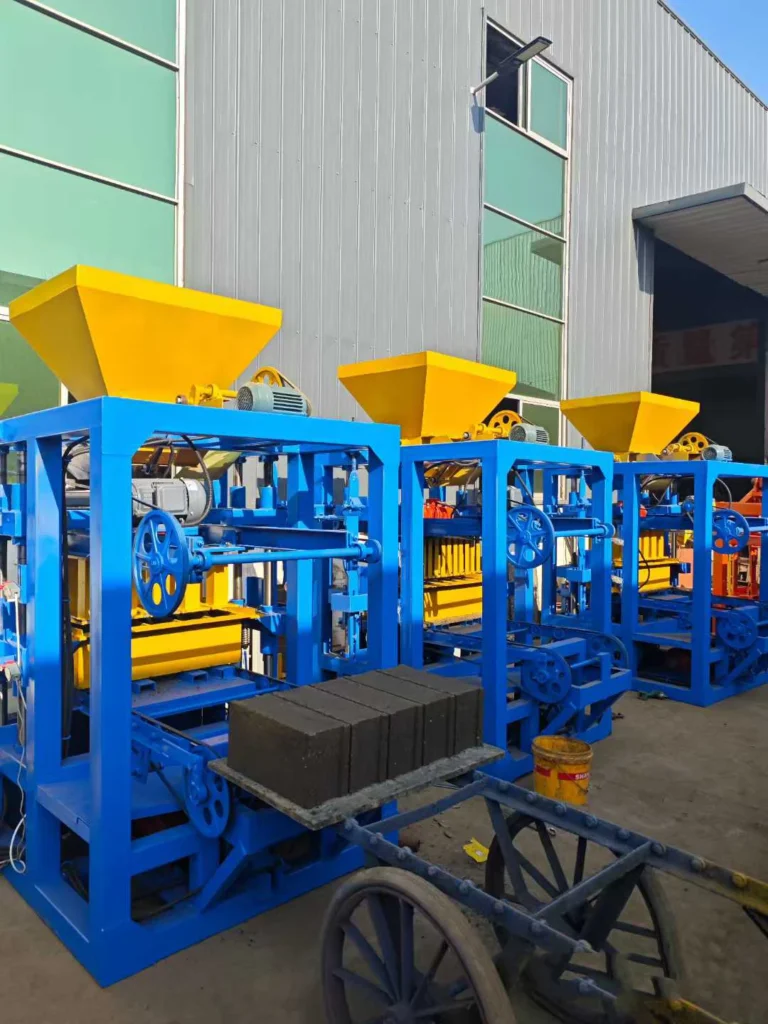
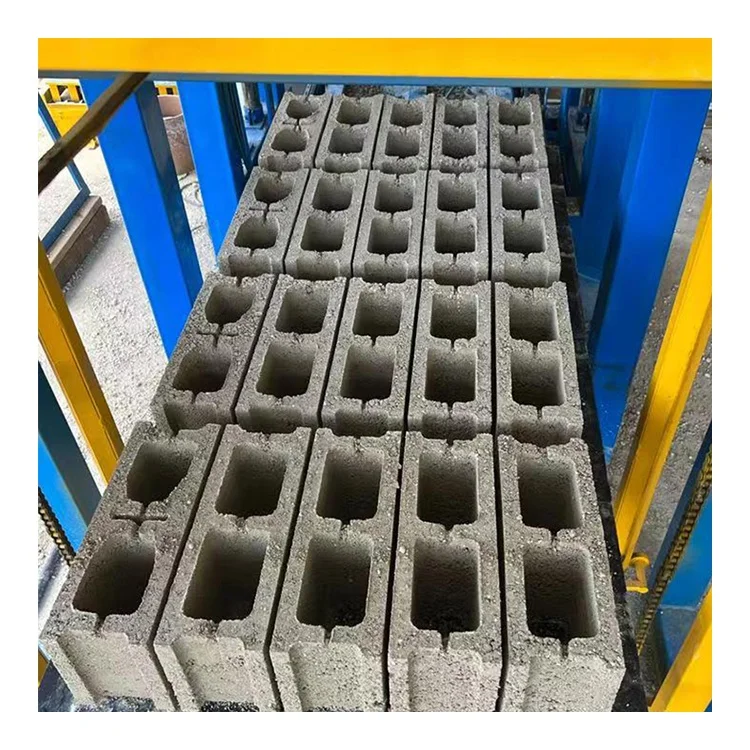
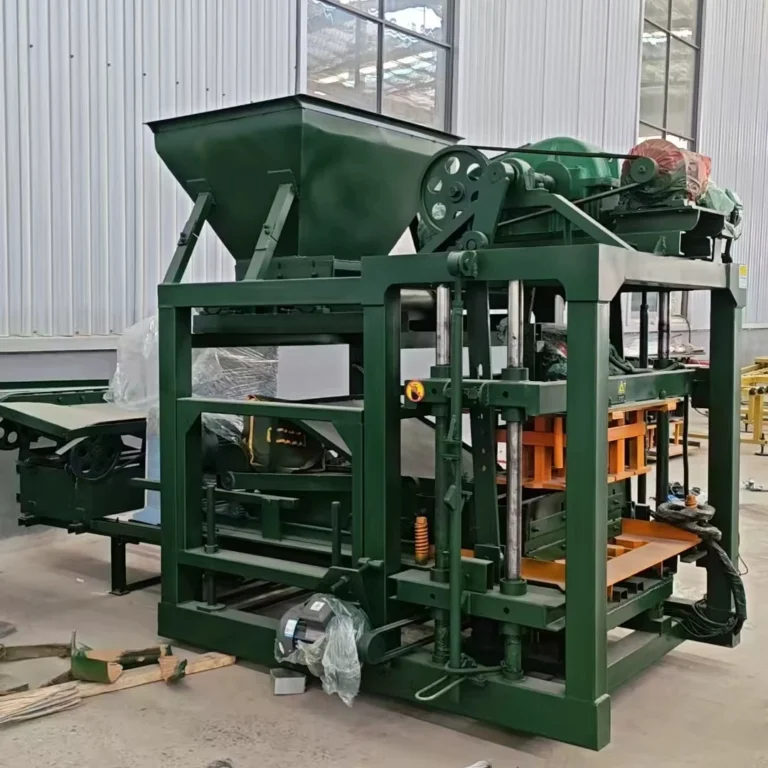
QTJ4-25 Semi-Automatic Block Making Machine — capacity figures stated against the 400×200×200 mm hollow block format so daily planning starts from a known baseline, not a catalogue promise.
Technical Specifications
| Parameter |
Value |
| Model |
QTJ4-25 |
| Product Type |
Semi-Automatic Concrete Block Making Machine |
| Rated Power |
17.9 kW |
| Vibration Frequency |
2800 r/min |
| Vibration Force |
60 KN |
| Mould Format (Standard) |
400×200×200 mm hollow block, 4 pcs/mould |
| Output Capacity |
960 pcs/h, 7680 pcs/day (based on 400×200×200 mm hollow block, 4 pcs/mould) |
| Molding Cycle |
25 s |
| Pallet Size |
850×550×20 mm |
| Overall Dimensions |
6400×1500×2700 mm |
| Net Weight |
2500 kg |
| Automation Level |
Semi-automatic |
| Control System |
Motor-driven with hydraulic station |
| Standard Configuration |
Host machine 1 set, block mould 1 set, JQ350 mixer |
| Pallet Material Options |
Fiber glass (optional), wooden pallet compatible |
| Assembly State |
Shipped as complete unit |
| Standards |
CE declaration where applicable |
Application Suitability
| Application |
Material or Output |
| Hollow block production |
Crushed stone, sand, cement mix for load-bearing and partition walls |
| Solid block manufacturing |
Dense aggregate and cement for structural masonry |
| Paving block production |
Fine aggregate and cement for walkways and yards |
| Kerbstone forming |
Coarse aggregate and cement for road and curb applications |
What "7680 Pieces per Day" Actually Means for Your Plant
The QTJ4-25 output is calculated at 960 pieces per hour based on a 400×200×200 mm hollow block, 4 pcs per mould, with a 25-second molding cycle.
Many buyers receive quotations listing cycles per hour without the block format behind that number. A semi-automatic block making machine manufacturer may quote a fast cycle, but if the pallet size or vibration force does not match your target format, daily output drops well below expectation. The QTJ4-25 capacity figure is tied to a specific block size so you can plan raw material purchasing, curing space, and labour shifts with a clear starting point. When buyers switch to a different format, the cycle time and output per hour change accordingly [NEED_CITE: block format impact on cycle time and daily output].

Where the QTJ4-25 Fits in a Full Block Machine Range
The Shiyue stationary range covers mobile egg-laying machines at one end and fully automatic stacking lines at the other. The QTJ4-25 occupies the entry-to-mid tier, giving first-time plant owners a semi-automatic block making machine that moves beyond manual pallet handling without requiring the capital and floor space of a high-capacity automatic line. Buyers who start here can later add automatic pallet feeding or stacking modules as production volume grows.
Plant Footprint and Line Integration
A complete QTJ4-25 setup includes the host machine, one block mould set, and a JQ350 mixer. The 6400×1500×2700 mm machine footprint leaves room for raw material staging on one side and wet block curing on the other. Semi-automatic operation means an operator loads pallets and removes finished blocks manually, so the curing area layout and forklift access path must be planned around the 850×550 mm pallet size. Matching the pallet dimension to your existing curing racks avoids double-handling after pressing [NEED_CITE: pallet size compatibility with curing infrastructure].
Pressure, Vibration, and Block Density
The 60 KN vibration force and 2800 r/min frequency work together with the hydraulic station to compact the mix inside the mould cavity. Higher vibration force drives aggregate particles into tighter arrangement, while the hydraulic upper mould compression ensures uniform density across all four block positions. If vibration force is too low for a coarse local aggregate, blocks emerge with weak corners and inconsistent weight. The QTJ4-25 vibration and pressure settings are adjustable during commissioning so the machine can be tuned to the buyer’s specific mix design and aggregate source.
The Cost of Skipping Mix Design Verification
When a buyer orders a machine configured for a standard sand-cement ratio but local aggregate carries high clay content, the vibration force that works for clean crushed stone fails to compact the sticky mix properly. Blocks leave the mould with surface cracks and lower compressive strength. Replacing worn moulds sooner than expected and losing output to rejected batches add hidden costs that never appear in the original quotation [NEED_CITE: aggregate quality impact on block compressive strength].
Why Buyers Source This Machine Here
Block machinery is the single focus at Shiyue, so the QTJ4-25 host machine, mould, pallet, and mixer are specified as a matched set rather than assembled from separate suppliers. Mould design covers the formats your local market actually buys, with custom drawings available for non-standard shapes. The automation level is selectable — start semi-automatic and add pallet feeding or stacking automation as volume justifies the investment. Voltage, frequency, and control language are confirmed before production so commissioning is not delayed after arrival. Installation support includes operator training and a wear parts list from day one.
Documentation & Verification
- Line layout with capacity calculation stated per block format for QTJ4-25
- Machine specification sheet confirming vibration force and hydraulic pressure values
- Mould drawing and format list covering all target block shapes
- Voltage and control language confirmation record before production
- Factory test record on buyer’s specified block format before dispatch
- Packing photographs and customs documentation support for shipment
Installation, Commissioning & Support
- Foundation pad sized to 6400×1500 mm footprint with level tolerance for stable press operation
- 17.9 kW rated power requires dedicated circuit with confirmed voltage and frequency
- Machine shipped as complete unit for straightforward on-site positioning
- First-run parameter tuning of vibration force and cycle time against buyer’s mix
- Operator training covering mould change procedure and daily maintenance checkpoints
- Wear parts and hydraulic seal list provided for initial spare stock planning
Before You Request a Quote
Tell us the block formats your market sells, your target daily output, and the local aggregate you plan to use. Share your available workshop dimensions, curing area layout, and existing pallet or forklift specifications so the semi-automatic block making machine configuration fits your site conditions from the first production run.
Frequently Asked Questions
Q: How is the QTJ4-25 output capacity calculated, and which block format is it based on?
A: The quoted 960 pieces per hour and 7680 pieces per day are based on producing 400×200×200 mm hollow blocks at 4 pieces per mould with a 25-second molding cycle. When you switch to a different block format or pallet size, the cycle time and output per hour change accordingly. We provide a capacity calculation for each format you plan to produce.
Q: Where does the QTJ4-25 sit compared to automatic and mobile machines in the range?
A: The QTJ4-25 is positioned between mobile egg-laying machines and fully automatic stacking lines. It suits buyers who want more consistent output than a mobile machine but do not yet need the investment and floor space of a high-capacity automatic plant. The semi-automatic configuration leaves room for future automation upgrades.
Q: What pallet size does this machine require, and will it fit my existing curing area?
A: The QTJ4-25 uses 850×550×20 mm pallets, available in fiber glass or wood. Before confirming the order, we check your curing rack dimensions and forklift capacity to ensure the pallet size integrates with your existing handling setup without requiring changes to your curing area layout.
Q: Can I start semi-automatic and add automation later?
A: Yes. The QTJ4-25 host machine supports adding automatic pallet feeding, stacking, or cubing modules as your production volume grows. The hydraulic station and control system are specified to accommodate future automation without replacing the core press, keeping upgrade costs proportional to actual demand.
Q: What supporting equipment does a complete QTJ4-25 line require?
A: A standard line includes the host machine, one mould set, and a JQ350 mixer. Raw material feeding is manual at this tier. You will also need pallets matching the 850×550 mm size, a curing area with adequate ventilation, and basic handling tools. We provide a line layout showing station positions and workflow before production begins.

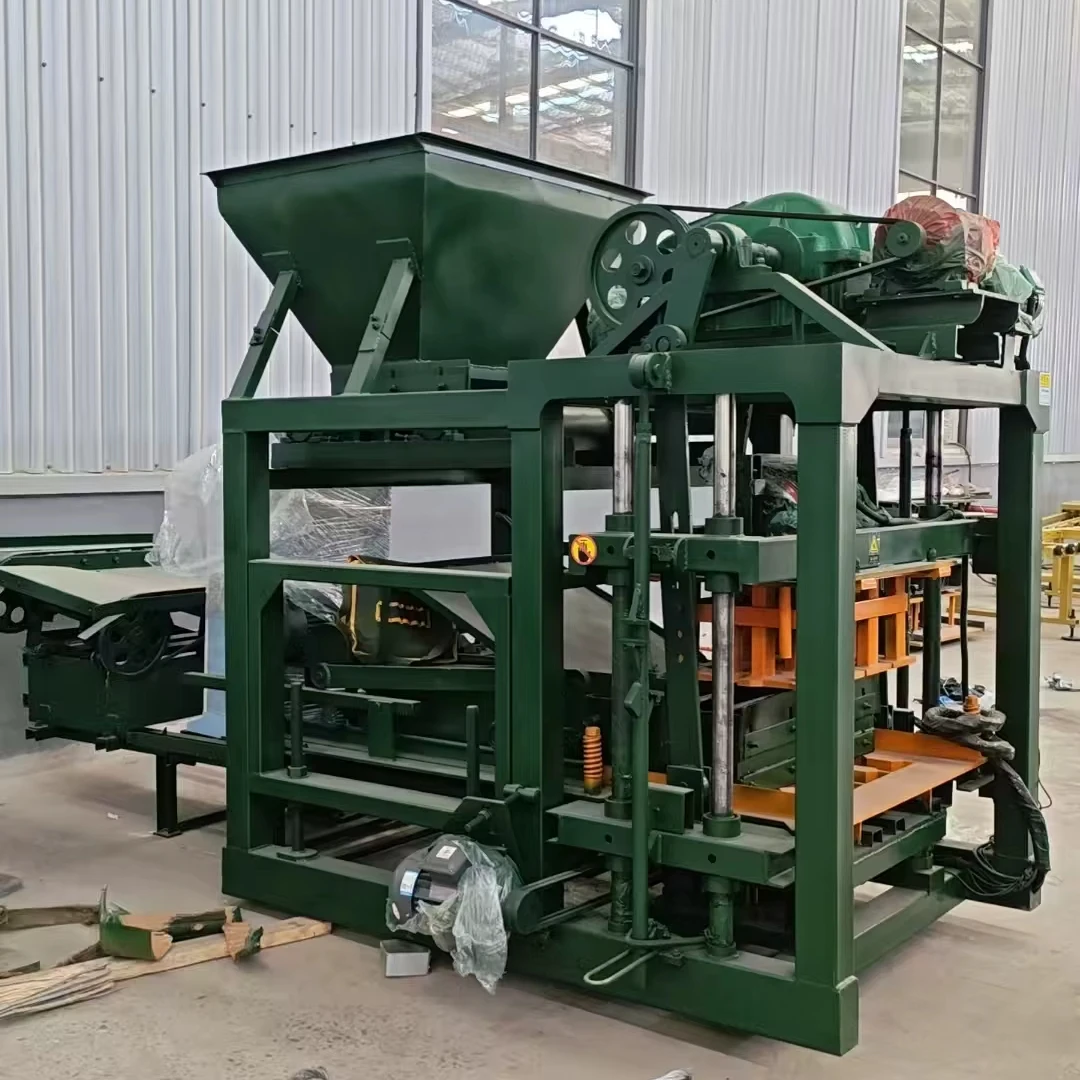
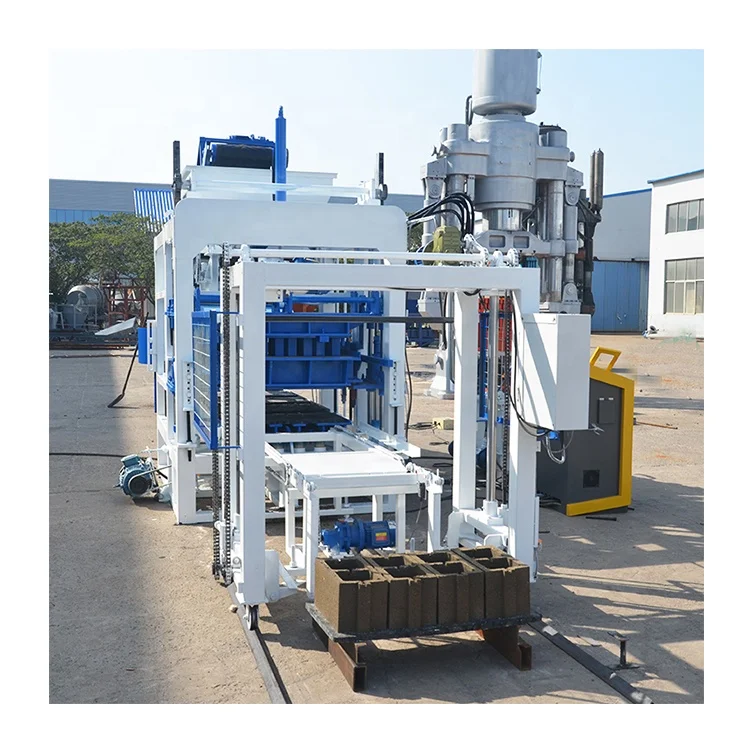 Stationary block machine