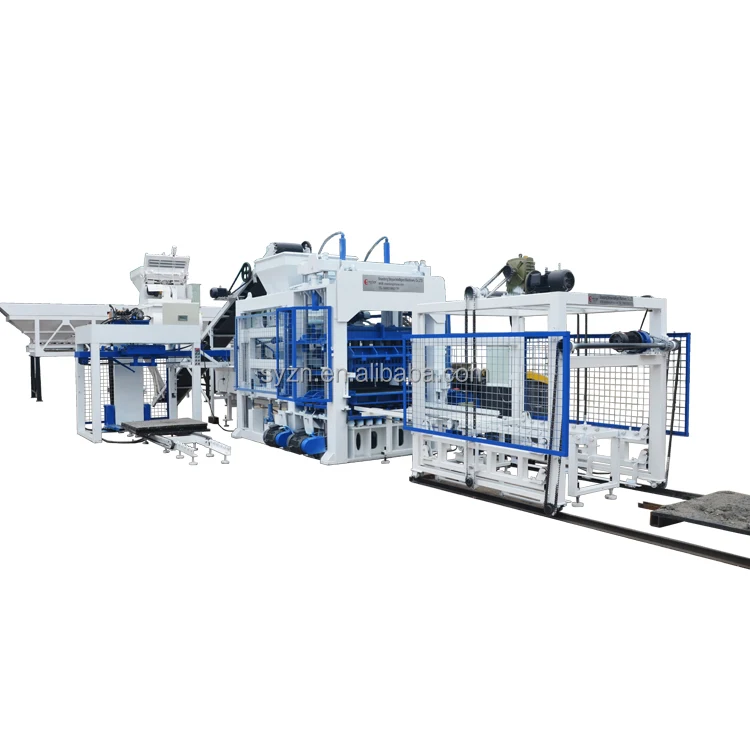
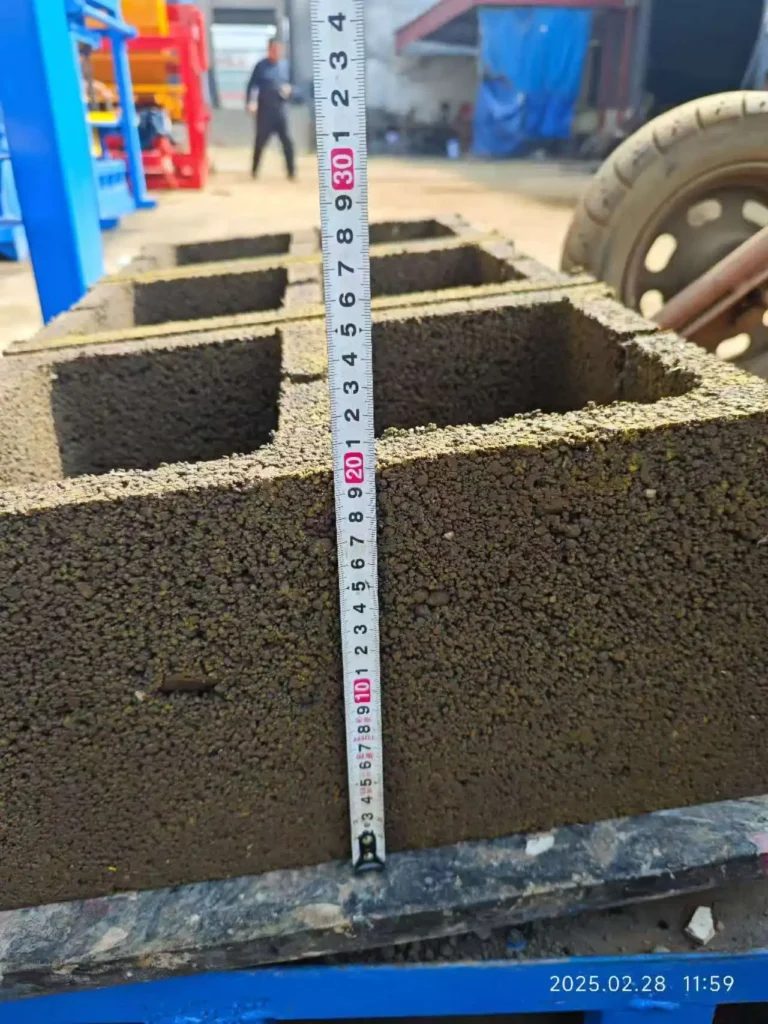
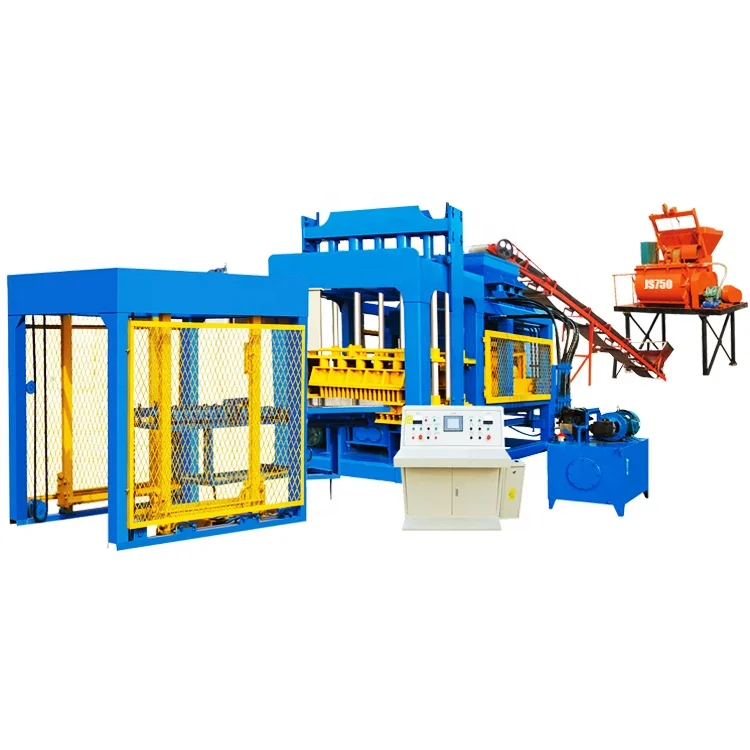
Matched System Design — The QT4-25 is specified as a coordinated set of press, mixer, mould and pallet rather than a standalone machine pulled from a catalog.
Technical Specifications
| Parameter |
Value |
| Model |
QT4-25 |
| Product Type |
Semi-Automatic Concrete Block Making Machine |
| Rated Power |
17.9 kW |
| Overall Dimensions |
6400×1500×2700 mm |
| Net Weight |
2500 kg |
| Molding Cycle |
25 s |
| Pallet Size |
850×550×20 mm |
| Vibration Frequency |
2800 r/min |
| Vibration Force |
60 kN |
| Output Capacity |
960 pcs/h, 7680 pcs/day (based on 400×200×200 mm hollow block, 4 pcs/mould) |
| Configuration |
Host machine 1 set, block mould 1 set, JQ350 mixer |
| Control System |
Motor-controlled (PLC not confirmed in source) |
| Mould Format |
Hollow, solid, paver (8 inch, 6 inch, 5 inch, 4 inch) |
| Automation Level |
Semi-automatic |
| Stacking Method |
Manual |
Application Suitability
| Application |
Material or Output |
| Hollow block production for small-to-medium block plants |
Crushed stone, sand, cement, fly ash |
| Solid block manufacturing for housing projects |
Local aggregate, cement, water |
| Paving block and kerbstone production |
High-density concrete mix with fine aggregate |
| On-site production for construction contractors |
Available site materials with portable mixer setup |
What "960 Pieces per Hour" Actually Means for Your Plant
Capacity figures only hold weight when the block format and mould cavity count are stated alongside them.
The QT4-25 is rated at 960 pieces per hour based on a 400×200×200 mm hollow block with 4 cavities per mould. Switch to a smaller solid block format with more cavities, and the pieces-per-hour number rises; move to a large paver with fewer cavities, and it falls. Many buyers receive a single headline capacity number and only discover the gap between quoted and actual output after the machine arrives and the first production run disappoints. This semi-automatic concrete block making machine for sale documentation states the format assumption up front so daily planning starts from a realistic baseline [NEED_CITE: block machine capacity calculation standards by format].

Where the QT4-25 Sits in the Shiyue Range
This model occupies the entry-to-mid tier of the stationary block machine lineup. It suits buyers launching a first block plant with limited capital or contractors who need on-site production for a specific housing project. The semi-automatic configuration keeps the initial investment modest while leaving room to add automation stations later. Buyers who already know their daily volume exceeds what this tier delivers can look at higher-output models in the range without re-evaluating the entire supplier relationship.
Planning the Upgrade Path from Semi-Automatic
Starting with a semi-automatic concrete block making machine for sale does not lock a plant into manual operations permanently. The QT4-25 platform allows future addition of automatic pallet feeding, stacking, and cubing stations as production volume justifies the investment. The key decision at the ordering stage is choosing a pallet size and press configuration that remains compatible with those future additions. Selecting the right foundation now avoids a complete equipment replacement when output demands grow [NEED_CITE: block plant automation upgrade compatibility requirements].
Vibration Force, Pallet Size, and Mould Flexibility
The 60 kN vibration force works with bed mould vertical vibration and upper mould compression to compact the concrete mix into consistent block density. This dual-vibration approach matters when local aggregate contains fines or clay that resist compaction. The 850×550×20 mm pallet size must match the curing area dimensions and the forklift capacity already on site — ordering a pallet size without this check leads to bottlenecks at the stacking and curing stage. Mould formats cover 8-inch, 6-inch, 5-inch, and 4-inch hollow blocks plus solid and paver options, giving a small plant the flexibility to serve multiple local market segments without buying separate machines.
The Hidden Cost of Skipping Configuration Checks
When voltage, frequency, and control language are not confirmed before production, the machine arrives and sits idle while electricians source transformers or operators struggle with an unfamiliar interface. When the mould is specified for a mix the buyer cannot source locally, production halts until a new material supply chain is established. These delays do not appear in the purchase price but consume weeks of project timeline and erode the return the buyer expected from the investment [NEED_CITE: industrial equipment commissioning delays due to specification mismatches].
Why Buyers Source This Tier from Shiyue
Block machinery is the single focus, so the QT4-25 press, JQ350 mixer, mould, and pallet are specified as one matched system rather than assembled from separate suppliers. Configuration is set against the buyer’s actual mix design and local aggregate, not a catalogue default. Mould design covers the formats the buyer’s market actually sells, including custom drawings when standard sizes do not match local demand. Automation level is selectable, letting a buyer start semi-automatic and add stations as volume grows. Installation support includes operator training so the first production week runs without avoidable stoppages.
Documentation & Verification
- Line layout and capacity calculation stating the 400×200×200 mm hollow block format assumption for the 960 pcs/h figure
- Machine specification sheet with voltage, frequency, and control language confirmed before production begins
- Mould drawing and format list covering 8-inch, 6-inch, 5-inch, and 4-inch options for buyer review
- Factory test record and packing photographs supplied before shipment for visual verification
Installation, Commissioning & Support
- Foundation must support 2500 kg net weight across 6400×1500 mm footprint with level concrete pad
- Power supply must deliver 17.9 kW at confirmed voltage and frequency with dedicated circuit breaker
- Host machine and JQ350 mixer arrive as separate units requiring on-site assembly and belt alignment
- First production run includes vibration frequency and molding cycle adjustment to match local aggregate characteristics
- Manual pallet handling and stacking training covers curing area layout and block movement workflow
- Wear parts list identifies vibration components and mould surfaces requiring periodic inspection
Before You Send an Inquiry
Provide the specific block formats your market demands and the daily volume you need to achieve. Include details on local raw material availability, especially aggregate type and any known contamination like clay or silt content. State your site voltage and frequency, preferred control language, and the curing area dimensions you have planned so pallet compatibility can be confirmed at the quotation stage.
Frequently Asked Questions
Q: How is the 960 pcs/h capacity calculated, and what is the real daily output for different block formats?
A: The 960 pcs/h figure is based on a 400×200×200 mm hollow block with 4 cavities per mould and a 25-second molding cycle. Smaller formats with more cavities yield higher piece counts, while larger pavers with fewer cavities yield lower counts. Daily output depends on operating hours and format mix, so request a capacity calculation document that states the assumed format for each figure.
Q: Where does the QT4-25 sit in the full machine range — when should a buyer choose a higher tier?
A: This semi-automatic concrete block making machine for sale fits first-time plant owners and contractors with modest daily volume targets. Buyers whose market research shows demand exceeding this tier’s capacity, or who need fully automatic stacking and cubing from day one, should look at higher-output models in the range that share the same mould compatibility and upgrade philosophy.
Q: What voltage and frequency options are available, and is the control language configurable?
A: Voltage and frequency must be confirmed before production to match the buyer’s local power grid. The control system is motor-controlled, and display language should be specified at the ordering stage. Confirming these details early avoids commissioning delays when the machine arrives on site and requires immediate production.
Q: Which moulds are included in the standard configuration, and how do I order custom formats?
A: The standard configuration includes one block mould set. Available formats cover 8-inch, 6-inch, 5-inch, and 4-inch hollow blocks plus solid and paver options. Custom mould designs can be produced to buyer drawings when local market demand requires sizes outside the standard range. Request the mould drawing and format list for review before finalizing the order.

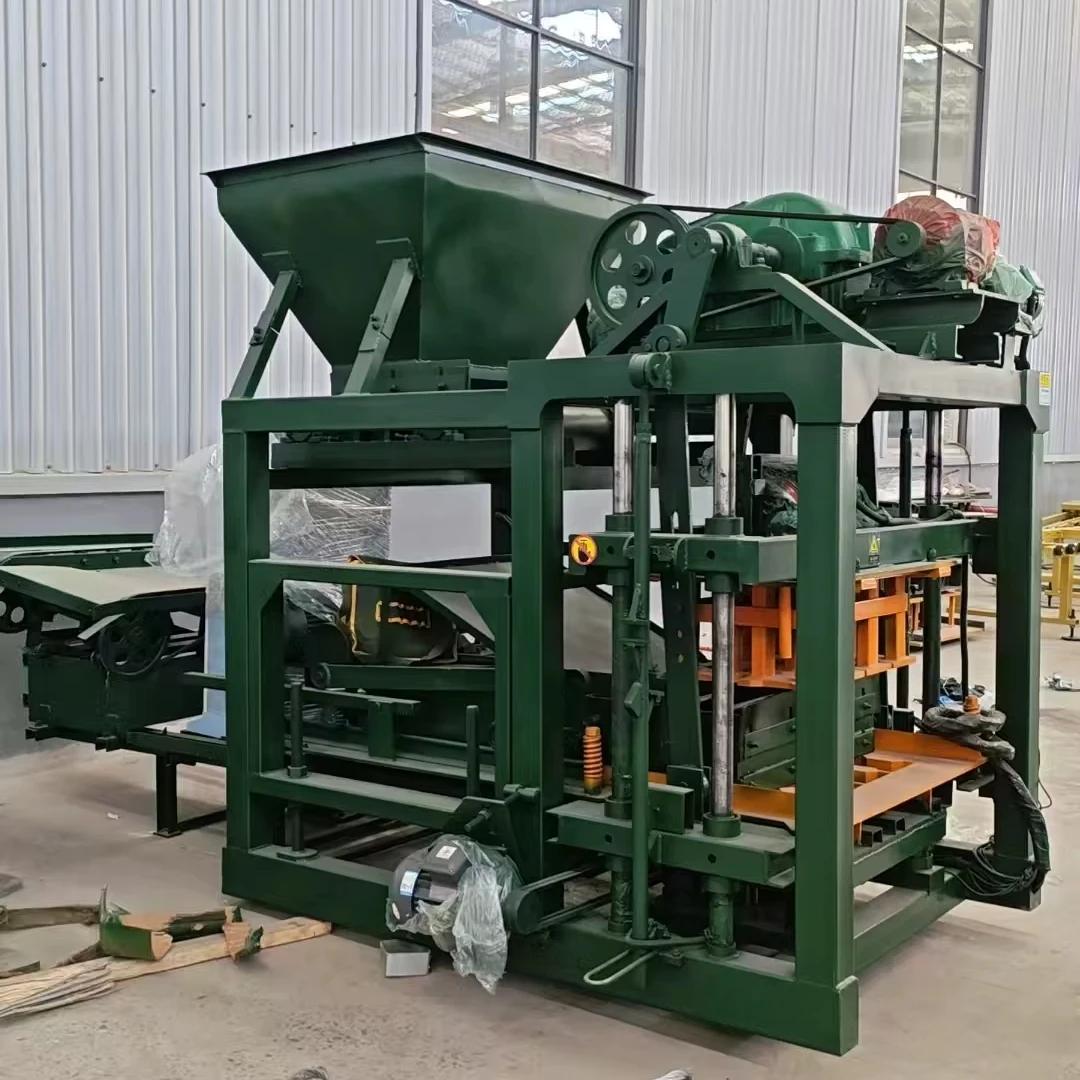
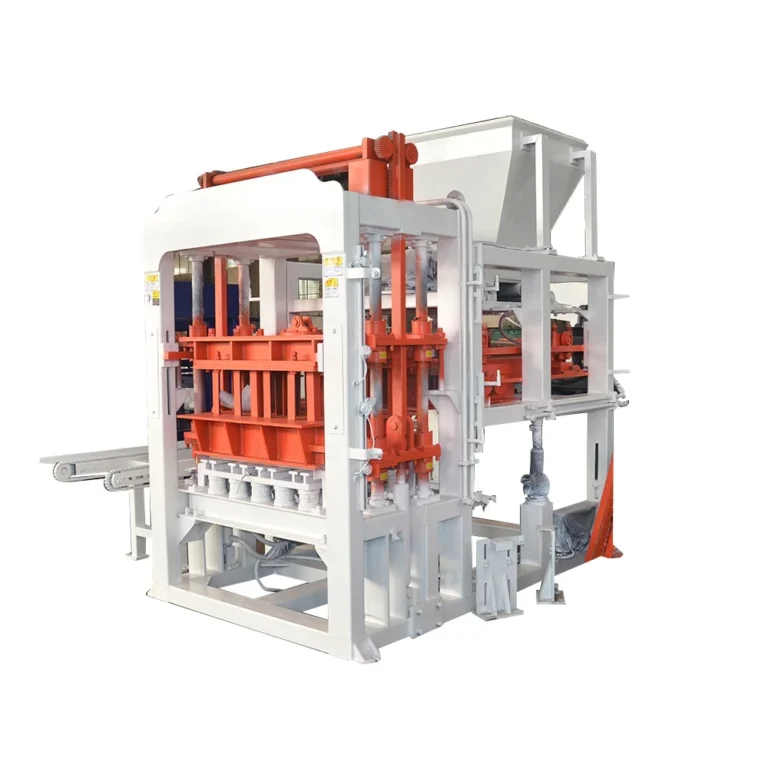 Stationary block machine