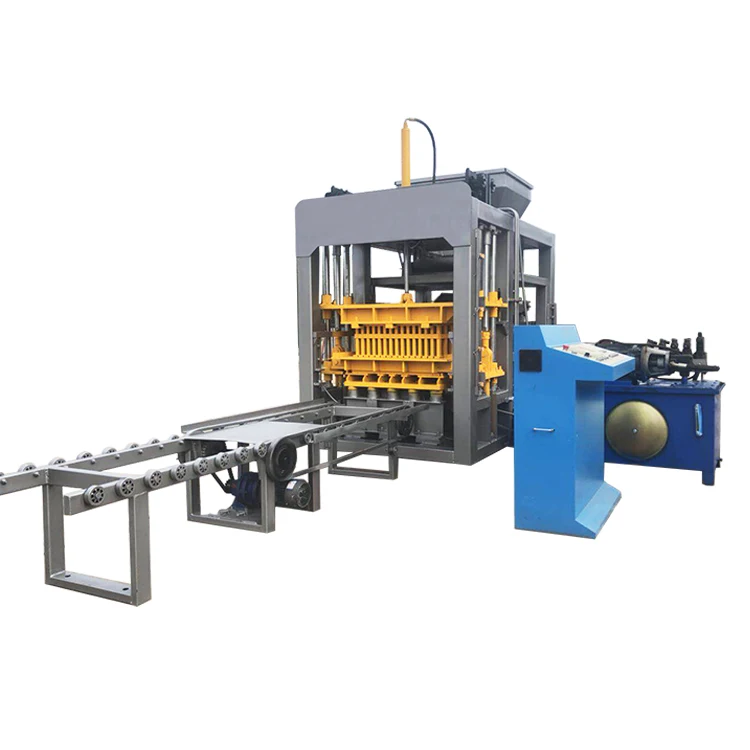
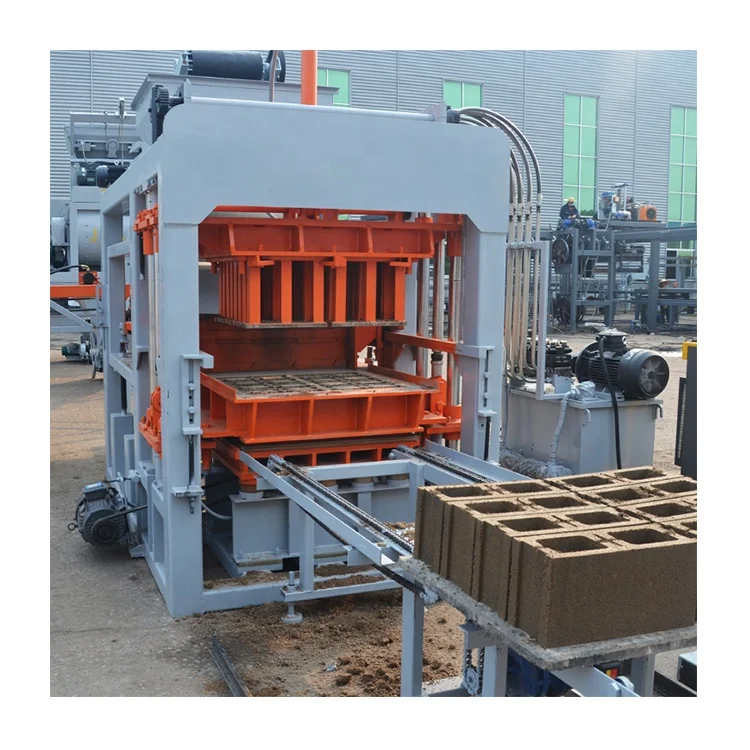
Matched System Sizing — we configure the QTJ4-25 against your actual block format, local aggregate, and curing area rather than quoting a default catalogue line.
Technical Specifications
| Parameter |
Value |
| Model |
QTJ4-25 |
| Product Type |
Hollow Block Brick Making Machine |
| Overall Dimensions (L×W×H) |
3000 × 1800 × 2680 mm |
| Total Mass |
3.5 T |
| Vibration Form |
Platform Vibration |
| Vibration Force |
60 KN |
| Vibration Frequency |
2800–4500 r/min |
| Molding Cycle |
25 s |
| Pallet Size |
850 × 480 mm |
| Overall Power |
16.58 kW |
| Guide Column |
Four-column with overlong guide design |
| Demolding Method |
Mechanical |
| Steel Material |
National standard manganese steel |
| Surface Treatment |
Chrome-plated |
| Factory Area Required |
300 m² |
| Output Capacity (Hollow Block 400×200×200 mm) |
4 pcs/mould, 580 pcs/hour, 4640 pcs/day (8 hours) |
| Output Capacity (Porous Block 240×115×90 mm) |
9 pcs/mould, 1400 pcs/hour, 11200 pcs/day (8 hours) |
| Output Capacity (Solid Brick 240×115×53 mm) |
21 pcs/mould, 3300 pcs/hour, 26400 pcs/day (8 hours) |
Application Suitability
| Application |
Material or Output |
| Small to medium block plant startups |
Hollow and solid concrete blocks from crushed stone, sand, and cement |
| On-site production for building contractors |
Interlocking blocks and curbstones using locally available gravel and slag |
| Product range expansion for distributors |
Paving blocks and colored pavers from fly ash, dust, and cement blends |
| Housing project supply |
Porous blocks and standard hollow blocks at workshop-level daily volumes |
What "580 Pieces per Hour" Actually Means for Your Plant
That figure holds only when the mould is set for 400×200×200 mm hollow blocks — switch the format and the hourly count changes entirely.
Buyers regularly receive quotations listing a single cycles-per-hour number with no format attached, then discover on commissioning day that their target block runs at a much lower count. With the QTJ4-25, the 25-second moulding cycle produces 4 hollow blocks per press, giving 580 pieces per hour on that specific format. Move to 240×115×53 mm solid bricks and the same cycle yields 21 pieces per mould — a very different daily total. I have seen contractors order machines based on a headline number, only to realise the format they actually sell was never part of the calculation [NEED_CITE: capacity calculation standards for block making equipment].

Where the QTJ4-25 Sits in the Full Machine Range
The QTJ4-25 occupies the entry-to-mid tier of our automatic block machine range, targeting workshop volumes where a fully automatic stacking and cubing line would overshoot both budget and floor space. At 300 m² of factory area, this model fits inside a standard industrial shed without demanding a dedicated curing tunnel. Buyers stepping up from manual egg-laying machines find the platform vibration and mechanical demolding a meaningful step forward in block density and daily output consistency, while keeping the operator count manageable.
Choosing Between Semi-Automatic and Automatic Tiers
Within the broader range, this model runs mechanical demolding with manual pallet handling, placing it below the fully automatic lines that add pallet feeding, stacking, and cubing stations. For an entrepreneur setting up a first block plant, starting here leaves room to add automatic handling later if demand grows. The 850 × 480 mm pallet size is a common footprint across several models in the range, so pallets purchased now remain usable if the press is eventually upgraded [NEED_CITE: pallet standardization across block machine tiers].
Reading the Specs That Shape Daily Output
The 60 KN vibration force paired with platform vibration determines how densely the concrete mix compacts before demolding — insufficient force on a coarse aggregate blend produces blocks that chip at the edges during handling. The 2800–4500 r/min frequency range lets the operator tune vibration to the mix: finer sand blends respond to higher frequencies, while crushed stone with larger particle sizes benefits from the lower end. Four chrome-plated guide columns with an overlong guide design keep the mould aligned through every cycle, reducing uneven wear that would otherwise show up as thickness variation across the block face. The 16.58 kW total power draw is modest enough to run from a standard workshop supply without a dedicated transformer, though voltage and frequency must still be confirmed before the machine leaves the factory.
The Cost of Skipping Configuration Details
When a machine arrives configured for a mix the buyer cannot source locally, the first months of production go to waste on material trials instead of sales. A pallet size chosen without checking the curing rack spacing or forklift capacity means pallets pile up on the floor, creating bottlenecks that have nothing to do with the press itself. Voltage mismatches discovered after arrival delay commissioning by weeks while a transformer is sourced or rewound [NEED_CITE: voltage and frequency standards by export market]. These are not engineering failures — they are gaps in the specification conversation that happen before the order is placed.
Why Buyers Source This Model Through Us
Block machinery is our single focus, so the QTJ4-25 is specified together with its mould, pallet, and handling equipment as one matched set rather than assembled from separate suppliers. Configuration is set against the buyer’s actual mix design and target block format — not a catalogue default — which is why we ask for a raw material report before finalising the quotation. Mould design covers the formats the buyer’s market actually sells, including custom drawings when a standard mould does not match local dimensions. Automation level is selectable, so a buyer can start with mechanical demolding and add automatic stacking when volume justifies the investment.
Documentation & Verification
- Line layout showing capacity calculation per block format for the QTJ4-25
- Machine specification sheet with confirmed voltage, frequency, and control language
- Mould drawing and format list matching your local market block dimensions
- Factory test record on your target block format before dispatch
- Operation and maintenance manual with wear parts and mould replacement schedule
Installation, Commissioning & Support
- 300 m² floor space with level concrete foundation for the 3000 × 1800 mm machine footprint
- Power supply matched to confirmed voltage and the 16.58 kW total draw on a dedicated circuit
- Machine shipped as a single unit with pallet and mould packed for container loading
- On-site commissioning includes mould alignment and vibration tuning to your local aggregate
- Operator training covers mould change procedure, cycle timing, and daily maintenance checkpoints
- Wear parts list and mould spares available for first replacement ordering at time of shipment
What to Share When You Request a Quotation
Send us the block formats your market sells, including dimensions and target daily volume, along with a sample or lab report of your local aggregate and cement blend. Let us know the voltage and frequency at your site, the control panel language your operators need, and whether you already have pallets, forklifts, or curing racks on hand. If you are comparing this tier to a higher-automation model, tell us your current operator count so we can map the right position on the range.
Frequently Asked Questions
Q: Where does the QTJ4-25 fit compared to fully automatic block lines?
A: This model sits in the entry-to-mid tier of the range with mechanical demolding and manual pallet handling, aimed at workshop-level output. Fully automatic lines add pallet feeding, stacking, and cubing stations for higher daily volumes and reduced labour. Starting here leaves room to upgrade handling later.
Q: Is the 580 pieces per hour figure based on a specific block size?
A: Yes. That number applies to 400×200×200 mm hollow blocks at 4 pieces per mould with a 25-second cycle. Other formats produce different counts per mould — for example, 21 solid bricks per mould at the same cycle length — so daily output must be recalculated for your actual product mix.
Q: What floor space does this model need?
A: The QTJ4-25 requires approximately 300 m² including space for raw material storage, block curing, and pallet handling around the 3000 × 1800 mm machine footprint. A level concrete foundation is needed, and ceiling height must clear the 2680 mm machine height plus demolding clearance.
Q: Can I upgrade to automatic stacking after starting with this model?
A: The pallet size and machine platform are compatible with automatic stacking and cubing modules available elsewhere in the range. Adding them later depends on your production volume growth and available floor space, which we can assess during a follow-up line review.
Q: How long does a mould change take when switching block formats?
A: Mould change on the QTJ4-25 involves unbolting the current mould from the platform and fitting the replacement, a task that takes one shift for an operator trained during commissioning. Frequency of changes should be planned into your production schedule to avoid losing output to format swaps.

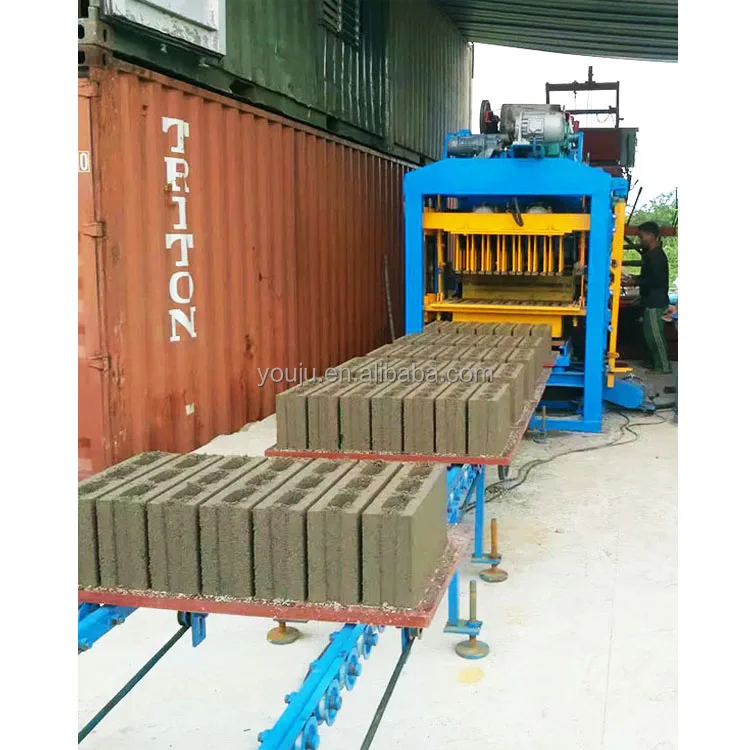
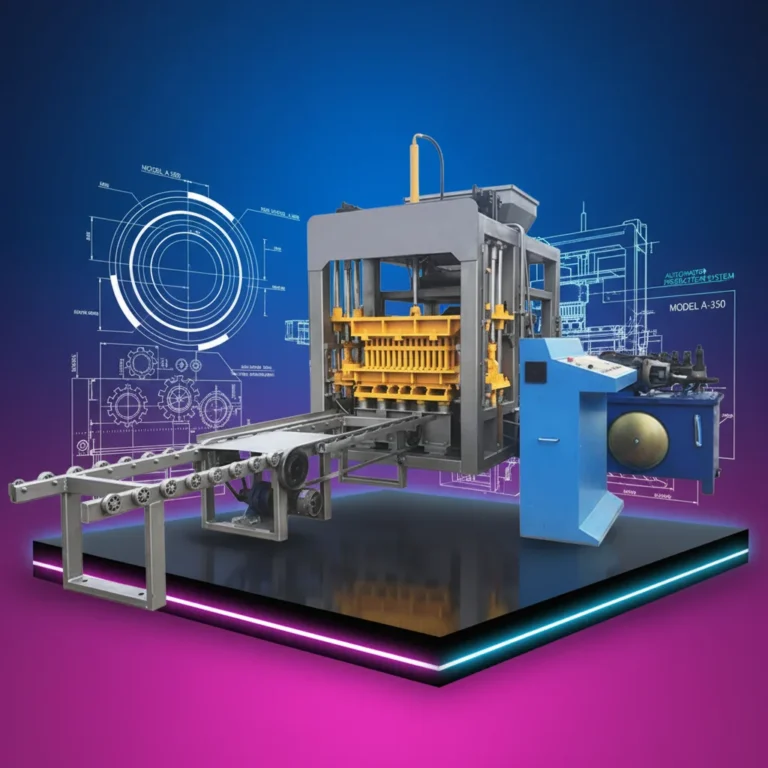 Automatic block machine