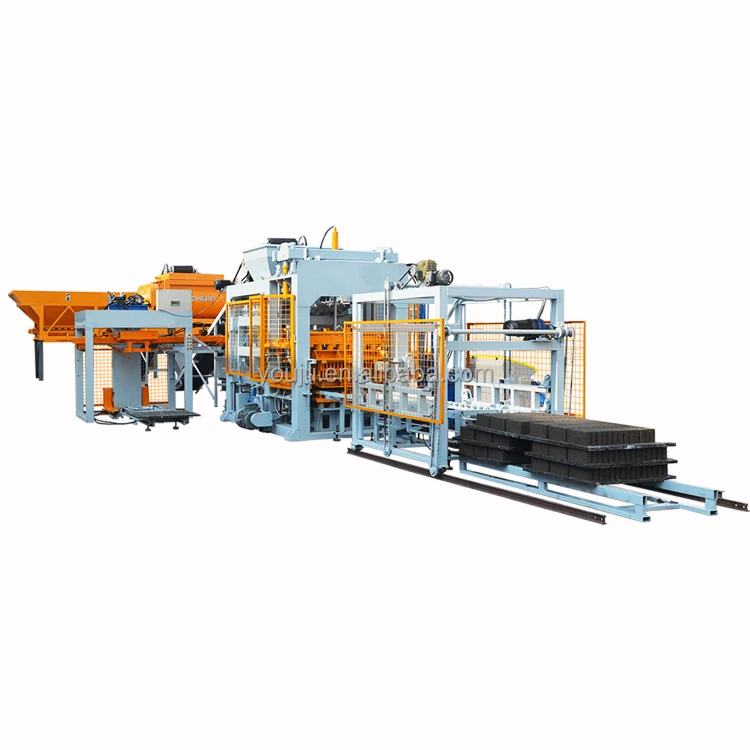
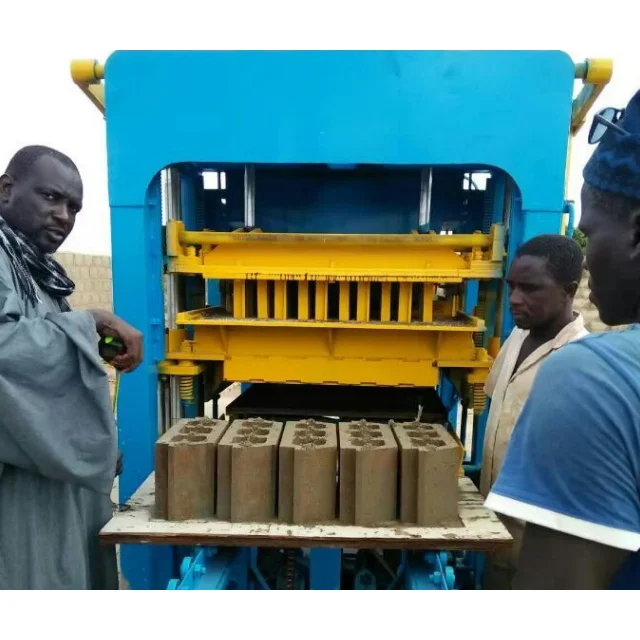
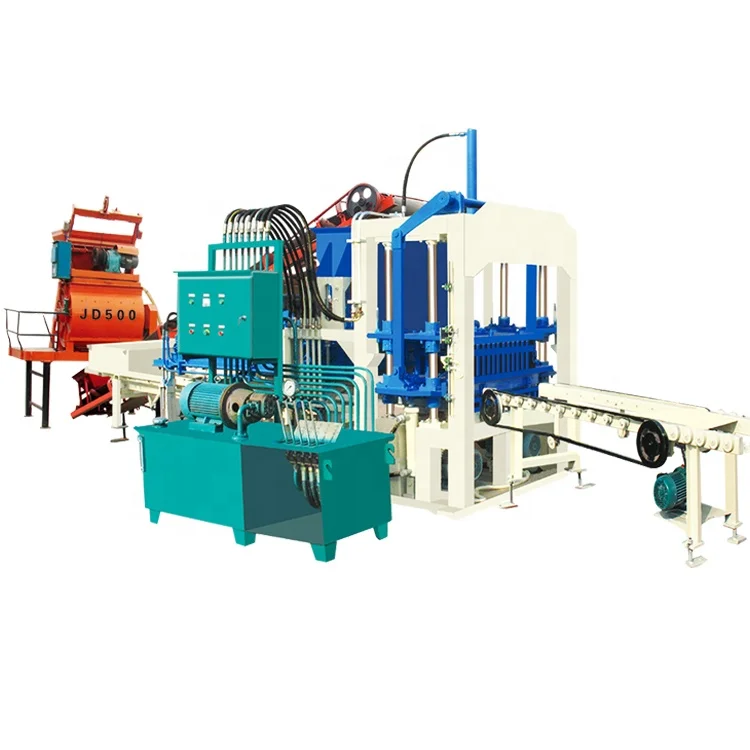
Matched System Configuration — the QT5-15 block machine, its 1100x550mm pallets, and hydraulic handling gear are specified together so the press never waits on upstream or downstream stations.
Technical Specifications
| Parameter |
Value |
| Model |
QT5-15 |
| Product Type |
Hydraulic Block Making Machine |
| Overall Dimension |
7400 × 1950 × 2800 mm |
| Total Mass |
5000 kg |
| Vibration Form |
Platform Vibration |
| Vibration Frequency |
0–60 Hz |
| Vibration Force |
80 kN |
| Moulding Mode |
Automatic load, vibration moulding |
| Demolding Method |
Hydraulic |
| Pallet Size |
1100 × 550 mm |
| Molding Cycle |
15–20 s (basis not stated in source — confirm block format / material / thickness) |
| Overall Power |
32 kW |
| Control System |
PLC (Programmable Logic Controller) |
| Output Capacity |
900–1200 pcs/h (based on 400×200×200 mm hollow block, 5 pcs/mould) |
| Output Capacity |
1080–1440 pcs/h (based on 400×150×200 mm hollow block, 6 pcs/mould) |
| Output Capacity |
5760–7680 pcs/h (based on 240×115×53 mm solid brick, 32 pcs/mould) |
| Output Capacity |
3600–4500 pcs/h (based on 200×100×60 mm rectangular brick, 25 pcs/mould, cycle 20–25 s) |
| Output Capacity |
2304–2880 pcs/h (based on 225×112.5×60 mm zigzag brick, 16 pcs/mould, cycle 20–25 s) |
| Compressive Strength |
More than 15 MPa |
| Fly Ash Content |
Up to 70% |
| Factory Area |
1000 m² |
| Key Features |
CE marked; pallet feed machine, storage hopper, conveyor, hydraulic unit, and PLC cabinet included |
Application Suitability
| Application |
Material or Output |
| Hollow block production for residential and commercial wall systems |
Crushed stone, sand, cement, and water with fly ash content up to 70% |
| Solid brick manufacturing for load-bearing structures |
Local aggregate blended with cement, targeting compressive strength above 15 MPa |
| Rectangular paving brick for walkways and light-traffic areas |
Sand, crushed stone, and cement mixes with platform vibration compaction |
| Zigzag interlocking brick for driveways and slopes |
Interlocking mould with hydraulic demolding at 20–25 s cycle |
| Fly ash brick for cost-sensitive housing projects |
Industrial fly ash at ratios up to 70% mixed with slag, gangue, or sand |
What "1200 Pieces per Hour" Actually Means for a QT5-15 Block Machine Manufacturer
Cycle time only matters when you know which block format it was measured on.
Sellers quote a peak hourly number that assumes the largest mould cavity and the fastest possible cycle. In a real workshop producing smaller formats or working with unfamiliar aggregate, the actual output can fall well short of that headline figure. I have watched buyers sign off on a machine expecting five-figure daily totals, only to discover that switching from a 400×200 mm hollow block to a 200×100 mm paver cuts the per-cycle piece count and stretches the molding cycle beyond the quoted range. The gap between catalogue capacity and daily reality is where most disputes start [NEED_CITE: block production output verification methods].

Mapping the Full Range from Workshop to Continuous Production
The QT5-15 block machine sits at the mid-range automatic tier, bridging small workshop output and high-capacity continuous lines. Buyers evaluating their first automatic press will find it covers daily volumes that manual egg-laying machines cannot reach, while still fitting within a modest 1000 m² factory footprint. Those already running semi-automatic setups can see where this model slots in as a capacity step-up without requiring a complete plant redesign.
Where Each Configuration Tier Fits Your Investment Plan
Choosing between a basic automatic press and a fully integrated line depends on how much downstream handling you want to automate. The QT5-15 block machine manufacturer supplies configurations that range from standalone press with manual pallet removal through to lines with automatic stacking and curing rack handling. The decision usually comes down to available labour and whether your curing yard already has a forklift compatible with the 1100×550 mm pallet format.
Reading the Specs That Shape Your Daily Output
The 80 kN vibration force working through platform vibration compacts the mix from below, which is critical for dense pavers and interlocking bricks that need uniform density across the mould face. The 0–60 Hz adjustable frequency range lets the operator tune vibration to different materials — lower frequency for coarse aggregate mixes and higher frequency for fine sand blends. The hydraulic demolding system lifts the mould box vertically, protecting block edges on thin-wall hollow formats. Meanwhile, the PLC control cabinet manages load timing, vibration duration, and demolding sequence, so cycle consistency does not depend on operator experience [NEED_CITE: hydraulic vibration block forming principles].
The Cost of Overlooking Pallet and Downstream Compatibility
When the pallet size is chosen without checking the curing rack spacing or the forklift tine width already in the yard, blocks pile up on the floor waiting to be moved by hand. A 1100×550 mm pallet that does not match existing racks means either buying new racks or accepting slower handling. Similarly, if the quotation does not include a pallet feed machine or stacking system, the press may cycle at full speed while workers struggle to clear finished pallets, creating a bottleneck that erases the capacity advantage you paid for [NEED_CITE: block plant pallet handling integration].
Why Source Your Line from This QT5-15 Block Machine Manufacturer
Every component in the line — from the storage hopper to the conveyor to the hydraulic unit — is specified as a matched set rather than assembled from unrelated suppliers, so feed rates and cycle times stay synchronized. The mould catalogue covers hollow block, solid brick, rectangular paver, and zigzag interlocking formats, with custom mould design available to buyer drawings. Machine configuration is set against the buyer’s actual mix design and local aggregate, not a generic catalogue default. Voltage, frequency, and PLC display language are confirmed before production begins, avoiding commissioning delays after arrival. Factory testing records document cycle time and block quality on the specific format and material the buyer will run.
Documentation & Verification
- Line layout drawing with capacity calculation stating the block format assumed
- Machine specification sheet covering vibration force, frequency range, and pallet size
- Mould drawing and format list matching the products your market sells
- Hydraulic and electrical schematic for local maintenance teams
- Voltage, frequency, and PLC display language confirmation before shipment
- Factory test record on your target block format and material mix
Installation, Commissioning & Support
- Foundation plan accounts for the 7400 × 1950 mm footprint and 5000 kg mass
- Electrical connection requires dedicated 32 kW circuit at confirmed voltage and frequency
- Machine arrives partially assembled; press frame and hydraulic unit bolt on site
- First commissioning includes vibration frequency tuning to your specific aggregate blend
- Operator training covers PLC fault diagnosis and mould change procedure
- Wear parts list with reorder codes for hydraulic seals and vibration springs
What to Include in Your Next Inquiry
Send your target block format with dimensions, the local raw material you plan to use (including whether fly ash or slag is available), and the daily output you need. Confirm your site voltage, frequency, and preferred PLC display language. Let us know whether you already have curing racks and forklifts so the pallet specification can match your existing equipment.
Frequently Asked Questions
Q: How do I check real daily output when capacity is quoted per hour?
A: Ask for a capacity table that lists cycle time and pieces per mould for each block format separately. The QT5-15 produces different hourly totals depending on whether you run hollow blocks at 15–20 seconds or pavers at 20–25 seconds. Multiply the per-format hourly figure by your actual working hours and subtract pallet change and mould swap time.
Q: Which automation level matches my budget and workforce?
A: A standalone QT5-15 press with manual pallet handling suits workshops with available labour. Adding automatic pallet feeding and stacking reduces headcount but raises investment. Start with the automation tier that fits your current budget and plan the upgrade path so future additions integrate without replacing the press.
Q: What voltage and PLC language options can I request?
A: Voltage and frequency are configured before production to match your local grid, whether single-phase or three-phase. The PLC touchscreen display language is also confirmed at order stage so operators can read fault codes and cycle parameters in a language they understand from day one.
Q: How long does a mould change take and what formats are possible?
A: Mould change involves lifting the current mould box, aligning the new one, and recalibrating the demolding stroke. The QT5-15 supports hollow block, solid brick, rectangular paver, and zigzag interlocking formats. Custom moulds can be designed to buyer drawings for formats your local market requires.
Q: What supporting equipment comes with the quotation?
A: The standard package includes the pallet feed machine, storage hopper, conveyor, hydraulic unit, and PLC control cabinet. Automatic stacking, curing rack handling, and cubing systems are available as line additions. Confirm which downstream stations you need so the quotation covers your complete production flow.

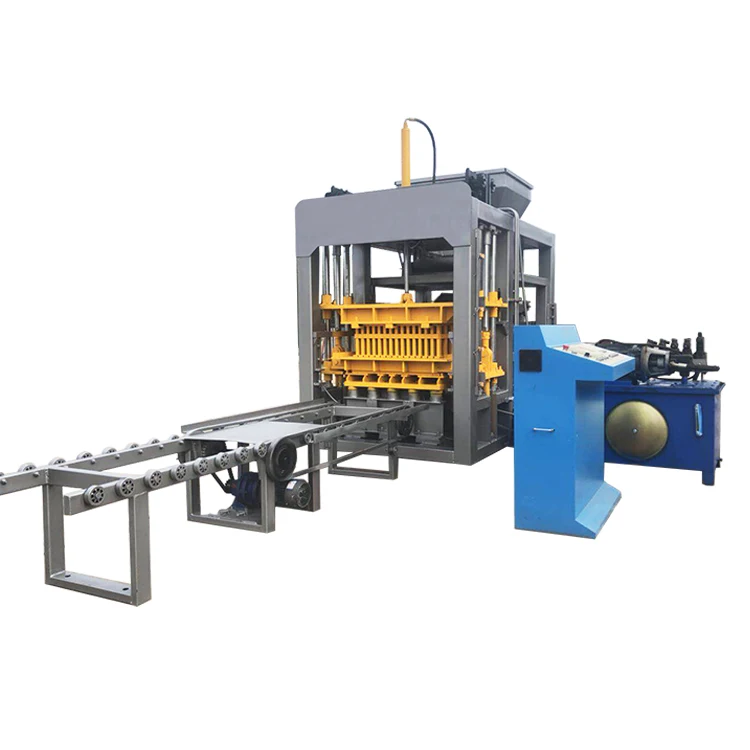
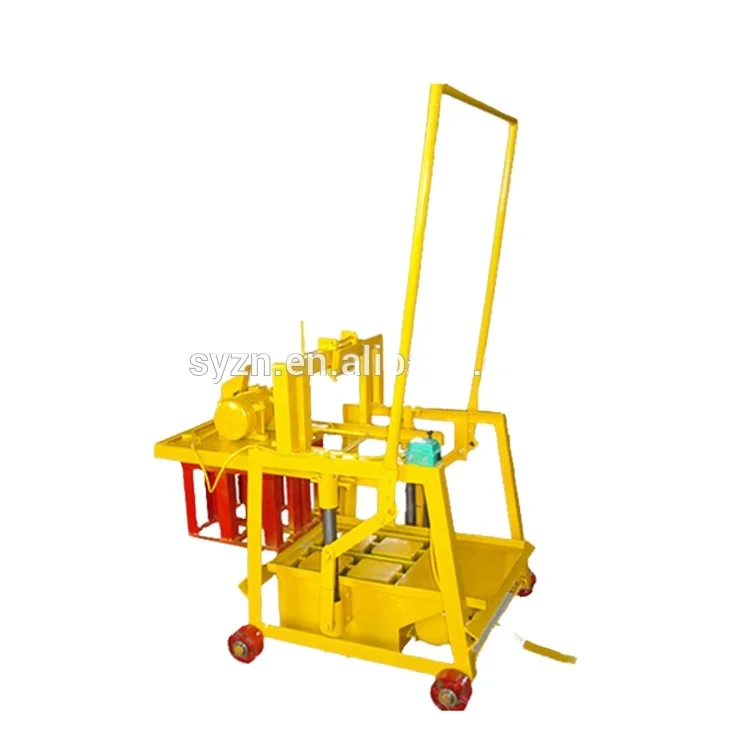 Automatic block machine