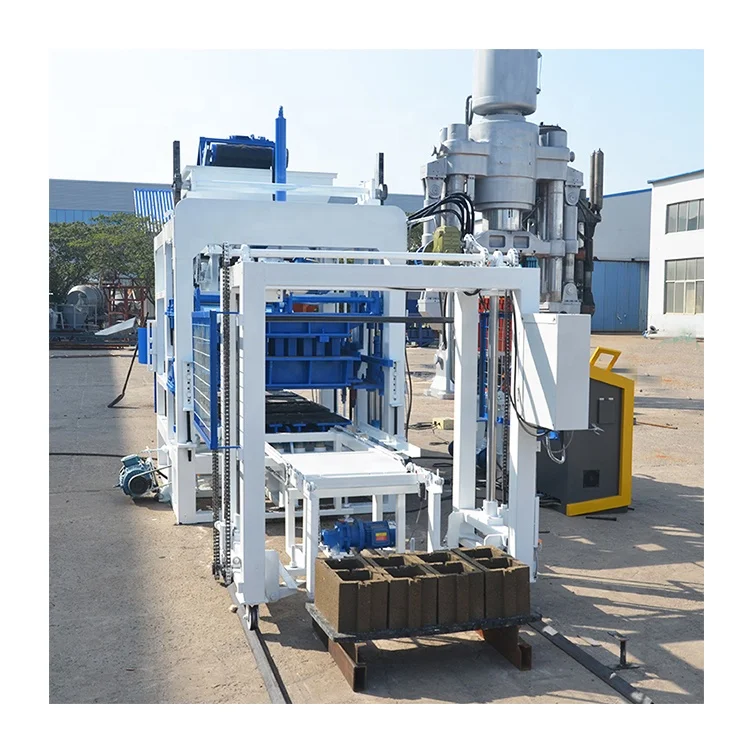
Single-Focus Block Line Sizing — every output figure for the QTJ4-25 is stated against a named block format and mould cavity count, not a catalogue peak.
Technical Specifications
| Parameter |
Value |
| Product Type |
Automatic Concrete Block Making Machine |
| Model |
QTJ4-25 |
| Overall Dimensions (L×W×H) |
3000 × 1800 × 2680 mm |
| Total Mass |
3.5 T |
| Overall Power |
16.58 kW |
| Vibration Force (Exciting Power) |
60 KN |
| Main Vibration Form |
Platform Vibration |
| Vibration Frequency |
2800–4500 r/min |
| Pallet Size |
850 × 480 mm |
| Molding Cycle |
25 s |
| Demolding Method |
Mechanical |
| Guide Column Design |
Four columns, overlong guide, chrome-plated |
| Steel Material |
National standard manganese steel |
| Mould Exchange |
Multi-function (solid, hollow, porous, paver, interlocking) |
| Recommended Factory Area |
300 m² |
| Output Capacity |
580 pcs/h (basis: 400×200×200 mm hollow block, 4 pcs/mould) |
| Output Capacity |
1400 pcs/h (basis: 240×115×90 mm multicellular brick, 9 pcs/mould) |
| Output Capacity |
3300 pcs/h (basis: 240×115×53 mm standard brick, 21 pcs/mould) |
| Raw Materials |
Crushed stone, sand, cement, dust, fly ash, gravel, slag |
| Applied Products |
Hollow/solid blocks, pavers, interlocking blocks, curbstone |
| Standards |
CE declaration where applicable (source value — verify against manufacturer catalog) |
Application Suitability
| Application |
Material or Output |
| First block plant for entrepreneurs |
Entry-to-mid automatic tier at contained investment, 300 m² footprint |
| On-site hollow block production for contractors |
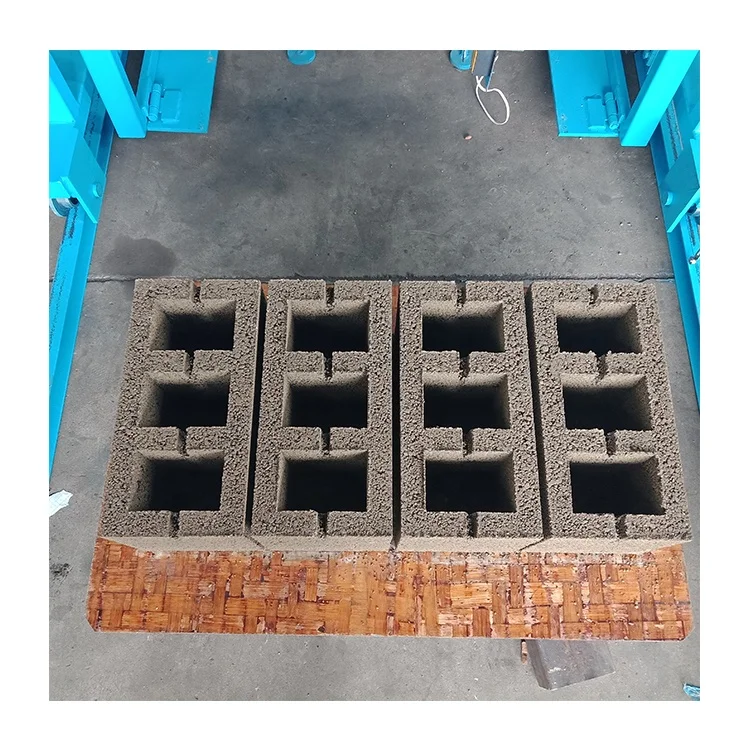
400×200×200 mm hollow blocks from crushed stone and cement |
| Standard brick range for distributors |
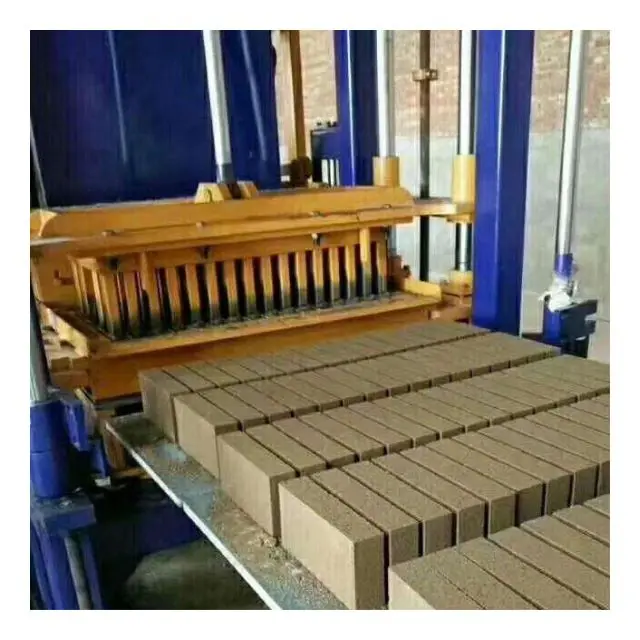
240×115×53 mm solid bricks using local sand and fly ash |
| Paver and interlocking format additions |
Colored pavers and interlocking bricks with mould change |
| Multicellular brick production |
240×115×90 mm bricks from gravel, slag, and cement blends |
What "580 Blocks per Hour" Actually Means for Your Plant
Every capacity number on this page names the exact block size and mould cavity count behind it — no format, no quote.
Buyers frequently compare machines on a single headline cycle rate, only to discover on commissioning day that the quoted throughput assumed a small solid brick, while their market demands 400 mm hollow blocks. I once spent three days on-site in Oman reworking a mix because the vibration force specified for a catalogue default could not compact the local limestone aggregate. The QTJ4-25 automatic concrete block making machine manufacturer documentation states output per format so you can cross-check against your actual product mix before the order is placed. [NEED_CITE: block format assumptions in capacity quotations]

Where the QTJ4-25 Sits in the Full Machine Range
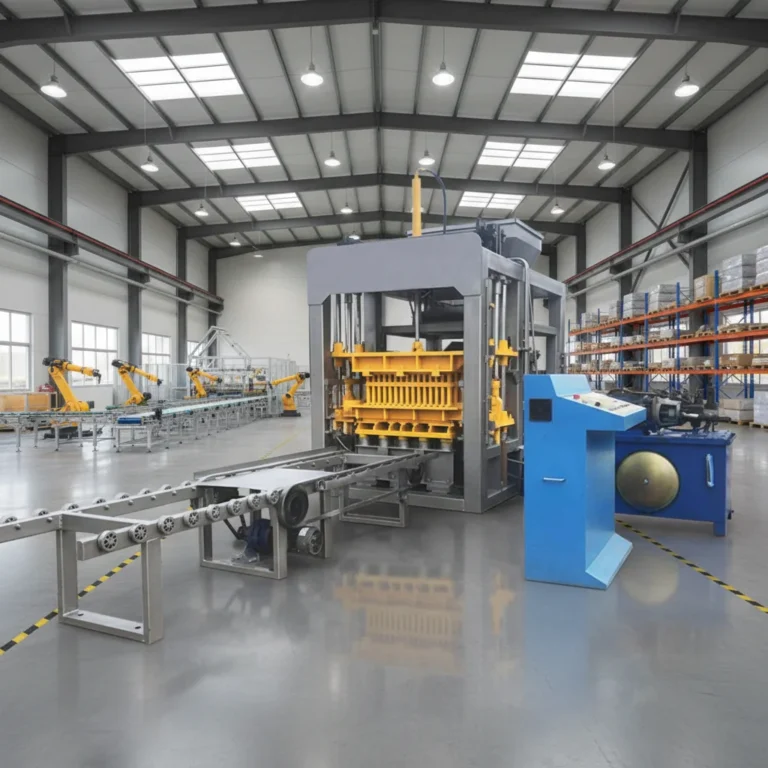
The QTJ4-25 occupies the entry-to-mid automatic tier, positioned above semi-automatic workshop machines and below high-capacity fully automatic lines with integrated stacking and cubing. For a buyer surveying options, it offers a 25-second moulding cycle with mechanical demolding across multiple block formats, keeping the automation level manageable for a first plant while leaving room to add pallet handling and automatic stacking later. The 300 m² recommended factory area reflects a line that does not demand the larger curing yards and heavy forklift infrastructure required by upper-tier models.
Output Tiers and Plant Footprint Across the Range
Moving up from this tier means higher vibration force, larger pallet sizes, and fully automatic pallet circulation — but also a bigger curing area and a higher capital commitment. The QTJ4-25 automatic concrete block making machine manufacturer range lets you see the step change clearly: pallet size here is 850×480 mm, while upper-tier machines run pallets above 1000 mm in length, which changes the racking and forklift spec entirely. Choosing this tier means your curing racks and material handling stay proportionate to an entrepreneur’s or contractor’s first-phase volume, and an upgrade path remains open when market demand justifies it. [NEED_CITE: block plant footprint planning by output tier]
Reading the Specs That Matter on Site
The 60 KN vibration force and platform vibration form work together to compact the concrete mix against the pallet. If your local aggregate is angular crushed stone rather than rounded river gravel, the vibration frequency range of 2800–4500 r/min allows adjustment, but the force must still be sufficient to settle the mix into deep hollow cavities. The four-column overlong guide design with chrome-plated surfaces resists distortion under repeated vibration cycles, which directly affects mould alignment and block dimensional consistency over thousands of cycles. Pallet size at 850×480 mm dictates the curing rack slot width and the forklift tine spacing you need — order pallets that match the racks you already have, not the other way around. The 16.58 kW overall power draw means a dedicated circuit with appropriate breaker rating is required; confirm your site voltage and frequency before the machine leaves the factory.
The Cost of Skipping the Format Conversation
When a machine is ordered against a single headline cycle number without confirming the target block format, the real daily output can fall well below the business plan. I have seen plants where the buyer assumed the quoted hourly rate applied to 400 mm hollow blocks, only to find it was based on small solid bricks — a gap that takes weeks of mix adjustment and shift rescheduling to recover from. Mould change time and pallet handling capacity compound the problem: if the formats your market actually sells are not the ones the machine was configured around, the flexibility you paid for sits unused. [NEED_CITE: output shortfall from format mismatch in block plants]
Why Buyers Source This Tier Here
Block machinery is the single focus of this manufacturing operation, so the QTJ4-25 is specified as one matched system — press, mould, pallet, and handling — rather than assembled from unrelated suppliers. The configuration is set against your actual mix design and local aggregate, not a catalogue default, which prevents the on-site rework I used to manage as a buyer. Mould design covers the formats your market sells, including custom drawings when a standard cavity layout does not fit. Automation level is selectable, so you can start with the mechanical demolding of this tier and add automatic stacking as volume grows. Installation support includes operator training so your crew is producing consistent blocks from the first shift. [NEED_CITE: matched system specification in block machinery supply]
Documentation & Verification
- Line layout and capacity calculation stating the block format assumed for each output tier
- Machine specification sheet with pallet size, vibration force, and cycle time per format
- Mould drawing and format list confirming included and optional block sizes
- Voltage, frequency, and PLC display language confirmation before shipment
- Factory test record on your specified block format and mould set before dispatch
- Operation and maintenance manual covering mechanical demolding and guide column care
Installation, Commissioning & Support
- 3000×1800 mm footprint requires a level concrete pad within the 300 m² recommended area
- 16.58 kW overall power demands a dedicated circuit; confirm voltage and frequency at inquiry
- 3.5 T total mass shipped dismantled; on-site reassembly and guide column alignment included
- First-run commissioning covers vibration frequency tuning to your local aggregate and mix
- Operator training on mechanical demolding and multi-function mould exchange procedure
- Wear parts list and mould maintenance schedule provided at handover
What to Share When You Open an Inquiry
To size the QTJ4-25 correctly against your plant, send the block formats your market sells along with the daily output target for each. Include your local raw material — aggregate type, sand source, and cement grade — so vibration force and cycle settings can be matched before production. Confirm your site voltage, frequency, and preferred control language, plus the pallet size and curing rack layout you plan to use, so the pallet specification aligns with your existing handling equipment.
Frequently Asked Questions
Q: How do I verify daily output against the block format my market actually sells?
A: Ask for the capacity calculation sheet that lists each block size, its mould cavity count, and the cycle time assumed. Compare the figure for your primary format — for example, 580 pieces per hour is based on a 400×200×200 mm hollow block at 4 cavities per mould — against your shift length and target daily volume to see if this tier meets your plan.
Q: Where does the QTJ4-25 fit compared to higher-tier automatic and semi-automatic models?
A: It sits in the entry-to-mid automatic range, offering a 25-second moulding cycle with mechanical demolding. Semi-automatic models below it require more manual pallet handling, while upper-tier fully automatic lines add integrated stacking, cubing, and larger pallet sizes that need bigger curing yards and heavier forklifts.
Q: What does the 300 m² recommended factory area actually include?
A: It covers the QTJ4-25 press footprint at 3000×1800 mm, raw material storage, a mixing station, pallet circulation space, and an adjacent curing area sized for the output volume of this tier. If you plan to add automatic stacking or curing racks later, confirm the layout can accommodate the expansion.
Q: Which pallet size and material should match my existing curing racks and forklift?
A: The standard pallet for this machine is 850×480 mm. Share your current rack slot dimensions and forklift tine spacing so the pallet specification — material and thickness — can be matched. A pallet that does not fit your existing racks forces a separate handling investment.
Q: How does automation at this tier compare to fully automatic stacking and cubing lines?
A: The QTJ4-25 handles moulding and mechanical demolding automatically but leaves pallet transfer and stacking to manual or semi-assisted methods. Upper-tier machines add automatic pallet feeding, stacking, and cubing, which reduces labour but increases the capital and footprint commitment significantly.

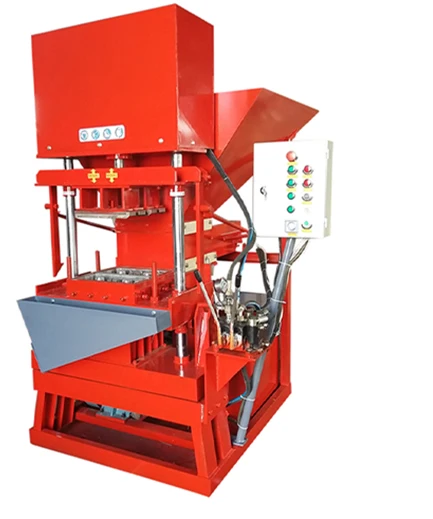 Automatic block machine