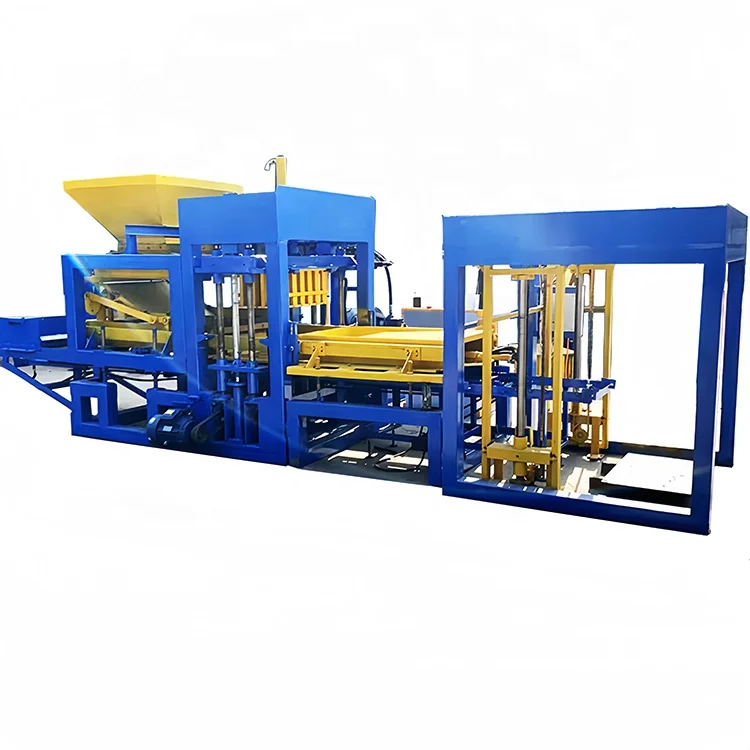
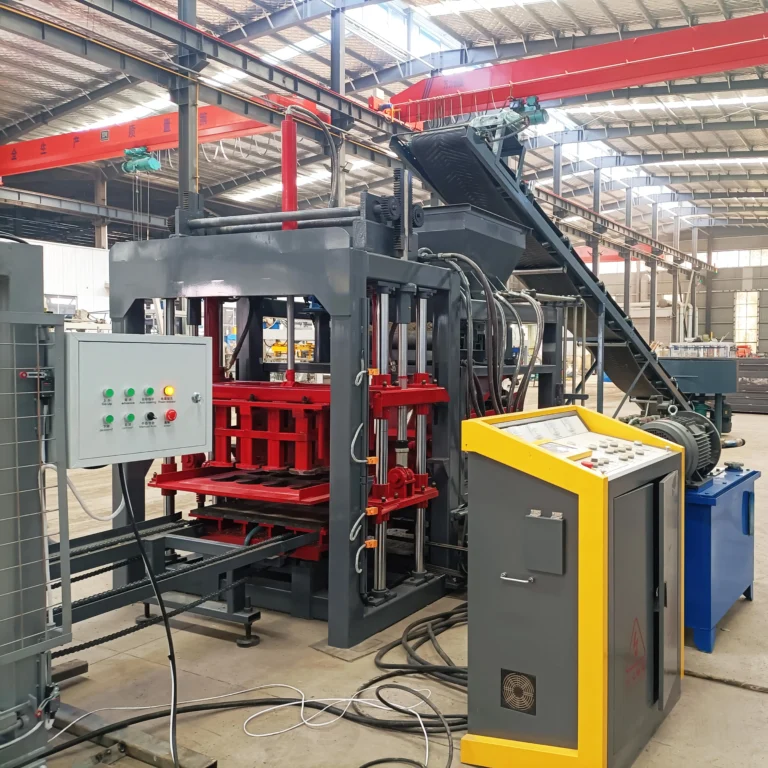
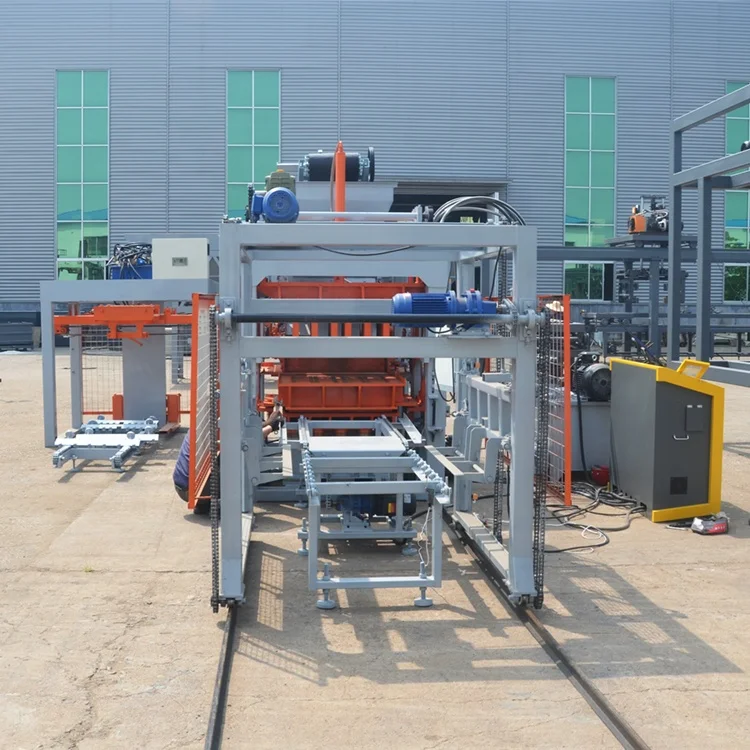
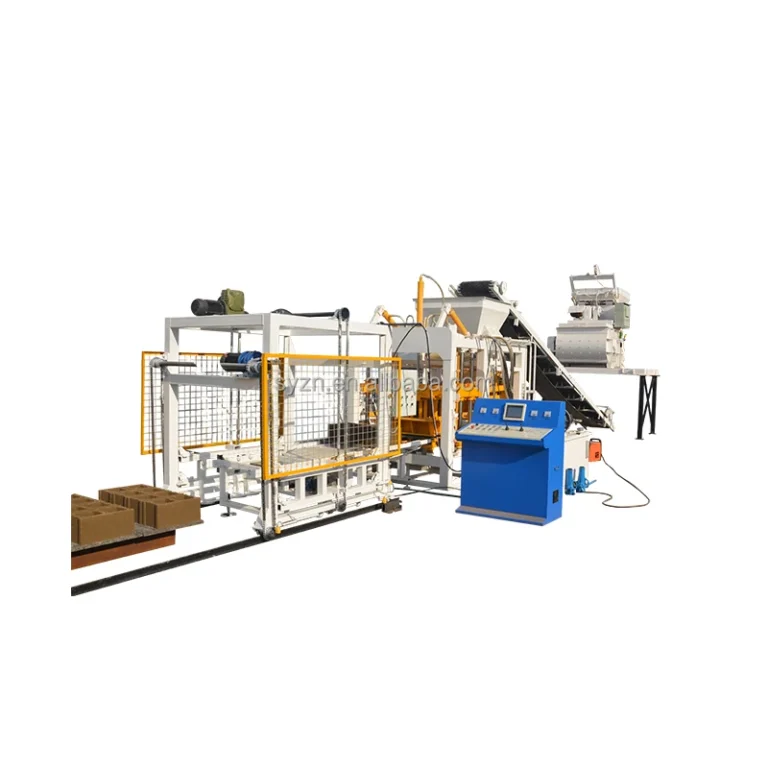
Matched System Design — the QT8-15 is specified as one coordinated package of press, mould, pallet, and handling, not assembled from separate sources.
Technical Specifications
| Parameter |
Value |
| Model |
QT8-15 |
| Product Type |
Hydraulic Concrete Block Making Machine |
| Overall Dimensions (L×W×H) |
8300×1860×3000 mm |
| Rated Pressure |
21 MPa |
| Main Vibration Form |
Platform Vibration |
| Vibration Frequency |
2800–4500 r/min |
| Vibration Force |
45 kN |
| Pallet Size |
950×900 mm |
| Molding Cycle |
15–20 s (basis not stated in source) |
| Overall Power |
55.5 kW |
| Total Mass |
8 T |
| Demolding Method |
Hydraulic |
| Factory Area |
300 m² |
| Warranty |
1 year (whole machine, excluding spare parts) |
Application Suitability
| Application |
Material or Output |
| Hollow block production |
Crushed stone, sand, cement, fly ash |
| Solid block production |
Gravel, sand, cement, slag |
| Paving block and colored paver production |
Crushed stone, sand, cement with pigment |
| Interlocking block production |
Sand, cement, dust, fly ash |
| Curbstone production |
Gravel, crushed stone, cement |
What "15–20 Seconds per Cycle" Actually Means for Your Output
A cycle time only matters once you know which block format it was measured on.
Many quotations list a single molding cycle without naming the block size, thickness, or mix design behind that figure. A hollow block and a thin paver will never share the same cycle on the same QT8-15 block machine manufacturer setup. When the format assumption is missing, buyers plan their shifts around a number that was never meant for their product. I have watched production plans collapse on day one because the quoted cycle was measured on a lightweight solid block, while the buyer needed dense hollow blocks from a high-fly-ash mix [NEED_CITE: block format assumptions in capacity quotations].

Where the QT8-15 Sits in the Complete Machine Range
The QT8-15 occupies the mid-to-high output tier within our block machine lineup. It is positioned above small-workshop semi-automatic presses and below high-capacity fully automatic lines. Buyers evaluating a first plant or replacing an undersized unit typically land here. The 55.5 kW overall power draw and 8 T machine mass place it in a category that requires a dedicated power supply and a cured concrete floor, but not the heavy civil groundwork that the largest tier demands. As a QT8-15 block machine manufacturer, we map every tier side by side so buyers can see exactly where their budget and output target intersect.
How the Range Scales Around This Model
Moving up from the QT8-15 means larger pallets, higher vibration force, and fully automatic stacking and cubing. Moving down means accepting manual pallet handling and a smaller daily volume. The value of understanding the full range before committing is that you avoid over-investing in automation you cannot staff or under-investing in a press you will outgrow within two seasons [NEED_CITE: block plant capacity planning and tier selection]. Every tier shares the same approach to mould and pallet specification, so a configuration decision made today does not lock you out of a future move.
Vibration Force and Hydraulic Pressure as a Paired System
The 45 kN vibration force and 21 MPa rated hydraulic pressure on the QT8-15 are not independent numbers — they work together to determine block density and strength. Vibration settles the aggregate into the mould cavity, while hydraulic pressure compacts it from above. If vibration is too high relative to pressure, the mix segregates and weak blocks result. If pressure dominates without enough vibration, air pockets remain trapped. The 2800–4500 r/min frequency range allows adjustment for different aggregate sizes, from fine fly ash blends to coarse crushed stone mixes. The platform vibration form delivers energy directly through the pallet, which is why pallet flatness and rigidity matter as much as the press settings themselves.
Pallet Size, Mould Change, and the Daily Reality of Format Switching
The 950×900 mm pallet defines the maximum molding area and therefore how many blocks are produced per cycle. This pallet size must align with the curing racks and forklifts already on site — a mismatch means double-handling every wet block. The hydraulic demolding method releases blocks cleanly across hollow, solid, paver, and interlocking formats, but each format change still requires a mould swap. When a buyer needs three or four block types in a single week, the time spent changing moulds becomes a real production cost. We confirm the full format list and mould drawing before the order ships, so there are no surprises about which products the machine can actually run [NEED_CITE: mould change procedures and format flexibility in block production].
The Cost of Skipping the Configuration Conversation
When voltage and frequency are not confirmed before shipment, the machine sits idle on arrival while transformers are sourced locally. When the pallet size does not match existing curing racks, the buyer improvises stacking solutions that slow the entire line. I have seen plants run at half capacity for weeks because the mix design was never discussed before the machine was built — the press arrived configured for a standard sand-cement blend, while the local aggregate was high in river silt and required different vibration settings. These are not machine failures; they are specification failures [NEED_CITE: common commissioning delays in block plant startups].
Why Buyers Source This Tier From Us
Block machinery is our single focus, so the QT8-15 arrives with its mould, pallet, and handling equipment specified as one system. We set the configuration against the buyer’s actual mix design and local aggregate, not a catalogue default. Mould design covers the formats the buyer’s market actually sells, with custom drawings available. The automation level is selectable, meaning a buyer can start with semi-automatic pallet handling and add stacking later. Installation includes on-site commissioning and operator training, so the crew understands parameter adjustment from day one.
Documentation & Verification
- Line layout with capacity calculation stating the block format assumed for each output figure
- Machine specification sheet confirming power, dimensions, and hydraulic ratings
- Mould drawing and complete format list for every block type in the configuration
- Pallet specification matched to curing area and forklift capacity
- Factory test record and packing photographs provided before dispatch
- Operation and maintenance manual with wear parts and mould replacement list
Installation, Commissioning & Support
- 300 m² factory area requirement with level cured concrete floor and drainage provision
- 55.5 kW total power draw requiring a dedicated three-phase supply and circuit protection
- Machine arrives at 8 T total mass; rigging plan and unloading sequence provided in advance
- Vibration frequency and hydraulic pressure calibrated on-site against your local aggregate blend
- Operator training covers mould change procedure, pallet handling, and daily maintenance checks
- Wear parts and hydraulic seal list supplied with recommended reorder intervals
What We Need to Size Your Line Correctly
Share the block formats your market sells and the daily volume you need for each one. Tell us your local raw materials — the type of sand, aggregate size, and whether fly ash or slag is part of your mix. Confirm your site voltage, frequency, and the control language your operators read. If you have existing curing racks or forklifts, send their dimensions so the pallet and handling specification aligns from the start.
Frequently Asked Questions
Q: How is the QT8-15’s daily output calculated, and which block format is assumed?
A: Daily output depends entirely on the block format, wall thickness, and mix design used in the calculation. A hollow block cycle differs from a paver cycle on the same press. We provide a capacity document that states the assumed format for every output figure, so you can plan around numbers that match your actual product.
Q: Where does the QT8-15 sit compared to semi-automatic and higher-capacity models?
A: It sits in the mid-to-high tier, above small semi-automatic presses and below fully automatic high-volume lines. It suits buyers who need consistent daily volume and plan to produce multiple formats. The automation level is selectable, so the machine can grow with your operation.
Q: What plant footprint does the QT8-15 require compared to other tiers?
A: The QT8-15 requires approximately 300 m² of factory space. This is more than a small workshop press but significantly less than a full high-capacity automatic line with integrated cubing. The footprint includes space for the press, raw material feed, and pallet circulation.
Q: Can I start semi-automatic and upgrade later?
A: Yes. The QT8-15 configuration allows starting with manual or semi-automatic pallet handling and adding automatic stacking and cubing later. We design the base machine so that automation upgrades do not require replacing the press itself.
Q: What voltage, frequency, and control language options are confirmed before shipment?
A: These are confirmed during the quotation stage, not assumed. We verify your site voltage, frequency, and the display language your operators need, then document the configuration on the specification sheet before production begins. This prevents commissioning delays after the machine arrives.

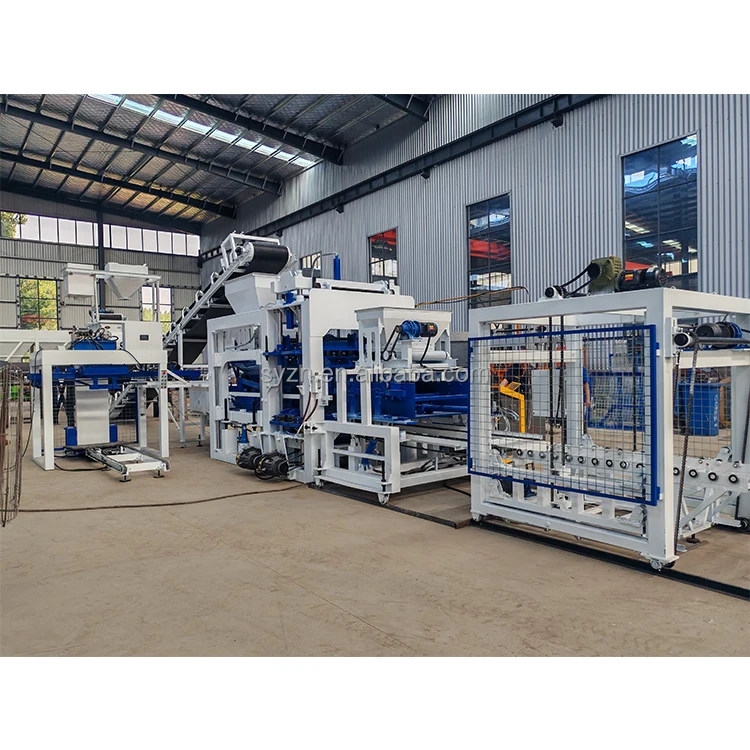
 High quality block machine