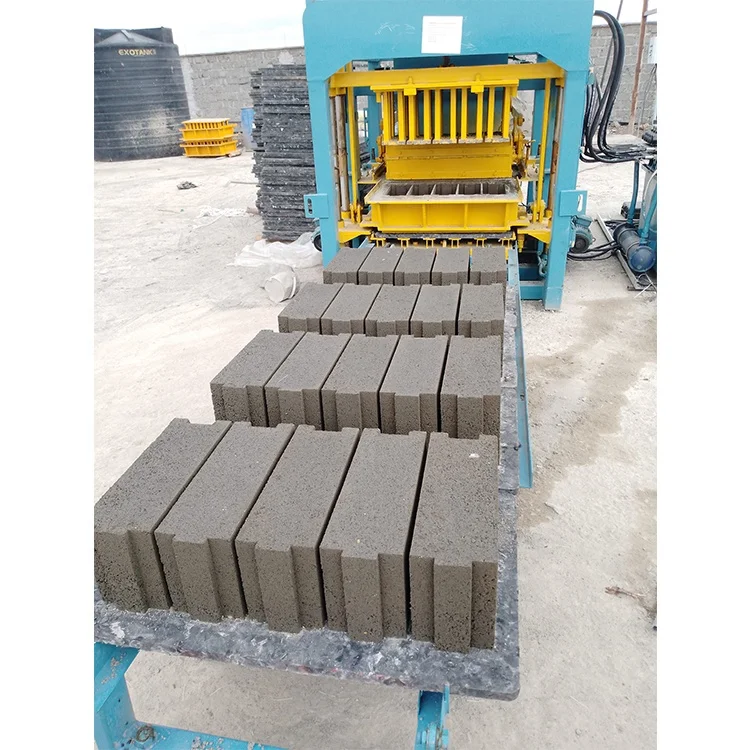
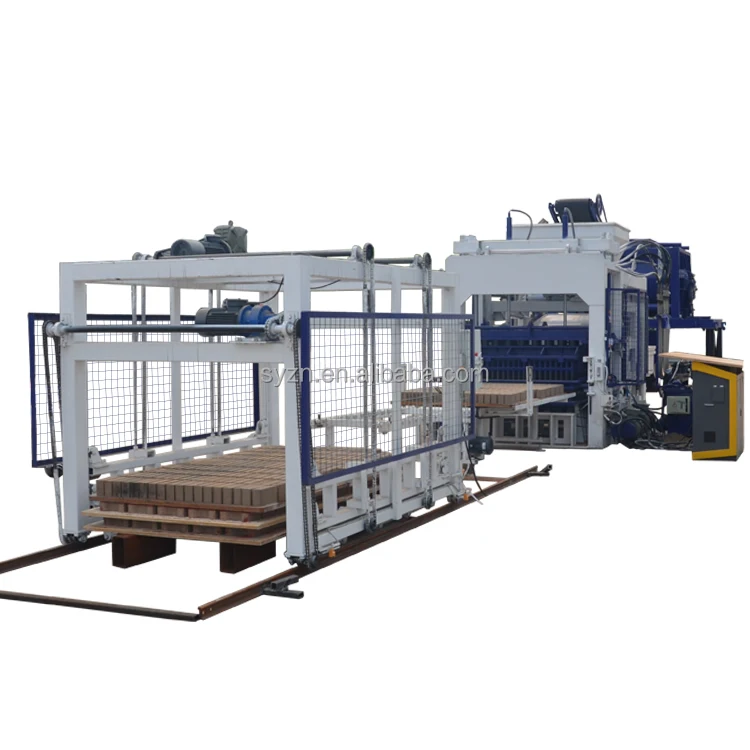
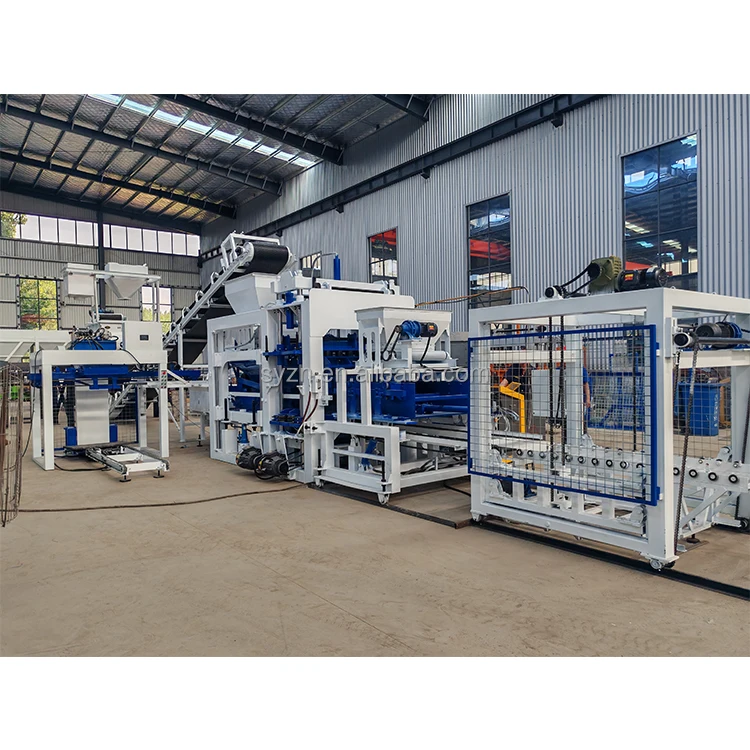
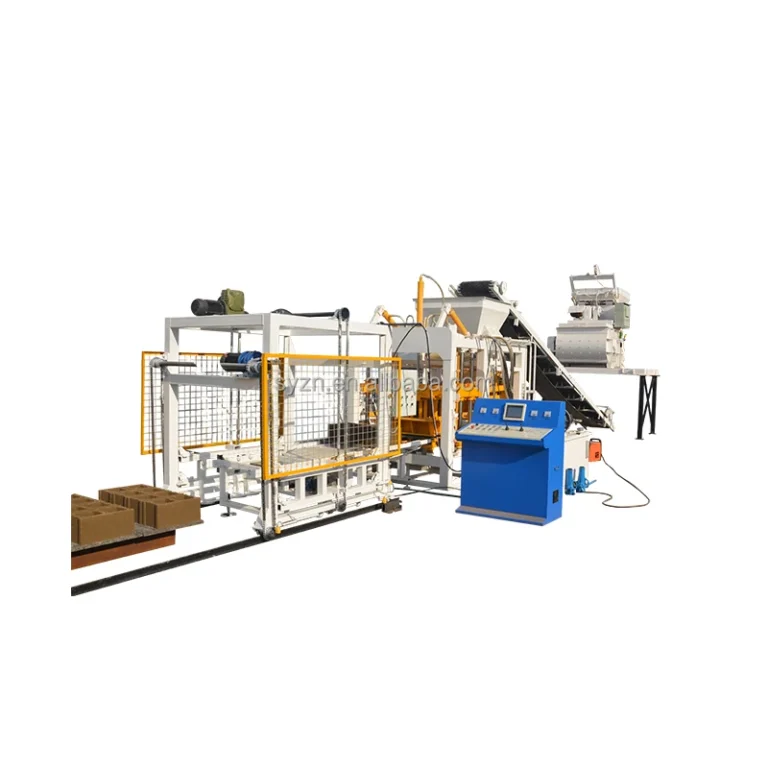
Matched System Spec — The QT4-18 block machine, its moulds, pallets, and handling gear are configured together as one line rather than pulled from separate suppliers.
Technical Specifications
| Parameter |
Value |
| Model |
QT4-18 |
| Product Type |
Concrete Block Making Machine |
| Overall Dimensions (L×W×H) |
3900 × 1600 × 2300 mm |
| Molding Cycle |
15–25 s |
| Vibration Force |
40–50 KN |
| Rated Power |
24 kW |
| Mixer Model |
JQ350 |
| Pallet Size |
850 × 550 × 25 mm |
| Total Weight |
3 T |
| Applied Products |
Paver, solid block, hollow block, curbstone |
| Raw Materials |
Crushed stones, sand, cement, dust, fly ash |
| Control System |
PLC control system |
| Hydraulic Station |
Included |
| Included Equipment |
Block making machine, hydraulic station, PLC control system, pallet feeder, brick conveyor, block sweeper |
| Free Parts |
Manual hydraulic trolley, spare parts and tools |
| Output Capacity |
1200–1680 pcs/hr (basis: 400×200×200mm hollow block, source value — verify against manufacturer catalog) |
| Output Capacity |
1800–2400 pcs/hr (basis: 400×150×200mm hollow block, source value — verify against manufacturer catalog) |
| Output Capacity |
3240 pcs/hr (basis: 240×115×53mm solid brick, source value — verify against manufacturer catalog) |
| Automation Level |
Semi-automatic (manual hydraulic trolley included, no automatic stacking) |
Application Suitability
| Application |
Material or Output |
| Hollow block production |
Crushed stone, sand, cement, fly ash blends for 400×200×200mm and 400×150×200mm formats |
| Solid brick manufacturing |
Fine aggregate and cement mixes for 240×115×53mm standard bricks |
| Paver and curbstone forming |
Denser concrete mixes with graded aggregate for interlocking or kerb formats |
| On-site construction supply |
Local river sand, quarry dust, and cement for contractor-produced masonry |
What "Output per Hour" Actually Means for a Concrete Block Making Machine Manufacturer
Every capacity figure we quote is tied to a specific block size and cycle time, not a generic peak number.
I have watched buyers in Southeast Asia sign off on a machine based on a single hourly output number, only to find their real production drops once they switch from a small solid brick to a large hollow block. The molding cycle stretches from the lower end of the 15–25 s range toward the upper end when the block volume increases, and the press needs more vibration time to consolidate the larger cavity [NEED_CITE: block format effect on cycle time in hydraulic presses]. A concrete block making machine manufacturer should always state which format the capacity assumes, so the buyer can plan curing space and labor around real daily volumes.

Placing the QT4-18 Within the Full Machine Range
The QT4-18 sits in the mid-tier of the range, between entry-level mobile egg-laying machines and high-capacity fully automatic lines. It is designed for buyers who have outgrown a mobile unit but do not yet need the floor space or capital of a complete automatic stacking and cubing system. As a concrete block making machine manufacturer, we position this model for small-to-medium plants where a semi-automatic setup keeps initial investment manageable while leaving room to add automation stations later.
Where This Tier Fits in a Buyer’s First or Replacement Plant
Entrepreneurs launching their first block plant often start here because the 3 T weight and 3900 × 1600 mm footprint fit into a modest workshop without heavy foundation work. Construction contractors producing blocks on their own site value the included manual hydraulic trolley, which moves fresh pallets to the curing area without a forklift upgrade. When the business grows, the same platform can accept an automatic pallet feeder and stacker, so the machine is not scrapped but expanded [NEED_CITE: modular upgrade paths in block production lines].
How Vibration Force and Hydraulic Pressure Shape Block Density
The 40–50 KN vibration force works together with the hydraulic station to consolidate the mix during the 15–25 s molding cycle. Vibration liquefies the concrete so it fills the mould cavity, while hydraulic pressure compresses it from above to drive out air voids. If the vibration is too low for a stiff mix with coarse crushed stone, the block emerges with weak edges. If the pressure is set too high for a lightweight fly ash blend, the block cracks on demoulding. Matching both parameters to the buyer’s actual aggregate and cement ratio is what separates consistent block strength from batch-to-batch variation.
The 850 × 550 × 25 mm pallet size defines the pressing area and therefore the number of blocks per cycle. Buyers need to check that this pallet dimension works with their existing curing racks and forklift tines. A mismatch means either rebuilding the curing area or running two pallet sizes in the yard, which slows handling and increases breakage. The JQ350 mixer paired with this press handles the typical batch volume for one pallet load, so the mixer cycle and press cycle stay synchronized without the press waiting idle.
The Cost of Skipping Configuration Details Before Shipment
When voltage and frequency are not confirmed before the machine leaves the factory, a 24 kW motor wired for the wrong supply burns out on first start-up or trips the breaker repeatedly. Buyers then face weeks of downtime waiting for a replacement motor or transformer [NEED_CITE: voltage mismatch failures in exported industrial machinery]. Similarly, when the PLC display language does not match the operator’s literacy, the crew ignores alarm codes and runs the press through faults that damage the hydraulic seals.
Why Source This Concrete Block Making Machine Manufacturer
Block machinery is our single focus, so the QT4-18 is never shipped as a standalone press. The mould, pallet, hydraulic station, and PLC cabinet arrive as one matched system with tested interfaces. Configuration starts from the buyer’s local aggregate and target block format, not a catalogue default. Mould design covers the formats the buyer’s market actually sells, including custom drawings when a developer specifies a non-standard interlocking shape. Automation is selectable: a buyer can begin with the manual hydraulic trolley and add a pallet feeder and stacker when volume justifies it. Installation includes on-site commissioning and operator training so the crew can run the machine independently from day one.
Documentation & Verification
- Line layout and capacity calculation stating the block format assumed for each output figure
- Machine specification sheet with hydraulic pressure and vibration force matched to buyer’s mix
- Voltage, frequency, and PLC display language confirmation signed off before production
- Mould drawing and format list showing available block sizes and custom options
- Factory test record on buyer’s specified pallet size and cycle time before dispatch
Installation, Commissioning & Support
- Foundation pad leveled for the 3900 × 1600 mm footprint with anchor bolt template supplied
- Dedicated 24 kW circuit with correct voltage and frequency confirmed before motor connection
- Machine arrives partially assembled; hydraulic station and PLC cabinet bolt on and plug in
- First-run parameter setting for molding cycle and vibration force tuned to buyer’s aggregate
- Operator training covers mould change procedure and PLC alarm response in agreed language
- Wear parts list and mould maintenance schedule provided at handover
What We Need to Move Your Inquiry Forward
To size the QT4-18 correctly for your plant, send the target block format, required daily output, and a sample of your local sand or crushed stone so we can run a mix trial. Confirm your site voltage, frequency, and preferred PLC display language so the electrical build matches your grid. Let us know the curing area dimensions and whether you plan to start with manual pallet handling or add automatic stacking from the outset.
Frequently Asked Questions
Q: How is the QT4-18 positioned within the full block machine range?
A: The QT4-18 occupies the mid-tier between mobile egg-laying units and high-capacity automatic lines. It suits buyers who need more output than a mobile machine but do not yet require the floor space of a fully automatic stacking and cubing system. The same platform can accept additional automation stations as production volume grows.
Q: What block format does the quoted capacity assume?
A: Each capacity figure is tied to a specific block size and molding cycle. For example, the 1200–1680 pcs/hr figure assumes a 400×200×200mm hollow block. Switching to a smaller solid brick raises the hourly rate, while a larger paver format lowers it. Always ask which format the number is based on before comparing machines.
Q: Can the automation level be upgraded later?
A: Yes. The QT4-18 ships as a semi-automatic line with a manual hydraulic trolley. Buyers can add an automatic pallet feeder and stacker when daily volume justifies the investment. The PLC control system already supports these stations, so the upgrade is a mechanical and wiring addition rather than a full control replacement.
Q: What plant footprint does the QT4-18 require?
A: The machine itself measures 3900 × 1600 × 2300 mm. Allow additional space for the JQ350 mixer, raw material stockpile, pallet return path, and curing area. Compared to a mobile egg-laying machine, it needs a fixed covered bay; compared to a full automatic line, it occupies noticeably less floor area because there is no automatic cubing station.
Q: Is the machine configured for local raw materials?
A: Configuration starts from the buyer’s actual aggregate and cement supply. We ask for a material sample and target block strength before finalizing vibration force and hydraulic pressure settings. This avoids the situation where a machine tuned for clean quartz sand produces weak blocks when fed high-clay river sand.

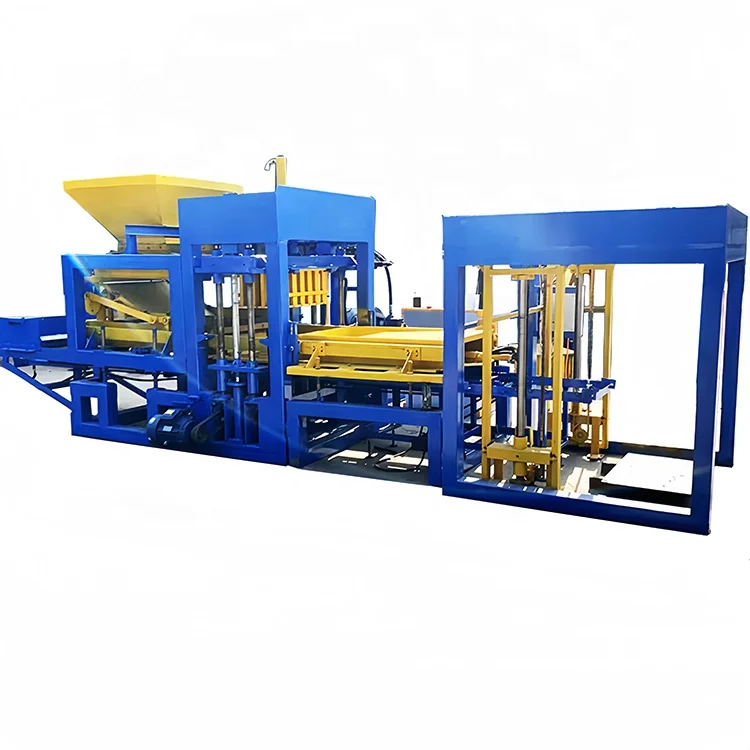
 High quality block machine