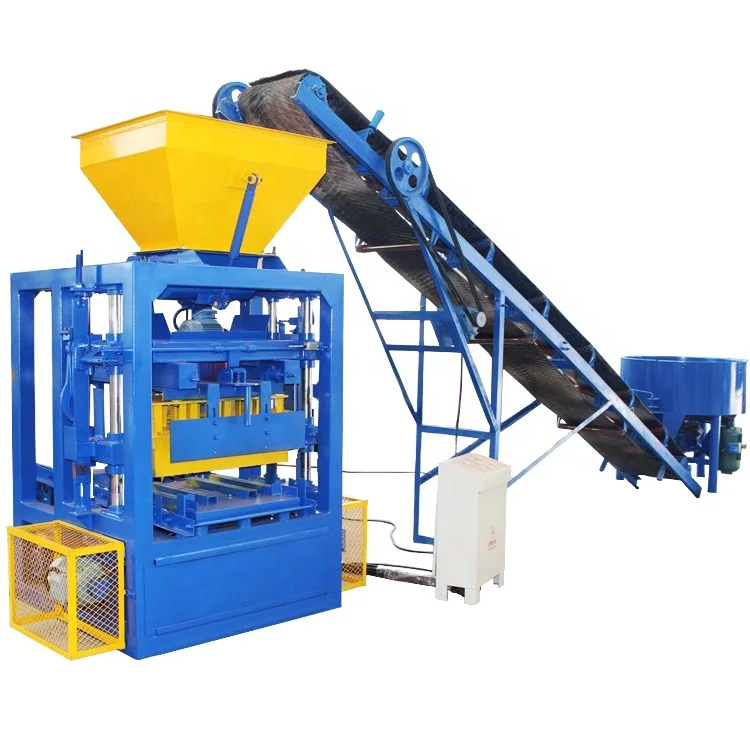
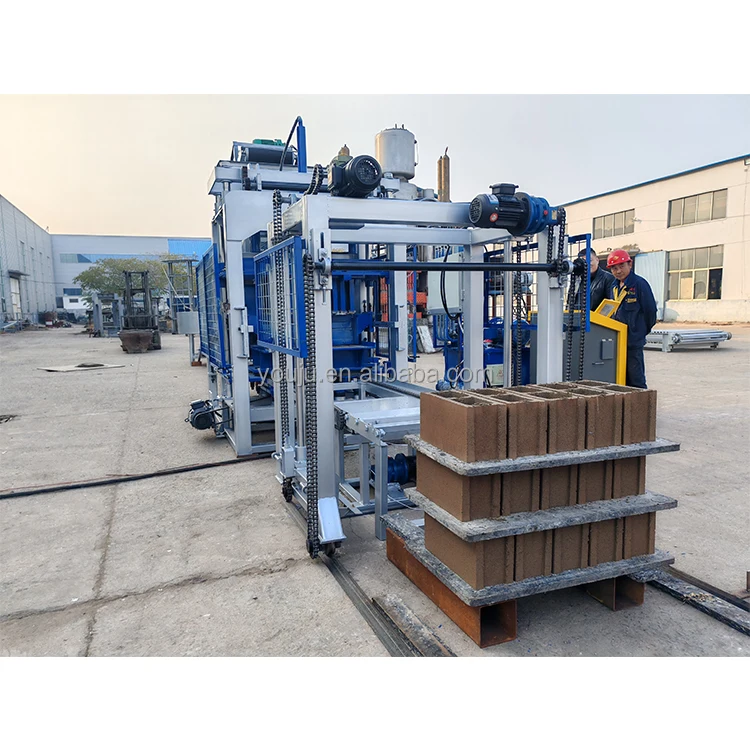
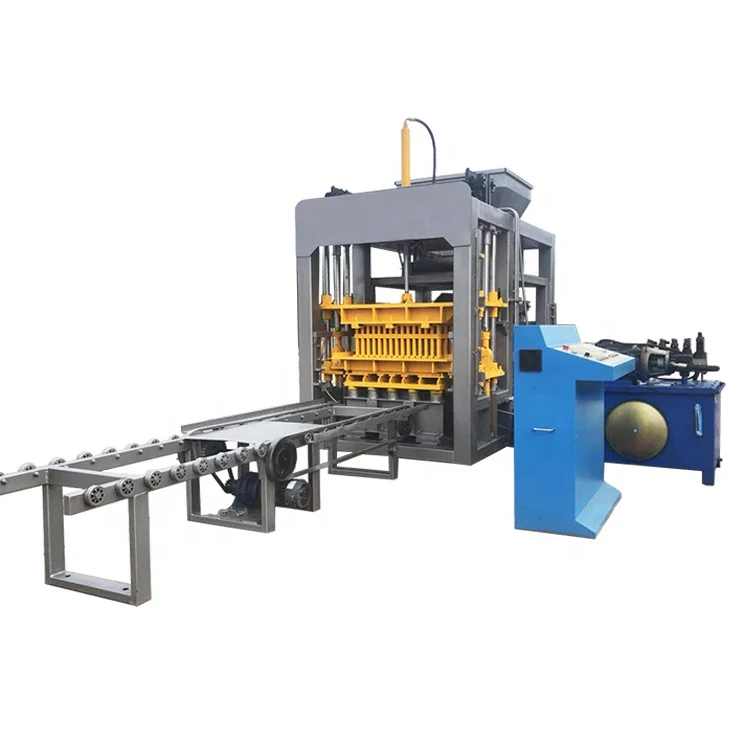
Matched System Integration — the QT7-15 press, moulds, pallets, and handling gear are specified as a unified production tier rather than a collection of unrelated components.
Technical Specifications
| Parameter |
Value |
| Product Type |
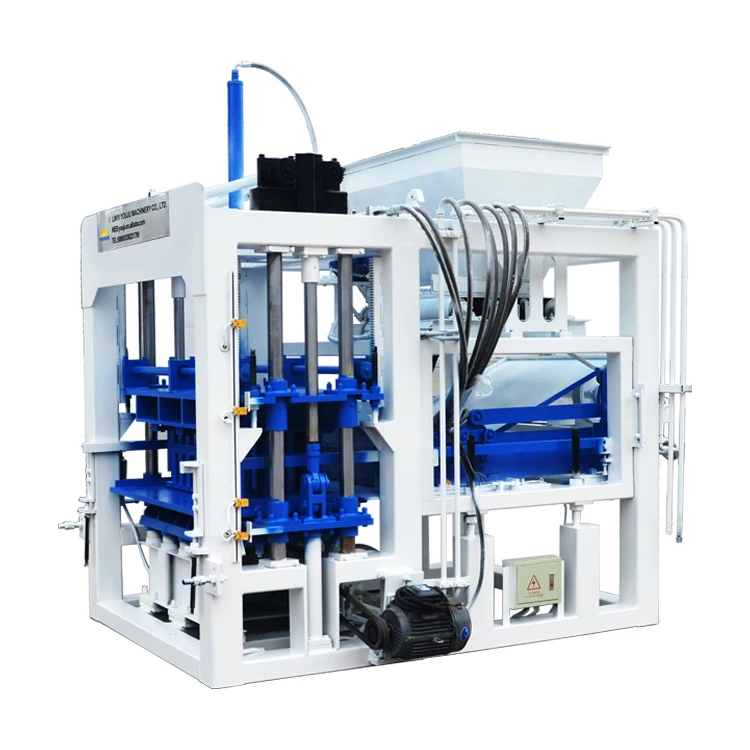
Automatic Hydraulic Block Making Machine |
| Model |
QT7-15 |
| Host Machine Dimensions |
3200 × 2300 × 2750 mm |
| Host Machine Weight |
6 Tons |
| Molding Area |
1150 × 700 mm |
| Workshop Area Requirement |
200 m² |
| Host Machine Power |
45 kW |
| Vibration Force |
100 kN |
| Pallet Size |
1150 × 700 × 25 mm |
| Voltage Options |
220 / 380 / 415 / 440V (configurable) |
| Molding Period |
15 Seconds (basis not stated in source — confirm block format and material) |
| Vibration Method |
Hydraulic + Platform Vibration |
| Vibration Frequency |
2800 – 4500 Times/Minute |
| Control System |
Siemens PLC with independently developed program |
| Motor Brand |
Germany SIEMENS or CE standard equivalent |
| Travel Switch |
France Schneider / Japan Omron |
| Mould Treatment |
Heat treatment + carburizing, 54–58 HRC hardness, lifespan >100,000 cycles |
| Welding Standard |
CO₂ protection welding, CE standard materials |
| Batching Machine (PLD1200) |
1200 L hopper, 4 × 2.5 m³ storage, ±2% ingredient precision |
| Mixer (JS500) |
800 L charging / 500 L discharging, 18.5 kW mixing motor, max aggregate 60 mm |
| Stacker (SY-4) |
3 kW, 600 kg capacity, mobile pallet stack |
| Color Paver Option |
Color feeding system available as add-on |
Application Suitability
| Application |
Material or Output |
| Hollow block production |
Crushed stone, sand, cement, fly ash aggregates up to 60 mm |
| Solid block manufacturing |
Dense concrete mixes for load-bearing wall units |
| Paving block and color paver |
Fine aggregate surface mix with color feeding system |
| Interlocking brick |
Dry or semi-dry concrete with interlocking mould profiles |
| On-site contractor production |
Project-specific formats for housing and development sites |
| Building material distribution |
Multi-format output for regional market supply |
What "15-Second Cycle" Actually Means for Your Output
Every cycle time figure must name the block format it assumes — otherwise daily output numbers are guesswork.
When I first started commissioning block machines across African job sites, I watched buyers sign off on quotations quoting a single molding period. The QT7-15 lists a 15-second cycle, but that number shifts depending on whether you are pressing a standard hollow block, a dense paver, or a thin interlocking brick. An automatic block making machine manufacturer that quotes capacity without tying it to a specific format is asking you to plan a business around a guess. I have seen plants arrive on site and produce half the expected volume simply because the quoted cycle assumed a block the buyer never intended to make. [NEED_CITE: block format impact on cycle time and daily output in stationary hydraulic presses]

Positioning the QT7-15 Within the Full Machine Range
The QT7-15 occupies the mid-to-high tier of a stationary block machine lineup that stretches from small semi-automatic presses for workshop-scale output up to high-capacity automatic lines. For a buyer surveying options, this model represents the point where full PLC automation and matched line equipment — batching, mixing, pallet feeding, stacking — become standard rather than optional. Below it, semi-automatic machines trade lower investment for manual pallet handling. Above it, higher-capacity tiers add faster cycles and larger pallet formats. As an automatic block making machine manufacturer offering a continuous range, the intent is to let you identify where your volume target and budget intersect before narrowing down.
How Line Integration Prevents Bottlenecks Around the Press
A stationary press only runs as fast as the slowest station feeding or receiving it. The QT7-15 line groups a PLD1200 batching machine, a JS500 mixer, a pallet feeder, and an SY-4 stacker so that each station’s cycle is timed to the press. If the mixer cannot discharge a fresh batch before the next molding cycle demands it, the press sits idle. If the stacker cannot clear cured pallets quickly enough, the brick receiver backs up. Specifying these components together — rather than sourcing each from a different vendor — removes the guesswork from line balancing. [NEED_CITE: importance of cycle synchronization in multi-station concrete block production lines]
Reading the Specs That Matter on Site
The 100 kN vibration force paired with hydraulic pressure determines how densely the concrete is compacted into the mould cavity. Higher compaction yields stronger blocks but demands a mix design that flows under vibration — if your local aggregate is angular or oversized, the vibration frequency range of 2800 to 4500 cycles per minute needs tuning to match. The 1150 × 700 mm pallet size dictates not only which mould formats fit but also whether your existing curing racks and forklifts are compatible. Mould hardness at 54–58 HRC after carburizing treatment means the cavity surfaces resist abrasive wear from cement and aggregate, extending the interval before refurbishment is needed. Voltage configurability across 220, 380, 415, and 440V ensures the motor and PLC match your site supply without requiring a step-down transformer that introduces its own failure point.
The Cost of Skipping Configuration Checks Before Shipment
Buyers who confirm machine specs without verifying local conditions often discover mismatches only after the container arrives. A QT7-15 wired for 380V / 50 Hz shipped to a 440V / 60 Hz region will burn out the mixer motor within weeks. A pallet size chosen without checking the curing area dimensions forces the plant to hand-stack output, negating the automation the buyer paid for. When the mould format list does not include the specific block profile the local market demands, the buyer commissions a custom mould after arrival — adding weeks of downtime to a machine that was supposed to be earning revenue. [NEED_CITE: common commissioning delays from unconfirmed voltage and pallet specifications in exported block machinery]
Why Source This Tier From a Single-Focus Manufacturer
Block machinery is the sole product focus here, meaning the QT7-15 press, its moulds, pallets, and handling equipment are engineered as one system rather than assembled from unrelated suppliers. Configuration starts with the buyer’s actual mix design and local aggregate, not a catalogue default. Custom mould design from buyer drawings is available for any format the local market requires. Automation level is selectable — a buyer can begin with semi-automatic handling and upgrade the pallet feeding and stacking modules later without replacing the press. Installation support includes on-site commissioning and operator training so the crew running the machine on day one understands the PLC interface and mould change procedure.
Documentation & Verification
- Line layout and capacity calculation stating the exact block format behind each output figure
- Machine specification sheet confirming voltage, frequency, and PLC display language before production
- Mould drawing and format list covering every block type your market sells, including custom profiles
- Factory test record demonstrating press function with your specified pallet and mould set
- CE declaration and packing photographs provided with customs documentation support
Installation, Commissioning & Support
- 200 m² workshop area with level concrete foundation to support the 6-ton host machine and vibration loads
- Dedicated power circuit matching confirmed voltage option (220/380/415/440V) for the 45 kW host and 18.5 kW mixer
- Machine shipped in dismantled sections with reassembly guided by hydraulic and electrical schematics on site
- First-run commissioning includes vibration frequency tuning to match your aggregate and target block density
- Operator training covers Siemens PLC interface navigation, mould change procedure, and daily maintenance checkpoints
- Wear parts and mould refurbishment list provided so replacement intervals are planned before stock runs out
What to Include With Your Inquiry
To match the QT7-15 and its line equipment to your actual production needs, share the block formats your market demands along with target daily output per format. Provide a sample or description of your local aggregate — particle size, shape, and source — so vibration and mix parameters can be set before the machine ships. Confirm your site voltage, frequency, and preferred PLC display language to avoid commissioning delays.
Frequently Asked Questions
Q: Where does the QT7-15 sit compared to semi-automatic and higher-capacity tiers?
A: The QT7-15 is a mid-to-high tier automatic press with full PLC control, matched batching, mixing, and stacking. Semi-automatic tiers below it reduce investment but require manual pallet handling. Higher-capacity lines above it offer faster cycles and larger pallets for plants targeting greater daily volume. The range lets you match investment to realistic output.
Q: How is daily output calculated, and which block format is assumed?
A: Every output figure should be tied to a specific block format, mix design, and pallet layout. A molding period quoted without naming the format it assumes is incomplete. We provide a capacity calculation that states the exact block type, dimensions, and cycle parameters behind each daily output number so your business plan rests on verified data.
Q: What voltage and PLC language options are available, and when must I confirm them?
A: Voltage is configurable across 220, 380, 415, and 440V to match your local supply. The Siemens PLC display language is selectable. Both must be confirmed before production begins — changing them after the machine is built causes commissioning delays and potential motor or control damage on site.
Q: Can I start semi-automatic and upgrade to full automation later?
A: Yes. The QT7-15 platform supports starting with manual pallet handling and adding automatic pallet feeding, stacking, and cubing modules later. The press itself remains the same; the upgrade adds handling stations around it. This path suits buyers managing initial investment while planning for higher output as market demand grows.
Q: Which block formats does the QT7-15 support, and can moulds be custom-designed?
A: The QT7-15 produces hollow blocks, solid blocks, paving blocks, interlocking bricks, and kerbstones within its 1150 × 700 mm molding area. Custom mould design from buyer drawings is available for any format your market requires. Moulds undergo carburizing and heat treatment to 54–58 HRC for extended service life across all formats.

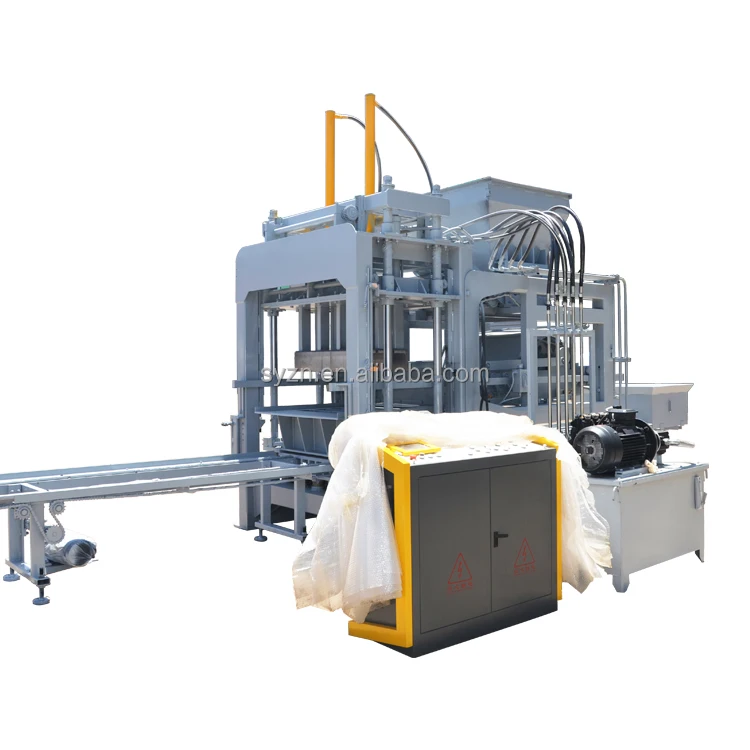
 Stationary block machine