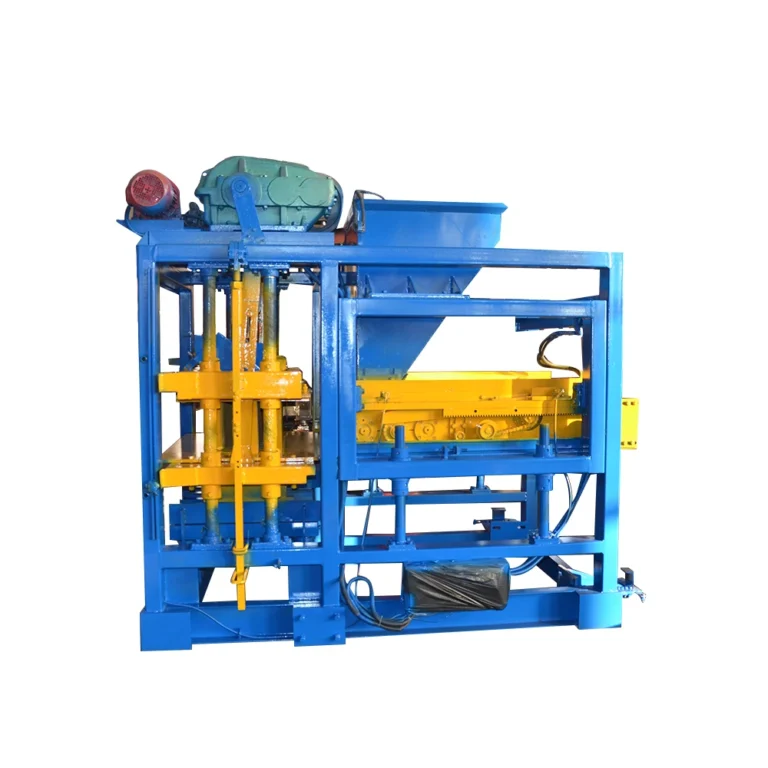
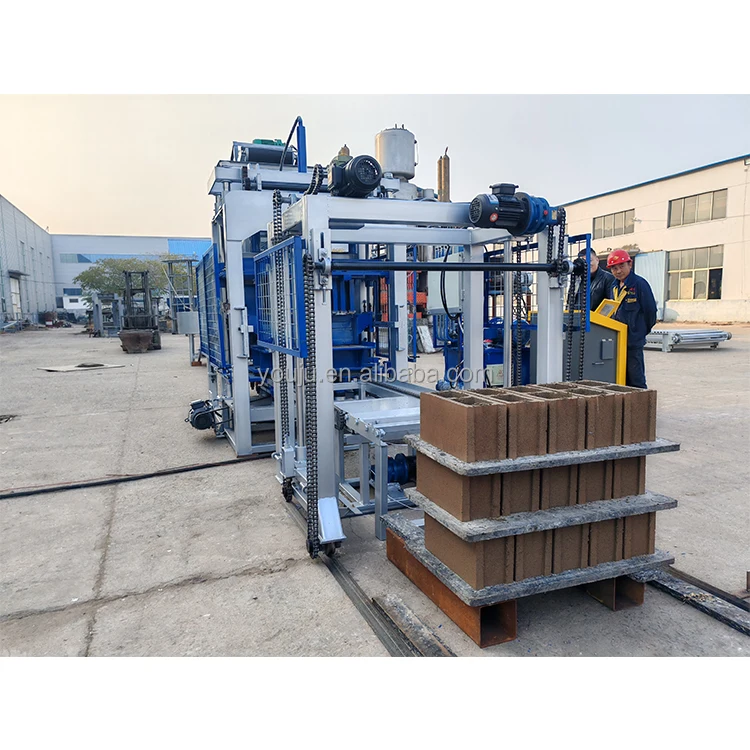
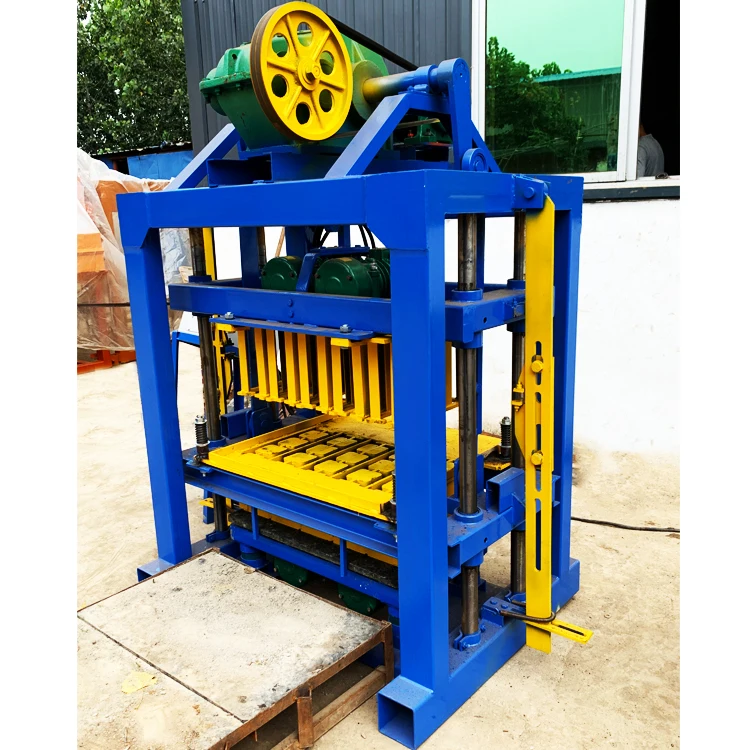
Matched System Sizing — the QT5-15 is specified against your target block format, local aggregate and curing footprint rather than a catalogue default, so every tier in our range lands as a balanced line.
Technical Specifications
| Parameter |
Value |
| Model |
QT5-15 |
| Product Type |
Automatic Concrete Block Making Machine |
| Overall Dimensions (L×W×H) |
7400×1950×2800 mm |
| Rated Pressure |
21 MPa |
| Main Vibration Form |
Hydraulic platform vibration |
| Vibrating Frequency |
2800–4500 rolls/minute |
| Cycle Time |
15–20 seconds |
| Motors Power |
26.5 kW |
| Pallet Size |
1100×550 mm |
| Weight |
6T |
| Voltage |
Configurable according to buyer needs |
| Control System |
PLC with fault diagnosis and remote monitoring |
| Automation Level |
Full automatic |
| Assembly State |
Fully assembled stationary line |
| Output Capacity (Standard Brick) |
23,040–28,800 pcs/8h based on 240×115×90mm brick, 16 pcs/mould |
| Output Capacity (Slim Brick) |
61,440–70,400 pcs/8h based on 400×115×53mm brick, 32 pcs/mould |
| Output Capacity (Hollow Block) |
7,200–9,600 pcs/8h based on 400×200×200mm hollow block, 5 pcs/mould |
| Standards |
CE declared |
Application Suitability
| Application |
Material or Output Context |
| Hollow block production |
Crushed stone, cement, and sand mixes for load-bearing and partition walls |
| Standard brick manufacturing |
Local aggregate blends for residential and commercial masonry |
| Paving brick output |
High-density mixes for walkways, driveways, and light-traffic areas |
| Multicellular brick runs |
Lightweight aggregate or fly ash blends for thermal insulation blocks |
What "Cycles Per Hour" Leaves Out When Sizing an Automatic Concrete Block Making Machine
Capacity numbers mean nothing without the block format attached to them.
Many quotations list a single hourly cycle rate and leave it at that. When the machine arrives, the buyer discovers that figure assumed a small solid brick, while their market actually sells 400×200×200mm hollow blocks. The real daily output drops to a fraction of what was promised [NEED_CITE: capacity assumptions in block machinery quotations]. I have watched a Southeast Asian plant lose weeks recalibrating because the quoted tonnage did not match their high-clay sand, forcing vibration and pressure parameters to be rewritten from scratch. Stating output per format is the only honest way to compare machines across any tier.

Where the QT5-15 Sits in the Full Machine Range
The QT5-15 occupies the mid-tier of our fully automatic stationary line, bridging the gap between entry-level semi-automatic presses and high-volume plants that demand larger pallets and bigger hydraulic circuits. Buyers stepping up from manual pallet handling find this Automatic Concrete Block Making Machine covers the feeding, pressing, and discharge cycle without requiring a full plant redesign. Its 7400 mm length fits a standard curing rack layout, keeping the investment proportional to the output target.
How the Range Scales Around This Mid-Tier Anchor
Smaller tiers in the range use shorter pallets and lower vibration force, suited to workshops producing a single format for local sales. Larger tiers push pallet dimensions and hydraulic pressure higher, serving plants that run multiple shifts and need automatic stacking and cubing stations downstream. The QT5-15 anchors the middle ground where an entrepreneur can start a dedicated block plant without over-committing to a footprint that demands extra forklifts and a bigger curing yard [NEED_CITE: block plant scaling and equipment tiers]. Each step up or down in the range is a deliberate shift in automation, output, and site requirements.
Reading the Specs That Actually Shape Daily Output
Hydraulic platform vibration at 2800–4500 rolls per minute gives the operator a wide frequency window to match different mix designs. A coarser aggregate needs lower frequency and longer dwell to consolidate, while a fine sand blend responds to higher frequency for surface finish. The 21 MPa rated pressure works in tandem with vibration to compress the mix into dense, uniform blocks. Pallet size at 1100×550 mm is chosen to align with standard curing racks and common forklift tine widths, so wet blocks move from press to rack without a handling bottleneck. A 15–20 second cycle time keeps the press rhythm steady across most standard formats.
The Cost of Choosing the Wrong Tier
Picking a press one tier too small means the plant runs extra shifts just to hit contract volumes, burning through pallets and wear parts faster than planned. Going one tier too large leaves a bigger footprint sitting idle while the curing area and forklift fleet cannot keep up with the output pace [NEED_CITE: block plant under-utilization and hidden operating costs]. Mismatched voltage or PLC language adds commissioning delays that push the first production run back by weeks.
Why Buyers Source This Range Here
Every machine, mould, pallet, and handling station in the range is specified as one matched system, not assembled from separate suppliers. Configuration starts from the buyer’s actual mix design and target format, not a catalogue default. Mould design covers the formats the buyer’s market sells, with custom drawings available. Automation level is selectable within the range, so a plant can start semi-automatic and move up later. Installation includes operator training on the specific tier delivered.
Documentation & Verification
- Line layout and capacity calculation stating the block format assumed for each output figure
- Machine specification sheet confirming hydraulic pressure, vibration force, and pallet size against your curing area
- Mould drawing and format list so you verify which block sizes are included in the quotation
- Voltage, frequency, and PLC display language confirmation recorded before production begins
- Factory test record run on your target block format prior to dispatch
Installation, Commissioning & Support
- Foundation pad sized to the 7400×1950 mm footprint with anchor bolt template provided before arrival
- Dedicated power circuit matched to the confirmed voltage and 26.5 kW motor load
- PLC display language set to operator preference before the control cabinet leaves the factory
- First-run parameter tuning on your local aggregate to set vibration frequency and hydraulic pressure
- Operator training covering mould change sequence and daily pallet inspection routine
- Wear parts list with reorder codes for hydraulic seals and vibration mounts
Before You Send the Inquiry
To place the QT5-15 correctly within the range, we need your target block format, daily output goal, and local raw material description. Share your site dimensions and existing curing rack layout so the pallet size and automation level align with what you already handle. Confirming voltage, frequency, and preferred PLC language at this stage keeps commissioning on schedule.
Frequently Asked Questions
Q: How is the QT5-15 positioned within the full machine range compared to smaller or larger tiers?
A: The QT5-15 sits in the mid-tier of the fully automatic stationary range. Smaller tiers use shorter pallets and lower hydraulic force for single-format workshops, while larger tiers push pallet size and automation further for multi-shift plants. This model balances output volume and plant footprint for buyers scaling up from semi-automatic or starting a dedicated block plant.
Q: What block formats are assumed in the quoted 8-hour output figures?
A: Each output figure states the exact block format and mould cavity count. For example, 7,200–9,600 pieces per 8 hours is based on 400×200×200mm hollow blocks at 5 pieces per mould. We provide a capacity calculation document that lists every format included in your quotation so there is no ambiguity.
Q: What plant footprint and utility requirements does the QT5-15 need?
A: The press itself measures 7400×1950×2800 mm and weighs 6T. You need a level concrete foundation, a dedicated power circuit matching the confirmed voltage for the 26.5 kW motor load, and a curing area sized to handle the 1100×550 mm pallets circulating through the system each shift.
Q: Can the automation level be upgraded later if I start with a simpler configuration?
A: The range allows buyers to start with semi-automatic pallet handling and add automatic stacking or cubing stations later. The PLC control architecture on the QT5-15 supports these additions, so the upgrade path is built into the machine from the outset rather than retrofitted.
Q: What voltage and PLC language options are confirmed before shipment?
A: Voltage and frequency are set to match your site supply, and the PLC display language is chosen by the buyer before production starts. These details are recorded in the specification sheet and verified during the factory test so commissioning proceeds without electrical or language delays.

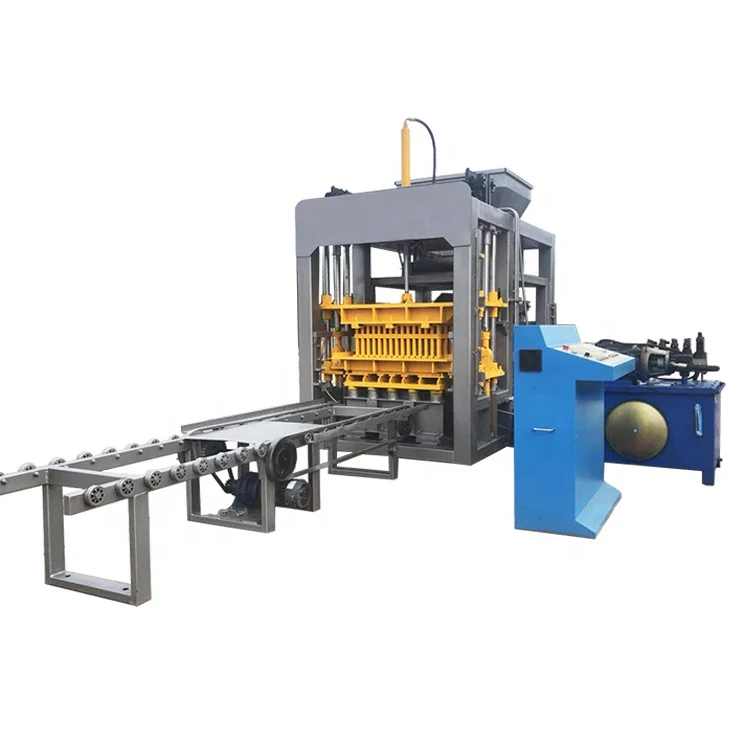
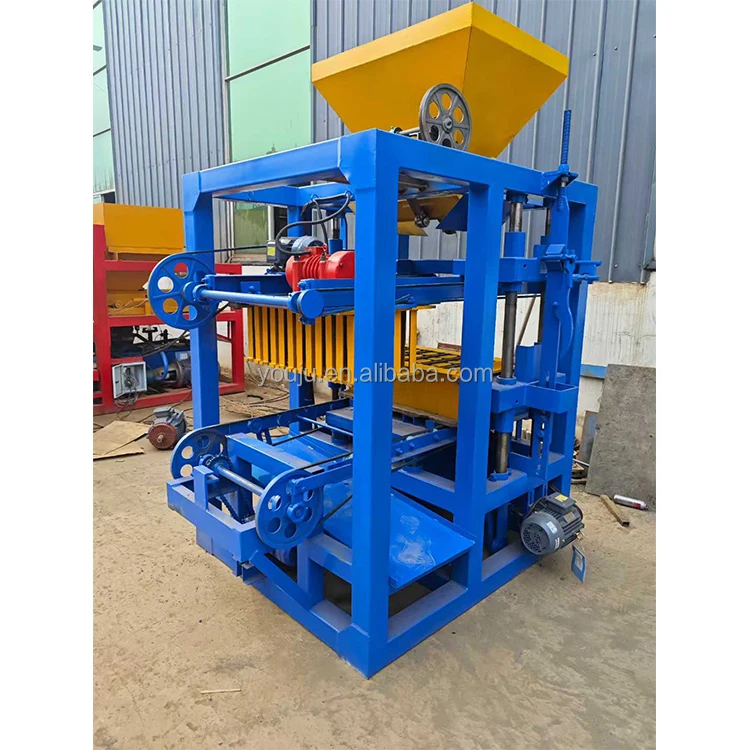 Stationary block machine