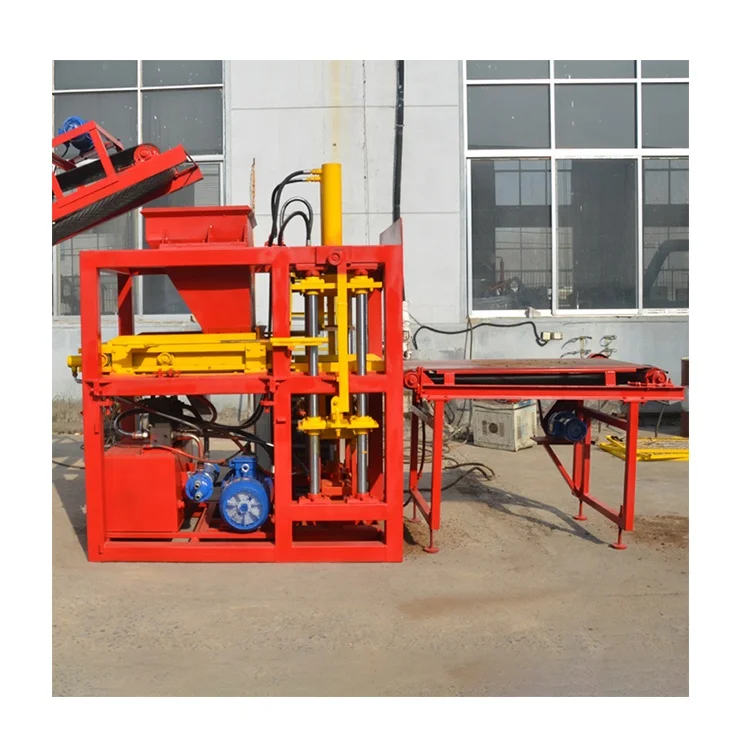
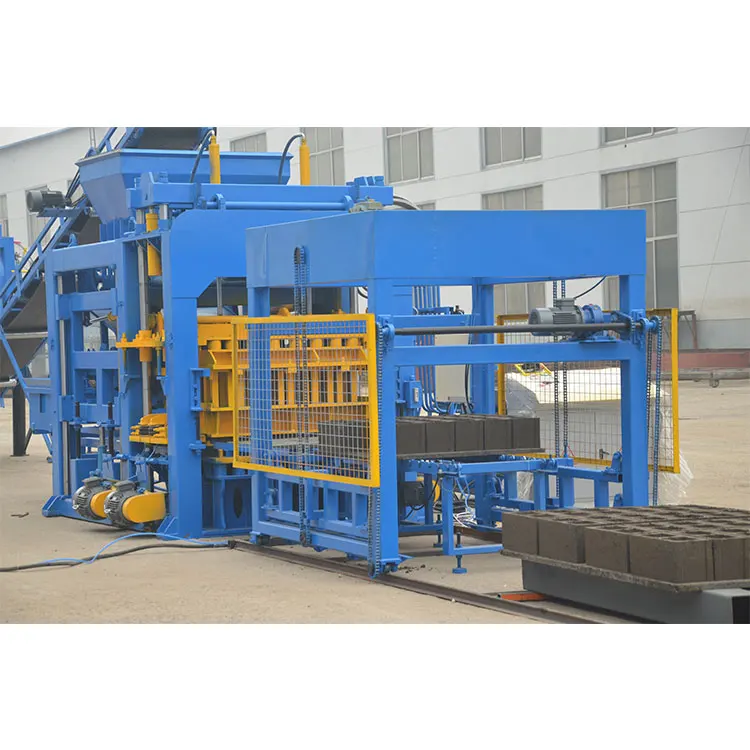
Matched system configuration — the QT6-15 block making machine, pallet and handling equipment are specified together so cycle times align across the line instead of leaving the press idle between moulding stages.
Technical Specifications
| Parameter |
Value |
| Model |
QT6-15 |
| Product Type |
Semi-Automatic Concrete Block Making Machine |
| Molding Method |
Vibration combined with hydraulic pressing |
| Rated Hydraulic Pressure |
21 MPa |
| Molding Cycle |
15–20 s (basis not stated in source — confirm block format, material and thickness) |
| Pallet Size |
900 × 700 mm |
| Main Machine Weight |
6000 kg |
| Output — Hollow Block (400×200×200 mm) |
1440 pcs/h, 11520 pcs per 8 h shift |
| Output — Paving Brick (200×100×60 mm) |
5040 pcs/h, 40320 pcs per 8 h shift |
| Output — Solid Brick (240×115×53 mm) |
7680 pcs/h, 61440 pcs per 8 h shift |
| Mixer (Simple Line) |
JS500 |
| Conveyor Belt (Simple Line) |
8 m |
| Automation Level |
Semi-automatic (configurable to higher automation with additional stations) |
| Voltage & Frequency |
Customizable to local supply |
| Key Features |
CE compliant design, mould change capability, multiple block format production |
Application Suitability
| Application |
Material or Output |
| Hollow block production for load-bearing and partition walls |
Cement, sand, fly ash, stone powder, slag blends |
| Paving brick manufacturing for roads, walkways and parking areas |
High-density concrete mixes with fine aggregate |
| Solid brick production for masonry and infill |
Standard concrete mixes with crushed stone or sand |
| Kerbstone and interlocking brick for landscaping |
Coarse aggregate concrete with pigment additives |
| On-site block production for housing and development projects |
Locally sourced fly ash or river sand combined with cement |
What "15 Seconds per Cycle" Actually Means on Site
Cycle time is only half the equation — the full press-to-stack sequence determines your real daily output.
I have watched buyers celebrate a 15-second moulding cycle, then lose half the shift waiting for pallets to return from the curing area or for the mixer to deliver the next batch. The QT6-15 Semi-Automatic Block Making Machine manufacturer rates this press at 15–20 seconds per cycle, but that number assumes every upstream and downstream station keeps pace. If your JS500 mixer takes 90 seconds per batch and the press needs a fresh batch every three cycles, the mixer becomes your bottleneck, not the press [NEED_CITE: line balancing principles in concrete block production]. Before you plan a daily target around the moulding cycle alone, the entire material flow from hopper to curing rack has to be mapped against the format you actually sell.

Positioning the QT6-15 Within a Semi-Automatic Range
The QT6-15 sits at the mid-output tier of our semi-automatic block machine line. Buyers moving up from manual egg-laying machines or small workshop presses find it covers the volume needed for a steady commercial supply without requiring a full automatic stacking and cubing system on day one. The semi-automatic configuration keeps labour in the loop for pallet handling and stacking, which reduces initial capital outlay while still delivering vibration-hydraulic forming consistency that manual machines cannot match.
How the Simple Line Package Connects
A Semi-Automatic Block Making Machine manufacturer typically quotes the press alone, leaving the buyer to source mixers, conveyors and pallet circuits separately. The QT6-15 simple line configuration includes a JS500 mixer and an 8-metre conveyor belt as baseline equipment. This means the raw material batching and delivery to the press hopper are already matched in throughput, so you are not guessing whether a third-party mixer can keep the press fed. Additional stations — automatic pallet feeders, stacking units, curing rack handlers — can be added later as volume grows, because the press control architecture supports sequential upgrades.
Pressure, Vibration and Pallet Size Decoded
The 21 MPa rated hydraulic pressure works together with the vibration system to compact the concrete mix inside the mould cavity. Higher pressure alone produces a dense block but can cause cracking if vibration is insufficient to settle the aggregate evenly; vibration alone gives a smooth finish but lower compressive strength. The dual-action approach on the QT6-15 addresses both. The 900 × 700 mm pallet size is not arbitrary — it must match your curing rack spacing and the forklift tine width already in your yard. A pallet that is too wide for your existing racks forces you to replace the entire curing infrastructure, an expense that never appears in the machine quotation [NEED_CITE: pallet and curing area compatibility in block plants]. The 6000 kg main machine weight provides the mass needed to absorb vibration without transmitting it to the foundation, which matters when the press runs eight-hour shifts on a concrete slab.
The Cost of Skipping the Format Conversation
Buyers who order a block machine without specifying which formats they produce most often end up with moulds that do not match local market demand. I have seen a plant in Guangdong receive a full set of solid brick moulds when their buyers wanted hollow blocks and interlocking pavers — three weeks of production lost before new moulds arrived. With the QT6-15, the format list and mould drawing must be confirmed before the machine enters assembly, because the vibration frequency and hydraulic dwell time are calibrated against the block geometry and the mix design you actually run. Skipping this step means the machine ships with default settings that may not produce acceptable block strength with your local fly ash or stone powder blend.
Why Buyers Specify Through This Process
Block machinery is our single focus, so the QT6-15 is not assembled from unrelated press, mixer and conveyor brands — every station is checked for cycle compatibility before the line ships. We configure the machine against your actual mix design and target block format rather than a catalogue default, because a press tuned for river sand will underperform with fly ash if the vibration and pressure parameters are not adjusted. Mould design covers the formats your market sells, and custom mould drawings are reviewed with you before tooling begins. The automation level is selectable, so a buyer can start with the semi-automatic QT6-15 and add automatic pallet feeding or stacking later without replacing the press. Installation support includes on-site commissioning and operator training so the crew running the machine understands mould change procedure, daily maintenance points and the relationship between mix moisture and block quality.
Documentation & Verification
- Line layout showing QT6-15 station spacing and material flow path
- Capacity calculation table stating the block format behind each output figure
- Mould drawing and format list for the formats your market requires
- Pallet specification matched to your curing rack and forklift dimensions
- Voltage and control language confirmation sheet signed before production
- Factory test record on your specified mix and block format before dispatch
Installation, Commissioning & Support
- Foundation plan sized for the 6000 kg QT6-15 main machine dynamic load
- Power circuit specification for the confirmed voltage and frequency at your site
- Machine dismantled for container loading with reassembly supervised on arrival
- Vibration and hydraulic parameters calibrated to your local aggregate during commissioning
- Operator training covering mould change sequence and daily lubrication schedule
- Wear parts and mould replacement list provided with the operation manual
What We Need to Size Your Line
Tell us which block formats your market sells most — hollow block, paving brick, solid brick or a combination — along with the daily volume you plan to run. Share the raw materials available locally, particularly whether you use river sand, fly ash or stone powder, and the compressive strength your buyers require. We also need your site voltage and frequency, the language your operators read, and whether you already have curing racks and forklifts so we can match the pallet size to your existing equipment.
Frequently Asked Questions
Q: How is QT6-15 capacity calculated and which block format does each figure assume?
A: Every output figure on our specification sheet is tied to a specific block format. The 1440 pieces per hour rating applies to 400×200×200 mm hollow blocks, while paving brick at 200×100×60 mm is rated at 5040 pieces per hour. These numbers assume a continuous production cycle with no pallet or material interruption — your actual daily output depends on line balancing and shift organisation.
Q: What automation level does the QT6-15 start at and what is the upgrade path?
A: The baseline configuration is semi-automatic, meaning the operator handles pallet transfer and stacking manually. As volume grows, automatic pallet feeding, stacking and cubing stations can be added to the existing press without replacing the core machine. The control system supports sequential upgrades so you invest in automation only when production volume justifies it.
Q: How do we confirm voltage, frequency and control language before shipment?
A: We send a voltage and control confirmation sheet that captures your site supply specification and the language your operators need on the display panel. This document is signed off before the machine enters final assembly, because rewiring a completed press or replacing a PLC language module after the fact delays commissioning by days.
Q: What is included in the simple line versus a full semi-automatic configuration?
A: The simple line ships with the QT6-15 press, a JS500 mixer and an 8-metre conveyor belt — enough to produce blocks with manual pallet handling. A full semi-automatic configuration adds pallet feeding, automatic stacking and curing rack handling stations. The press itself is identical in both packages; the difference is how much manual labour remains in the material flow loop.
Q: How is the mould matched to our local aggregate and mix design?
A: Before tooling begins, we review your local aggregate type, cement ratio and target block strength. Vibration frequency and hydraulic dwell time are then adjusted so the mould produces consistent density with your specific mix. A mould tuned only for standard river sand will not compact fly ash or stone powder correctly, leading to weak edges and high breakage rates.

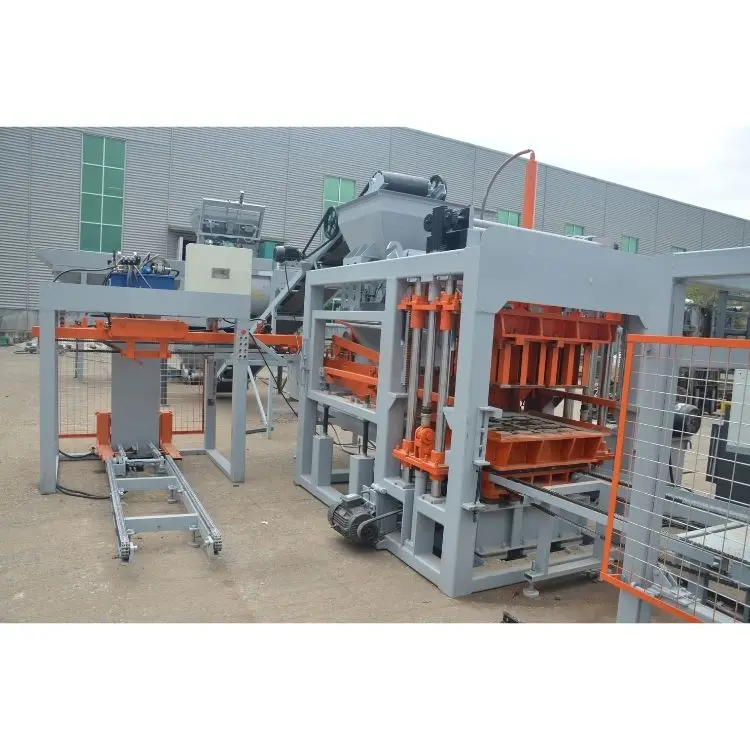
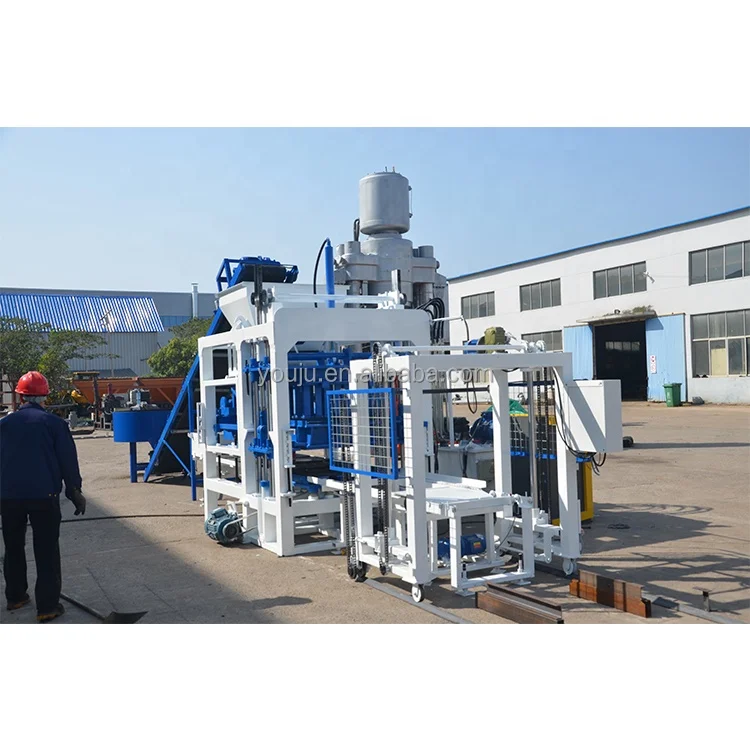 Semi automatic block