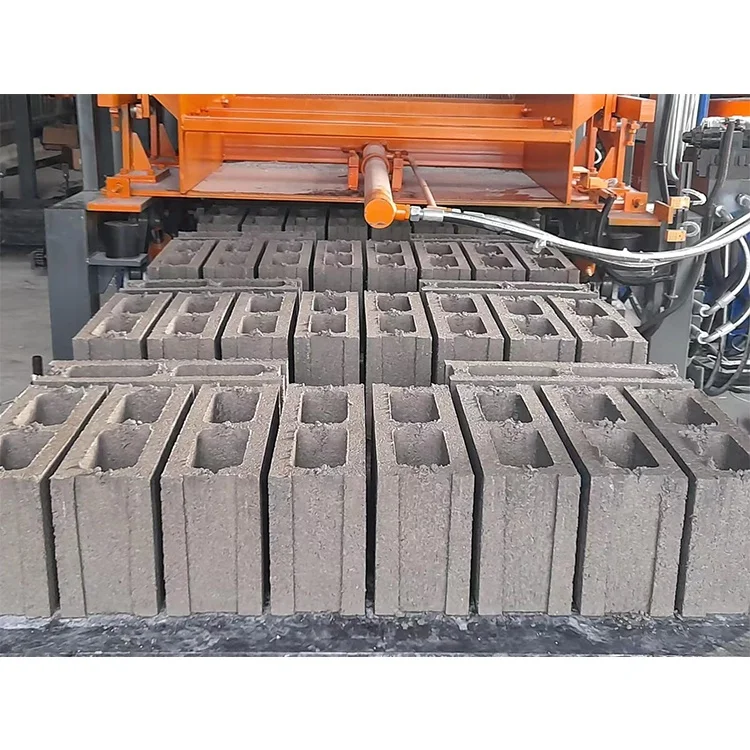
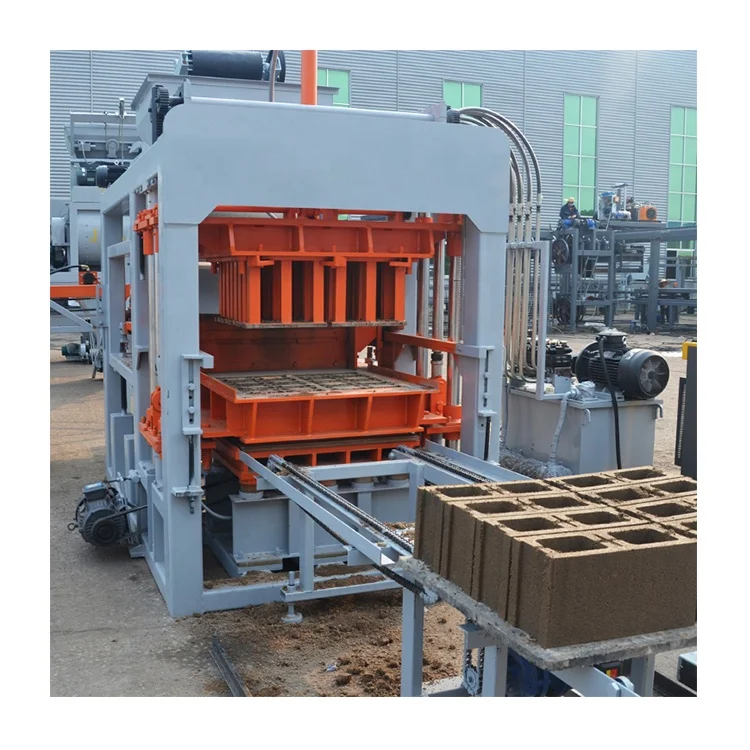
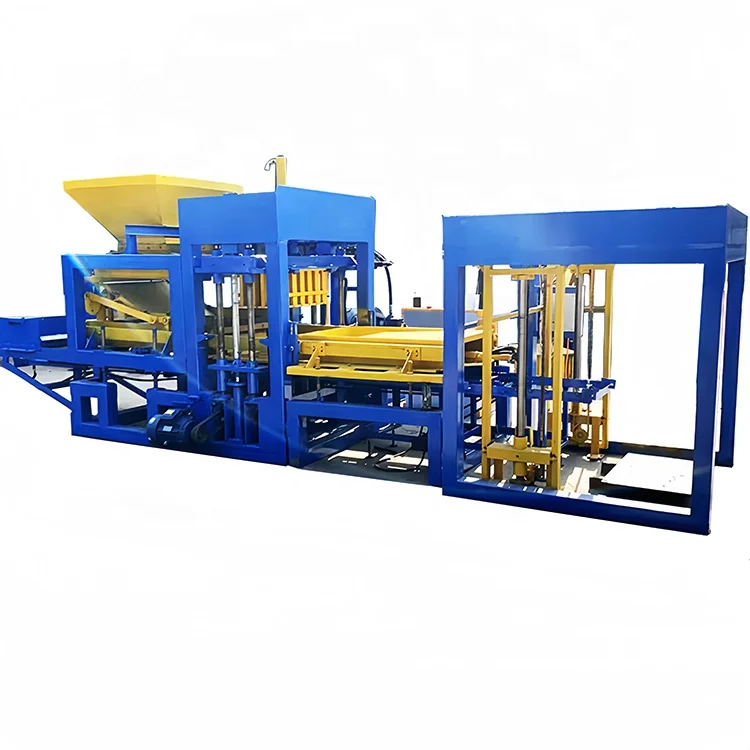
Matched System Supply — the QT6-15 block machine, moulds, pallets and handling are specified together rather than sourced separately, so capacity and format stay aligned from day one.
Technical Specifications
| Parameter |
Value |
| Model |
QT6-15 |
| Product Type |
Automatic Concrete Block Making Machine |
| Overall Dimensions (L×W×H) |
7350×1780×2950 mm |
| Rated Pressure |
16 MPa |
| Main Vibration |
Platform vibration |
| Vibration Frequency |
4600 r/min |
| Pallet Size |
880×700 mm |
| Molding Cycle |
15-20 s |
| Overall Power |
30.5 kW |
| Voltage & Frequency |
Configurable to buyer’s site requirement (basis to be confirmed) |
| Control System |
PLC-based, brand and display language configurable (basis to be confirmed) |
| Output Capacity — Hollow Block 400×200×200 mm |
6 pcs/mould, 1080 pcs/h, 8640 pcs/day |
| Output Capacity — Porous Brick 240×115×90 mm |
14 pcs/mould, 2800 pcs/h, 22400 pcs/day |
| Output Capacity — Standard Brick 240×115×53 mm |
30 pcs/mould, 6800 pcs/h, 54400 pcs/day |
| Raw Materials |
Crushed stone, sand, cement, fly ash, cinder, slag, gangue, gravel, perlite, industrial wastes |
| Automation Level |
Automatic |
| Warranty |
1 year |
| Standards |
CE, SGS, ISO 9001 |
Application Suitability
| Application |
Material or Output |
| Hollow block production for building walls |
Crushed stone, sand, cement, fly ash — 400×200×200 mm format |
| Porous brick manufacturing |
Sand, cement, industrial waste blends — 240×115×90 mm format |
| Standard solid brick for masonry |
Cement, gravel, slag — 240×115×53 mm format |
| Interlocking paver production for roads and squares |
Face-mix or mono-layer concrete — format per mould |
| Kerbstone and edger production |
Heavy-aggregate concrete — format per mould |
| Landscaping and garden block manufacturing |
Lightweight aggregate blends — grass blocks, slope blocks |
What "8640 Blocks per Day" Actually Means on the QT6-15 Block Machine Full Range
The daily output figure only holds when the mould, cycle time and block format all match the stated assumption.
I have watched buyers sign off on a capacity number, then discover on commissioning day that the figure was based on a small solid brick while they needed hollow blocks. The QT6-15 block machine full range lists 8640 pcs/day for 400×200×200 mm hollow blocks at 15-20 s cycle, but that same machine running porous bricks yields a different daily total entirely. When a supplier quotes a single headline number without naming the format, the real throughput on your product can fall well short of expectation [NEED_CITE: capacity disclosure practices in block machine quotations].

Where the QT6-15 Sits in the Automatic Tier Lineup
The QT6-15 occupies the mid-tier automatic segment, bridging the gap between smaller semi-automatic machines and higher-output fully automatic lines. Buyers setting up a first block plant often start here because the automation covers pallet feeding and block ejection without the capital commitment of a full stacking and cubing system. The 30.5 kW overall power draw keeps operating cost in check for plants running single-shift operations.
Format Flexibility Across One Matched Platform
Switching between hollow blocks, porous bricks, standard bricks and interlocking pavers requires a mould change on the 880×700 mm pallet envelope. The platform vibration at 4600 r/min combined with 16 MPa hydraulic pressure maintains consistent density across formats, provided the mix design suits the local aggregate. A buyer producing kerbstones in the morning and hollow blocks in the afternoon needs to confirm mould change procedure time before committing [NEED_CITE: mould change duration and format flexibility in mid-tier block presses].
Reading the Specs That Actually Shape Daily Output
The 16 MPa rated pressure and 4600 r/min vibration frequency work together to compact the concrete mix. Higher vibration alone does not guarantee block strength if hydraulic pressure is insufficient to hold the mould closed during compaction. The 880×700 mm pallet size sets the physical boundary for every mould you run — if your existing curing racks or forklift are sized for a different pallet, the mismatch will surface during installation. The 7350×1780×2950 mm machine footprint determines the minimum bay width and overhead clearance required, so measuring the plant floor before ordering avoids rework after arrival.
The Hidden Cost of Skipping the Pallet and Voltage Check
Pallets ordered without confirming material and size against the curing area mean blocks get stacked by hand while the buyer waits for replacements. Voltage and frequency left unconfirmed until the machine arrives can delay commissioning by weeks if the local supply does not match the motor winding. I have seen a 415 V machine sit idle in a 380 V workshop until a transformer was sourced locally, adding cost and lost production days [NEED_CITE: voltage mismatch delays in exported industrial machinery].
Why Source the QT6-15 Block Machine Full Range Here
Machine, mould, pallet and handling equipment are specified as one system, so the 880×700 mm pallet matches both the press and the downstream curing layout. Configuration starts from your actual mix design and local aggregate, not a catalogue default, which matters when fly ash or crusher dust replaces natural sand. Mould design covers the formats your market sells, and custom drawings are available when standard formats do not fit. The automation level is selectable — a buyer can begin with semi-automatic pallet handling and add automatic stacking later as volume grows. Installation support includes on-site commissioning and operator training so the 15-20 s cycle time is achievable from the first shift.
Documentation & Verification
- Line layout showing QT6-15 footprint with capacity stated per block format
- Pallet specification sheet confirming 880×700 mm size and material grade
- Voltage, frequency and PLC display language confirmation before production
- Mould drawing and format list included with the quotation
- Factory test record run on buyer-specified block format before dispatch
- Hydraulic and electrical schematic for on-site maintenance reference
Installation, Commissioning & Support
- Foundation pad sized for 7350×1780 mm footprint with anchor bolt plan provided
- Dedicated power circuit rated for 30.5 kW total draw at confirmed voltage and frequency
- Machine shipped in dismantled state with reassembly supervised on site
- PLC display language set before dispatch to match operator proficiency
- Mould change procedure trained on-site with first format swap timed
- Wear parts list with hydraulic seals and vibration components identified for reorder
Before You Send the Inquiry
Share the block formats you need to produce, the daily volume target per format, and the raw materials available locally including aggregate type and moisture content. Confirm your workshop dimensions, existing curing rack setup, and the voltage and frequency at your site so the QT6-15 block machine full range can be configured before the quotation stage.
Frequently Asked Questions
Q: How is daily output verified for the QT6-15?
A: Each capacity figure is tied to a specific block format and mould. The 8640 pcs/day figure assumes 400×200×200 mm hollow blocks at a 15-20 s cycle. A capacity calculation document names the format for every output tier, so there is no single headline number without a stated assumption.
Q: Where does the QT6-15 fit between semi-automatic and higher-tier models?
A: It sits in the mid-tier automatic range, offering automated pallet feeding and block ejection without the full stacking and cubing system of upper tiers. Buyers can start here and add automation modules later as production volume increases.
Q: What plant footprint does the QT6-15 require?
A: The machine measures 7350×1780×2950 mm. Buyers need to confirm bay width, overhead clearance, and that the 880×700 mm pallet size matches their existing curing racks and forklift capacity before ordering.
Q: Can the automation level be upgraded later?
A: Yes. The platform supports additional automation such as automatic stacking and cubing, added after initial installation when production volume justifies the investment.
Q: What mould formats are available for the QT6-15?
A: Standard moulds cover hollow block, porous brick, standard brick and interlocking paver formats within the 880×700 mm pallet envelope. Custom moulds can be designed to buyer drawings when local market demand requires non-standard shapes.

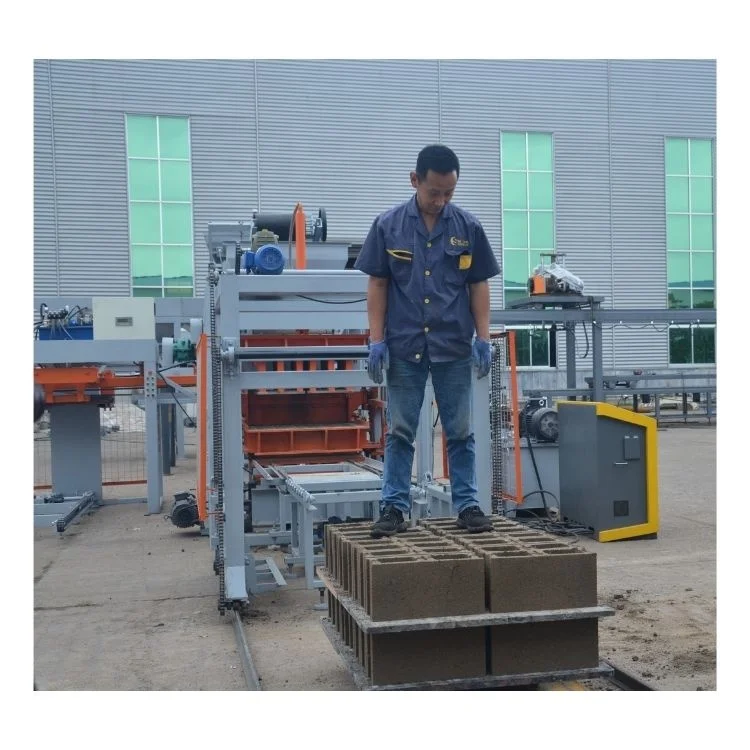
 High quality block machine